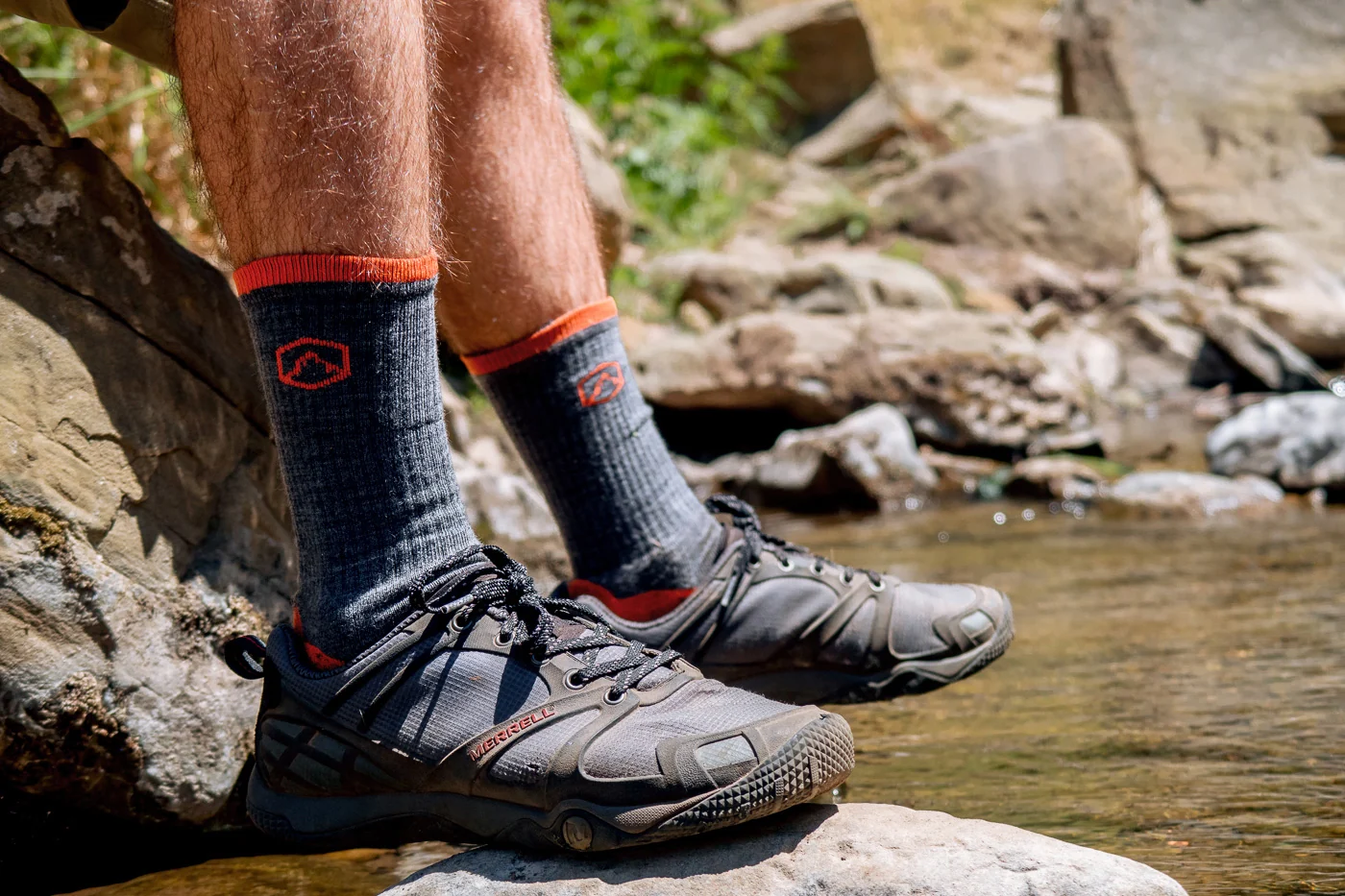
I learned a long time ago that a beautiful hiking outfit means very little if your feet aren’t happy.
You can have the perfect boots, a beautifully planned route and a backpack packed down to the last detail. Then, three hours into the trail, one hot spot appears on your heel and suddenly that’s all you can think about.
That’s why socks deserve more attention than they usually get.
When I look for the best hiking socks, I’m not looking for the thickest pair or the most expensive label. I’m looking for socks that manage moisture, reduce friction, stay comfortable inside a boot and continue feeling good when the trail gets longer than expected.
Here are the things I’d actually look for before packing a pair.
Merino Wool Is Still Hard to Beat
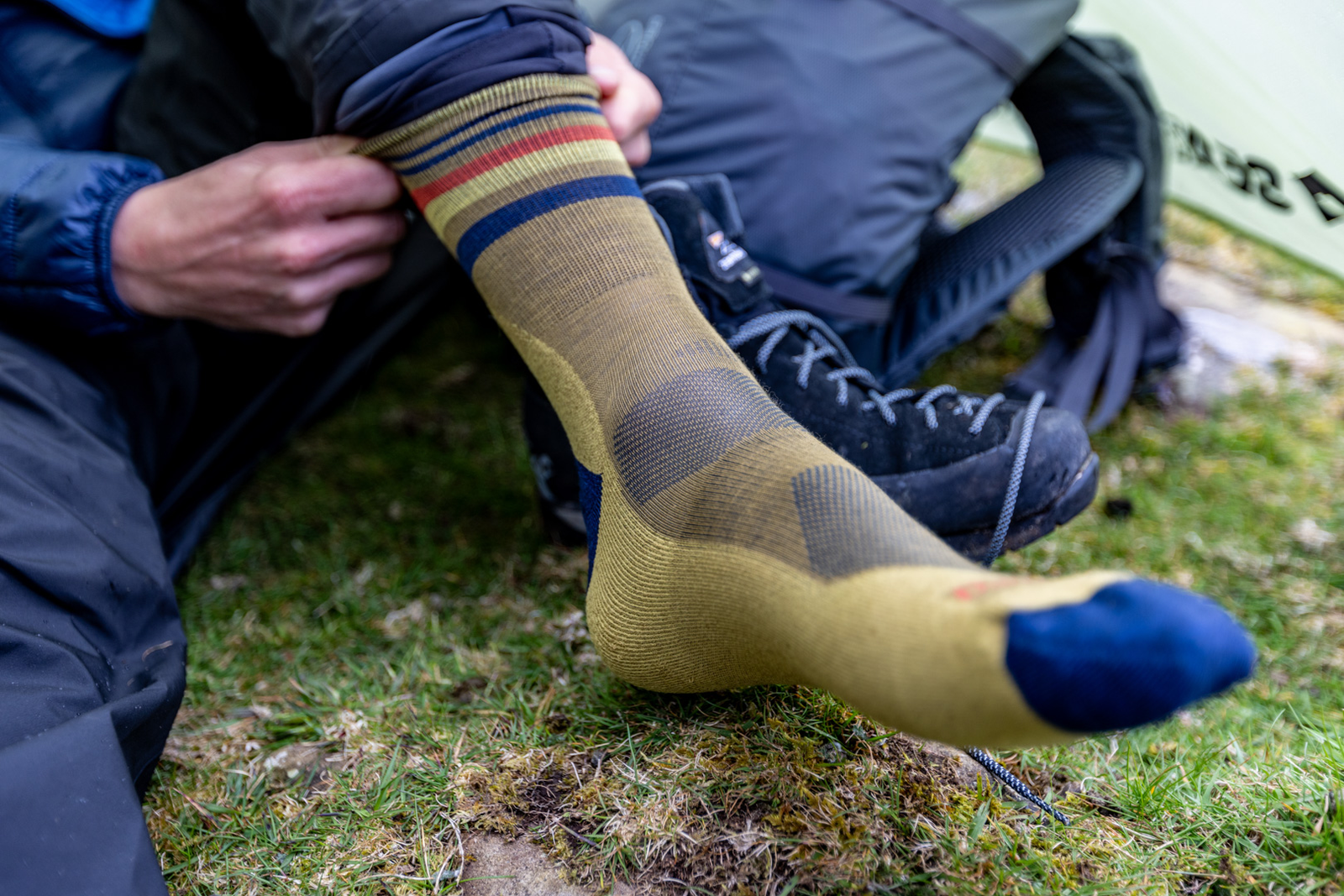
Merino wool is one of those materials that makes sense almost immediately once you’ve worn it on a long day outdoors.
It’s naturally good at managing moisture and temperature, which makes it useful across changing conditions.
The important thing is that merino hiking socks don’t have to feel like the heavy wool socks you might imagine. Modern blends can be surprisingly soft and comfortable.
For a cool mountain morning that turns into a warm afternoon, that’s exactly the kind of versatility I want.
Cushioning Should Match the Boot
More cushioning isn’t automatically better.
A heavily cushioned sock can feel wonderful inside a roomy hiking boot, particularly on rocky terrain. But put the same sock into a close-fitting boot and suddenly everything feels cramped.
I usually think about cushioning in three categories:
- Light cushioning: good for warmer weather and lighter footwear
- Medium cushioning: a useful everyday hiking option
- Heavy cushioning: better suited to cold conditions and substantial boots
The right thickness is the one that works with your footwear, not the one that looks most substantial on the shelf.
The Heel and Toe Matter More Than You Think
These are the places where hiking socks earn their keep.
Reinforced heel and toe areas can help a sock handle repeated friction, especially during long hikes.
A good fit matters too. If the heel slips every time you take a step, even a technically impressive sock can become irritating.
A sock should stay where you put it.
That’s a surprisingly luxurious feeling after several hours on a trail.
Moisture Management Is Everything on a Warm Hike
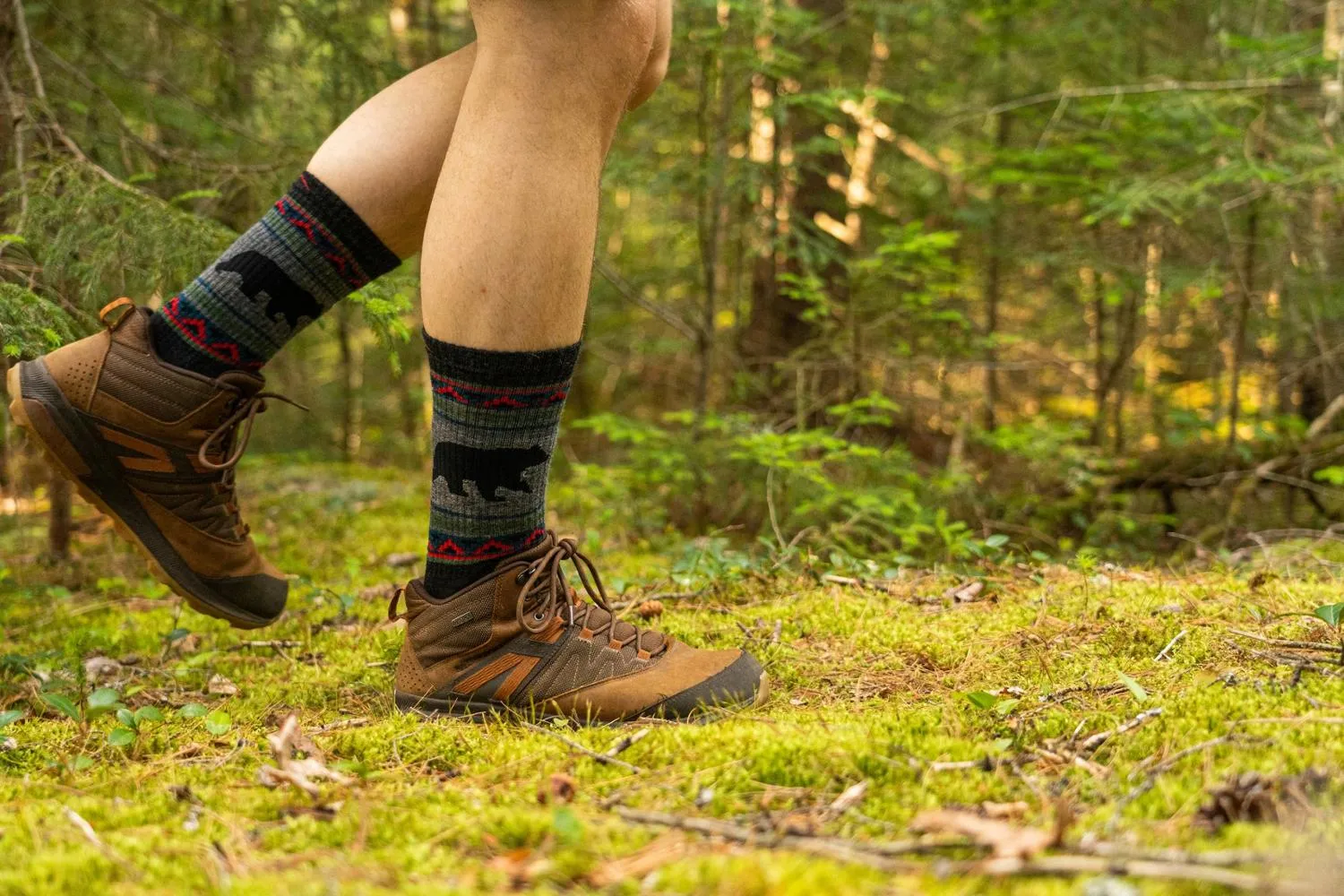
Sweaty feet aren’t merely uncomfortable.
Moisture combined with friction can create hot spots and blisters.
That’s why I wouldn’t choose hiking socks based purely on softness. A sock that feels wonderful for five minutes but stays wet for hours isn’t doing much for you.
Look for materials and construction designed to move moisture away from the skin and consider the climate before deciding how much insulation you need.
Don’t Ignore Synthetic Blends
There is a tendency to assume natural fibers are automatically better.
It’s not that simple.
Nylon, polyester and elastane are often blended with wool or other fibers to add durability, stretch and shape retention.
For hiking, that can be extremely useful.
A well-designed blend can give you softness, moisture management and durability in the same sock.
For Summer Trails, I Want Less
On a hot trail, I don’t want my feet wrapped in unnecessary insulation.
A lightweight hiking sock can make more sense when temperatures are high and your boots are breathable.
This is where many people make the mistake of buying one “perfect” hiking sock and using it for everything.
I wouldn’t.
Your summer trail through a warm valley and your winter hike through a snowy mountain environment are completely different jobs.
Winter Changes the Equation
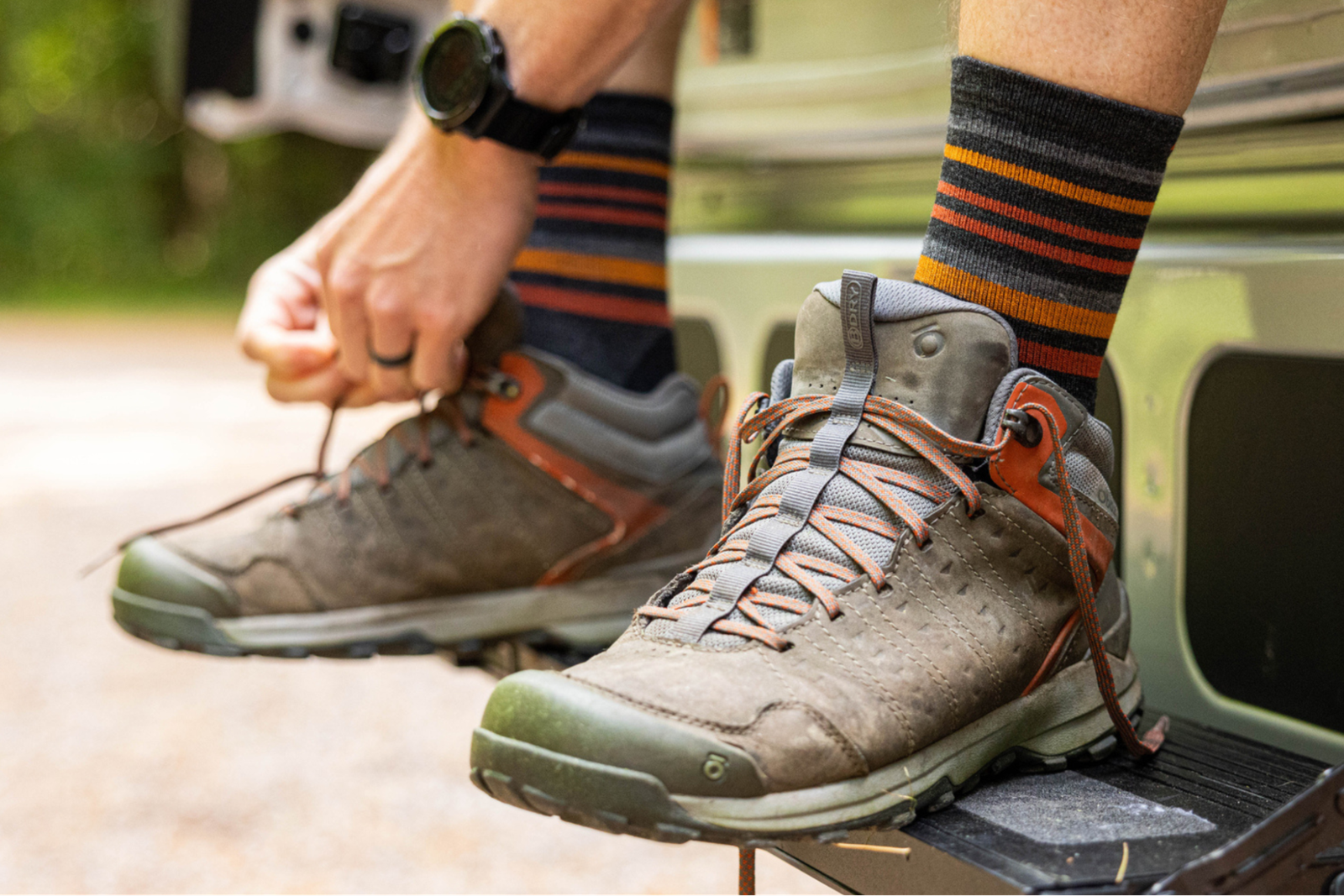
Cold-weather hiking is when thicker socks become much more valuable.
The goal isn’t simply to make your feet feel warm when you first leave.
You need enough insulation to remain comfortable as the temperature drops, while still leaving enough room inside the boot for proper circulation.
A thick sock inside a boot that’s already too tight can actually make the experience worse.
The Sock Should Work With Your Boot
This is probably the most overlooked part of the decision.
Before buying another pair, put on your hiking boots.
Think about how much space you actually have.
Then consider:
Boot fit + sock thickness + terrain + temperature.
Those four things are connected.
A sock that feels perfect in a trail runner might feel completely wrong in a rigid mountain boot.
What I’d Look for in a Great Hiking Sock
If I were standing in a store trying to choose between several pairs, I’d check:
- Material composition
- Merino content or technical fiber blend
- Cushioning level
- Heel and toe reinforcement
- Seam placement
- Elasticity
- Moisture management
- Temperature rating or intended conditions
- Fit around the ankle and calf
- Compatibility with my hiking boots
The label doesn’t have to say “premium.”
The construction should tell you.
Don’t Buy a Giant Collection
You probably don’t need twenty pairs of hiking socks.
I’d rather have a small rotation suited to different conditions.
A lightweight pair for warm hikes.
A medium-cushion pair for general use.
A warmer pair for colder trips.
That’s enough for most wardrobes.
And because good hiking socks are relatively small, they’re also one of the easiest pieces of outdoor gear to keep organized when you’re packing for a trip.
The Pair I’d Want in My Bag
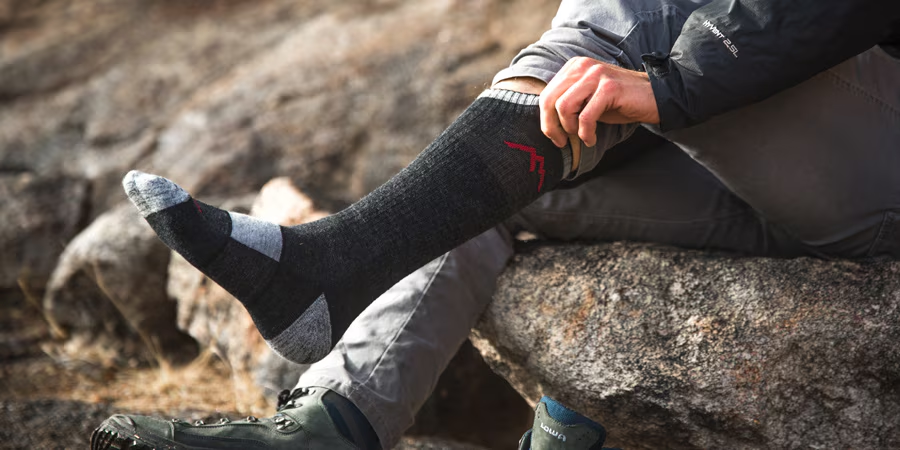
For an ordinary day hike, I’d lean toward a comfortable merino blend with moderate cushioning.
For hot weather, I’d go lighter.
For cold mountain conditions, I’d choose more insulation—but only if my boots have enough room to accommodate it.
That’s really the secret.
The best hiking socks aren’t necessarily the thickest, softest or most expensive pair.
They’re the ones you stop noticing once the hike begins.
And honestly, that’s exactly what I want from them.
I want to think about the mountain, the view, the weather changing around me and where the trail goes next.
Not my feet.
FAQs
Are merino wool socks good for hiking?
Yes. Merino wool is popular for hiking because it can help manage moisture and temperature while remaining comfortable against the skin.
Should hiking socks be thick?
Not necessarily. Thickness should match your footwear, the weather and the type of hiking you’re doing.
Are cotton socks good for hiking?
Cotton can hold moisture against the skin, which can become uncomfortable during prolonged activity. Technical or wool-blend hiking socks are generally better suited to long hikes.
How many pairs of hiking socks should I own?
For regular hiking, a small rotation of lightweight, medium-cushion and cold-weather socks can cover a wide range of conditions.
Why do my hiking socks slip down?
Poor sizing, insufficient elasticity or an unsuitable sock-and-boot combination can cause slipping. A properly fitted hiking sock should stay securely in place as you walk.