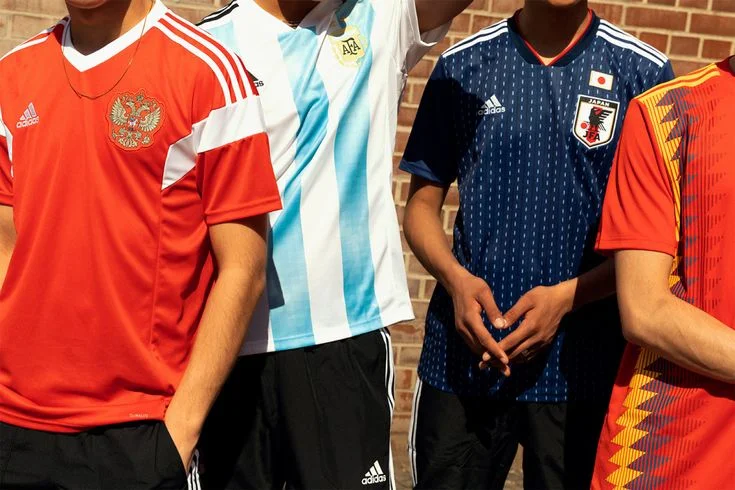
There was a time when a soccer jersey had one obvious destination: the stadium. You wore it to support a club, watched the match, celebrated a goal, and eventually folded it away until the next game. Today, that boundary has become much less certain. The same piece can appear at a café, under a tailored jacket, with relaxed denim, or styled with sneakers on a city street.
The transformation isn’t really about football changing fashion. It is about fashion becoming more interested in culture, identity and pieces with a story. And somewhere between the terrace, the tunnel and the street, soccer jerseys found a new role in the modern man’s wardrobe.
From Team Identity to Personal Style

A jersey has always communicated something. A club. A city. A generation. A favorite player. A particular moment in football history. That emotional connection gives the garment something many ordinary fashion pieces don’t have: context.
You aren’t simply wearing a shirt with a graphic on it. You’re wearing a visual reference to a club, a season, a player, a place or an era. That makes soccer jerseys surprisingly expressive. Two people can wear the same jersey and make it feel completely different depending on everything around it.
One might pair it with loose trousers and understated sneakers. Another might wear it with vintage denim and a jacket. Someone else might keep the entire outfit deliberately minimal and let the jersey become the only statement. The garment stays the same. The story changes.
Why the Street Took Notice
Streetwear has always borrowed from places outside traditional fashion. Skateboarding. Music. Workwear. Basketball. Military clothing. Racing. Football was always going to find its way into that conversation.
The visual language of the sport is particularly strong. Bold colors, crests, sponsor graphics, numbers, stripes and distinctive collars can make a jersey recognizable from a distance. But the appeal goes deeper than aesthetics.
Football has communities. It has rivalries, cities, rituals and memories. That cultural weight gives a jersey a sense of authenticity that is difficult to manufacture.
The Vintage Jersey Has a Different Kind of Luxury
There is something especially appealing about an older football shirt. Maybe it has a faded sponsor. A slightly unusual collar. A design that would never be approved by today’s minimalist fashion departments.
Perhaps it belongs to a famous season or carries the name of a player remembered long after the match itself has disappeared from television. That history changes the way the garment feels.
In contemporary fashion, rarity and provenance can be as compelling as price. A vintage jersey doesn’t necessarily need to look expensive. It needs to look like it has lived a life. And that is often much more interesting.
How to Wear a Soccer Jersey Without Looking Like You’re Heading to the Match
The easiest mistake is making every part of the outfit compete with the jersey. If the shirt is colorful, graphic or heavily branded, everything around it can become quieter. Try relaxed trousers rather than another loud graphic.
Try simple sneakers rather than footwear covered in competing details. Layer a jacket over it when you want the outfit to feel more considered. The idea isn’t to hide the jersey. It is to give it space.
With Tailored Pieces
One of the more interesting directions in modern menswear is the contrast between sportswear and tailoring. A football shirt underneath a structured blazer can create a tension between formal and casual dressing.
The combination works because the pieces aren’t trying to be the same thing. The tailoring brings structure. The jersey brings personality. Keep the rest of the look restrained and the contrast becomes intentional rather than accidental.
With Denim
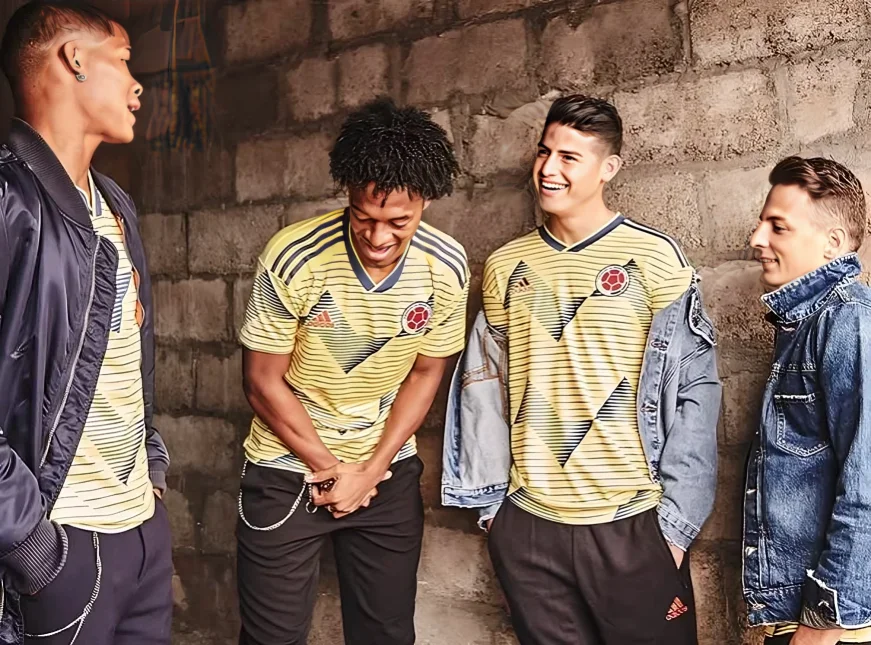
Denim is probably the easiest partner. Straight-leg jeans, relaxed denim or even vintage-washed styles can make a jersey feel natural rather than costume-like.
This is particularly effective with older shirts because the textures and proportions tend to complement each other.
With Shorts
For warmer weather, a jersey and tailored or relaxed shorts can feel effortless. The trick is proportion. A slightly oversized jersey can work beautifully with cleaner shorts, while a more fitted shirt may suit a relaxed silhouette elsewhere. There is no need to overcomplicate it.
The Rise of the Football Aesthetic
Football’s influence extends beyond the jersey itself. Scarves, track jackets, terrace sneakers, retro training pieces and football-inspired graphics have all become part of a broader visual language. This is less about dressing like a football fan from head to toe and more about borrowing individual references.
That distinction matters. Modern fashion often works through fragments. A detail here. A texture there. A familiar silhouette placed somewhere unexpected. The football shirt became powerful precisely because it could exist outside football.
Why Some Jerseys Feel More Fashionable Than Others
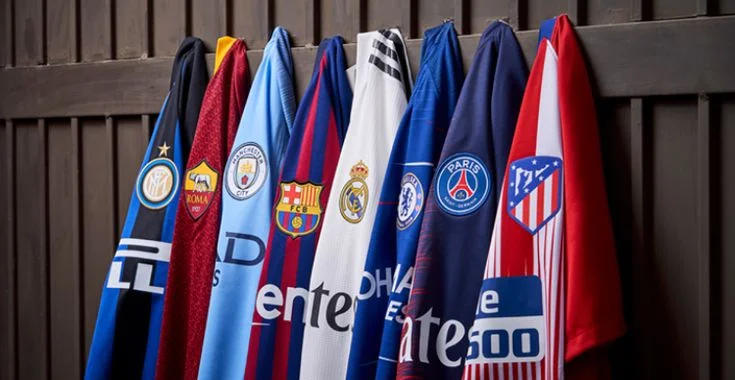
Not every jersey naturally translates into everyday menswear. Design plays a huge role. Classic colors tend to be easier to style. Simple stripes, restrained crests and vintage silhouettes can work particularly well because they don’t overwhelm the rest of an outfit.
More elaborate modern designs can still be striking, but they demand more consideration. This is where personal taste becomes important.
A minimalist wardrobe might call for a shirt with subtle detailing. Someone with a more expressive style might enjoy something louder. Neither approach is more correct. The best wardrobe is the one that reflects the person wearing it.
Soccer Jerseys as Travel Pieces
There is also something wonderfully practical about taking football-inspired pieces on the road. They are casual without feeling completely anonymous. A well-chosen jersey can move from an afternoon exploring a city to a relaxed dinner without requiring an entirely new outfit.
And when traveling somewhere with a strong football culture, the garment can become a small connection to the place you’re visiting. You aren’t just wearing fashion. You’re wearing a conversation starter.
The Question Nobody Asks: Why Do We Like Wearing Other People’s History?
Perhaps this is part of what makes football shirts so interesting. Fashion usually sells us the idea of something new. Football shirts often sell us the opposite. A shirt from another decade can feel more desirable because it has already belonged to a particular cultural moment.
It reminds us of matches we may have watched, players we remember, cities we associate with football, or eras whose visual identity has returned through nostalgia. That emotional dimension is difficult to replicate with a completely new garment.
When Sportswear Becomes Menswear
The broader shift is bigger than football. Modern menswear has become increasingly comfortable mixing categories that once lived separately. Sneakers with tailoring.
Technical fabrics with classic coats. Outdoor clothing with luxury accessories. Sportswear with vintage pieces. Soccer jerseys fit naturally into that evolution because they already occupy an unusual position between clothing and cultural artifact.
They are functional enough to be worn casually, recognizable enough to communicate something, and distinctive enough to give a simple outfit character.
A More Personal Way to Wear Them
The most interesting way to wear a soccer jersey isn’t necessarily the most fashionable one. It is the one that feels believable. A jersey might be from the club your father grew up supporting, a vintage one you discovered while traveling, or simply a design you love even if you’re not a dedicated football fan.
Maybe the jersey reminds you of a particular player or a particular summer. Those reasons matter. Clothing becomes more compelling when there is something behind it. And perhaps that is why soccer jerseys have moved so comfortably beyond the pitch. They already carried stories before fashion discovered them. Now they simply have more places to tell them.