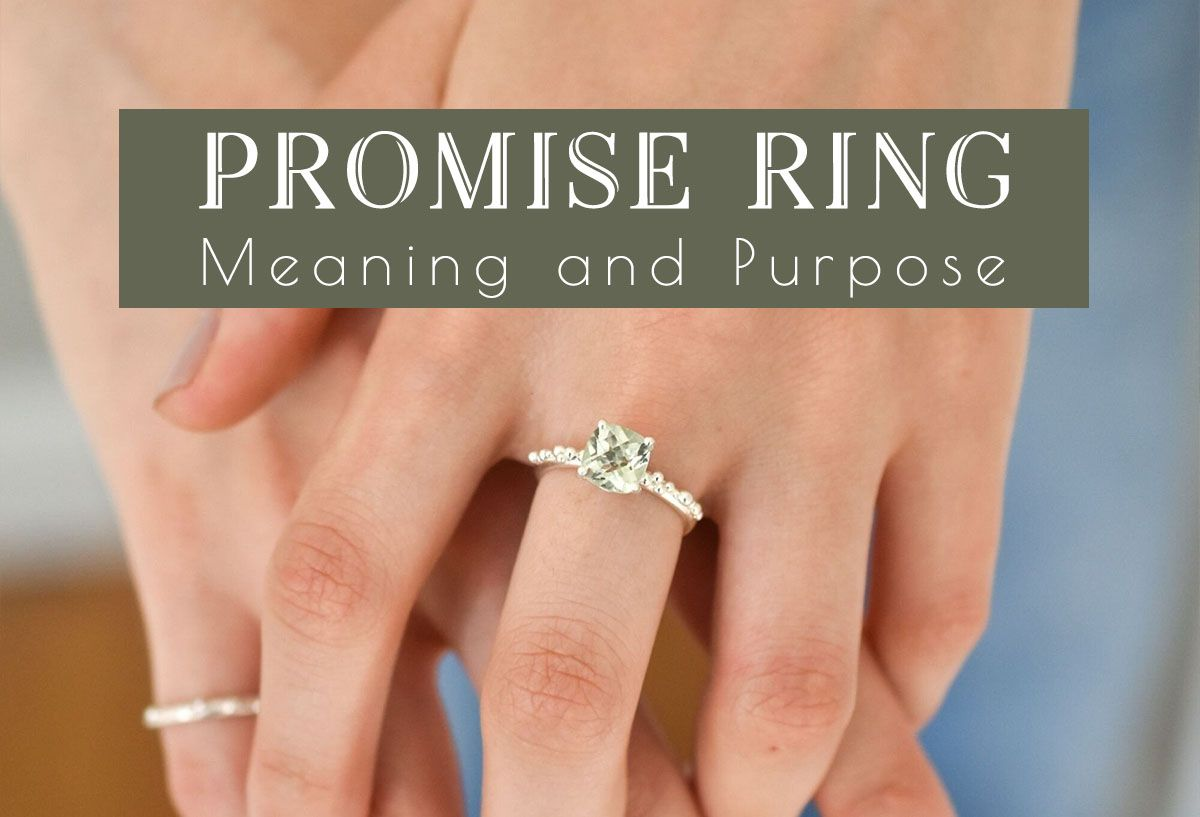
A promise ring is a ring given to symbolize a specific commitment between two people most commonly a romantic promise, though not exclusively. It sits below an engagement ring in meaning and formality, and the exact commitment it represents is defined by the couple themselves rather than by fixed tradition. Modern promise rings are typically worn on the ring finger of the left hand (if not yet engaged) or the right hand, tend to cost between $50 and $500 for most buyers, and come in styles ranging from simple bands to intricate designs with small diamonds or gemstones. This guide walks through what promise rings actually mean today, the styles and price ranges available, and the practical questions to think about before choosing one.
What a Promise Ring Actually Means
Promise rings have existed in various forms for centuries from Roman betrothal rings to 16th-century posy rings inscribed with romantic verses to Victorian acrostic rings that spelled out words in gemstones. The modern promise ring has evolved from all of these traditions into something more flexible: a symbol of a specific commitment defined by the couple, not by a formal social contract.
Common meanings couples attach to promise rings today include:
- A promise of future engagement. The most common interpretation a formal signal that the relationship is heading toward marriage, even if the timing isn’t right yet for a formal engagement.
- A promise of exclusivity and commitment. Given at a stage where the relationship is serious but not necessarily engagement-bound.
- A promise of continued relationship growth. Sometimes given during long-distance separations, before deployments, or during other transitions where the couple wants to formalize their commitment.
- A promise of specific personal values. Purity rings, sobriety rings, and other commitment-specific rings sit within the broader promise ring category.
- A promise between family members or close friends. Less common but genuine parents to children, or between very close friends.
The important thing to know: promise rings don’t come with a fixed meaning. What the ring represents is whatever the giver and receiver agree it represents. Conversations about the meaning matter more than any traditional definition.
How Promise Rings Differ From Engagement Rings
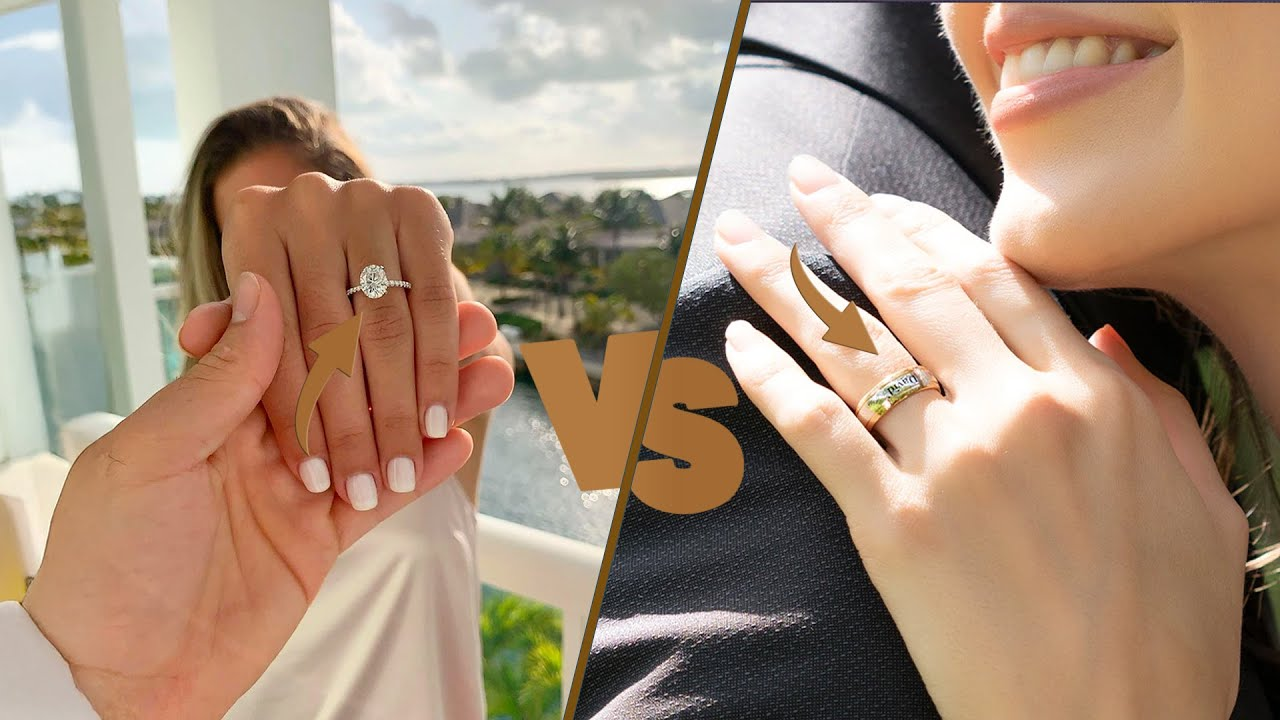
This is one of the most common questions, and the answer is meaningful:
| Promise Ring | Engagement Ring | |
| Level of commitment | Symbolic; couple-defined | Formal proposal of marriage |
| Typical cost | $50–$500 for most buyers | Often $2,000+, varies widely |
| Style | Often simpler; smaller stones or bands | Typically features a prominent center stone |
| Finger worn on | Right hand or left ring finger | Left ring finger |
| Meaning is | Flexible, defined by couple | Culturally standardized |
| Follow-up expected | None required | Wedding |
An engagement ring signals a specific, formal step toward marriage. A promise ring signals whatever the couple decides which is both its strength (flexibility) and its potential for miscommunication (the other person may interpret it differently).
Because of that, the single most important step when giving or receiving a promise ring is a clear, direct conversation about what it means to both of you. Skipping that conversation is where most confusion happens.
Which Finger a Promise Ring Goes On
There isn’t one universal rule, but a few conventions are common:
- Left ring finger — if the receiver isn’t yet engaged. This is common when the promise ring specifically signals a future engagement.
- Right ring finger — if the couple wants to leave the left ring finger open for a future engagement ring, or if the promise represents a commitment other than future marriage.
- Right middle finger — sometimes used for friendship-based or family-based promise rings.
- A chain around the neck — for people whose work or lifestyle makes wearing a ring impractical.
Some couples switch which finger the ring goes on if an engagement happens later, moving the promise ring to the right hand and receiving the engagement ring on the left. There’s no wrong choice the finger reflects the meaning the couple assigns.
Common Promise Ring Styles
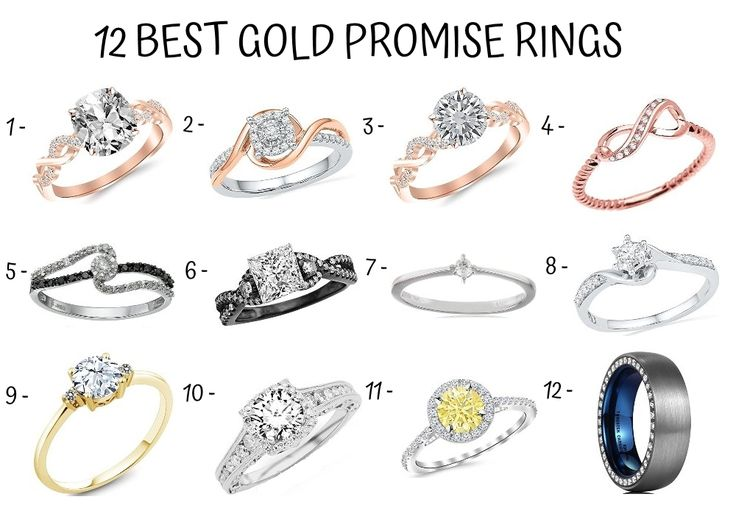
Promise rings span a much wider design range than engagement rings, largely because the meaning is more flexible:
- Simple bands — a plain metal band, often the most affordable and understated option. Sometimes engraved with a date, initials, or short phrase.
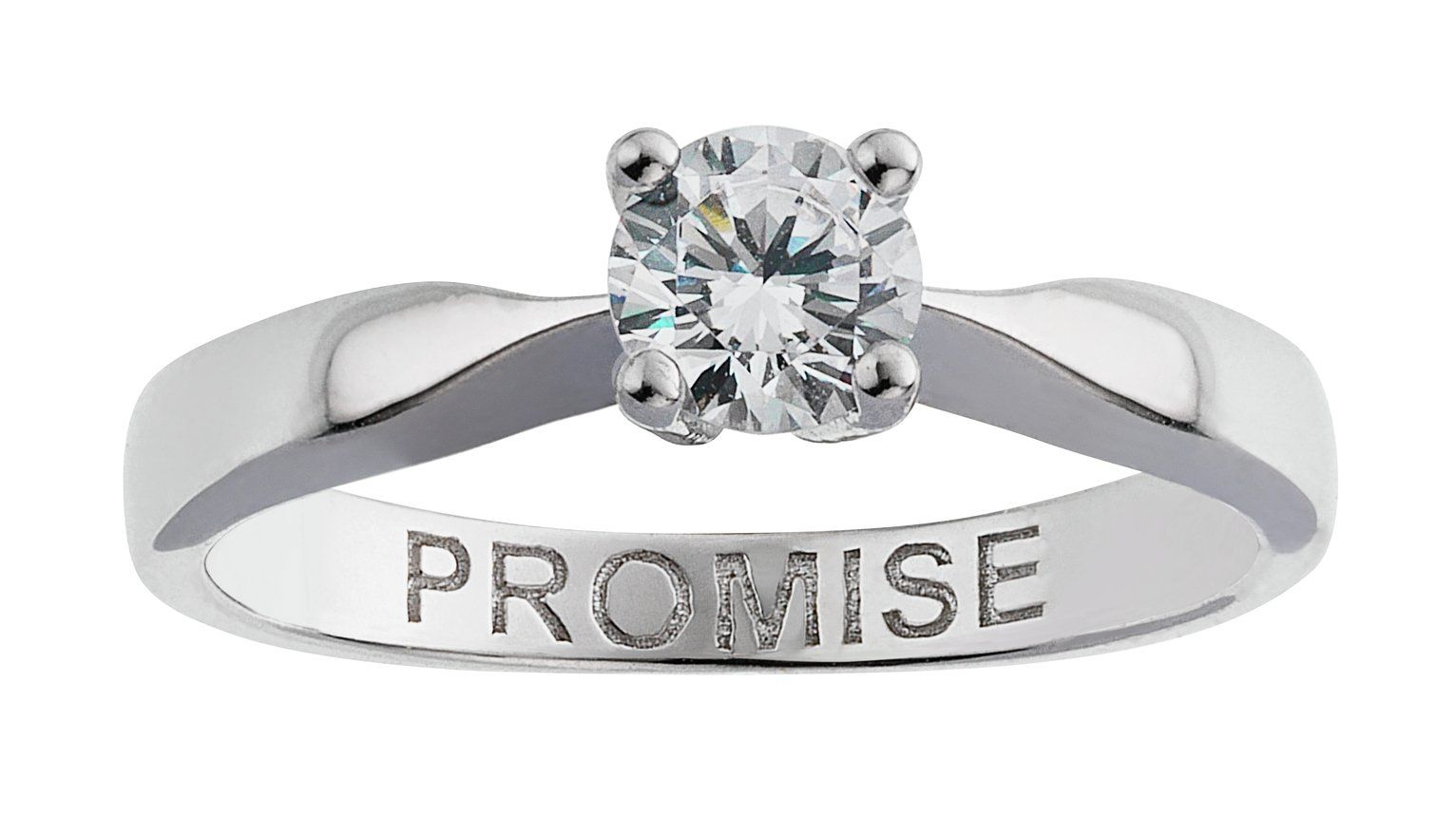
- Solitaire rings — a single small stone (often a diamond, birthstone, or gemstone) as the focal point. Similar to engagement ring styling but smaller.
- Heart-shaped rings — an explicit romantic symbol, often used specifically for young couples or as a first serious commitment ring.
- Infinity rings — a symbol of continuous, unending commitment. One of the most popular non-heart symbolic styles.
- Claddagh rings — a traditional Irish design featuring hands holding a crowned heart, representing love, friendship, and loyalty.
- Halo and cluster rings — a small center stone surrounded by smaller accent stones. Often used when the couple wants something more elaborate without engagement-ring pricing.
- Stackable and eternity bands — thin bands with small diamonds set around all or part of the band. Popular because they can be worn alongside other rings later.
- Engraved bands — inscribed with a name, date, coordinates, or short phrase meaningful to the couple. Common as an addition to other styles too.
Most modern promise rings blend elements a simple band with a small stone, or an infinity design in gold with an inner engraving. The style should reflect the receiver’s taste, not just tradition.
Metals and Materials
The material used affects both cost and durability. Common choices:
- Sterling silver — most affordable metal option, but requires more polishing over time to prevent tarnishing.
- Gold-plated or gold-filled — affordable while giving a gold appearance; the plating can wear over years of daily wear.
- Solid 10K, 14K, or 18K gold — durable, classic, and the most common “real” gold options. Yellow, white, and rose gold are all widely available.
- Platinum — extremely durable and hypoallergenic, but significantly more expensive than gold.
- Titanium — modern, lightweight, durable, and often more affordable than gold. Popular for men’s promise rings.
- Tungsten — very hard, resistant to scratching, and modestly priced. Can’t be resized, however.
- Palladium — a hypoallergenic alternative to platinum at somewhat lower cost.
For stones, small diamonds, moissanite (a diamond alternative), birthstones, and cubic zirconia are all common. Moissanite specifically has grown in popularity for promise rings because it looks similar to diamond at a small fraction of the cost.
What Promise Rings Actually Cost
Prices span a wide range depending on materials, stones, and where you buy. Some general guidance:
- Under $50 — simple bands, plated metals, cubic zirconia stones. Suitable for young or first-time promise rings.
- $50–$200 — the most common range for online-purchased promise rings. Typically sterling silver or gold-plated with small stones or moissanite.
- $200–$500 — solid gold bands, small real diamonds or higher-grade moissanite, some designer pieces from mid-tier jewelry retailers.
- $500–$1,500 — higher-quality gold, larger real diamonds or gemstones, established brand-name designs.
- $1,500+ — approaching or overlapping engagement-ring pricing, typically for buyers who want a promise ring that’s substantial without technically being an engagement.
For most buyers, $100 to $400 covers the meaningful middle range for a solid, well-made promise ring in real gold or silver with a small stone. Going more expensive doesn’t inherently make the promise stronger it mostly changes what the ring looks like and how long the materials last.
When to Give a Promise Ring
There’s no formal timeline, but common moments couples choose:
- A relationship anniversary — often a first, second, or third anniversary, marking a specific stage.
- Before a long separation — deployments, extended travel, long-distance work moves.
- A significant birthday — the receiver’s, or one that’s meaningful to the relationship.
- Christmas or Valentine’s Day — traditional gift-giving occasions with existing romantic meaning.
- A quiet, private moment — some couples specifically choose to give a promise ring without an associated event, precisely because the promise itself is the occasion.
What matters more than the timing is whether the receiver is genuinely ready for what the ring symbolizes, and whether the giver has thought clearly about what they’re actually promising.
How to Choose the Right Promise Ring
A few practical things to think about before buying:
- Talk about it first, at least in general terms. Some couples want the ring to be a surprise; others prefer to discuss meaning and style openly. Both approaches work, but silent guessing rarely does.
- Consider the receiver’s daily style. A minimalist person often prefers a simple band. Someone who loves statement jewelry may prefer something more visible. Match the ring to how they actually dress and live.
- Get the ring size right. This is more important than most people realize — a ring that doesn’t fit isn’t a symbol, it’s a stressor. Options for finding the size discreetly include measuring an existing ring they wear, borrowing one briefly for measurement, or asking a family member or close friend who might know.
- Match the metal to their skin sensitivity and existing jewelry. If they mostly wear silver, don’t buy them yellow gold. If they have metal allergies, stick to platinum, palladium, titanium, or high-karat gold.
- Think about durability for their actual life. People who work with their hands often need harder metals (titanium, tungsten, or 14K gold rather than 10K or platinum settings). Small delicate stones may not survive daily wear for someone with an active lifestyle.
- Consider engraving. A short personal phrase, a date, or coordinates engraved inside the band is one of the most-loved features of a promise ring, and usually costs relatively little to add.
Common Mistakes to Avoid
- Assuming the meaning is understood. Different people bring different assumptions to a promise ring. Explicit conversation about what it means matters more than any element of the ring itself.
- Buying too close to engagement-ring territory without discussion. A large diamond on the left ring finger, given without conversation, can be misinterpreted as an engagement which is fine if that’s the intention, but confusing if it isn’t.
- Underestimating ring size importance. A guess that’s slightly off can be resized cheaply for most metals, but tungsten and some other harder metals can’t be resized at all.
- Prioritizing appearance over the receiver’s actual taste. A ring you find beautiful isn’t necessarily one they’d choose to wear daily.
- Buying something you can’t afford as a signal of commitment. The commitment is what matters. Financial strain in the name of a bigger ring can actively work against what the ring is supposed to represent.
Do You Actually Need a Promise Ring?
Worth asking honestly. Promise rings are meaningful for some couples and unnecessary for others. Situations where they tend to fit:
- Relationships heading toward engagement but not ready yet
- Long-distance relationships where a physical symbol adds meaning
- Younger couples for whom a promise ring marks a serious step forward
- Couples where the giver wants to formalize commitment before the receiver is ready for engagement
Situations where they may not add much:
- Couples already engaged (the engagement ring covers this territory)
- Couples with no interest in symbolic jewelry generally
- Relationships where the commitment level is unclear enough that a ring won’t clarify it
- Cases where the ring would create pressure rather than express care
There’s no obligation to give one. If it fits the relationship, it adds real meaning; if it doesn’t, no amount of thoughtful shopping will make it fit.
Frequently asked questions
What does a promise ring actually mean?
A promise ring symbolizes a specific commitment between two people, most often romantic. The exact meaning is defined by the couple themselves rather than fixed by tradition, which is why conversations about what the ring represents matter more than any traditional definition.
Which finger does a promise ring go on?
Most commonly the left ring finger (if the receiver isn’t yet engaged) or the right ring finger (if the couple wants to leave the left open for a future engagement ring). There’s no universal rule, and the choice reflects the meaning the couple assigns.
How much should you spend on a promise ring?
The most common range is $50 to $500, with $100 to $400 covering solid, well-made options in real gold or silver with small stones. More expensive rings aren’t inherently more meaningful the commitment is what matters, not the price.
Is a promise ring the same as an engagement ring?
No. An engagement ring is a formal proposal of marriage with a specific cultural meaning. A promise ring signals whatever the couple decides often a serious commitment or intention toward future engagement, but without the specific “will you marry me” step.
Can a promise ring be worn on the same finger as an engagement ring later?
Usually the promise ring is moved to the right hand or worn on a chain once an engagement ring arrives, though some couples keep them stacked. There’s no rule it depends on how the couple wants to represent both symbols going forward.