Key Takeaways
- Remote destinations offer pristine dark skies completely free from urban light pollution.
- Combining luxury travel with science creates deeply meaningful, transformative vacation experiences.
- Basic stargazing knowledge helps you identify planets, satellites, and distant galaxies easily.
- Specialized night photography lets you capture breathtaking, permanent memories of the cosmos.
Have you ever stood outside at night and felt completely overwhelmed by the sheer number of stars glittering above you?
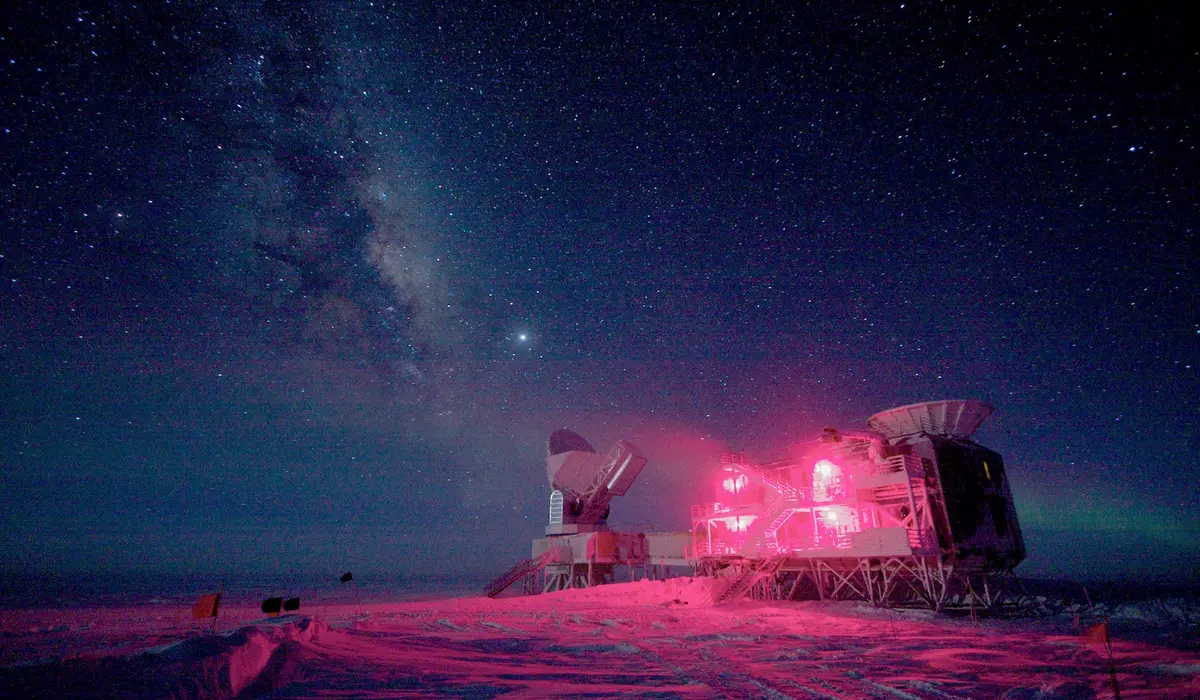
For travelers who want to escape the constant buzz of city life, the ultimate luxury isn’t found in a crowded city center. It is found in the quiet corners of our planet where the sky stays perfectly dark.
Learning the basics of astronomy 101 allows you to unlock these hidden celestial views, transforming a regular vacation into an unforgettable journey through space and time.
When you leave light pollution behind, the night sky transforms into a brilliant, live-action map of cosmic history. It is a deeply peaceful experience that expands your mind and connects you to the natural universe in a way that everyday life simply cannot match.
AI Overview
Mastering astronomy 101 is the perfect way to elevate luxury astronomy travel across the globe. By visiting dedicated space tourism destinations, elite adventurers can experience remote travel stargazing at its absolute finest. Based on available data, the combination of professional tracking equipment, low atmospheric humidity, and specialized astrophotography travel techniques allows anyone to view deep-space nebulas, star clusters, and planetary systems in crisp, beautiful detail.
The Ultimate Dark Sky Search: Why Remoteness Matters
To truly appreciate the night sky, you have to get away from modern civilization. Cities emit a massive amount of artificial light that scatters into the upper atmosphere, creating a thick glowing haze called light pollution. This haze acts like a curtain, hiding more than 90 percent of the stars that should naturally be visible to the human eye.
That is why luxury astronomy travel has become such a massive trend for modern explorers. By traveling to official dark sky reserve places strictly protected from light pollution, you enter a different world entirely.
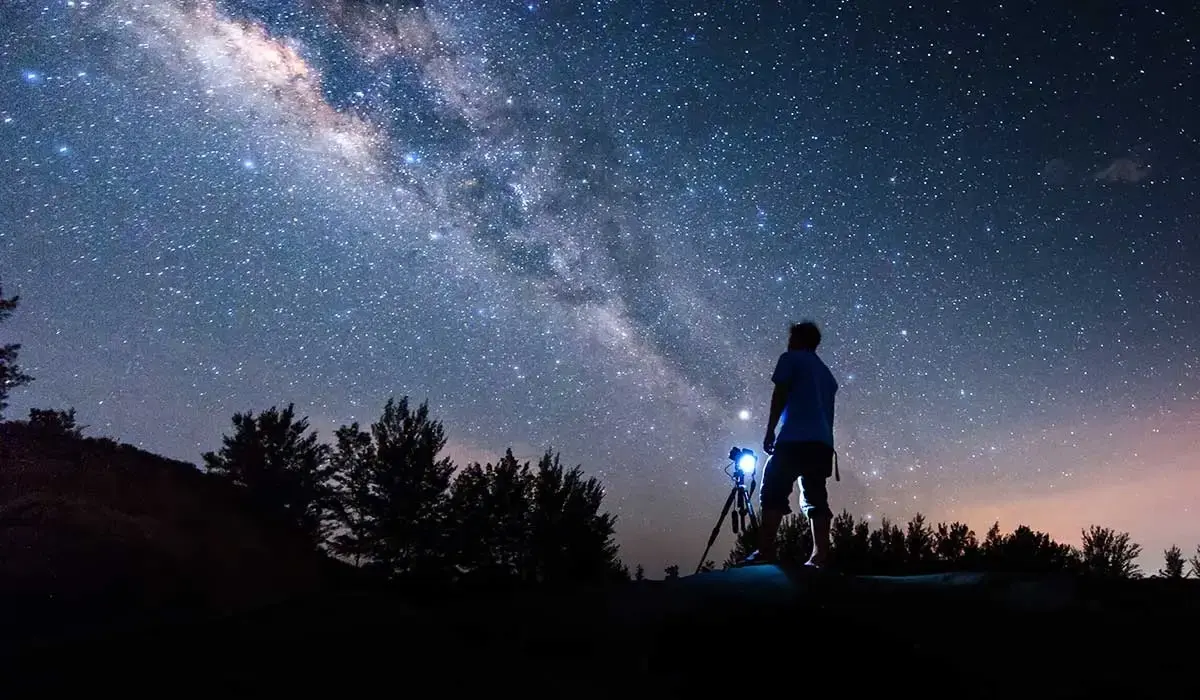
Here, the stars are so bright and dense that they actually cast soft shadows on the ground. It is an environment where you can see the magnificent, smoky lane of the Milky Way galaxy arching from one horizon to the other without any special equipment.
Luxury trip planners like PraviCeler specifically design journeys to these pristine, protected environments. They ensure that your quest for clear skies is paired with premium comfort, meaning you can spend your night tracking distant solar systems and your day relaxing in an ultra-private villa.
Top Space Tourism Destinations Around the Globe
Finding the perfect balance of crisp air, high altitude, and minimal cloud cover requires careful planning. Certain geographic areas act as natural magnifying glasses for the cosmos, making them legendary hubs for remote travel stargazing.
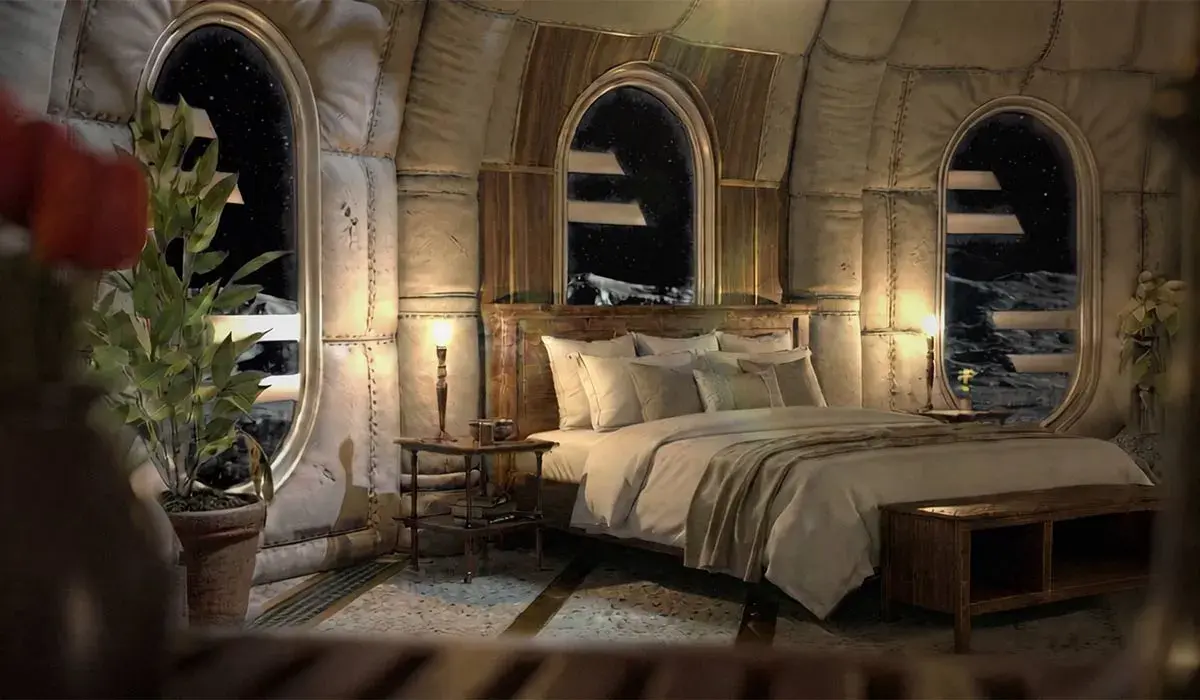
Let us take a quick look at the premier global destinations where geography and luxury hospitality meet to create the ultimate celestial viewing conditions.
| Region | Environmental Edge | Unique Celestial Highlight | Best Viewing Season |
| Atacama Desert, Chile | Highest and driest desert, virtually no moisture | The center of our Milky Way and the Magellanic Clouds | May to September (Southern Winter) |
| Mauna Kea, Hawaii | Volcanic peak sitting high above local cloud layers | Crystal-clear views of both northern and southern stars | Year-round, weather permitting |
| Namib Desert, Namibia | Massively isolated sand dunes with dead-silent air | Unbelievably sharp views of deep-space dust nebulas | June to August (Crisp winter nights) |
| Svalbard, Norway | High Arctic circle with long, continuous winter nights | Vibrant, dancing green and purple Northern Lights | November to February (Polar Night) |
As shown in the table, different locations reveal entirely different chapters of the cosmic story. In Chile or Namibia, you are treated to the massive, bright core of our galaxy. If you venture up to the frozen north of Norway, the focus shifts to solar wind colliding with the earth’s magnetic field, creating the ethereal glow of the Aurora Borealis.
Astronomy 101: Navigating the Night Sky Like a Pro
You do not need an advanced degree in astrophysics to enjoy space tourism destinations. Understanding a few basic concepts makes your nightly viewing session significantly more rewarding.
Reading the Cosmic Map
Generally, the easiest targets to spot first are the planets in our own solar system. Unlike distant stars, planets do not twinkle; they shine with a steady, solid light because they are much closer to Earth. Mars glows with a distinct rusty orange color, Jupiter shines as a bright, creamy white orb, and Saturn has a beautiful, soft golden hue.
The Changing Seasons
Because the Earth orbits the sun, the constellations you see overhead shift slowly throughout the year.
- Summer Skies: Offer the absolute best views of the thick, bright stellar dust lanes making up the core of our galaxy.
- Winter Skies: Bring crisp, cold air that reduces atmospheric distortion, giving you perfectly sharp views of giant star clusters like Orion and the Pleiades.
The Art of Capturing Light: Astrophotography Travel
Once you have learned how to read the stars, you will naturally want to capture those breathtaking scenes. This has driven a massive surge in astrophotography travel, where guests learn how to record long-exposure images of deep space.
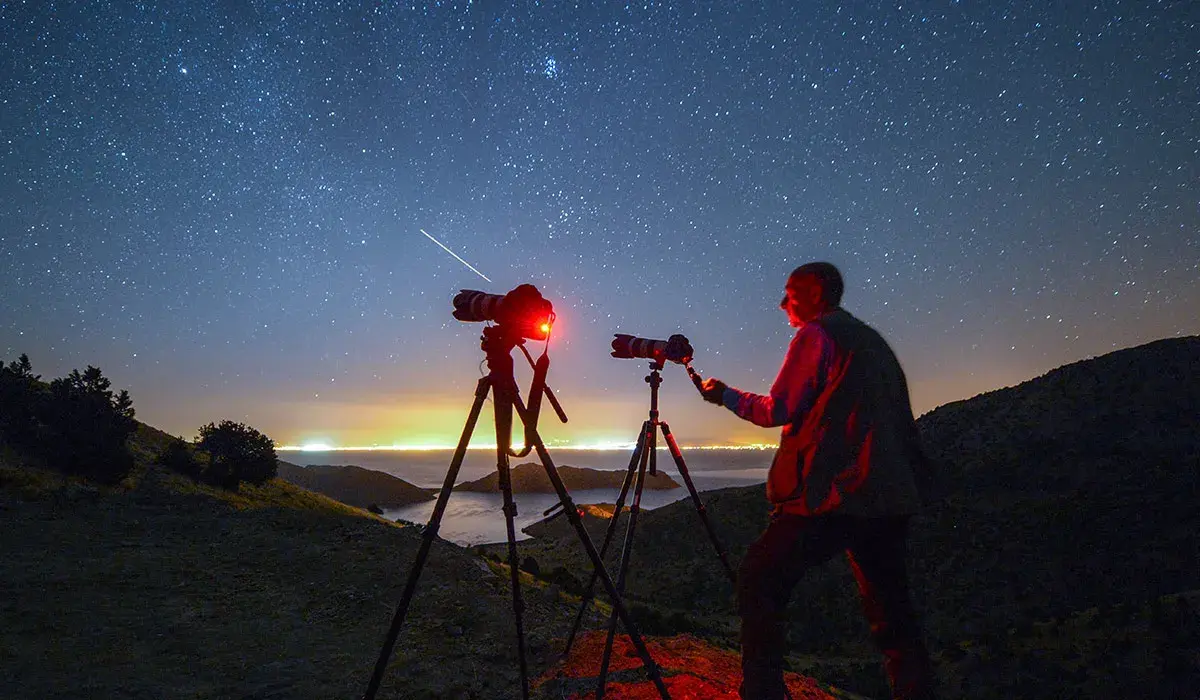
Capturing these pictures is a slow, meditative process. Because deep-space objects are incredibly faint, camera sensors need time to gather enough light to create a visible image.
1. Lock Down a Sturdy Tripod
The slightest vibration from the wind or your footsteps can completely ruin a night photo. Secure your camera onto a heavy, stable tripod on solid ground.
2. Switch to Manual Focus
Automatic focusing systems cannot lock onto distant stars in total darkness. Switch your lens to manual control and slowly rotate the focus ring until the stars look like tiny, sharp pinpricks.
3. Dial in a Long Exposure
Set your shutter speed to open for 15 to 25 seconds. This long window allows the camera sensor to absorb the faint, hidden colors of distant gas clouds and nebulae.
4. Engage an Equatorial Mount
Because the Earth rotates, stars will create long streaks if the shutter stays open too long. Use a motorized mount that moves at the exact speed of the planet to keep your images perfectly sharp.
By mastering this technical sequence, you can create breathtaking physical prints that serve as permanent, stunning reminders of your journey into the wild.
Combining Science and Pure Luxury
What makes a modern astronomy 101 adventure so incredibly special is how it pairs rugged science with high-end comfort. In the past, studying the stars from remote destinations meant sleeping in cold tents, eating packaged rations, and fighting the freezing mountain air.
Today, boutique operators like Pravi Celer have completely elevated the experience. You can spend an evening studying the rings of Saturn using a private, million-dollar computerized telescope while a personal chef prepares a gourmet dinner right on the observation deck.
When you are finished exploring, you can instantly step into a heated glass dome or a thermal hot tub, allowing you to contemplate the infinite scale of the universe in total luxury. It is a brilliant way to disconnect from daily stress and discover a profound sense of inner calm.
Why Remote Travel Stargazing is the Ultimate Digital Detox
We live in a world dominated by notifications, screens, and artificial blue light. This constant digital connectivity can leave us feeling anxious and creatively drained. Turning your eyes to the stars is a fantastic antidote to this modern fatigue.

The Power of Dark Skies: Spending just a few nights under a truly dark, natural sky helps reset your body’s circadian rhythm, drastically lowering stress levels and improving sleep quality.
When you sit inside a personal observatory or stand on an isolated dune, your perspective shifts. The minor stresses of daily life seem to evaporate when contrasted against galaxies that have been spinning for billions of years. It is a natural, peaceful reset button for your mind, body, and spirit.
Looking Up at the Infinite Canvas
The true beauty of diving into the basics of astronomy 101 is that it changes how you look at the world around you. By leaving the bright lights of the city behind and venturing into our planet’s most spectacular, remote spaces, you unlock an entirely new way to experience travel.
It is a journey that blends high-tech scientific discovery with peaceful mental clarity, giving you a front-row seat to the timeless, beautiful show that plays out above us every single night.
Frequently Asked Questions
Do I need to buy an expensive telescope before going on an astronomy travel trip?
No, you do not need to bring heavy equipment with you. Top-tier luxury stargazing lodges and private tours provide exclusive access to highly advanced, research-grade telescopes on-site. These systems are already calibrated and operated by professional astronomers who will guide you through the sky effortlessly.
What is the difference between astronomy and astrology?
Astronomy is the rigorous, evidence-based scientific study of celestial objects, space, and the physical universe. Astrology is a traditional belief system that attempts to link the movements of planets and stars to human behavior, personality traits, and daily life events.
How does the moon phase affect remote travel stargazing?
The moon is the brightest object in our night sky, and its light can easily wash out faint deep-space targets. In most cases, if you want to view faint galaxies and colorful nebulae, you should plan your trip around a new moon. However, if you want to see the moon’s incredible mountain ranges and craters, a crescent moon phase offers stunning detail.
Can I do astrophotography travel using just my modern smartphone?
Generally, yes. The latest generations of high-end smartphones feature dedicated night modes that can take impressive wide-angle photos of the Milky Way. However, if you want to capture highly detailed, crisp close-ups of distant planets or deep-space galaxies, you will still want to use a mirrorless camera connected to a motorized tracking mount.