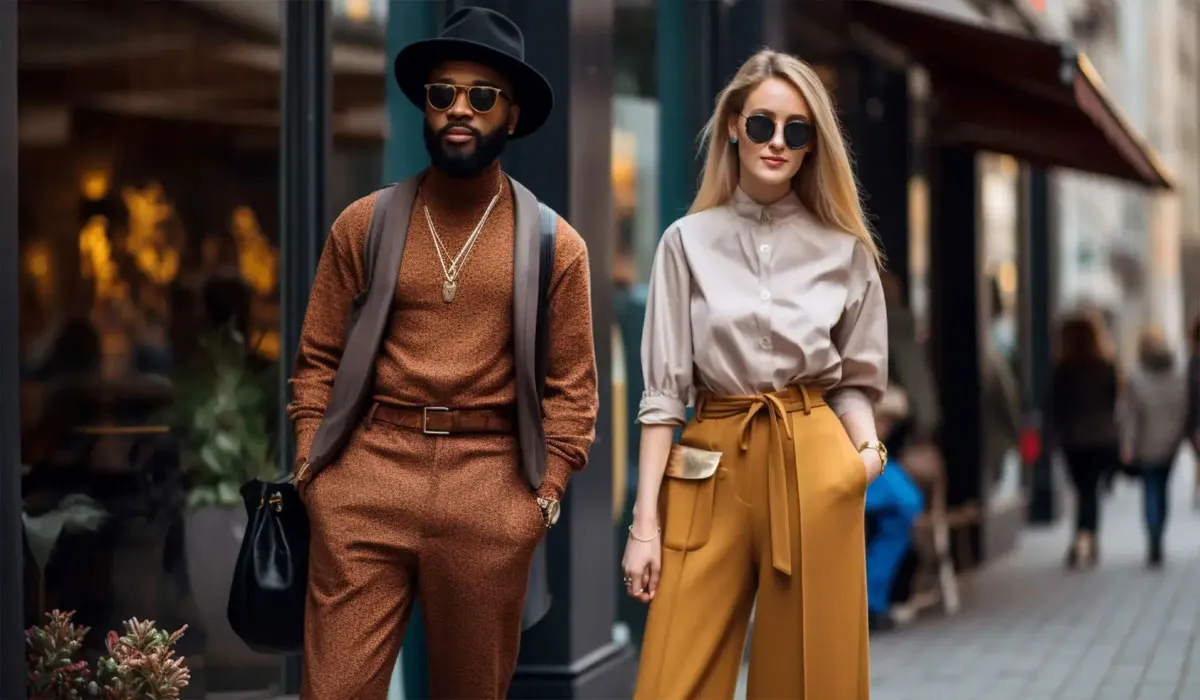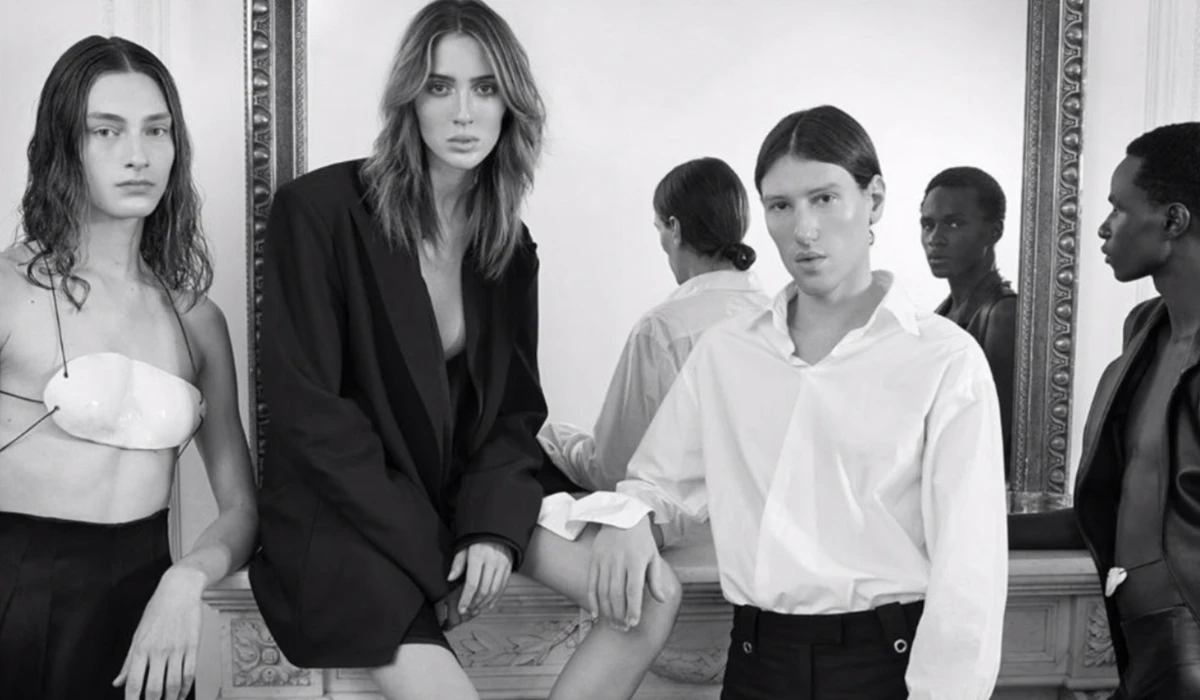
There is a specific kind of exhaustion that comes with shopping for luxury clothes when you do not fit neatly into what a brand imagined. You want the coat. The coat is in the men’s section. You are not a man. The cut assumes something about your shoulders that is wrong. You leave without the coat.
That experience is getting rarer. Not gone. But rarer.
Gender fluid luxury fashion brands have spent the last several years quietly dismantling the architecture of gendered retail. Some did it loudly with press releases and campaign imagery. Others just changed the pattern blocks and said nothing. Both approaches are valid. The results are what matter.
In 2026, ten brands are doing this better than everyone else right now.
1. Gucci
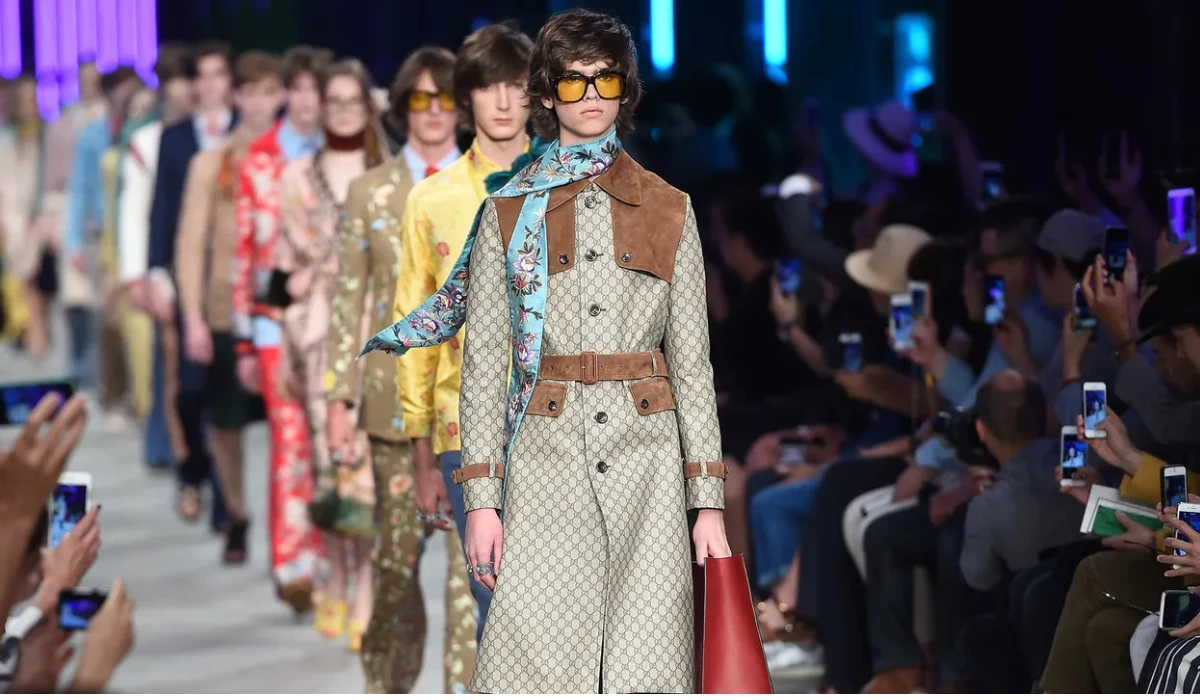
Gucci has been arguing with itself in public for about fifteen years and the argument has been genuinely interesting to watch.
Michele’s run gave the house a vocabulary that was impossible to ignore. Velvet suits styled with headscarves. Fur loafers. Men in blouses that had no equivalent in any other menswear collection on the market. It was maximalist and strange and the sales numbers backed it up completely.
De Sarno came in with a cooler register. Tighter. More restrained color palette. Some people called it a correction. It was more like a translation of the same underlying logic into a different tone.
What has not changed is the integration. Look at the 2026 ready-to-wear across both sections and the wide-leg trousers are cut identically. The silk shirts in botanical prints appear in both lookbooks without any modification. A blazer built for a shoulder, not for a gender.
The thing Gucci does better than almost any heritage house is make fluidity feel like the product rather than a statement about the product. You are not buying a piece from a gender neutral collection. You are buying a Gucci piece. The distinction matters commercially.
Price range: Ready-to-wear roughly £800 to £4,500. Accessories from £300.
2. Telfar
The tagline is “Not for you, for everyone.” That is not a marketing line. It is a functional description of how the brand operates.
Telfar Clemens does not use gendered sizing in any recognizable way. You pick the fit based on how you want it to sit. Oversized or close. Layered or alone. There is no tag telling you what kind of person this was made for. There is just the garment.
The Shopping Bag is the obvious entry point for most people. It became a cultural object at a speed that should not have been possible given the price point. A bag that costs $200 holding the same cultural weight as a bag that costs $2,000 is a structural argument about who luxury is supposed to belong to.
Here is the part that gets overlooked for Gender fluid luxury fashion brands. The bag resells actively. Demand consistently exceeds drops. The brand built genuine scarcity not through price but through community, and that community spans demographics that most luxury houses cannot access even with significant marketing spend.
The 2026 expansion of Gender fluid luxury fashion brands into outerwear and footwear has not diluted anything. The same logic applies. You decide what it means on your body.
Price range: Bags from approximately $150 to $257. Clothing from $80 to $400.
3. Harris Reed
Reed does not believe in taking up a normal amount of space.
Central Saint Martins. Giant ruffled collars that consumed the entire upper body. Corsets worn as the outermost layer. Suits with trains long enough to need management. The clothes were theatrical before they were anything else, and some people stopped there and assumed it was costume.
It is not a costume. It is very deliberately built around the idea that presence is not a gendered concept for Gender fluid luxury fashion brands. A person who wants to walk into a room and be seen is not making a statement about their gender. They are making a statement about themselves.
At Nina Ricci, Reed inherited a house known for soft femininity. Silk. Draped necklines. Romance as a consistent reference. Instead of replacing that, he pulled it into conversation with a broader idea of who soft romantic expensive clothes are meant for. Men in bias-cut silk now. Women in double-breasted suiting. The house’s archival language is still there. It is just being spoken by a wider range of people.
Reed’s own label stays smaller. More collectible. Not everything on this list needs to be practical.
Price range: Harris Reed label roughly £600 to £3,000. Nina Ricci varies seasonally.
4. Bottega Veneta
No logo. No exterior branding. The intrecciato weave is all the identification Bottega has ever needed, and the people who buy it know that and prefer it that way.
Matthieu Blazy’s direction is rooted in something simple. Clothes start from the body, not from a category. The runway shows have men and women wearing the same collection. No ceremony around it. No comment. Wide trousers that sit differently on different frames and look right on all of them. Knitwear in real weight that layers without a gender requirement attached.
The quiet approach of Gender fluid luxury fashion brands is harder to execute than the loud one. Making fluidity invisible means it stops being a selling point and starts being the default. That is the more durable version of this shift.
The leather goods are still the engine. Jodie. The Andiamo. But the ready-to-wear carries the same underlying logic and that logic is spreading outward through collections that get less press than the accessories but are often more interesting.
Price range: Ready-to-wear roughly £900 to £5,000. Jodie bag from around £2,200.
5. Maison Margiela
Galliano’s Margiela is not trying to be wearable in any traditional sense and does not pretend otherwise.
The Artisanal line is built from couture archives and distorted through a lens that is difficult to categorize. Seams running along the exterior of garments. Tailoring that references masculine structure and feminine softness simultaneously and then refuses to resolve into either. Padding inserted in locations that shift the body’s silhouette without mapping onto any recognizable gender marker.
Galliano has talked about this openly. His own relationship to gender expression is fluid and that is not a footnote in the brand story. It is the material the clothes are constructed from gender fluid luxury fashion brands.
The ready-to-wear translates that without requiring you to wear a sculptural installation. Oversized suiting with deliberate distress. Layering that builds from the inside out. Footwear that sits between categories without asking permission. The conceptual DNA carries without the price of the Artisanal line.
Fluidity from deconstruction is different from fluidity from softening menswear with florals. Margiela is doing the former and has been for longer than most of the brands on this list have existed for gender fluid luxury fashion brands.
Price range: Ready-to-wear roughly £400 to £3,500. Artisanal considerably more.
6. Loewe
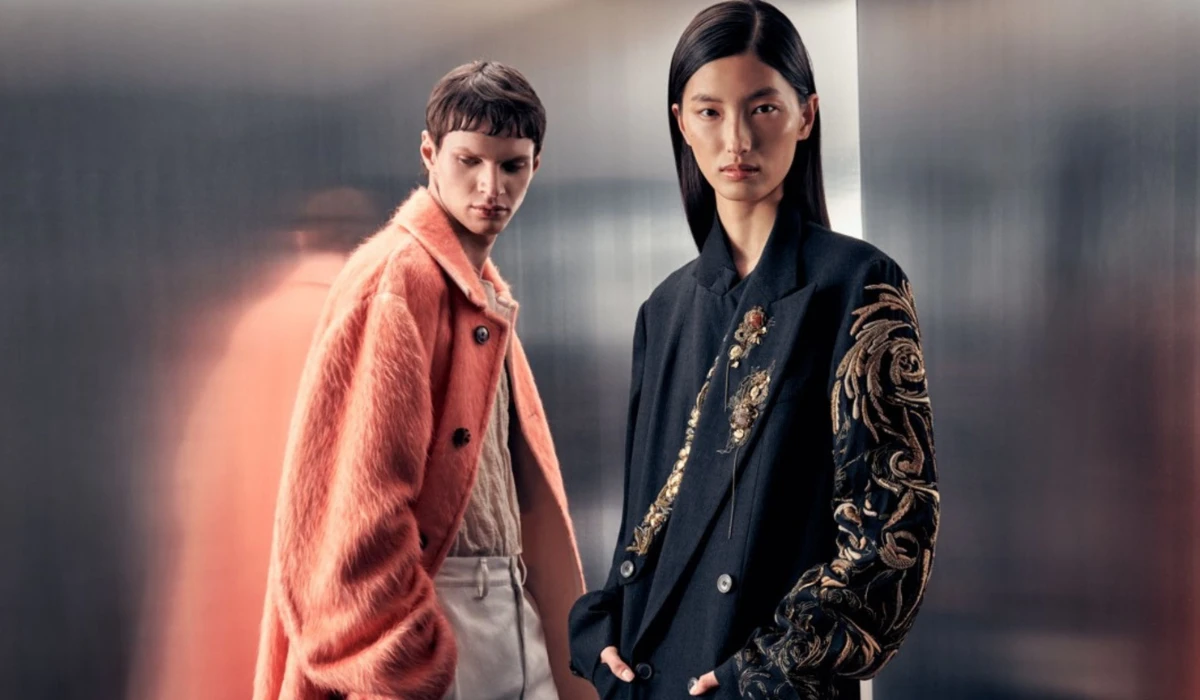
Anderson’s collections at Loewe are surprising in a specific way. Not random. Surprising because there is an internal logic that reveals itself slowly and the logic is never where you expected it.
The reference points are objects. Tools. Food. Sculpture from periods that had nothing to do with fashion. Knitwear shaped around a ceramic form rather than a body type. Leather cut and shaped into something that recalls architecture more than clothing. None of this lands in a gender category because it was not built from one.
The runway casting integrates without commentary. A pleated skirt with a structured jacket on a male model is not framed as transgressive. It is just how that look was styled for that show. After enough seasons of that, the framing disappears and you are just looking at clothes.
Loewe’s investment in craft also matters here in a way that often gets skipped over. The brand has active partnerships with artisan communities and handwork that shows in the finished pieces. Fluidity that comes from genuine material knowledge reads differently than fluidity that came out of a creative brief written by a marketing department of gender fluid luxury fashion brands.
Price range: Ready-to-wear roughly £600 to £4,000. Puzzle bag from around £2,900.
7. Comme des Garcons
Kawakubo has been doing this longer than the phrase gender fluid fashion has existed as a phrase.
1980s CDG was already building clothes that could not be categorized by conventional means. Black asymmetrical shapes. Garments that changed what the body looked like rather than ornamented what it already was. Silhouettes that did not enhance or diminish traditional gender markers because they started from a completely different question.
Homme Plus is the line that lives most directly in this territory. Dresses presented on male models without any particular drama around it. Flowers placed on tailoring that reads as aggressive without them. Scale distortions that reshape the body into something that is just a body, not a gendered body.
Kawakubo does not explain the work much. She has said things like “the future” and “something not yet seen” in interviews. The refusal to explain is not evasion. It is part of the project. The clothes are not illustrations of a concept about gender. They simply do not organize themselves around gender and everything follows from that.
CDG Play is the entry point. Heart logo on a T-shirt. Ungendered in the most basic possible way because nobody ever asked who the T-shirt was for.
Price range: CDG Play roughly £80 to £300. Main line £400 to £4,000 plus.
8. Stella McCartney
Two commitments since launch. No leather or fur. And design that does not default to convention. Neither has shifted.
The fluidity in McCartney’s work is not theatrical. It lives in the tailoring, specifically in the blazer, which has been a house signature since the beginning. The cut works across body types and gender expressions without requiring separate product lines or different pattern blocks. The same blazer styled differently across different bodies in the same lookbook. Not framed as a statement. Just options.
2026 collections keep pushing longevity. A coat designed to last a decade and worn by whoever buys it is a different kind of argument for fluid fashion than a limited capsule with a press release attached. The former does not need to explain itself.
McCartney’s sustainability work connects to the fluidity question in a way that does not get discussed enough. Both positions challenge the same assumption underneath. That the customer should shape themselves to fit the product. Neither accepts that for Gender fluid luxury fashion brands.
Price range: Ready-to-wear roughly £400 to £2,500.
9. Rick Owens
Owens approaches clothes from an architectural position. Structure first. The rest follows from structure.
The draping in a Rick Owens collection falls based on gravity and proportion. Long tunics. Leather pieces that encase rather than decorate. Footwear that extends the leg’s line in a direction that has nothing to do with whose leg it is. Gender does not factor into the construction because the construction is not asking that question.
The Paris shows are unlike anything else on the calendar. Classical sculpture next to post-apocalyptic utility next to couture-level handwork. All of it sits together because the unifying logic is not an aesthetic category. It is proportionate. Weight. How things move.
The customer base that built around the brand over two decades is unusually diverse. Different ages, body types, gender expressions. That diversity is organic. It was never engineered through campaigns. The clothes did not aim at a narrow demographic so a narrow demographic did not form around them.
Resale value is strong and getting stronger. Younger luxury consumers increasingly evaluate brands partly on secondary market performance. Rick Owens holds up for Gender fluid luxury fashion brands.
Price range: Ready-to-wear roughly £500 to £5,000. Footwear from £500 to £2,000.
10. Nensi Dojaka
Dojaka won the LVMH Prize in 2021 and has been building carefully since. The brand is younger than everything else on this list. The momentum is real.
The signature construction pulls from lingerie. Thin straps. Mesh panels. Structural elements left exposed on the outside rather than hidden inside the lining. The reference is intimate apparel but the result is not costume or eveningwear. These are clothes for actual wearing.
What the design is about is the body. Not the gendered body. Just the body. People across multiple gender expressions have worn Dojaka pieces in editorial and on red carpets and nothing in the construction asks them to justify that choice. There is no element in the design that said this belongs to one kind of person.
The important distinction with Dojaka is that gender fluidity is not the message. It is a byproduct of designing for people instead of designing for a category. Brands that lead with fluidity as their pitch tend to date. Brands that simply make clothes for people tend to last longer than the conversation about them.
Price range: Ready-to-wear roughly £300 to £1,200.
What Makes a Brand Actually Gender Fluid Right Now
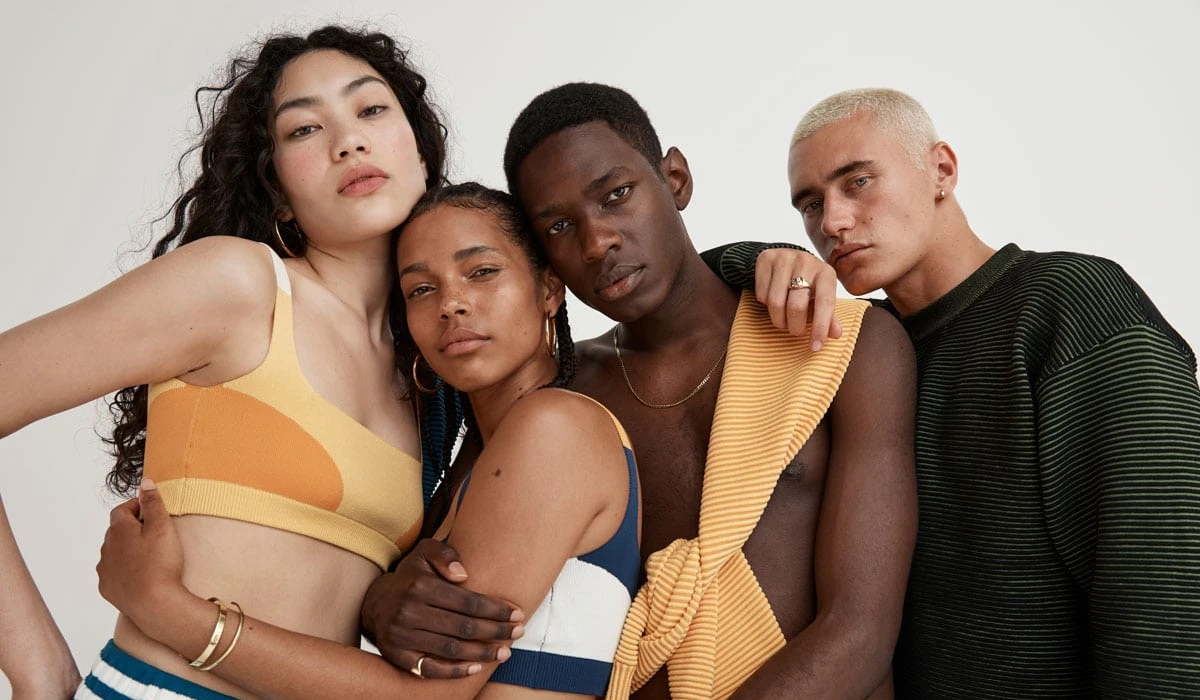
A seasonal capsule labeled genderless is not the same thing as a brand that does not use gender as a design parameter. That gap is wider than it looks from the outside.
A few things worth checking before you believe the marketing:
Runway integration. Does the brand show all genders wearing all looks or does it have a separate gender fluid section sitting outside the main collection?
Sizing logic. Does the brand offer ranges that account for varied bodies without defaulting to gendered measurements as the starting point?
Campaign styling. Are the same pieces styled across different bodies without the creative framing positioning that as brave or transgressive?
Design language. Does the fluidity live in the cut and the construction, or only in the lookbook?
Telfar, CDG, Margiela, and Rick Owens pass all four without much debate. The others on this list pass most of them. None of them are perfect. But the direction is consistent and the work keeps improving.
How This Is Changing Luxury as an Industry
Luxury fashion spent most of its history being precise about who its products were for. Men’s ready-to-wear. Women’s couture. Separate floors. Separate press days. Separate production budgets for Gender fluid luxury fashion brands.
That separation is loosening. Separate runway shows for men and women are consolidating. Some houses moved to combined shows entirely. Inventory logic is following because it has to. Fewer SKUs designed for a single gender means different production models, different wholesale relationships, different retail layouts.
Resale is also a genuine factor now. A gender-neutral piece has a larger potential buyer pool on the secondary market. That affects perceived value. Eventually it feeds back into design decisions at the brand level.
Purchasing data across multiple markets shows younger luxury consumers are not inheriting the old gender divisions with any particular conviction. Brands that built fluidity into their foundation are better positioned to reach that customer than brands trying to add it onto an existing structure after the fact.
FAQs About Gender-Fluid Luxury Fashion Brands
What are gender-fluid luxury fashion brands?
Gender-fluid luxury fashion brands are high-end labels that design and sell clothing without restricting pieces to a specific gender.
Is gender-fluid fashion the same as androgynous fashion?
They overlap but they are not identical. Androgynous fashion refers to a visual style that blends masculine and feminine elements. Gender-fluid fashion is a broader concept covering how clothes are designed, sized, marketed, and sold.
Which gender-fluid luxury brand is the best starting point?
Telfar is the most accessible entry. The Shopping Bag is already iconic, the pricing is reasonable relative to the luxury tier, and the clothing is designed for actual wear without requiring a specific aesthetic commitment. CDG Play works well as a second starting point for anyone curious about that universe of gender fluid luxury fashion brands.
Are gender-fluid luxury brands more expensive than traditional ones?
Not as a rule for Gender fluid luxury fashion brands. Price points overlap significantly with traditional luxury. Telfar is less expensive than most. Pricing reflects materials, craftsmanship, and brand positioning rather than whether the design is gendered.
How do I find my size in gender-fluid luxury fashion?
Most brands in this space use numeric sizing or measurement-based charts rather than gendered categories. Measure chest, waist, and hips and compare to the brand’s guide. Many of these brands also design for relaxed or oversized fits, which gives more flexibility across different body types.