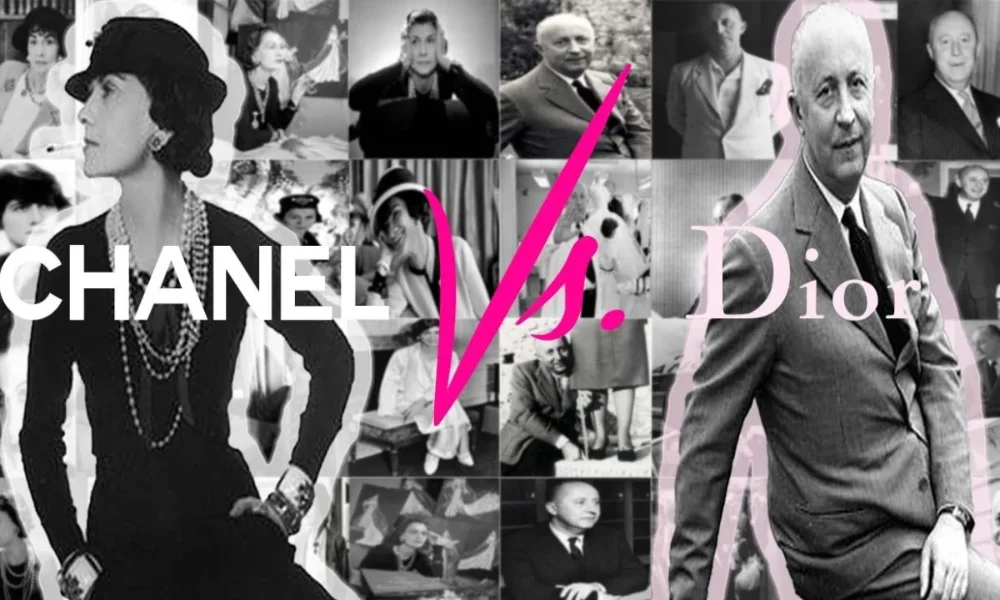
You know that feeling when you have finally saved enough to buy something genuinely nice, and suddenly the decision is harder than it was when you had no money? That is where you are right now.Dior vs Chanel. Two names that mean something.
Two brands with histories longer than most countries have had running water. And you are sitting somewhere trying to figure out which one is actually worth the price tag.
I have read enough of those comparison articles to know most of them are useless. They list features like they are comparing appliances. Both offer exceptional heritage and quality craftsmanship. Right. Thanks. Very helpful. Nobody writes that from a place of genuine knowledge.
So here is the version I would want to read. Grounded in what these brands actually are, what the money gets you, where they differ in ways that matter, and which one fits which kind of person. We will get into price, quality, resale, the US shopping experience, all of it.
Two Brands, Two Completely Different Origins
Most people skip this part. Worth reading anyway, because the founding story of each house still shapes how they operate today, more than you would expect from organizations that are over 75 years old.
What Chanel Was Actually About
Coco Chanel was not trying to build an empire. She was annoyed. Fashion in 1910 was genuinely absurd for women, corsets that made breathing difficult, skirts so heavy you could barely climb stairs, layers that existed purely to demonstrate that the wearer did not need to work. Chanel thought it was ridiculous and she said so, loudly, with her designs.
She raided menswear. Jersey fabric, which was essentially underwear material for men at the time, became her preferred textile for womenswear. She introduced trousers. She cut away the excess. What came out the other side was something that looked radical in 1910 and looks perfectly calibrated now, which is sort of the whole point.
The thing that sets Chanel apart in the present is ownership. The brand is private. The Wertheimer family controls it and has for generations. There is no conglomerate parent, no quarterly earnings call, no investor pressure. This shapes everything about how the brand moves: slowly, deliberately, on its own terms. When Chanel raises prices, and it raises them often, nobody is making them do it. It is a choice.
Dior and the Moment Paris Came Back
The context here genuinely matters. Paris in early 1947 was worn out. The war had ended less than two years before and the city was still in its recovery, rationing had flattened fashion into function, and women had been dressing practically for years out of necessity rather than choice.
Christian Dior’s first show dropped a silhouette nobody had seen in years. Long skirts. A nipped waist. Padded hips. Fabrics that felt almost obscenely luxurious after years of restriction. Carmel Snow from Harper’s Bazaar watched from the front row and said, out loud, it’s quite a new look. The phrase stuck. The house was made.
Today Dior sits inside LVMH alongside Louis Vuitton, Givenchy, Celine, Loewe, and about 70 other labels. Bernard Arnault’s operation gives Dior reach and resources that Chanel cannot match on distribution or marketing spend. The cost is speed and scale. Dior moves faster, sells more volume, and takes on more commercial partnerships than Chanel would ever consider.
The Look: This Is Really Where People Decide: Dior vs Chanel

Be honest with yourself here. Most people are not choosing between Dior and Chanel based on a careful analysis of supply chain practices. They see one of them and they feel something. Pay attention to that.
Chanel’s Whole Thing Is Restraint
The idea baked into Chanel from the beginning is that real elegance does not announce itself. A classic Chanel flap bag in black caviar leather sitting on a restaurant table is not trying to get your attention. People who know fashion notice it immediately. People who do not know fashion see a nice black bag. That gap is intentional.
Every season Chanel builds around the same core elements, tweed in rotating colorways, the quilted leather flap with its double-C clasp, the two-tone slingback shoe, oversized costume jewelry that somehow reads as understated, color palettes of black, white, beige, cream, navy. It does not change much year to year and the brand is not apologetic about that. The point is permanence.
The customer who buys Chanel is typically not a person chasing what is on the runway this season. They want the piece that looks just as right in fifteen years. Something they could pass to someone and have it mean something.
Dior Wants to Have a Conversation
Maria Grazia Chiuri has been running Dior’s creative direction since 2016 and she has a genuinely strong point of view. Her collections reference things: ancient mythology, feminist art history, the work of specific artists she admires. There is always a frame, always a story behind why things look the way they look.
That ambition filters into the products. Buying the Oblique canvas tote is not just buying a bag. It is participating in a visual language Dior has been developing for years. Younger buyers especially respond to that. There is a world to plug into, not just an object to carry.
What the brand puts out, Dior vs Chanel:
- Embroidered florals and prints that shift seriously from season to season
- The Oblique canvas with that D.I.O.R. woven diagonal pattern, genuinely one of the most recognized luxury prints right now
- The bar jacket, that structured blazer with the nipped waist that echoes the 1947 New Look
- A beauty and skincare operation that holds its own against dedicated luxury beauty houses
- A bag range that goes from delicate to architectural and covers far more price territory than Chanel
Dior vs Chanel buyers tend to be more connected to what is actively happening in fashion. They want to wear something that ties into a bigger cultural moment. That is a very different motivation from the Chanel buyer and neither is more valid than the other.
What You Are Actually Spending: US Pricing Reality: Dior vs Chanel

Both brands Dior vs Chanel are expensive. But the shape of the expense is completely different depending on which one you are looking at.
Bags: The First Question Everyone Has
A Chanel Classic Flap currently lands somewhere between $10,200 and $12,000 in the US depending on which size you want. The Jumbo is at the top of that range. The 2.55 Reissue runs higher still. Chanel has hit buyers with multiple price increases since 2020, sometimes more than once in a single year, and the official explanation is currency management, though maintaining mystique is clearly part of the calculation too.
Dior is more spread out. Roughly speaking in today’s US market:Dior vs Chanel,
- Lady Dior micro sits around $3,500
- Lady Dior medium runs $5,200 to $5,800
- Saddle bag in standard leather, $3,800 to $5,500 depending on configuration
- Book Tote in Oblique canvas starts near $1,800 for the small and goes up from there
That Book Tote is worth pausing on. Under $2,000 for a recognizable, well-made Dior piece is an unusual entry point in this category. It has become one of the most popular luxury purchases in the US partly because of it.
Resale Value: Not Even Close, Dior vs Chanel
If you are spending this kind of money and wondering whether you could get some of it back someday, you need to know this going in: Chanel resale performance is in a different class.
A Classic Flap bought new in 2018 for around $5,000 could realistically sell today on platforms like The RealReal or Fashionphile for $8,000 or more in good condition. That kind of appreciation is not common in any consumer product category. Chanel classic bags have gone up in value consistently for over a decade.
Dior resale is fine. The Lady Dior holds reasonably well and certain vintage Saddle bags have real collector demand. But as an asset class? Chanel wins with no real competition from Dior.
Getting In Without the Flagship Budget
Chanel sells cardholders and small leather goods starting around $500. The espadrilles are popular around $900. Costume jewelry and hair clips come in under $500. None of it is cheap but it is a real entry point.
Dior’s sub-$1,000 options are arguably more interesting. The Oblique canvas phone case. Small wallets. Silk scarves. Beauty products from the Rouge Dior line where a lip palette runs around $280. The entry into Dior is wider and varied across more product categories.
Build Quality: Where They Actually Differ; Dior vs Chanel
At this price range, genuinely poor quality is rare at either house. But there is a real difference in how each brand achieves the quality it delivers, and it matters.
Chanel has spent decades buying its own suppliers. Lesage, the storied embroidery house. Massaro, the Parisian cobbler. Lemarié, who makes feathers and flowers. Goossens for jewelry. The brand now controls most of its own production chain from raw material to finished product.
The practical result of that: consistency. When a Chanel artisan stitches the quilting on a flap bag, every row is even. The leather, whether lambskin or caviar, feels a specific way in your hand that you notice immediately. The hardware sits flush. None of this happens by accident. It is what you get when one company controls every step and has been doing it for generations.
Dior’s quality at the couture level is extraordinary. Their Paris atelier produces work that takes your breath away. The gap shows at higher volume. Dior sells considerably more product than Chanel across more price points, which means quality control has a bigger job. Ready-to-wear especially can be inconsistent. Not bad, but not as reliable as Chanel’s baseline. Worth checking stitching on seams and pockets before buying anything in store.
Buying These Brands in the USA: The Practical Stuff
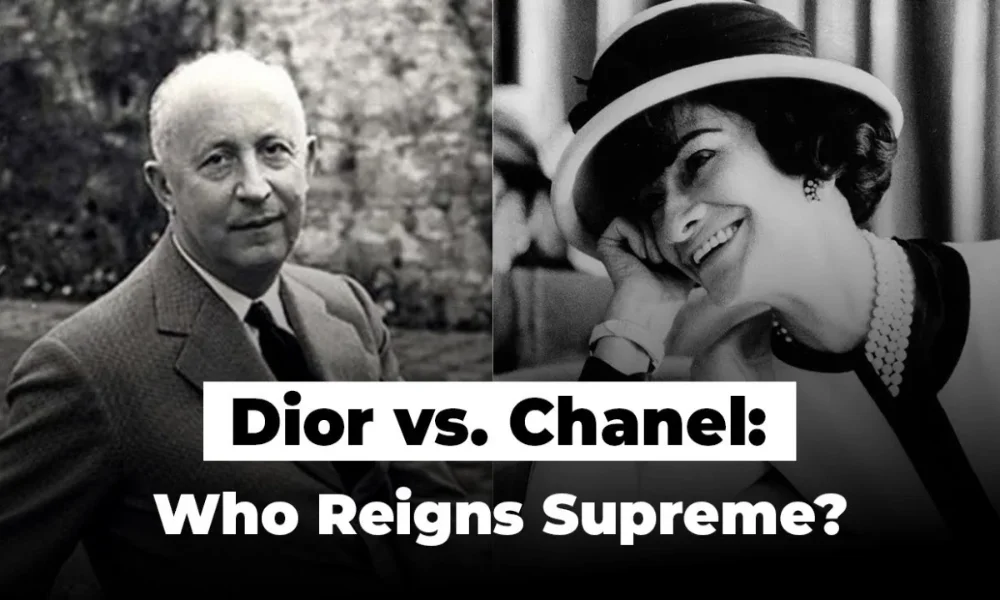
Both Dior vs Chanel have flagships on Fifth Avenue and Rodeo Drive. Both are in Neiman Marcus, Saks, and the higher-end malls. Both sell online. Fine. But there are real differences in how the purchase actually works.
Chanel tracks purchases. In the US you are generally limited to one Classic Flap and one Boy Bag per calendar year per client. This is not a soft guideline. They enforce it. The purpose is keeping bags out of the hands of people who buy to flip for profit, and it works. It also means you cannot walk in and buy two bags, and if you are buying on someone else’s behalf, you will need to bring them with you or figure something else out.
Dior vs Chanel does not run the same system. Multiple purchases in a single visit are possible if you have the budget. The brand has also put real money into US visibility, partnering with Natalie Portman, Jennifer Lawrence, Anya Taylor-Joy, Robert Pattinson. These are names with genuine reach into American culture, not just fashion culture, and the brand has used them well.
For designer brand awareness in the USA right now, Dior is simply louder. More places, more platforms, more pop culture presence. Chanel’s comparative quiet is very much on purpose. Which one matters to you is a personal call.
Buying This as a Gift: Dior vs Chanel
The recognition gap between these brands is real and it runs across generations. Chanel’s black box with the white ribbon and that double-C logo communicates clearly to almost anyone who receives it, whether or not they follow fashion, whether they are 28 or 68. That cross-generational legibility is useful when you are giving a gift to someone whose taste you cannot fully predict.
Dior does not quite have that yet, though it is closer than it was ten years ago. A fashion-forward person in their 30s will absolutely understand what they are holding. A relative who shops at department stores and owns one nice handbag might recognize the name and not feel the full weight of it. Again, not a knock on Dior. Just a difference in how they land in different rooms.
Milestone gifts, a graduation, a significant anniversary, a major birthday, tend to go to Chanel when the full meaning of the gesture matters. Dior is the better call when the recipient is genuinely plugged into what is happening in fashion right now and would be more excited by something current than something classic.
Which One Should You Actually Buy: Dior vs Chanel
After all of that, here is the honest version.
Go with Chanel when the plan is long term. When you want the piece that will still be worth money in 20 years and will look right at every age between now and then. When you prefer to be recognized by people who pay attention rather than everyone in the room. When you are building something that compounds over time rather than spending for the moment.
Go with Dior when you want to be part of what fashion is doing right now. When you connect more to a brand that has a point of view and changes with purpose rather than one that repeats its classics. When the wider price range matters because you want flexibility in how you enter the brand. When the feeling of wearing something culturally present is part of what you are buying.
These two houses: Dior vs Chanel are genuinely not chasing the same customer. Chanel is selling permanence. Dior is selling presence. Both are legitimate things to want from a luxury purchase. The mistake is trying to find the objectively better brand when the real question is which one fits your actual life.
More on designer brands in the USA at praviceler.com.
Questions People Actually Ask
Is Dior more expensive than Chanel?
For the iconic bags, Chanel costs more at the entry level. The Classic Flap starts above $10,000 in the US market. Dior’s Lady Dior starts around $3,500 and the Book Tote can be found under $2,000. Dior also has a wider spread of price points overall. At the very top end with exotic leathers and limited editions, both brands reach similar territory.
Which holds resale value better?
Chanel, and it is not particularly close for the core bag lineup. The Classic Flap and 2.55 Reissue have appreciated year over year consistently for well over a decade. Dior’s Lady Dior holds value reasonably but without the same track record of actual appreciation. If resale matters to you at all when making this decision, Chanel is the clearer choice.
Better starting point for a first luxury purchase?
Dior has more accessible entry options. The Book Tote, Oblique sneakers, and small leather goods give you genuine Dior pieces at lower price points. Chanel has real entry options too in accessories and small leather goods but the bags people actually want come with steep prices and purchase restrictions that make the first experience more complicated.
Are Chanel and Dior bags made in France?
The flagship leather goods from both brands are largely French-made. Chanel owns multiple French ateliers and suppliers which keeps its core production in France. Dior’s couture and main bag lines are also produced in France. Some ready-to-wear and accessories from both houses come out of Italy. Both brands will tell you where something is made if you ask.
Which brand is more popular in the US right now?
Dior has more cultural visibility with US audiences right now, especially younger buyers. The celebrity partnerships and social media presence have been more aggressive. Chanel sits higher in long-term prestige rankings and has deeper loyalty among established luxury buyers. Which brand is louder in the current moment and which carries more long-term status are two different questions with two different answers.
Can you actually wear either of these: Dior vs Chanel every day?
Dior is more practical for daily wear. The canvas Book Tote is genuinely built for real use. Chanel lambskin marks and scratches faster than most people expect. If daily use matters, caviar leather Chanel bags are significantly tougher than lambskin. Dior’s Lady Dior holds up well with moderate daily use though the metal feet on the bottom scratch on rough floors fairly quickly.
Which brand has been around longer?
Chanel is older by about 36 years. Coco Chanel opened her first shop in 1910. Christian Dior launched in late 1946 and showed his first collection in February 1947. Chanel has been operating for over a century, through both world wars and several reinventions, while Dior is approaching 80 years.