You try on three outfits, change your shoes twice, and eventually leave in the trousers and shirt you wore last week.
There is useful information in that familiar choice. Perhaps those trousers feel comfortable all day. Perhaps the shirt works without much styling. Together, they already give you something worth building around.
A personal uniform wardrobe for women is a collection of clothes built around a few repeatable outfit formulas. You keep the shapes and combinations that suit your life, then vary the colors, fabrics, layers, and accessories.
Your formula might be a dress and flat shoes, relaxed trousers and a blouse, or jeans with a simple top and jacket. The starting point is what you enjoy wearing and what works when you actually leave the house.
What Is a Personal Uniform Wardrobe?
A personal uniform is a reliable way of putting an outfit together.
For example:
Straight-leg trousers + a comfortable top + an open jacket + walking shoes
The individual pieces can change while the underlying combination stays familiar.
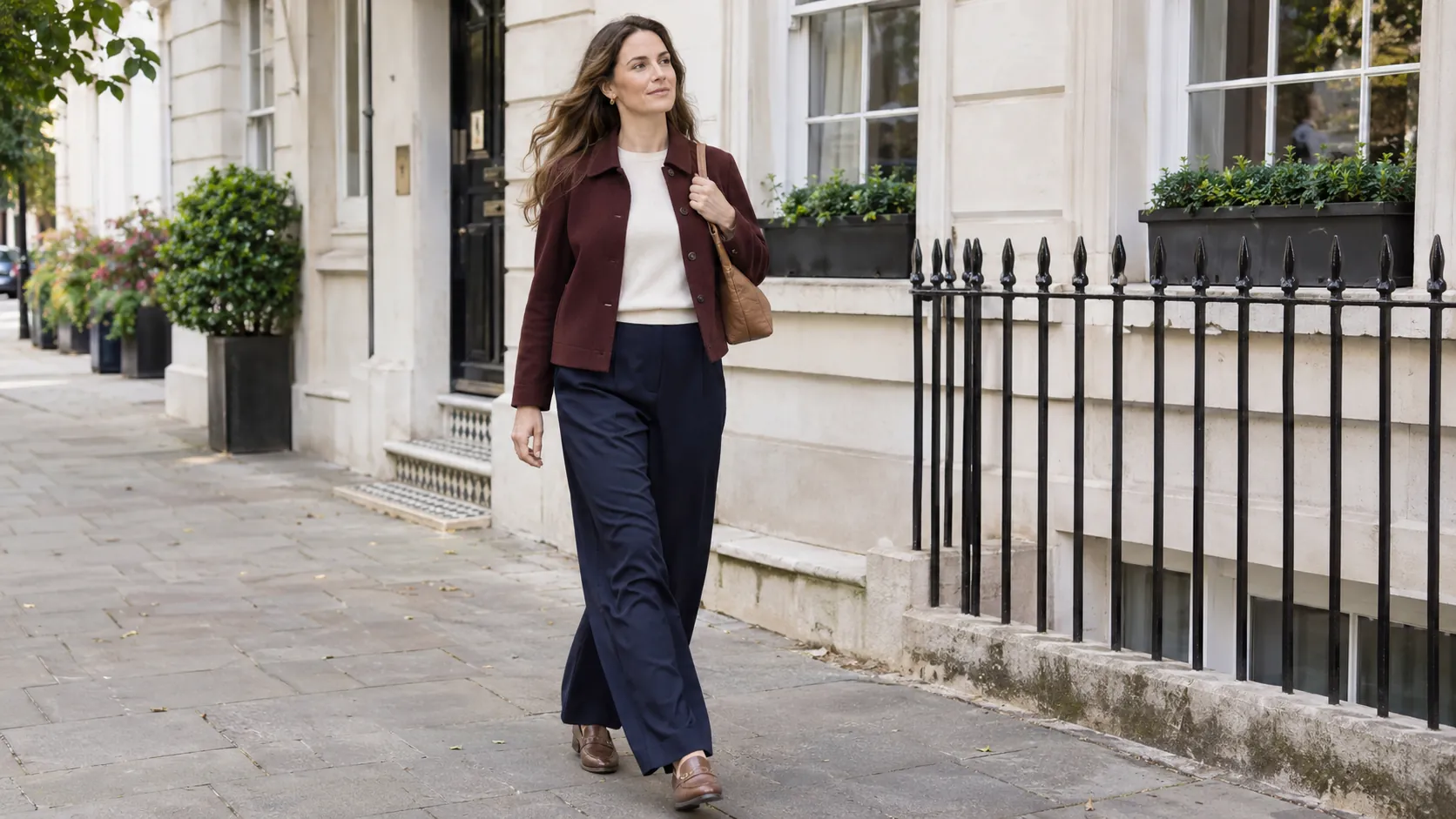
On Monday, you might wear navy trousers, a cream top, and a cropped jacket. Later in the week, you could use the same formula with brown trousers, a striped top, and a cardigan.
Personal uniform vs. capsule wardrobe
The two approaches can work together, but they focus on different things.
| Approach | Main focus | Example |
| Personal uniform | Repeating a useful outfit formula | Midi dress, cardigan, and flats |
| Capsule wardrobe | Keeping a coordinated selection of clothes | A seasonal collection of tops, bottoms, layers, and shoes |
| Signature style | Creating a recognizable personal look | Strong colors, sculptural jewelry, or relaxed tailoring |
You can have a personal uniform within a larger wardrobe. You can also use two or three formulas rather than wearing one silhouette every day.
1. Find the Outfits You Already Repeat
Before shopping, look at what you wore during an ordinary week.
Choose three outfits you reached for willingly. Include everyday clothes, rather than only the outfit that photographed best.
Ask:
- Could I sit, walk, and reach comfortably?
- Did I keep adjusting anything?
- Did the shoes suit my day?
- Did I feel appropriately dressed?
- Was the outfit straightforward to wash and prepare again?
Write down the common features.
You may discover that you consistently choose loose sleeves, an elasticated waist, a particular neckline, or layers you can remove easily. Those details are more useful than a list of supposedly essential clothes.
Describe your formula in one sentence
Try something specific:
“I like ankle-length trousers, a relaxed shirt, and comfortable closed-toe shoes.”
Or:
“I feel best in a long dress with sleeves and a lightweight outer layer.”
That sentence becomes a guide for choosing clothes.
2. Design Around Your Actual Week
A wardrobe needs to work where you spend your time.
Consider your workplace, commute, climate, caregiving responsibilities, dress requirements, and preferred coverage. Include any needs relating to mobility, sensory comfort, or easy fastenings.
| Everyday situation | A formula to explore | What to prioritize |
| Office or client meetings | Trousers, blouse, jacket, comfortable shoes | Sitting comfort, movement, workplace expectations |
| Working from home | Knit trousers, simple top, optional cardigan | Comfortable waistbands and suitable video-call coverage |
| Walking or public transport | Jeans or trousers, top, practical outerwear | Footwear, weather protection, useful pockets |
| Caregiving and active days | Washable separates with secure fastenings | Movement and manageable care |
| Modest dressing | Long dress or wide trousers with a tunic | Coverage, opacity, and comfortable layering |
| Warm-weather routines | Loose dress or lightweight separates | Fabric weight, airflow, and sun coverage preferences |
These are starting points. Adapt the clothes to the person wearing them.
3. Choose One Main Formula and One Alternative
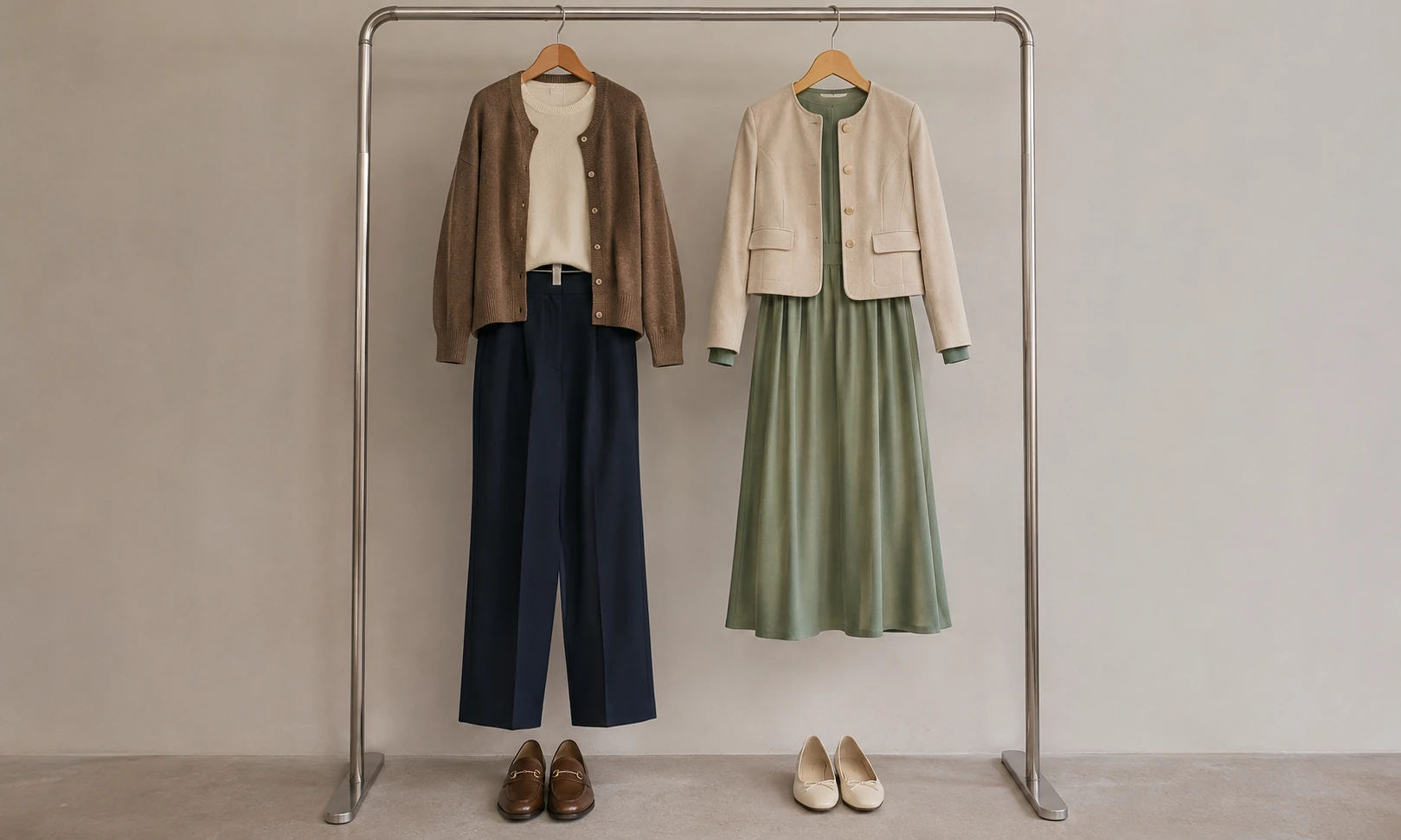
Begin with a formula for your most common days. Add a second for occasions when the first feels unsuitable.
For example:
- Main formula: Straight trousers, knit top, cardigan, loafers.
- Alternative formula: Midi dress, light jacket, flat shoes.
This gives you variety without requiring a completely different styling approach each morning.
Six personal uniform ideas for women
| Style preference | Outfit formula | Easy variation |
| Relaxed tailoring | Wide-leg trousers + fitted or tucked top + jacket | Swap the jacket for a cardigan |
| Casual and practical | Straight jeans + T-shirt + overshirt + trainers | Use a shirt in place of the T-shirt |
| Dress-led | Midi or maxi dress + comfortable shoes | Add a knit or outer layer |
| Soft and understated | Knit top + fluid trousers + simple shoes | Change texture or color |
| Modest and layered | Long tunic + trousers + optional scarf | Vary the tunic length and fabric |
| Colorful and expressive | Printed skirt + plain top + comfortable shoes | Repeat one print color in the top |
Treat each as an outfit to test. A formula earns its place by feeling useful when worn.
4. Build a Color Palette From Your Favorite Clothes
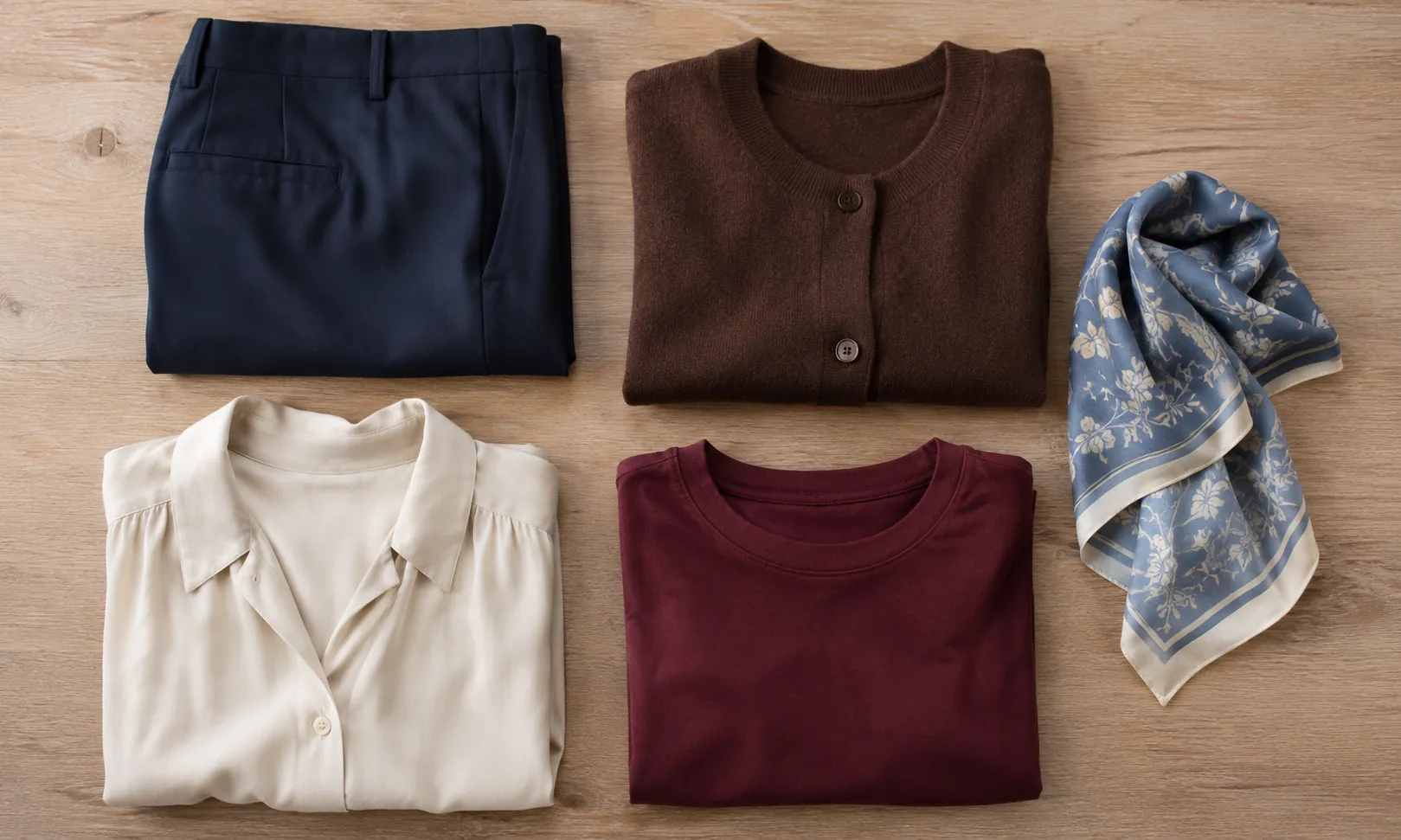
Look at the items in your chosen outfits. Which colors already work together?
Choose a few you enjoy repeating, then add others gradually.
A possible palette could include:
- Main colors: Navy and brown.
- Lighter supporting color: Cream.
- Accent colors: Burgundy and soft blue.
Another wardrobe might revolve around black, white, cobalt, and red. A third could use olive, rust, and patterned fabrics.
There is no requirement to wear neutrals.
Check combinations before buying
Place a potential purchase beside the clothes it needs to work with. Consider the whole outfit, including shoes and outerwear.
A beautiful blouse that needs several additional purchases may be less useful than one that immediately works with your existing trousers.
If you enjoy understated combinations, Pravi Celer’s guide to stealth wealth fashion offers further ideas on proportion, fabric, and discreet styling.
5. Test Fit Through a Normal Day
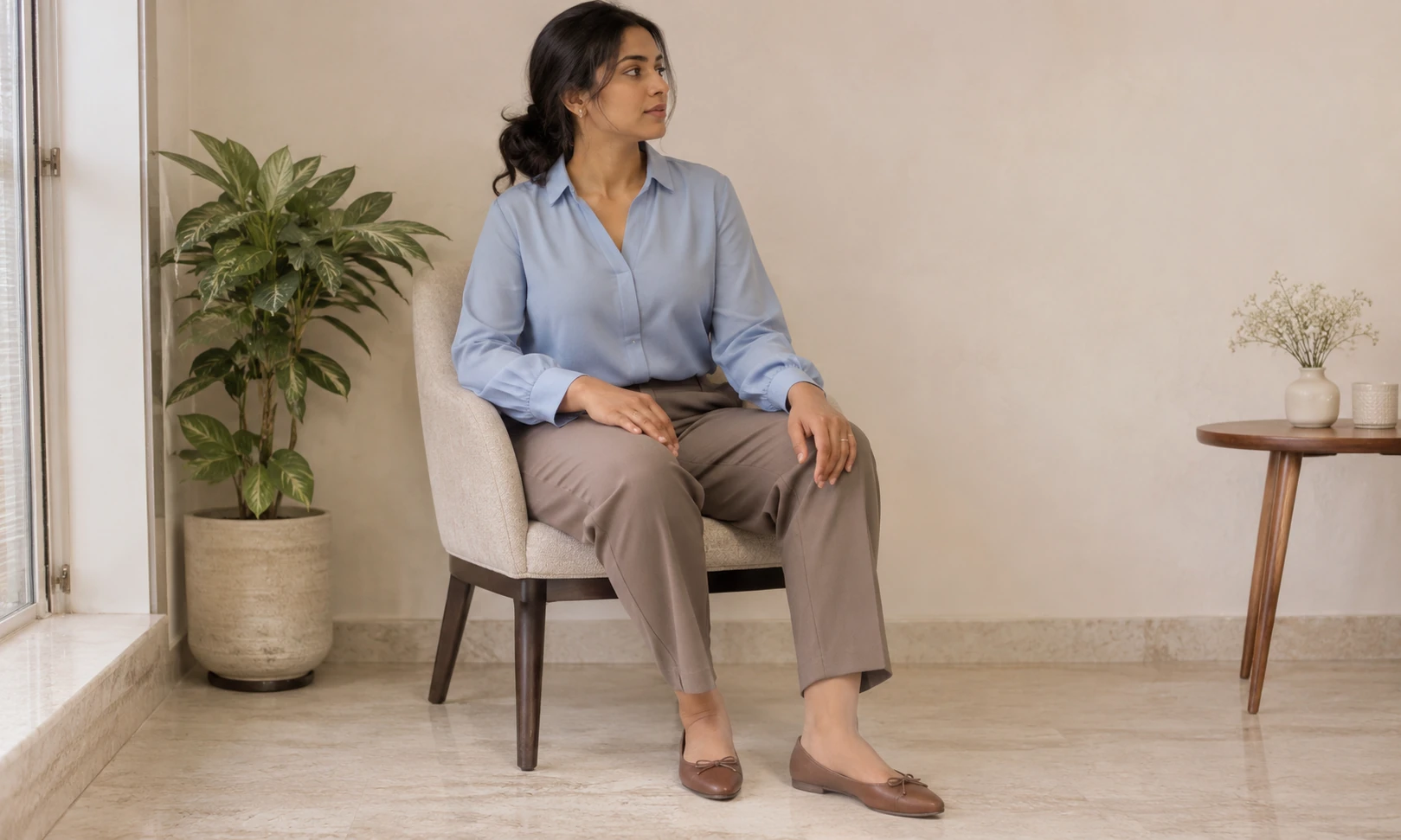
A personal uniform depends on clothes you can wear repeatedly with ease.
When trying a piece on, sit down, walk, reach forward, and bend your arms. Test it with the underwear, layers, and shoes you expect to wear.
Check for:
- A waistband that stays comfortable when seated.
- Sleeves that allow your usual movement.
- Necklines that feel secure.
- Hems that work with your shoes.
- Enough room for an intended underlayer.
- Fastenings you can manage comfortably.
Use the retailer’s measurements and fit information when shopping online. For example, Levi’s women’s size guidance includes waist and hip measurements for bottoms, rather than relying on a size number alone.
Identify the exact problem
Instead of deciding that “trousers never work,” note what happens: the rise feels too short, the waistband gaps, or the thigh is restrictive.
That gives you something specific to assess in the next pair. A tailor can also advise whether an adjustment is practical before you commit to keeping an item.
6. Choose Fabrics You Can Live With
Consider how the finished garment feels, hangs, and fits into your care routine.
Before buying, ask:
- Is the fabric comfortable against my skin?
- Is it sufficiently opaque for how I plan to wear it?
- Does it move the way I want?
- Can I manage its washing, drying, and ironing requirements?
- Will I reach for it during a busy week?
Fiber content is useful information, but it does not describe the entire garment. Examine the construction, lining, finish, and care label too.
Pravi Celer’s guide to how to identify luxury fabrics explains what to examine beyond the brand name.
For wool pieces, Woolmark recommends checking the garment’s care instructions; washing and drying permissions depend on the particular item.
A beautiful piece that regularly waits for specialist cleaning may have a smaller role in your everyday uniform.
7. Plan Quantities Around Laundry
There is no universal number of pieces a personal uniform wardrobe needs.
Your requirements depend on how often you change, what can appropriately be reworn, how frequently you do laundry, and how long clothes take to dry.
The following is an illustrative starting point, assuming weekly laundry and a routine where bottoms and layers can be reworn when clean.
| Category | Example quantity |
| Everyday tops | 5–7 |
| Bottoms | 2–4 |
| Optional dresses | 1–2 |
| Cardigans, jackets, or overshirts | 2 |
| Everyday footwear | 2 practical options |
| Weather-appropriate outerwear | As needed |
Underwear, sleepwear, exercise clothing, work uniforms, and special occasion outfits sit outside this example.
Adjust the quantities to your household. Clothes that require washing after each wear need a different rotation from occasional outer layers.
Buy duplicates after testing
Wear and wash a promising item according to its instructions before buying several.
Check whether you still like the fit, feel, and appearance. A second dependable pair of trousers can be useful once you know the first pair works.
8. Add Personality Through Repeatable Details
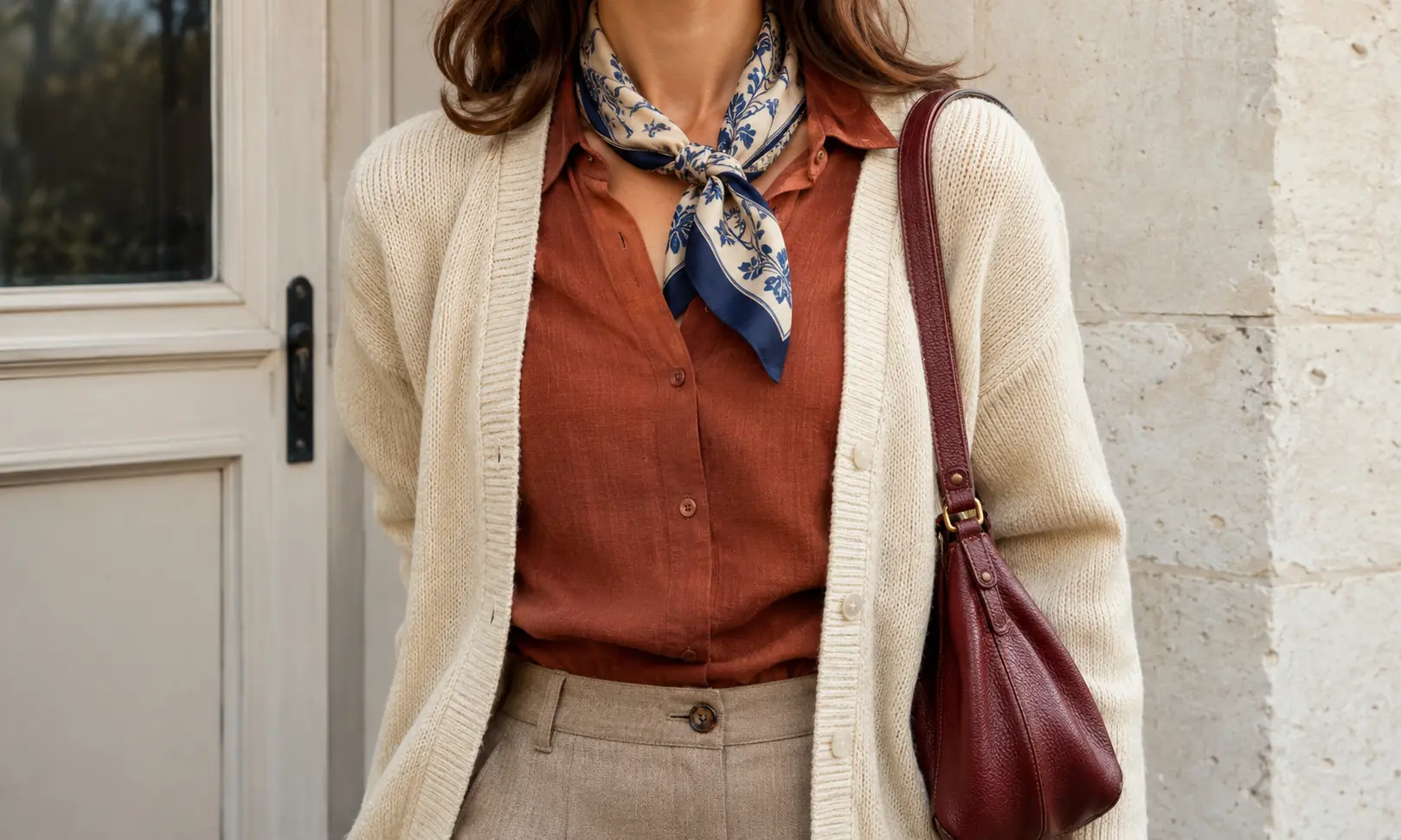
A uniform can include prints, bright colors, vintage pieces, jewelry, or distinctive shoes.
Choose details you already enjoy:
- A patterned scarf.
- A favorite pair of earrings.
- A vintage jacket.
- A colorful bag.
- A particular collar or sleeve shape.
Keep accessories comfortable and easy to use. If a belt or bracelet repeatedly gets in your way, it may belong in occasional outfits rather than the everyday formula.
You can also repeat one familiar detail across different outfits. That may become part of your signature style.
9. Prepare a Few Complete Outfits
Once you have useful combinations, make them easy to repeat.
Photograph them for your own reference, write a short list, or hang coordinating pieces together.
Check the practical details:
- Are the shoes ready to wear?
- Does the top need a particular underlayer?
- Is the jacket warm enough?
- Does the bag hold what you need?
- Are any items waiting for repair?
This is where an outfit becomes a reliable option for a busy morning.
How to Adapt Your Uniform Through the Seasons
Keep the parts you like and adjust what the weather requires.
| Core formula | Warmer-weather version | Cooler-weather version |
| Trousers + top + layer | Lightweight trousers, short-sleeved top, optional shirt | Heavier trousers, knit top, coat |
| Dress + comfortable shoes | Lightweight dress and suitable flats or sandals | Dress with warm layers and boots |
| Jeans + shirt | Lighter shirt with sleeves worn comfortably | Shirt under a knit or jacket |
| Tunic + trousers | Lightweight, opaque fabrics | Warmer fabrics with an outer layer |
Try seasonal versions on as complete outfits. A heavier layer or different shoe can change how familiar proportions feel.
Common Mistakes to Avoid
Building a wardrobe for an imagined lifestyle
Start with your current needs. Leave space for occasional dressing without making it the basis of every purchase.
Buying the whole formula at once
Test one complete outfit first. You will learn more from wearing it than from ordering several variations immediately.
Keeping uncomfortable pieces because they match
Coordination only helps when you want to wear the clothes.
Making the rules too strict
Allow an alternative silhouette, a favorite print, or an outfit chosen simply because you feel like wearing it.
Replacing useful clothes unnecessarily
Your current wardrobe may already contain most of the pieces you need. Identify a specific gap before shopping.
FAQs
What is a personal uniform wardrobe for women?
It is a wardrobe built around a few repeatable outfit combinations that suit a woman’s daily needs and preferences. The pieces can vary while the overall formula stays familiar.
How many outfit formulas should I have?
Start with one for everyday use and one alternative. Add another when a recurring need remains uncovered.
Do I need to wear the same colors every day?
No. A coordinated palette can make combining clothes easier, but it can include bright colors, prints, and several shades you enjoy.
Can a personal uniform include dresses?
Yes. A dress with comfortable shoes and an optional layer can be a complete formula.
Can I build one on a budget?
Begin with clothes you own. Test combinations, repair useful pieces, and buy only the missing items that would improve several outfits. Secondhand options can also be worth considering.
What if my size or comfort needs change?
Revise the formula and keep accessible clothes that fit comfortably now. Build flexibility into waistbands, layering, quantities, and budget according to your needs.
Start With the Outfit You Already Trust
Choose one outfit you would happily wear tomorrow. Write down its formula, then make a second version with clothes you own.
Wear both during an ordinary week. Notice what feels comfortable, what needs adjusting, and whether anything useful is missing.
Build from those observations. Your personal uniform should become a dependable part of getting dressed familiar enough to reach for easily, and flexible enough to feel like you.