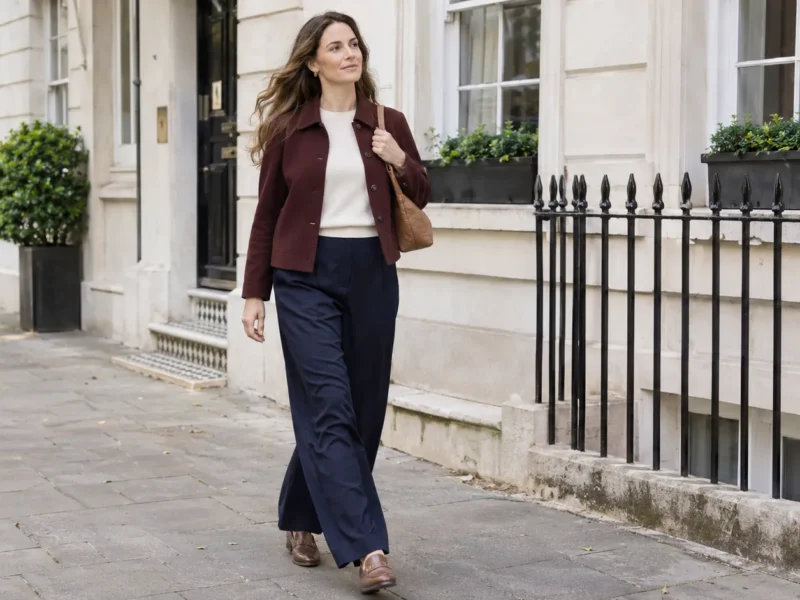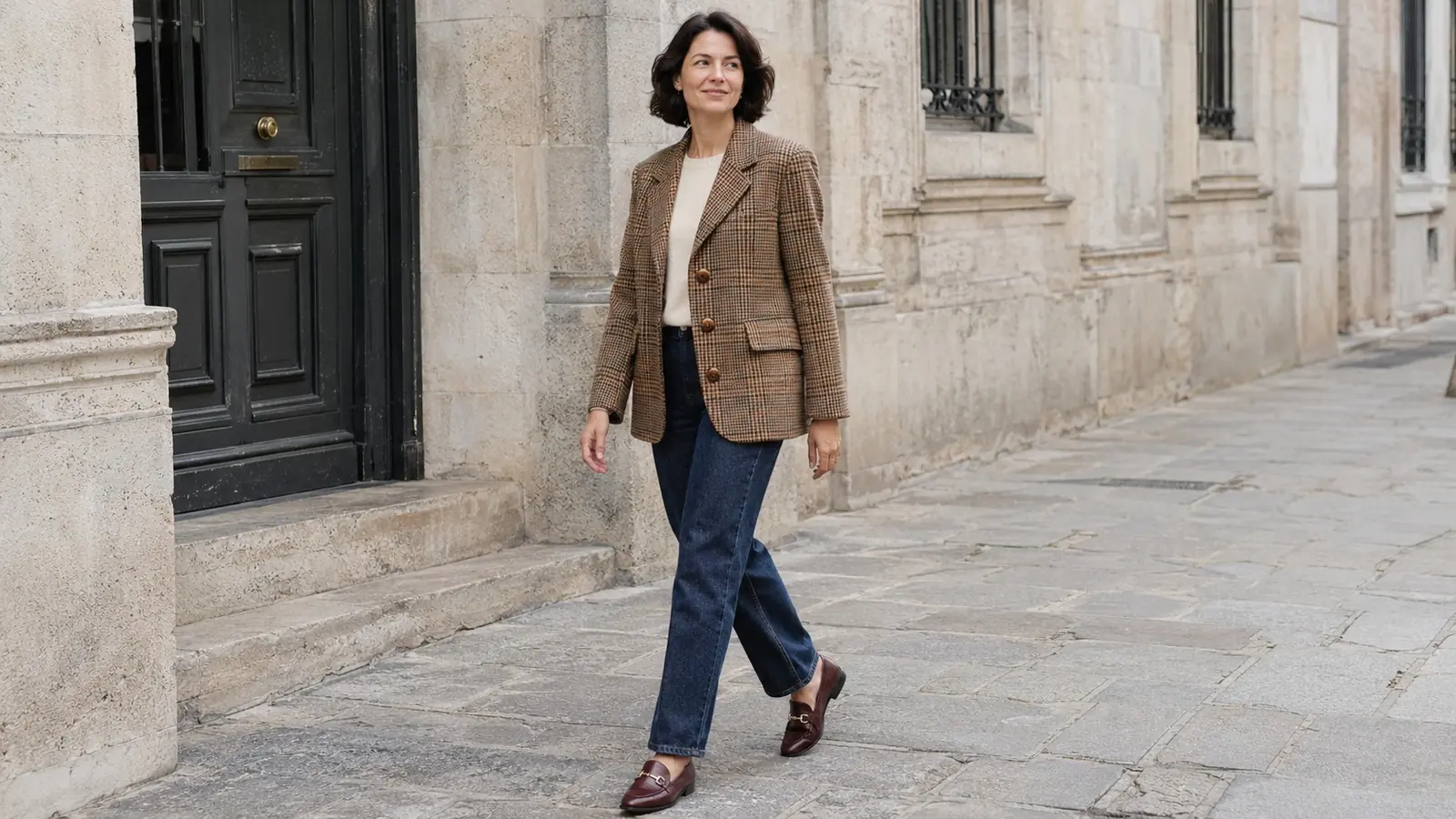
You find a jacket with exactly the right shape. The fabric has character, the buttons feel substantial, and the color works beautifully with your favorite jeans.
Then comes the question: what else will you wear with it?
That question is the starting point for a useful vintage wardrobe. A beautiful find becomes much more valuable to your everyday life when it works with the clothes, shoes, and routines you already have.
To build a wardrobe around vintage pieces, start with a few wearable favorites, check their fit and condition, and create several outfits using your existing clothes. Add supporting basics only where needed, and include alterations and care in your budget.
You can build gradually, one well-chosen piece at a time.
What Counts as Vintage Clothing?
Vintage generally describes clothing from an earlier period, although sellers and platforms may use different definitions.
Etsy, for example, requires items sold as vintage to be at least 20 years old. That is the platform’s rule rather than a universal guarantee of quality, rarity, or value.
These terms are also worth separating:
| Term | What it usually describes |
| Vintage | An older garment, with the age threshold depending on context |
| Secondhand | Previously owned clothing of any age |
| Vintage-inspired | A newer garment designed with references to an earlier period |
| Reproduction | A newly made interpretation or recreation of an older design |
| Deadstock | Unused older stock; its age and storage condition still need checking |
A recently made secondhand blazer may be excellent. An older designer jacket may be too fragile for regular use. Assess the actual garment alongside its description.
1. Build Around Your Real Week
Before choosing an era or browsing another shop, look at how you spend your time.
Do you need comfortable commuting clothes? Washable layers? Outfits for an office? Clothing that works in a hot climate?
Write down your most frequent situations and the pieces you already reach for.
| Your routine | A vintage piece to consider | What should guide the choice |
| Office days | Blazer, shirt, or tailored skirt | Comfortable movement and appropriate fit |
| Casual weekends | Denim jacket, overshirt, or knitwear | Practicality and easy outfit combinations |
| Evening outings | Dress, embellished top, or small bag | Condition, comfort, and suitable care |
| Warm-weather dressing | Lightweight shirt or skirt | Fabric feel, coverage, and breathability |
| Frequent travel | Scarf or versatile outer layer | Packing needs and maintenance |
Use this as a starting point, not a shopping list.
If you rarely attend formal events, a collection of evening dresses may bring more storage challenges than daily enjoyment. Begin where you will get the most use.
2. Choose One Piece to Lead the Wardrobe
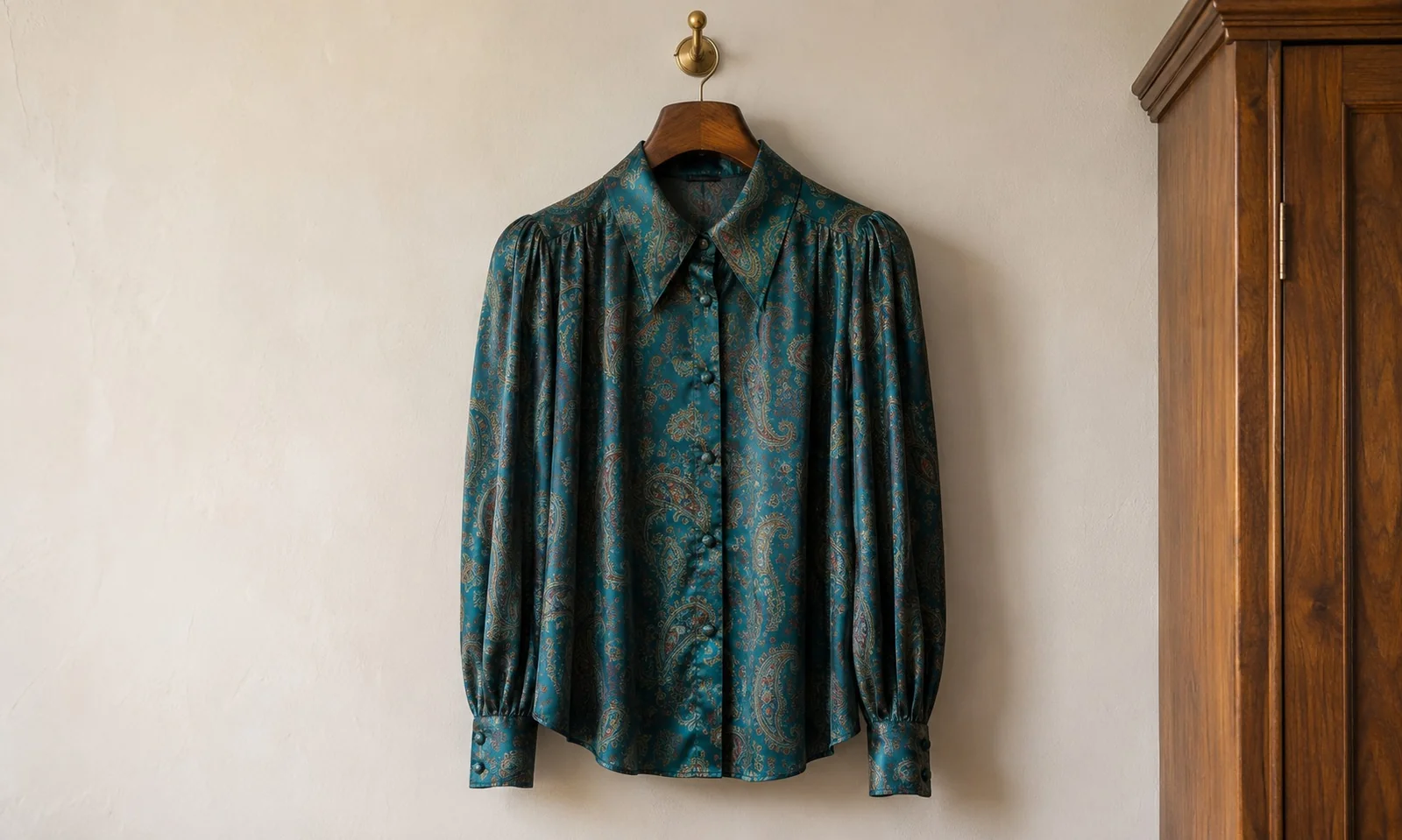
Start with an item you enjoy enough to wear repeatedly.
It could be a patterned shirt, a leather jacket, a beautifully cut coat, or a skirt in a distinctive color. Choose something whose condition and fit support the way you intend to use it.
Then identify what attracts you:
- The silhouette
- The color
- The texture
- The pattern
- A particular detail, such as the collar or buttons
That feature gives you a direction for the clothes around it.
For example, a brown checked blazer might connect easily with cream shirts, dark denim, olive trousers, and burgundy accessories. You now have a useful palette without buying a matching wardrobe.
3. Check Quality Before You Fall for the Label
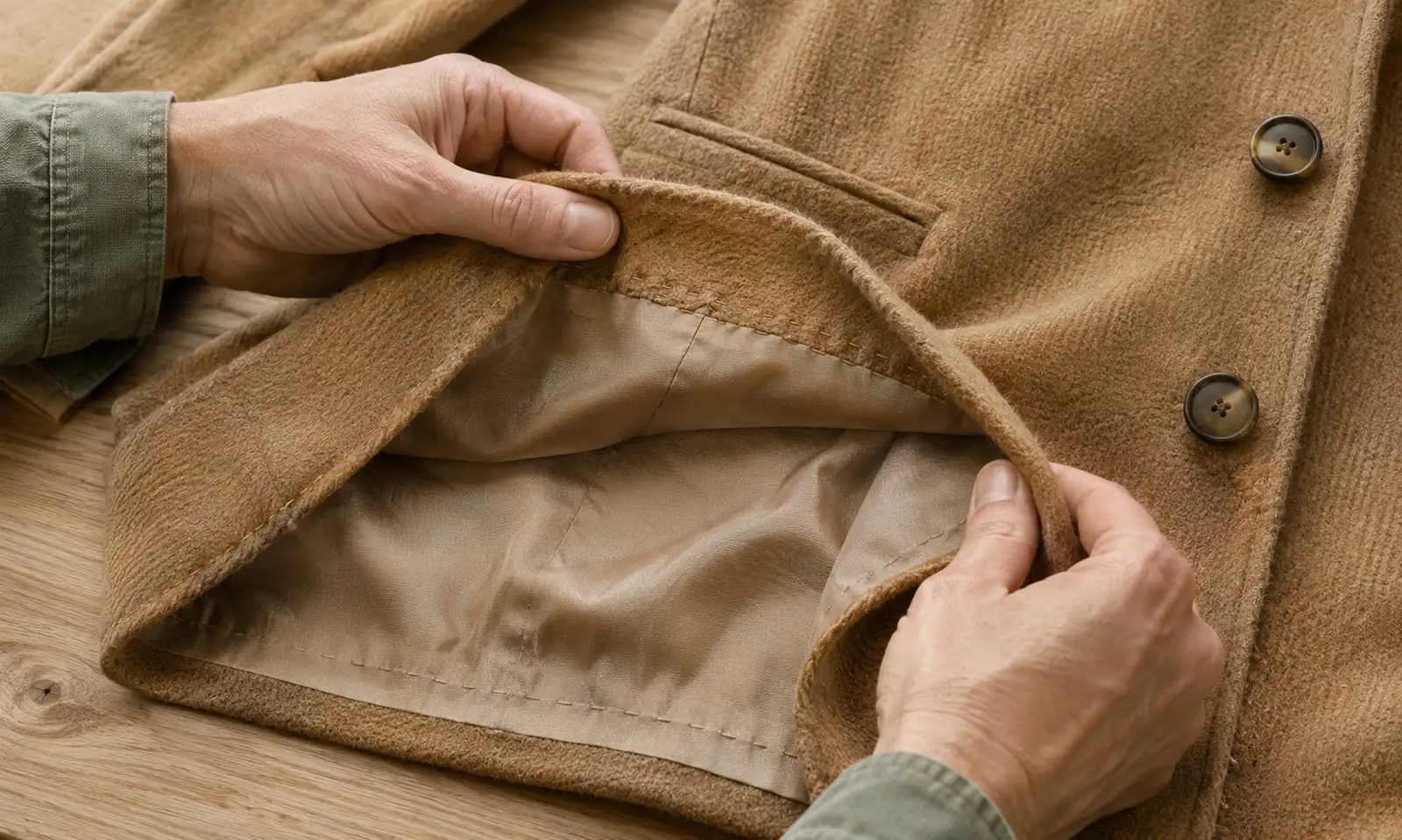
Look at the garment from the inside as well as the outside.
Inspect seams, lining, fastenings, hems, and areas exposed to friction. Pay particular attention to underarms, collars, cuffs, pocket openings, and the seat of trousers.
A practical inspection checklist
| Area | What to examine | What to ask yourself |
| Main fabric | Thin patches, holes, fading, tears | Is it strong enough for regular wear? |
| Seams | Open stitching, strain, previous repairs | Is the problem local or widespread? |
| Lining | Splits, discoloration, loose sections | Could repair or replacement affect the budget? |
| Fastenings | Zips, hooks, buttons, buttonholes | Do they work without forcing them? |
| Stretch sections | Elastic and stretch fabric | Do they recover after gentle movement? |
| Surface | Stains, peeling, flaking, persistent odor | Am I comfortable with the condition as it is? |
Avoid buying on the assumption that every stain will disappear or every damaged area can be restored invisibly.
For older or significant textiles, conservation guidance from the Institute of Conservation recommends seeking specialist advice about problems including fabric splits, bleeding dyes, old adhesive repairs, and damaged fastenings.
For a closer look at materials and construction, read Pravi Celer’s guide to how to identify luxury fabrics.
Age and a prestigious label are useful context. The garment’s present condition determines whether it suits your wardrobe.
4. Use Measurements Instead of Trusting the Size Tag
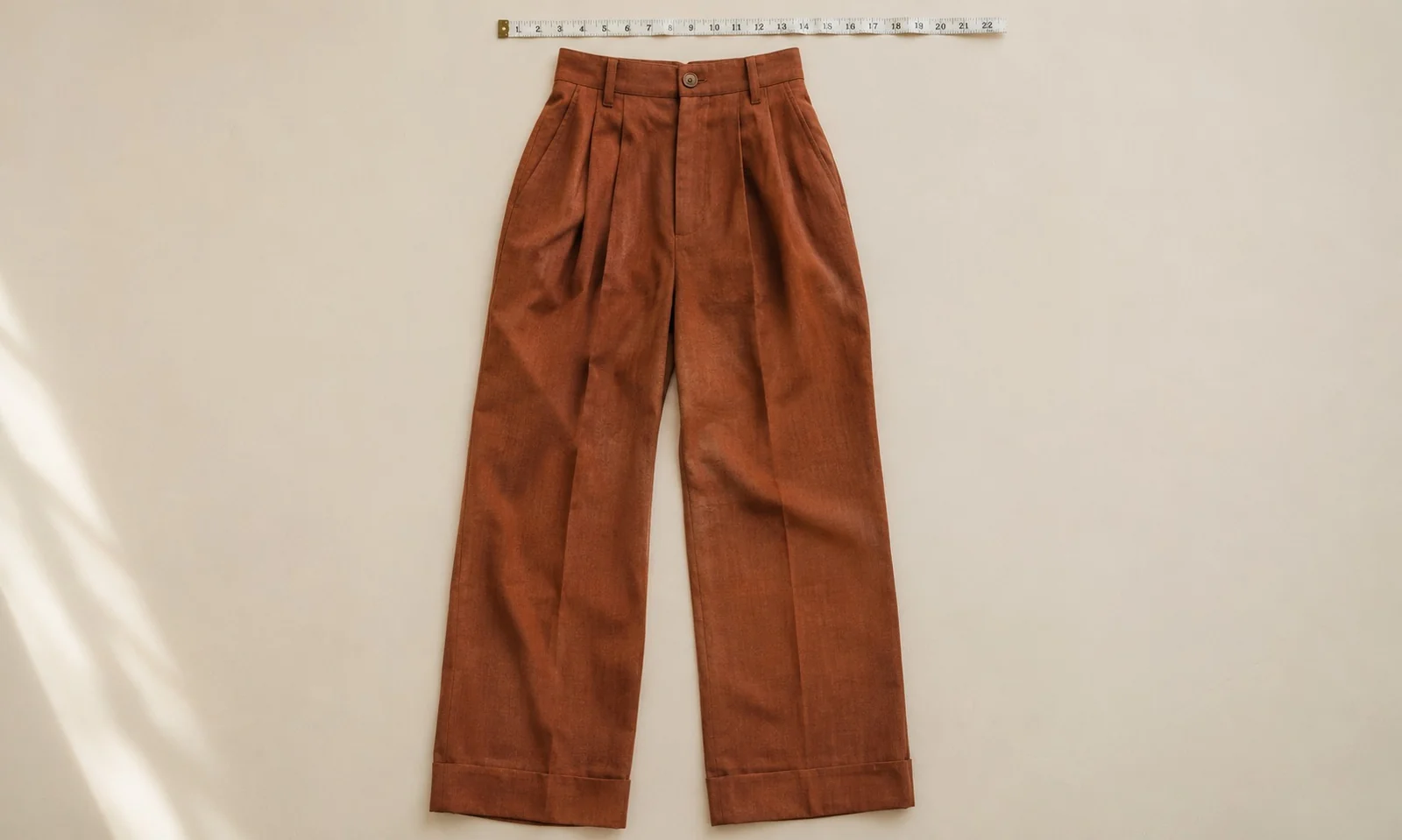
Vintage sizing can differ from modern sizing. The Vintage Fashion Guild specifically warns that older garment measurements rarely align exactly with contemporary size labels.
When shopping online, ask for measurements that matter to the garment:
- Chest or bust
- Waist and hips
- Shoulder width
- Sleeve length
- Overall length
- Rise and inseam for trousers
Check whether measurements were taken flat or around the garment.
Compare them with a similar piece you already wear comfortably. A flat waist measurement from your favorite trousers is often more useful than your usual retail size.
Test movement when trying things on
Sit down, reach forward, bend your arms, and walk.
A jacket can look good while standing still yet pull across the back when you reach for a bag. A skirt may fit at the waist but feel restrictive when seated.
Comfort helps determine whether a piece becomes part of your routine.
5. Make Three Outfits Before Buying More
Treat this as a practical shopping filter: can you create three outfits with the piece using clothes you already own?
They do not need to be dramatically different. The aim is to establish that the item belongs in your life.
Example: one vintage printed shirt
| Occasion | Outfit combination |
| Everyday | Printed shirt, straight jeans, comfortable trainers |
| Work or lunch | Printed shirt, tailored trousers, loafers |
| Evening | Printed shirt, simple skirt, understated shoes |
If the shirt only works after buying new trousers, shoes, and a bag, consider whether you want the whole project.
A special occasion piece can still be worth owning for one specific purpose. Just make that decision consciously.
6. Add Supporting Basics Where There Is a Gap
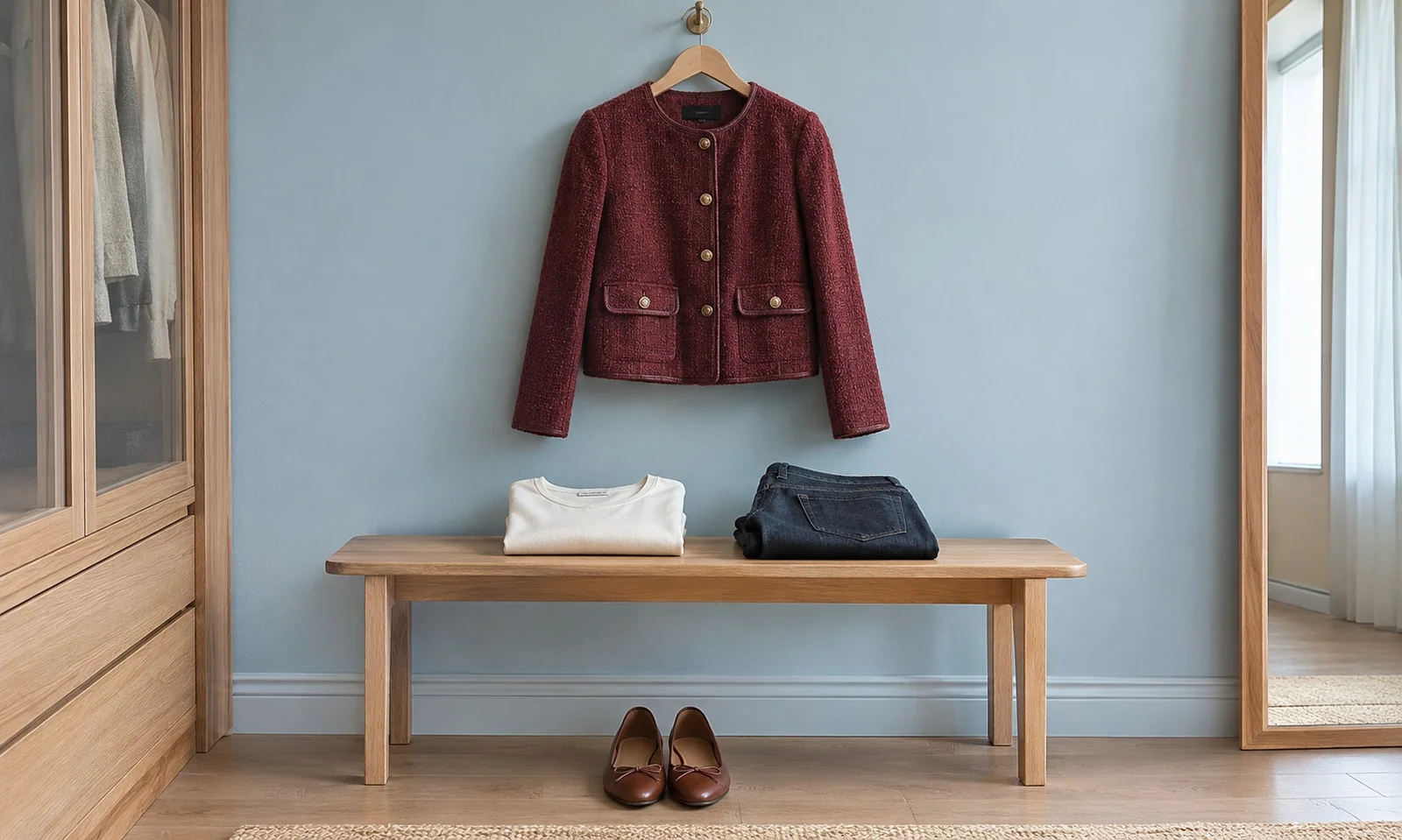
Your vintage pieces may supply much of the wardrobe’s character. Supporting clothes make them easier to wear.
Look for the missing items that would unlock several outfits: perhaps a plain top, well-fitting trousers, a suitable underlayer, or comfortable shoes.
These can be existing clothes, secondhand finds, or new purchases.
For a more restrained approach, Pravi Celer’s guide to stealth wealth fashion explores the role of fit, fabric, and understated styling.
A simple outfit can give you space to appreciate an unusual vintage texture or shape.
7. Mix Eras Through Shape, Color, and Texture
You can enjoy vintage clothing without dressing entirely within one historical period.
Start by connecting one element across the outfit:
- Repeat a color from a patterned blouse in your trousers.
- Pair a textured jacket with a smoother top.
- Balance a long outer layer with clothing proportions you already enjoy.
- Wear an ornate accessory with a simple neckline.
These are styling experiments rather than rules. Try the combination, move around in it, and decide whether it feels like you.
If you enjoy wearing several vintage pieces together, do that too. The useful question is whether you feel comfortable and intentional in the result.
8. Price the Finished Garment
The purchase price may be only part of the cost.
Before buying, consider:
Purchase price + delivery + applicable charges + cleaning + repairs + alterations
For example, a hypothetical jacket priced at £45 might need £20 in cleaning and £35 in alterations. That makes it a £100 wardrobe decision.
The figures are illustrative; obtain local quotes for the actual work.
Ask about alterations before committing
A tailor can assess whether a change is feasible for that garment.
Adjusting a hem is a different task from reshaping a shoulder or changing a complex sleeve. Beading, print placement, existing alterations, and available seam allowance can all affect the options.
For rare or historically significant clothing, seek specialist advice before making irreversible changes.
9. Shop With Questions, Not Just Keywords
A listing that says “rare vintage designer jacket” still leaves important details unanswered.
Ask for:
- Clear photographs of the front, back, inside, and labels
- Close-ups of disclosed damage
- Relevant measurements
- Information about alterations
- The basis for the stated age or designer attribution
- Return terms
Labels can help with research, but a label alone should not settle an expensive authenticity question.
For a substantial purchase, use a seller or independent specialist with relevant expertise. Keep photographs, receipts, and any supporting documentation.
A useful message is:
“Could you confirm the shoulder and chest measurements, show the lining and cuffs, and let me know about any repairs or fabric weakness?”
Specific questions make it easier to judge the item before paying.
10. Match Care to the Actual Piece
Vintage clothing covers many materials, ages, and conditions. One cleaning method will not suit everything.
Read any surviving care information, but also consider the present condition, lining, trims, and previous repairs. If these make cleaning uncertain, ask a professional experienced with vintage garments.
The Vintage Fashion Guild cautions that some older textiles are too delicate for ordinary handling and recommends professional help for important or museum-quality pieces.
Store with support and protection
Keep pieces away from prolonged light exposure and avoid crowding them.
Fragile shoulders and heavy decoration need particular attention. Museum textile guidance advises against hanging garments with weak shoulder seams or heavy beadwork, because the weight can strain them.
Preservation needs are especially relevant to fragile heirlooms and collectible clothing. Sound everyday vintage can have a more practical care routine, chosen for its materials and condition.
A Small Vintage Wardrobe: One Possible Starting Point
You do not need a fixed capsule size. This example shows how a few distinctive pieces can connect with ordinary essentials.
| Piece | Role in the wardrobe |
| Vintage blazer | Adds structure to jeans, trousers, and skirts |
| Vintage shirt | Introduces pattern or an unusual collar |
| Vintage skirt or trousers | Provides a distinctive silhouette |
| Vintage scarf | Connects colors across several outfits |
| Two simple tops | Support stronger shapes and prints |
| Everyday jeans or trousers | Make dressier pieces easier to use |
| Comfortable shoes | Keep the outfits practical |
Begin with whichever of these you already own. Add only what solves a real outfit gap.
FAQs
How do I start wearing vintage clothing?
Choose one piece that fits comfortably and works with your current clothes. Wear it several ways before deciding what to add next.
Can you mix vintage and modern clothing?
Yes. Connect the pieces through color, shape, texture, or the level of formality you want. There is no required vintage-to-modern ratio.
Is vintage clothing always better quality?
No. Assess construction, fabric condition, fit, and repair history. Older clothing can be beautifully made, poorly made, heavily worn, or unsuitable for your intended use.
Should I buy vintage clothing that needs repairs?
Only when you understand the damage and are comfortable with the likely cost and outcome. Get an assessment before buying if the repair is essential to making the piece wearable.
Is vintage clothing automatically sustainable?
Buying and continuing to wear an existing garment can support reuse, but “vintage” alone does not establish a precise environmental benefit. Consider how much you will wear it, its remaining life, care needs, and whether the purchase replaces another item you would have bought.
Can vintage pieces work in a minimalist wardrobe?
Yes. A small wardrobe can include distinctive older clothing. Choose pieces that combine easily and suit your daily needs.
Build the Next Outfit Before Buying the Next Piece
Take one vintage item you love and lay it beside clothes you already wear.
Try three combinations. Notice what fits, what feels comfortable, and whether anything genuinely useful is missing.
That process gives your wardrobe a direction. Over time, each addition earns its place through the outfits and everyday experiences it makes possible.