A luxury yacht charter in Montenegro opens up one of the Mediterranean’s most dramatic short coastlines. The country is smaller than many of its visitors’ home counties. Yet within an hour’s sail, it contains a mountain-walled bay that sailors call the southernmost fjord in Europe. It also offers a superyacht marina built to rival Monaco’s, a walled medieval town at the water’s edge, and an island hotel that has starred in a thousand photographs without ever exhausting its beauty.
Montenegro is the Mediterranean’s best-kept secret in its final years of being kept. The fleet has discovered Porto Montenegro, and brokers have added the country to their routes. Yet the pricing still belongs to the time before that discovery. This is the honest reason this guide exists now rather than five years from now.
The guest who charters here today buys the bay as few guests in this series will ever experience it.
A Captain’s Perspective on Montenegro
I had the country’s case made by a captain based in Tivat. We spoke over coffee on Porto Montenegro’s quay, with the marina’s superyachts rising behind us. Everyone sails Croatia, he said, and Croatia is wonderful. He sails it himself. But they pass his door to get there, and they do not stop. What they miss is this.
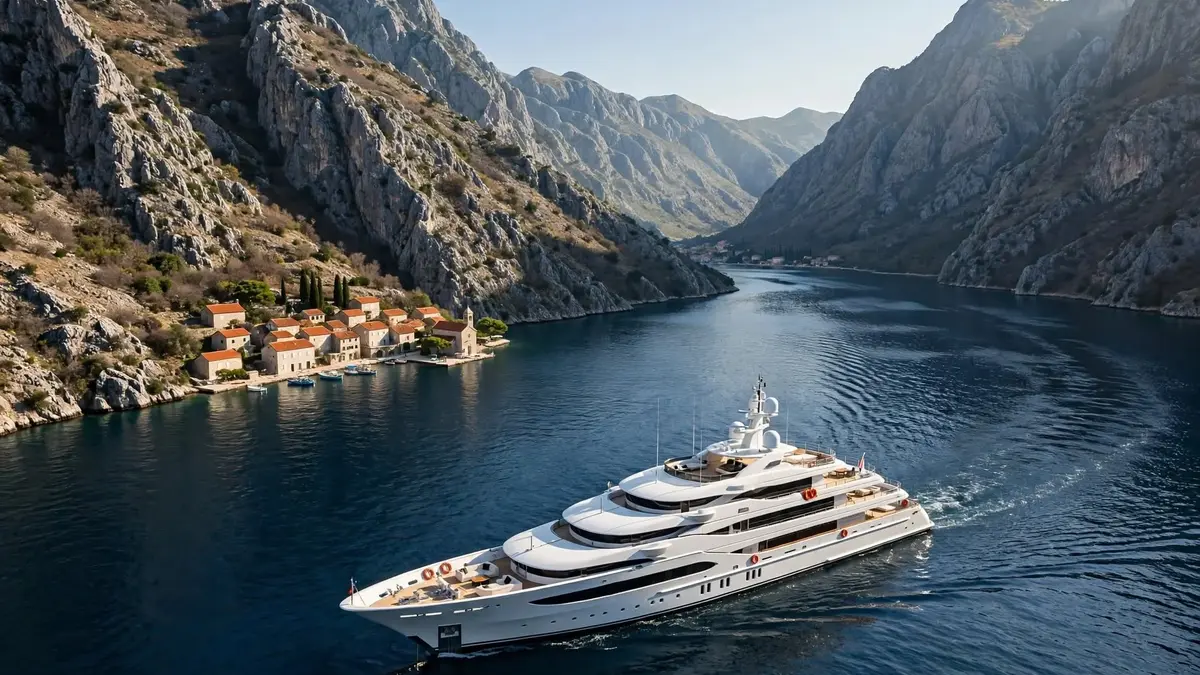
He gestured at the bay behind the marina, where the mountains close over the water like a hand. Thirty kilometers of water lie between walls a thousand meters high, he said. There are villages at the water’s edge that the Venetians built. There is an island church the fishermen made from vow stones. And you can anchor in it.
They get four hours from a railing. You get the week.
This guide follows his argument. It explores the bay and the coast, what the week holds, who it suits, and the method.
The Bay and the Coast
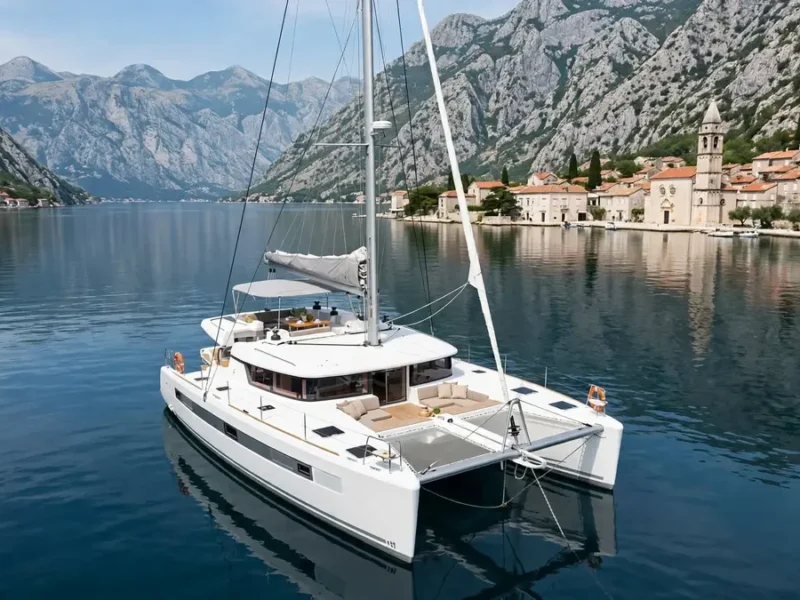
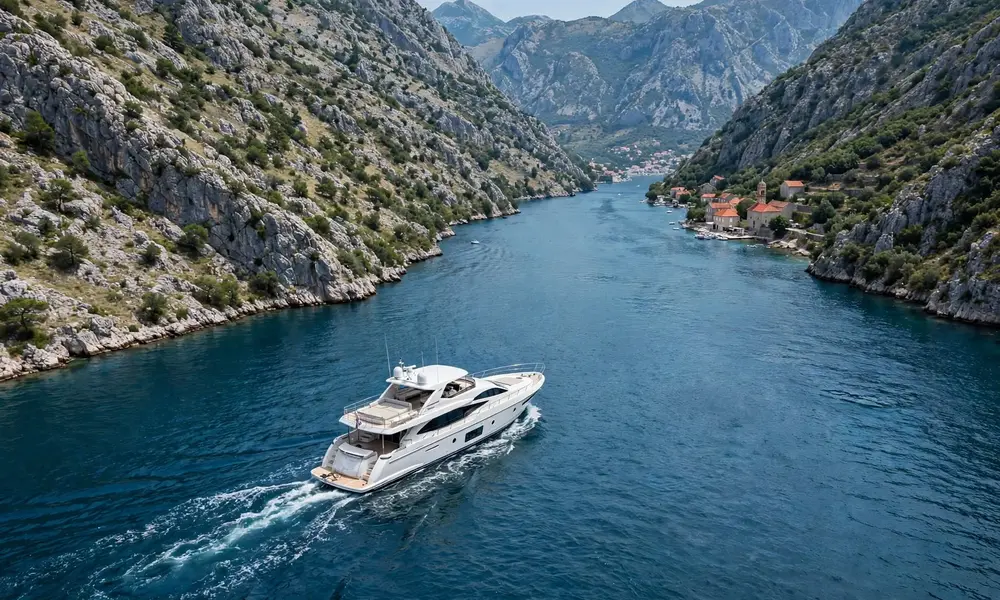
The Bay of Kotor comes first, and it is the country’s masterpiece. It is a winding inlet of the sea, with sixteen nautical miles of water folded between limestone walls. These walls rise sheer from the shoreline. Its inner reach is so enclosed that the water lies flat even when the open Adriatic blows.
The bay’s settlements read like a Venetian gallery at the water’s edge. Kotor itself is the walled town at the bay’s end. Its fortifications climb the mountain behind it in a switchback of stone. Perast is the smallest and most perfect settlement. It has a single waterfront of Venetian palaces facing two islets, one natural and one built. Between them lie a dozen villages with churches, bell towers, and fishing boats.
The bay is the anchorage that cruise ships visit with thousands of passengers. But yacht guests experience it in a way those visitors cannot. They see it at anchor, at dawn, in silence.
Budva and Sveti Stefan: The Southern Riviera
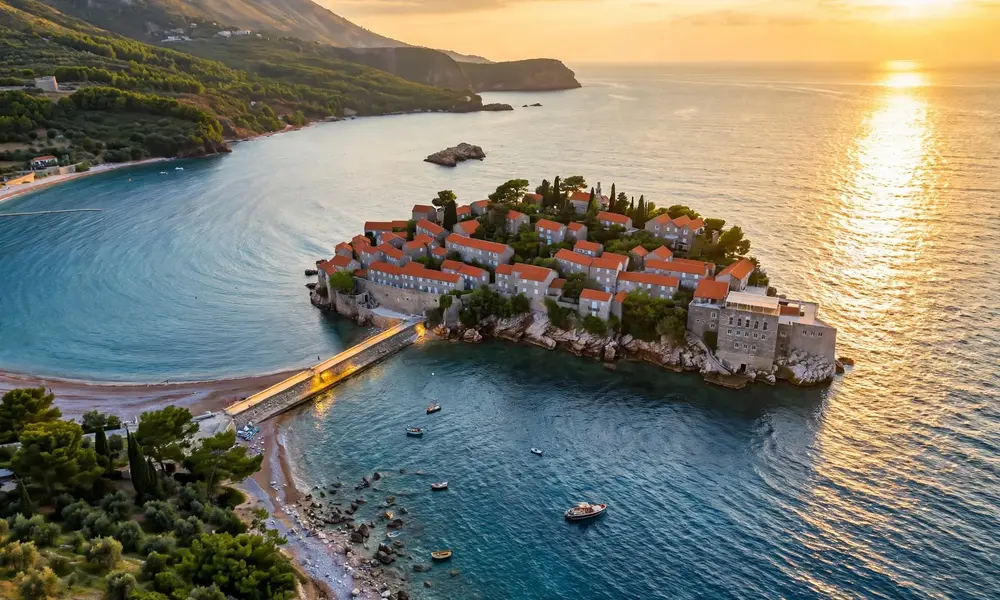
The coast south comes second: Budva, the resort town with one of the Adriatic’s liveliest old quarters; Sveti Stefan, the island village joined to the shore by a causeway, its stone roofs rising from the sea in the composition that has made Montenegro’s fortune in photographs, now a luxury hotel of legendary discretion; and the beaches of the riviera between them, Mogren and Jaz and the quiet coves south.
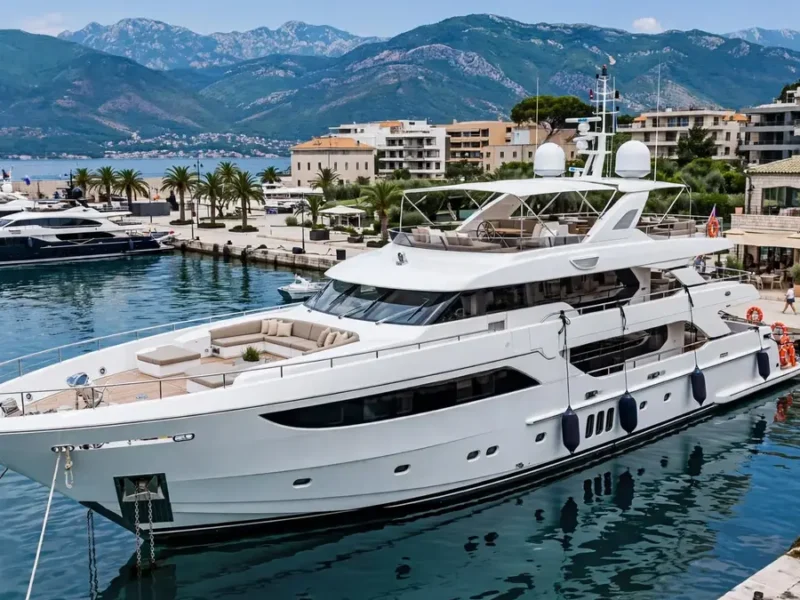
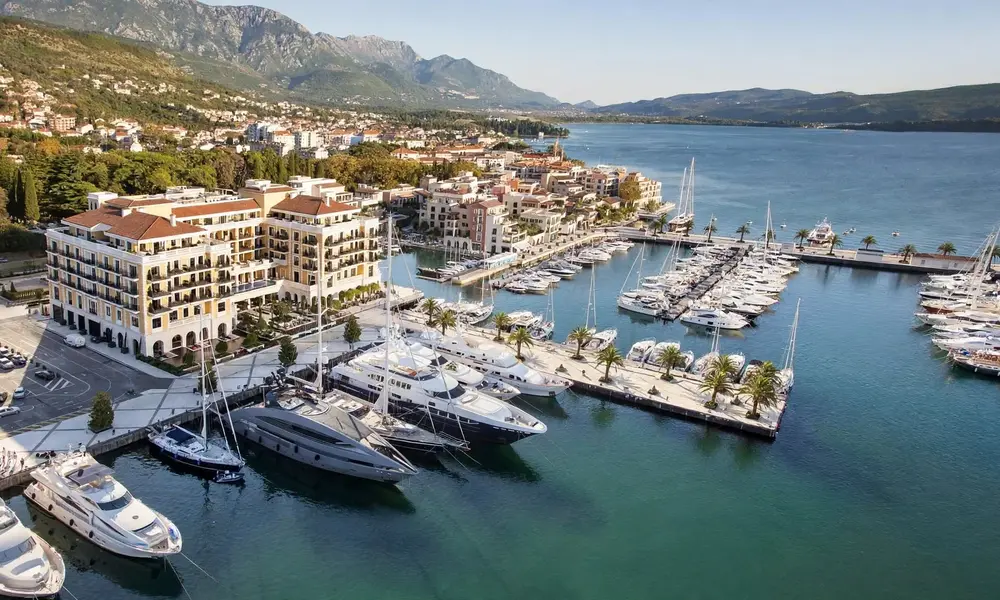
Porto Montenegro itself comes third. It is the country’s invention and its promise. Built at Tivat on land that once serviced naval submarines, it is now a village of quays, colonnades, residences, and boutiques. Its marina holds some of the largest private yachts in the world.
This congregation places Montenegro on the international circuit in a way no brochure could. The country’s arrival is announced in the language this series has followed throughout. It is the gathering of great yachts that Pravi Celer chronicles each season in its survey of the celebrant fleet of the modern marina. It is also proof that the sailors’ secret was always going to leak.
Why the Montenegrin Week Feels Different
Three differences set Montenegro apart from the Croatian coast to the north. Each works in the guest’s favor.
The first is the drama. Croatia’s islands offer gentle beauty, with pine, pebble, and calm. Montenegro is vertical. The mountains meet the sea without negotiation. The bay becomes a canyon of water, with scenery turned to eleven and no apology.
The second is the scale. The country’s entire coastline stretches for just a hundred kilometers. The bay itself takes only an hour to cross. A week here feels complete rather than sampled. Every corner is within reach, and nothing needs to be rushed.
The third is the moment. Montenegro stands where Croatia stood twenty years ago. The fleet has discovered it, but the crowds have not yet followed. Its harbors are filling, but its anchorages still hold room. Its prices remain honest, and its welcome is personal. Konobas’ owners still come down to the dock to ask how the day went.
The guest who comes now joins the country at the beginning of its chapter. That is a rarer luxury than any berth.
The Week’s Shape
The classic structure is based in Porto Montenegro or Kotor. Board at Tivat and spend the first evening among the marina’s colonnades.
Day two enters the bay. The passage between the mountains grows grander with each turn. Spend the afternoon anchored off Perast, facing its two islets. Visit Our Lady of the Rocks by tender. It is the fishermen’s church, built stone by vowed stone over centuries.
Day three belongs to Kotor itself. Explore the walled town in the morning and walk the fortress walls. Spend the evening at anchor in the bay’s inner reach, where the water lies still as glass.
Day four exits the bay and sails south along the riviera. Visit Budva’s old town in the afternoon. See Sveti Stefan from the water at golden hour. The photograph is finally earned after a thousand viewings.
Day five explores the southern coves. Visit the beaches of Jaz and the quiet anchorages beyond. Enjoy a swim in water as clear as Croatia’s, but without the company.
Day six returns north, reviewing the coast’s full profile. Pass the bay’s entrance at dusk.
Day seven closes at the marina. Pick up provisions from the market for home. Then comes the farewell, carrying the week’s discovery like a secret the guest has agreed, so far, to share only with the series’ readers.
Who It Suits
The Montenegro charter suits scenery seekers first. The bay is the single most dramatic anchorage in this series. It also suits connoisseurs of the moment, who understand that destinations have chapters and prefer a country at the beginning of its fame.
It suits superyacht guests, too. Porto Montenegro serves the largest hulls with a polish that Monaco delivers at twice the price. It also suits those who found Croatia wonderful but slightly crowded. They can enjoy the same water in a different setting.
However, it does not suit those who need a dozen islands to hop between or a restaurant scene of international depth. Montenegro’s pleasures are the bay, the mountains, the coast, and the table of a young country still learning its craft. Guests who need more should read the series’ guides to Croatia and the Riviera. Others may simply accept that one perfect bay can be enough.
A Method for Booking Well
First, choose the base according to the week’s priorities. Porto Montenegro offers the superyacht standard and access to the riviera. Kotor makes the bay the heart of the week. Budva suits those seeking the social season.
Second, engage a captain with experience in the bay. The rules around Kotor’s walls, changes in the bay’s depth, and coves the crowds miss all require local knowledge.
Third, book the shoulder season, in June or September. The bay is often perfectly calm, and the anchorages remain available with reasonable notice. Choose July and August only with early booking. The country’s fame is growing at the speed of its marina.
Fourth, provision for the konoba table and let the crew handle the bay’s permits. This is routine here, but worth confirming in writing.
And fifth, enter the bay twice if the week allows. The first passage belongs to the guest. The second belongs to the party’s photographer. The mountains rising between the water deserve both.
Frequently Asked Questions
What is a luxury yacht charter in Montenegro?
The private hire of a crewed yacht based at Porto Montenegro, Kotor, or Budva, sailing the Bay of Kotor, the country’s riviera, and the coast toward the Croatian border.
Where do you board a Montenegro yacht charter?
At Porto Montenegro in Tivat for the superyacht standard, Kotor for the bay as the week’s heart, or Budva for the resort season. The marina at Tivat serves the largest fleet.
What is there to see on a Montenegro yacht charter?
The Bay of Kotor and its mountain walls, Perast’s two islets, Kotor’s walled town, Budva’s old quarter, Sveti Stefan from the water, and the riviera’s southern beaches.
Can you anchor in the Bay of Kotor?
Yes, in designated bays and coves under the bay’s rules, which the captain handles as routine. The inner bay’s water lies flat even when the open sea blows.
Is Montenegro expensive to charter?
A rung below Croatia, which sits a rung below the west. The particularities are VAT at twenty-one percent and the superyacht premium at Porto Montenegro, both modest against the scenery.
When is the best season for a Montenegro yacht charter?
June and September offer warm water, calm bays, and anchorages with room. May and October bring a quiet coast and the year’s gentlest rates, while July and August deliver the full season at still honest prices.