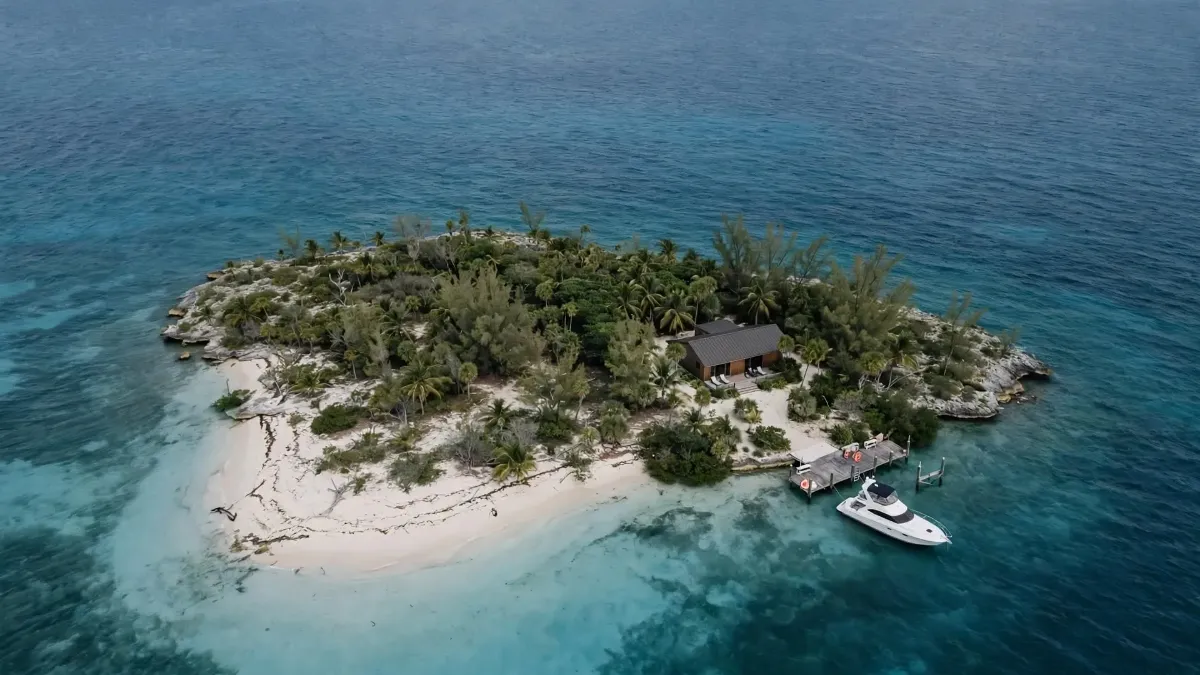
The listing photograph shows turquoise water, a single dock, and a beach that looks like a screensaver, and the price, a few million dollars, seems like a misprint compared to the neighboring coastal mansions. This is the private island market’s founding illusion: the purchase price is the cheapest part of the purchase.
Islands that list for less than a suburban house routinely cost more to operate than the yacht you will need to reach them, and the true economics, dock, generator, staff, weather, and the sheer logistics of concrete on a sandbar, are the story the listing photographs never tell.
The market itself is real and, at the top, genuinely active. Island brokers report steady demand from buyers seeking what no gated community offers, total geographic control, and a supply that is permanently fixed by geology.
Here are the eight islands and island types currently defining the market, what they list for, and what they actually cost.
1. The Bahamas: The Cottage Island Range, $3 to $15 Million
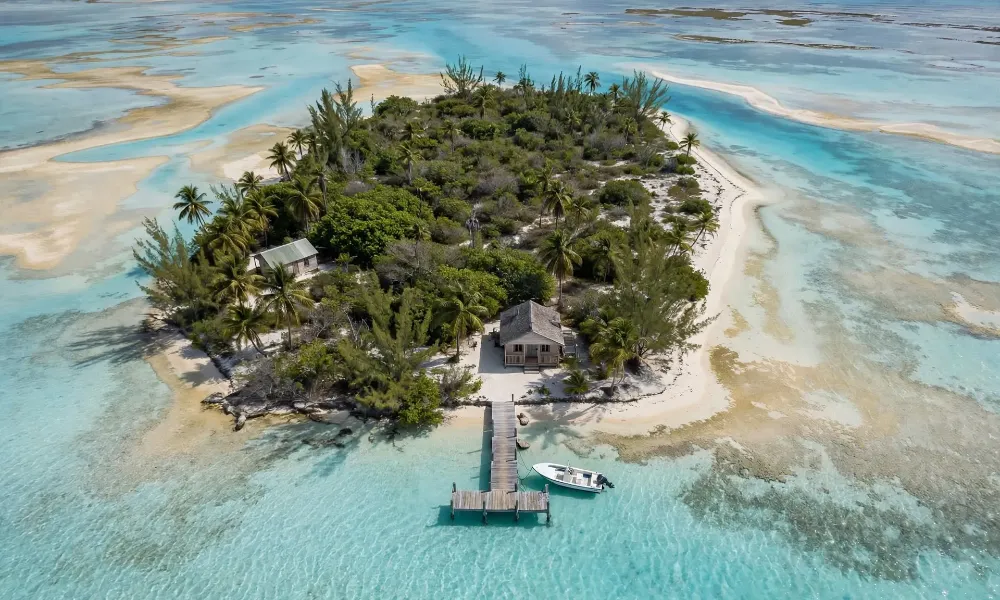
The Bahamas remains the world’s most liquid island market, with dozens of private islands for sale at any time across the Exumas, the Abacos, and the Berry Islands.
At the entry tier, two to ten acre islands with existing cottages list from around $3 million, while developed islands with mains power, staff quarters, and multiple residences run past $15 million.
The hidden costs are the Bahamas’ standard: everything arrives by boat, staff housing is mandatory, hurricane hardening is non negotiable insurance arithmetic, and the dock alone can run to seven figures. Our guide to renting the great private islands covers the geography; buying simply makes the logistics yours.
2. The Florida Keys: Pumpkin Key, $95 Million
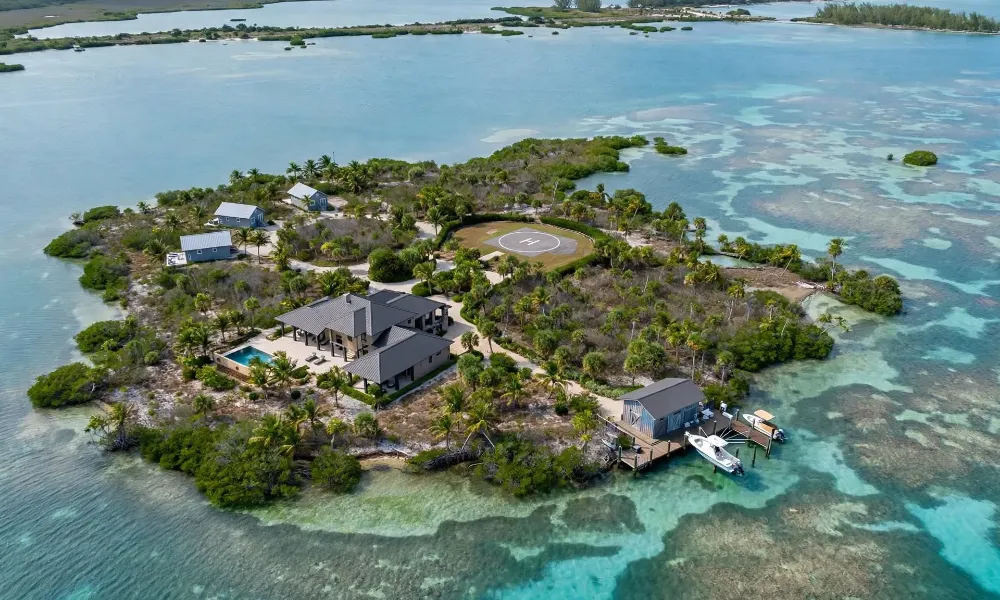
The most famous private island currently on the American market sits ten minutes by boat from Key Largo: 26 acres with a main residence, guest cottages, a dockmaster’s building, and its own helipad, marketed around $95 million.
The price buys proximity to civilization, ocean reef access, and a finished compound, which is the Keys’ unique offer among island markets: an island that functions like a waterfront estate with its own zip code. Operating costs are the county’s standard plus island premiums, and the helipad transforms the access equation entirely.
3. The Exumas, Bahamas: The $30 to $60 Million Compounds
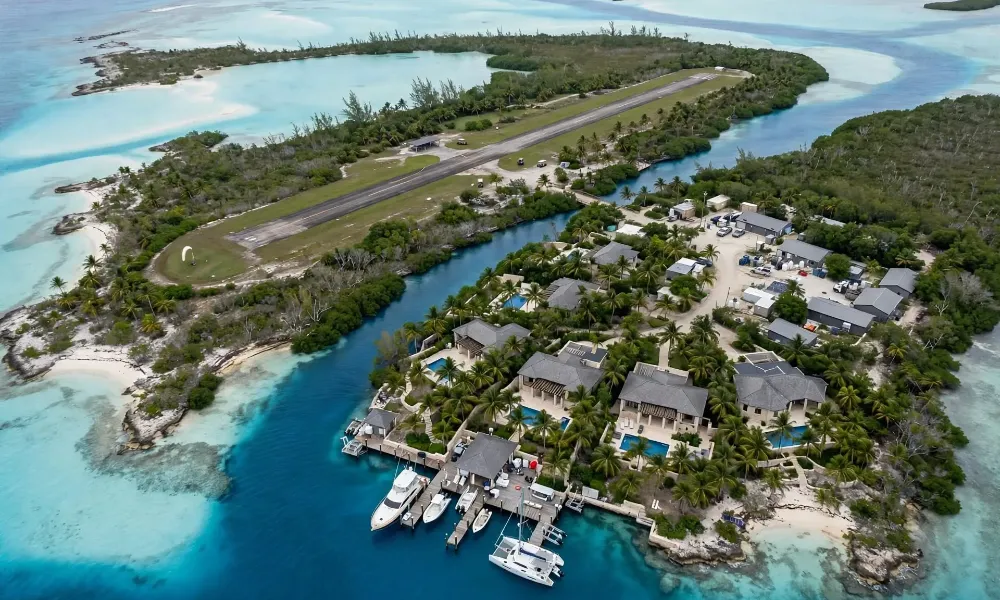
The Exumas, the chain that hosted James Bond and the world’s most famous swimming pigs, hold the Bahamas’ trophy tier: islands of 40 to 150 acres with deep water docks, solar microgrids, airstrips, and staff infrastructure, listing from $30 to $60 million and beyond.
The buyers here are buying the finished product, islands that have already absorbed the decade and the tens of millions that development requires, with the airstrip converting the logistics from maritime to aviation and tying the property into the private flying ecosystem.
4. Belize: The Turnkey Atolls, $4 to $10 Million
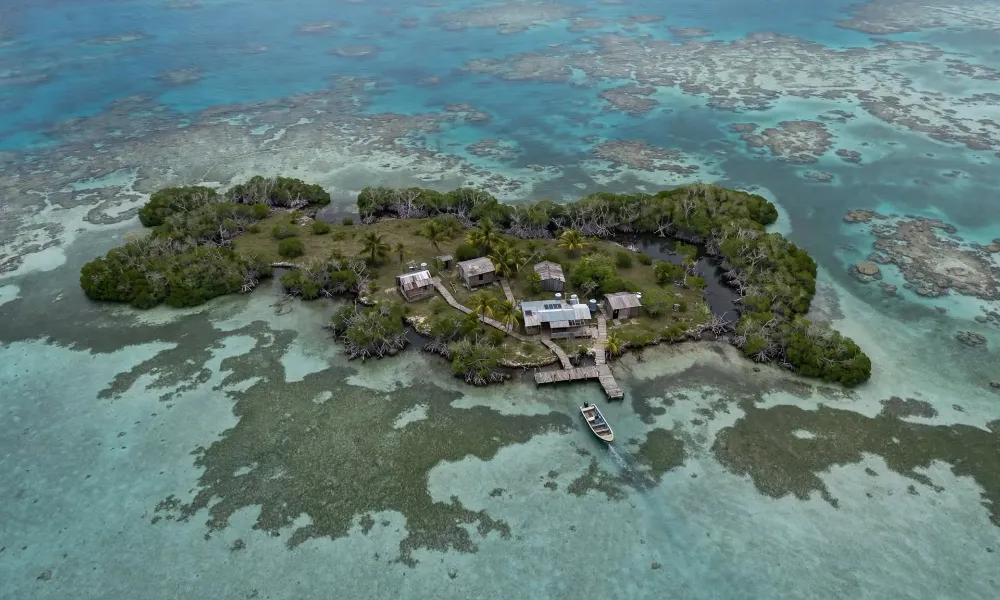
Belize’s barrier reef, a UNESCO site, hosts the market’s most affordable true private islands: sand cays and mangrove islands of one to five acres with existing lodges or cottage compounds, listing from roughly $4 million.
The arithmetic is seductive and the reality is not: reef zoning limits development severely, freshwater is rainwater or desalination, and the operating infrastructure of a remote atoll, boats, comms, power, staff rotation, is a permanent operating company, not a household.
5. Fiji: The South Pacific Estates, $5 to $25 Million
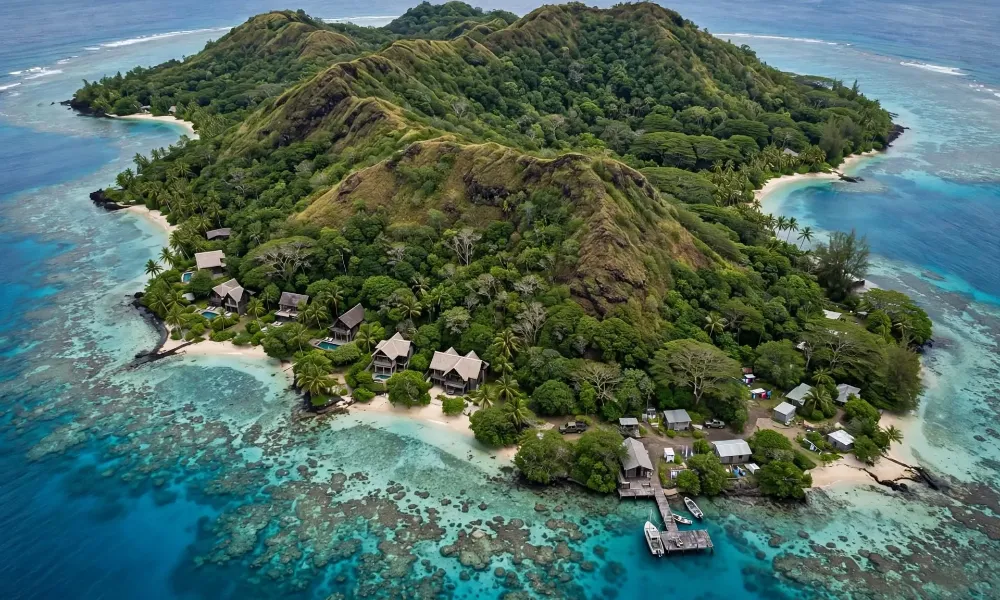
Fiji’s freehold islands, rare in the South Pacific where most land is communal, allow foreign ownership and support the region’s most developed private island market.
Islands with white sand, volcanic hills, and staff villages list from $5 million for modest cays to $25 million for finished estates, with the Pacific’s costs arriving by the same boat as everything else. The reward is the geography: Fiji’s reefs and water clarity remain the benchmark against which every other island market is measured.
6. Greece: The Cycladic Isles, $5 to $50 Million
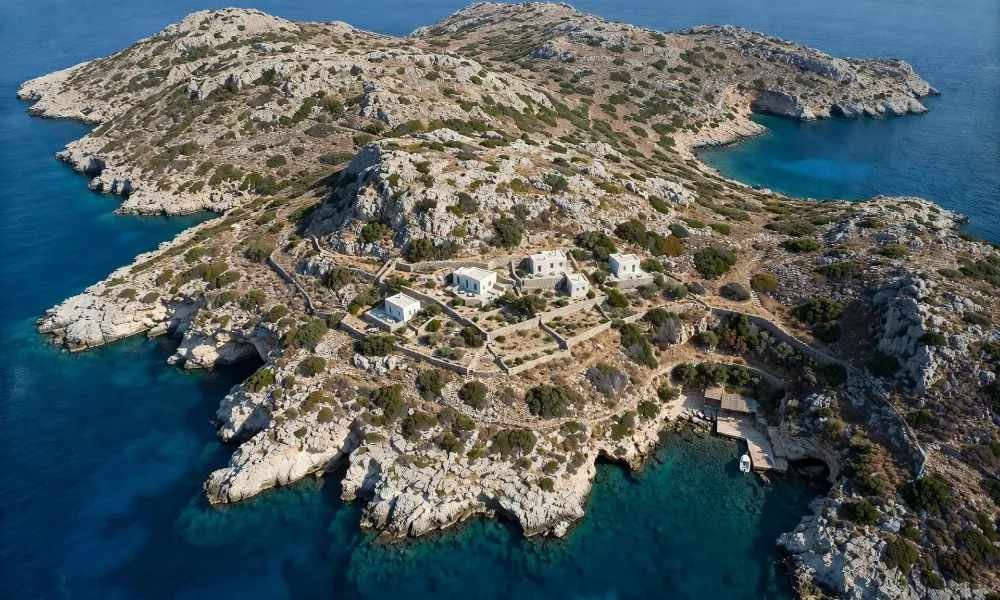
Greece’s private island market rebounded as the country’s finances stabilized, and the Cyclades now list everything from raw rock of a few acres at $5 million to developed islands with villas and helipads past $50 million.
The Greek offer is the view, dry stone architecture, and the Aegean’s light, with the logistics softened by proximity to islands that have infrastructure, water, and hospitals. Our Mediterranean itineraries cover the sailing; ownership stakes the claim.
7. Canada: The British Columbia Coast, $2 to $20 Million
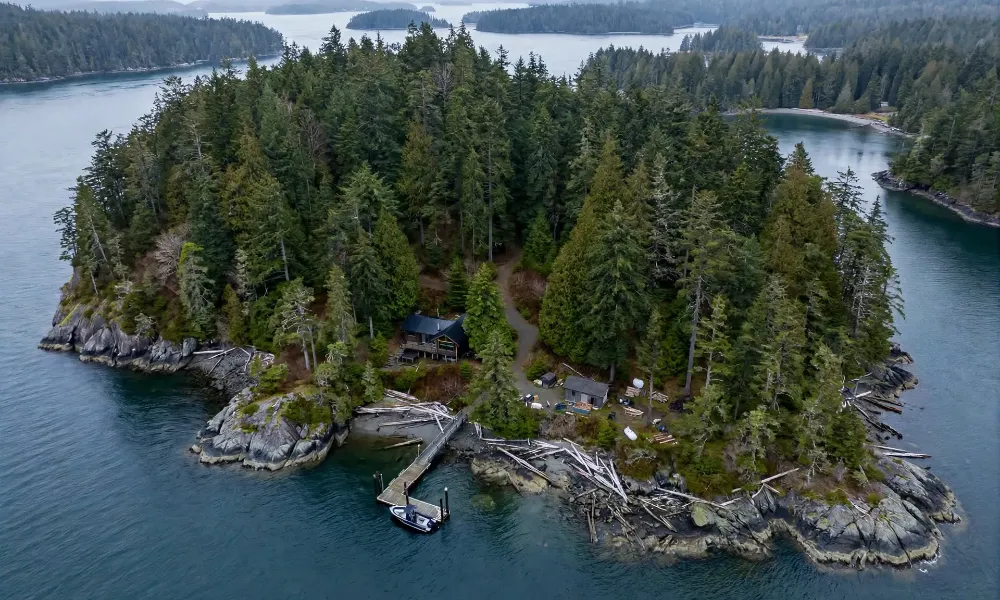
The Pacific Northwest holds the Northern Hemisphere’s most underrated island market: forested islands of 10 to 100 acres in the Gulf Islands and Desolation Sound, listing from $2 million, with deep water, protected anchorages, and summers that outshine the Mediterranean’s crowds.
The catch is the calendar: the season is four months, the winter storms are serious, and the infrastructure, docks, water systems, and heating, must be engineered for it.
8. The Trophy Tier: $100 Million and Beyond
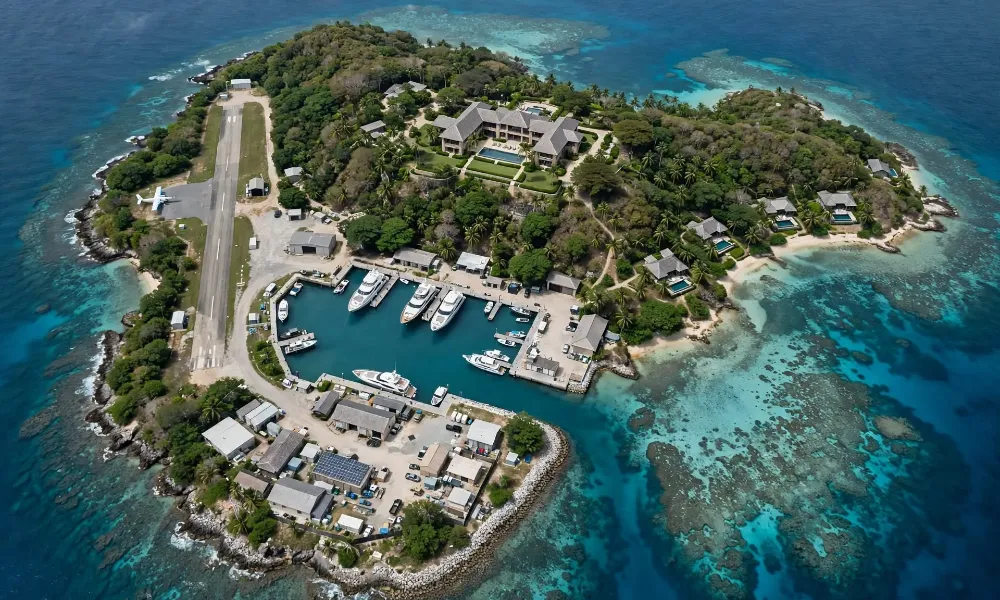
At the summit sit the world’s few true trophy islands, which trade privately or by whisper rather than listing: compound islands with airstrips, marinas, and staff villages, valued at $100 million and beyond, whose buyers measure the asset in decades and legacy rather than operating spreadsheets.
Pumpkin Key’s public listing is unusual; the very top of the market almost never is. The buyers of these islands share one trait: they already own everything else the water touches.
The Real Cost Arithmetic
The operating rule of thumb that island brokers cite is uncomfortable: budget ten percent of the purchase price annually for an undeveloped island and five percent for a developed one, before travel.
Staff, power generation, water systems, boats, maintenance, insurance, and the eternal logistics of supplies turn island ownership into the management of a small remote resort whose only guest is you. The buyers who thrive are those who want the logistics, who find the generator maintenance as romantic as the sunset. Everyone else should rent, and return the keys at the end of the week.
FAQs
1. What is the cheapest private island you can buy?
Raw islands in Canada, Belize, and parts of Scotland list below $1 million, with buildable, habitable islands realistically starting around $2 to $3 million in the Bahamas and British Columbia. The purchase price understates the true cost of operation by an order of magnitude.
2. Can foreigners buy private islands?
Yes in the Bahamas, Belize, Fiji’s freehold land, Greece, and Canada, with varying restrictions. Many countries, including much of the South Pacific and Scandinavia, restrict or prohibit foreign freehold ownership, which is why the liquid markets concentrate where title is open.
3. How much does it cost to run a private island annually?
Budget five to ten percent of the purchase price per year: staff, power, water, boats, maintenance, insurance, and supplies. Developed islands with infrastructure cost less proportionally than raw land requiring constant construction.
4. Do private islands have utilities?
Rarely. Most islands generate their own power, source water from rain, wells, or desalination, and treat their own sewage. Islands with airstrips, solar microgrids, and desalination plants carry premium prices precisely because infrastructure is the true asset.
5. Is a private island a good investment?
Raw island land has appreciated in the liquid markets, but islands are illiquid, expensive to hold, and dependent on development spending that rarely returns at sale. Buy for use and legacy, with appreciation as a bonus, not a plan.
6. How do you access a private island?
By boat, seaplane, or helicopter, with the airstrip or helipad transforming access economics. Proximity to a mainland airport or marina is the single biggest driver of an island’s practical value, more than acreage or beaches.
7. What about hurricanes and storms?
Exposure is a pricing and engineering fact: Bahamas and Caribbean islands pay catastrophic insurance premiums and build to hurricane codes, while Mediterranean and Pacific Northwest islands face different seasonal threats. Insurance availability increasingly shapes the market.
8. Who sells private islands?
Specialist brokerages, Christie’s and Sotheby’s international affiliates, and dedicated island firms, with the trophy tier trading privately through family offices and the major brokers’ discreet desks.