In 1948, a company that no longer existed built a car that would define its future. The car was assembled in a sawmill in Gmünd, Austria. Ferry Porsche, son of the brilliant but compromised engineer Ferdinand Porsche, led the effort.
He assembled the first car to bear the family name using Volkswagen parts. His father’s design office had been dissolved in the aftermath of the war. The family was also effectively under arrest in French custody.
The Porsche 356 was light, simple, and honest. It launched the only major sports car company founded in the immediate postwar ruins.
Eight decades later, Porsche holds nineteen victories at the Le Mans 24 Hours, more than any manufacturer in history, and its 911 remains the benchmark sports car against which every rival, from McLaren to Aston Martin, is measured. This is the story of how a car designed around an engine from the people’s car became the aristocrat of speed.
The 356 and the Birth of the Doctrine
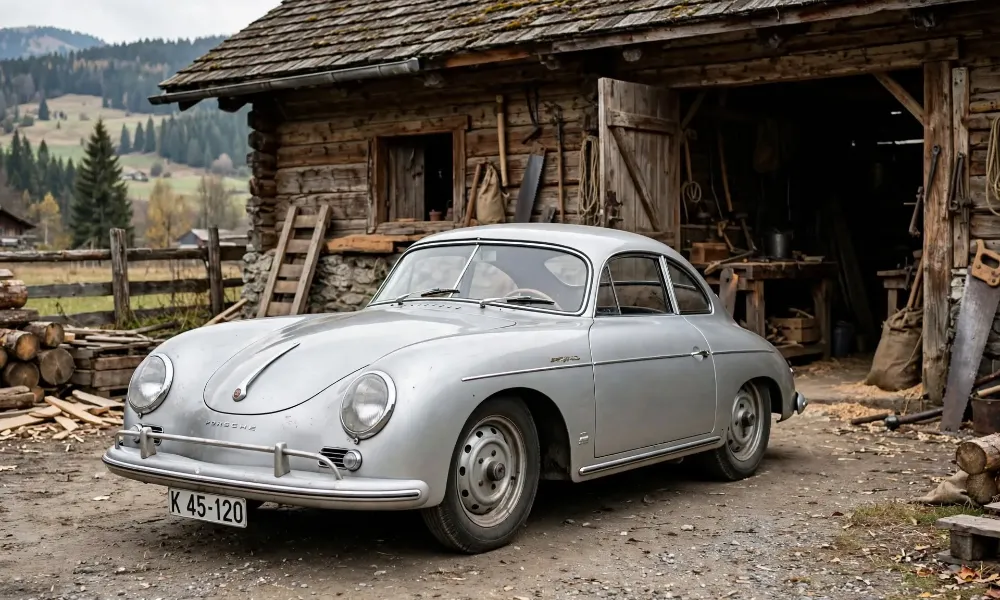
Ferry Porsche’s insight was that speed did not require excess. The 356 used a rear-mounted, air-cooled flat-four engine derived from the Volkswagen. It was tuned and lightened, then paired with a hand-beaten aluminum body.
Racing success followed immediately. The 356 won its class at Le Mans in 1951. This marked the beginning of a record that would never end.
The company’s doctrine was now established. A Porsche was a tool for driving, engineered for the entire journey. It was durable enough to race on Sunday and commute on Monday.
The company nearly failed more than once during the 1950s. Racing prize money helped save it each time. So did the devotion of customers who understood what the car truly represented.
The 911: Evolution as Religion
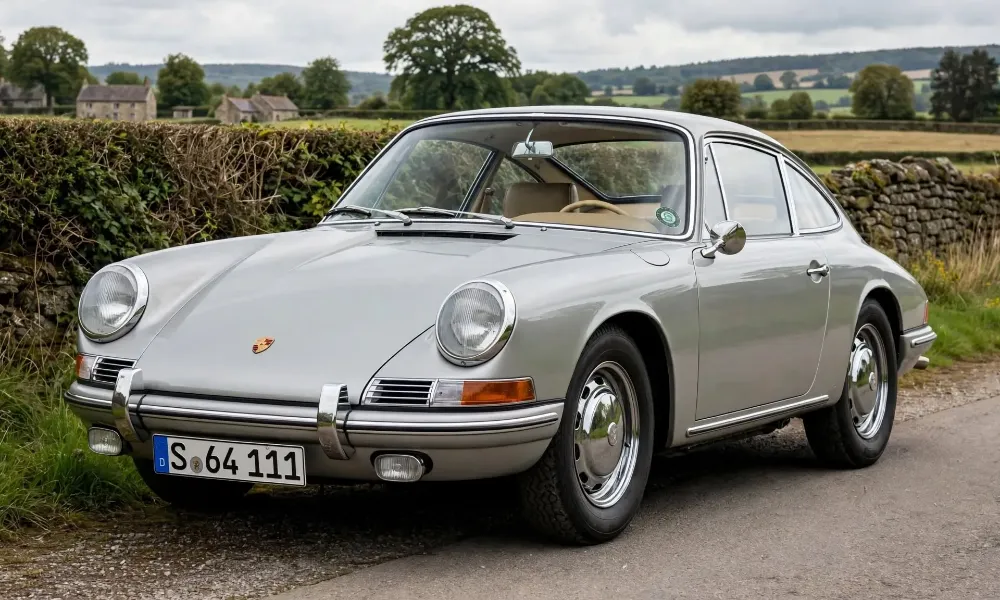
The 911 arrived in 1963, and it should not have worked. It had a rear-engine layout that every engineer considered wrong. Its air cooling was already dated. The shape also changed so gradually over six decades that a 1964 and a 2024 model remain unmistakably the same idea.
Yet the 911 became the most successful competition car in history and the most profitable sports car ever sold. The reason lies in the doctrine Porsche had perfected. It involved endless development of a single concept, with each generation becoming faster, cleaner, and more capable. The company never abandoned the layout that made the car distinctive.
The racing record provides the proof. The 911 secured class wins at Le Mans and Daytona throughout the 1960s and 1970s. It also won the world championship for makes during the GT era. Its victories extended from rallying’s Safari to modern GT3 categories.
A 911’s competition history is not a sideshow. It is the product.
Le Mans: The Nineteen
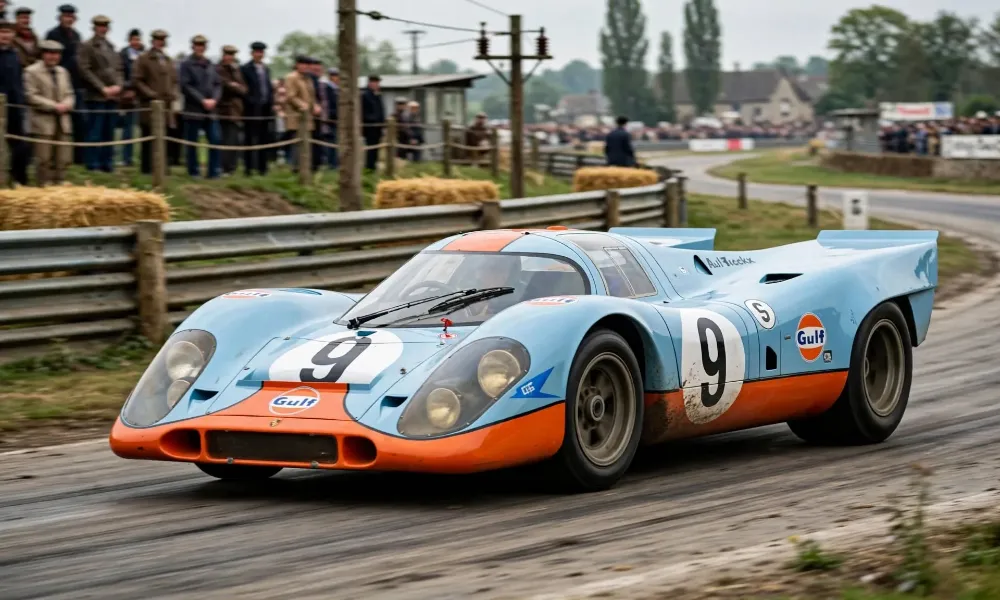
Porsche’s relationship with the 24 Hours of Le Mans is the deepest in motorsport. Its record stretches from the class-winning 356 of 1951 to the 917’s overall victories in 1970 and 1971. The legendary 935s and 936s followed in the late 1970s. Then came the all-conquering 956 and 962 Group C cars, which won seven consecutive races in the 1980s.
The GT1 added another overall victory in 1998. The hybrid 919 Hybrid then completed a hat trick of overall victories from 2015 to 2017. Porsche has nineteen overall wins, more than double any rival’s total. Each era of the sport was conquered with a different formula.
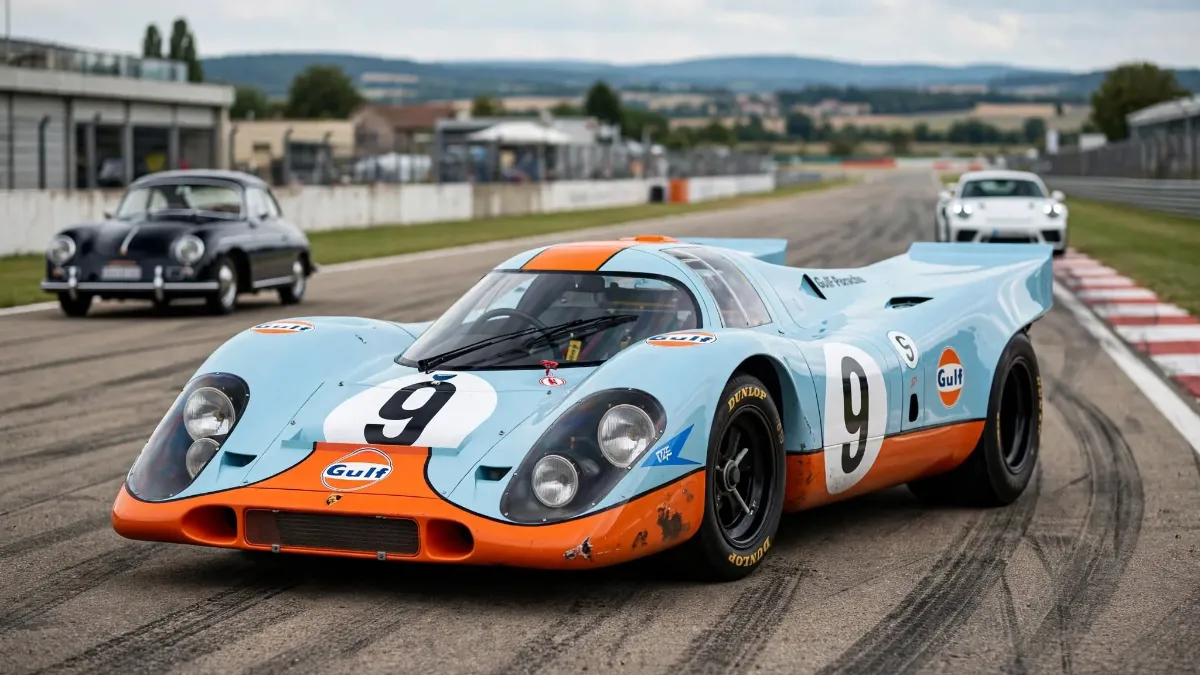
The 917 alone belongs to the same pantheon as the Fangio Mercedes. It is the car that Steve McQueen made a film around. It represents the kind of machine that changed what its sport believed was possible.
The Modern Empire
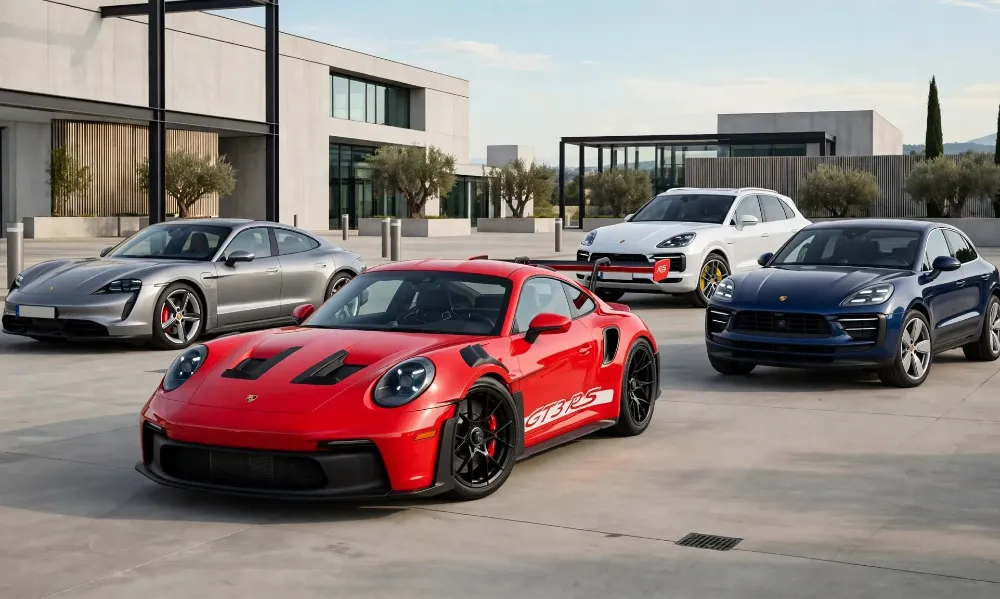
The modern Porsche is a public company with staggering profitability. Its range spans the electric Taycan, the Macan and Cayenne SUVs that generate much of the money, and the 911 GT3s that guard the brand’s soul.
The company returned to Le Mans’s top category with the hybrid 963 in 2023. Its goal was to secure a twentieth victory. Its motorsport programs also span every continent.
Yet the core product philosophy has never changed. Every Porsche, from the base Carrera to the GT2 RS, is engineered to be driven hard. It is built for daily use and intended to last for decades.
It is the anti-exotic. In a world of temperamental hypercars, Porsche remains the sports car brand whose owners actually keep their cars.
FAQs
1. Who founded Porsche?
Ferry Porsche founded the company in 1948, building the 356 in Gmünd, Austria. His father, Ferdinand Porsche, designed the original Volkswagen and the Auto Union Grand Prix cars but was imprisoned after the war and never led the company his son created.
2. How many times has Porsche won Le Mans?
Nineteen overall victories, the record by a wide margin, spanning 1951 to 2017 and including the 917, 956, 962, and hybrid 919 eras. Porsche returned to the top category in 2023 seeking a twentieth win.
3. Why does the 911 keep its rear engine?
Heritage and differentiation: the rear layout defines the car’s character, and Porsche has engineered around its physics for six decades with suspension geometry, electronics, and torque vectoring. The layout’s flaws became the platform’s identity, and the development of those flaws is the brand’s story.
4. What was the 917?
The 1970 Le Mans winning sports prototype, powered by a flat twelve engine and capable of over 240 miles per hour on the Mulsanne Straight. It was Porsche’s first overall Le Mans winner and remains the most iconic racing car the company ever built.
5. Is Porsche still family controlled?
No. The Porsche and Piëch families hold significant stakes through Porsche SE, but the operating company, Porsche AG, has been publicly traded since 2022, with Volkswagen Group as its controlling shareholder.
6. What is the greatest 911?
Opinion divides, but the GT3 and its RS variants are the track purists’ choice, the Turbo S the all weather benchmark, and the Carrera RS 2.7 of 1973 the collector grail. The 911’s greatness is the range itself, every variant faithful to the doctrine.
7. Does Porsche race the 911?
Constantly. The 911 has competed in every major GT category for five decades, with class wins at Le Mans, Daytona, Sebring, and the Nürburgring 24 Hours, making it the most successful race car in history by volume of victories.
8. What is Porsche’s electric strategy?
The Taycan launched the electric era in 2019, the Macan Electric followed, and the company has committed to electrifying its range while keeping the 911 combustion powered as long as regulation allows, a hedged strategy unique among sports car makers.