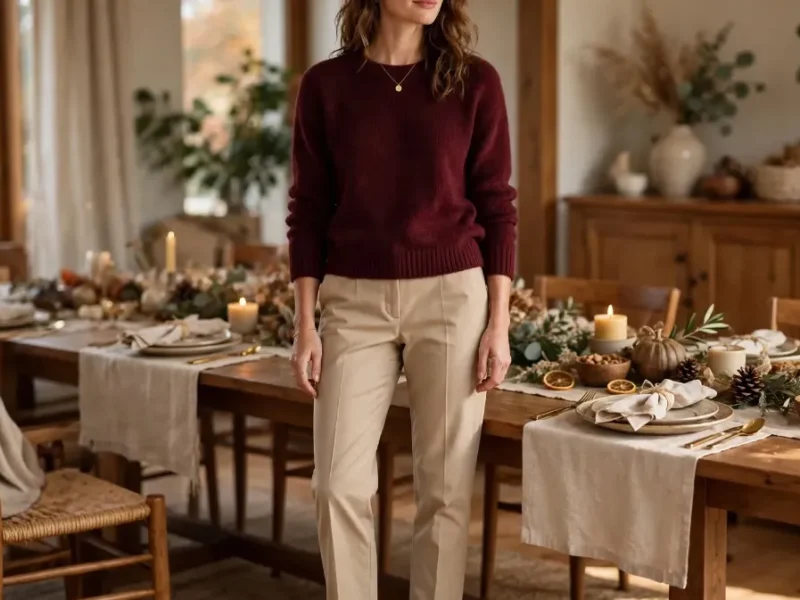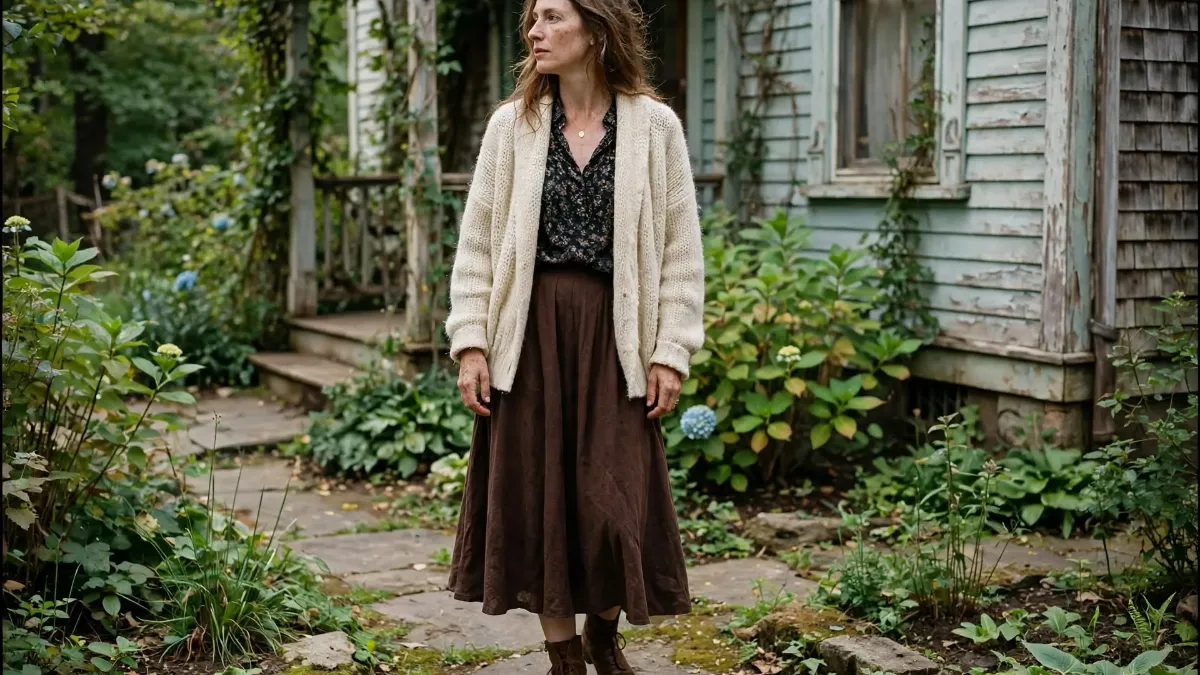
The Practical Magic aesthetic begins with clothes that feel personal: a cardigan you keep reaching for, a skirt that moves beautifully, a small necklace with a story you do not have to explain.
You can create the feeling with familiar pieces. Start with an everyday outfit, introduce one romantic texture, and keep enough ease to live in it.
The appeal reaches beyond a seasonal fashion label. There is pleasure in getting dressed without looking as though every item arrived together, chosen to complete an identical picture.
For PraviCeler, that is the most interesting interpretation: clothes with character, worn with affection.
What is the Practical Magic aesthetic?
The phrase refers to fashion inspired by the world of the 1998 film Practical Magic, starring Sandra Bullock and Nicole Kidman as Sally and Gillian Owens.
For our styling interpretation, think of ordinary dressing softened by romantic detail. Knitwear, flowing shapes, velvet, lace accents, and personal jewellery offer different ways into that mood.
They do not all need to appear at once. The look becomes more useful when you choose the elements you genuinely enjoy.
There is also no need to adopt the characters’ beliefs or recreate a complete screen costume. A film can inspire how you combine clothes without becoming an identity you have to perform.
Why does the costume design still matter?
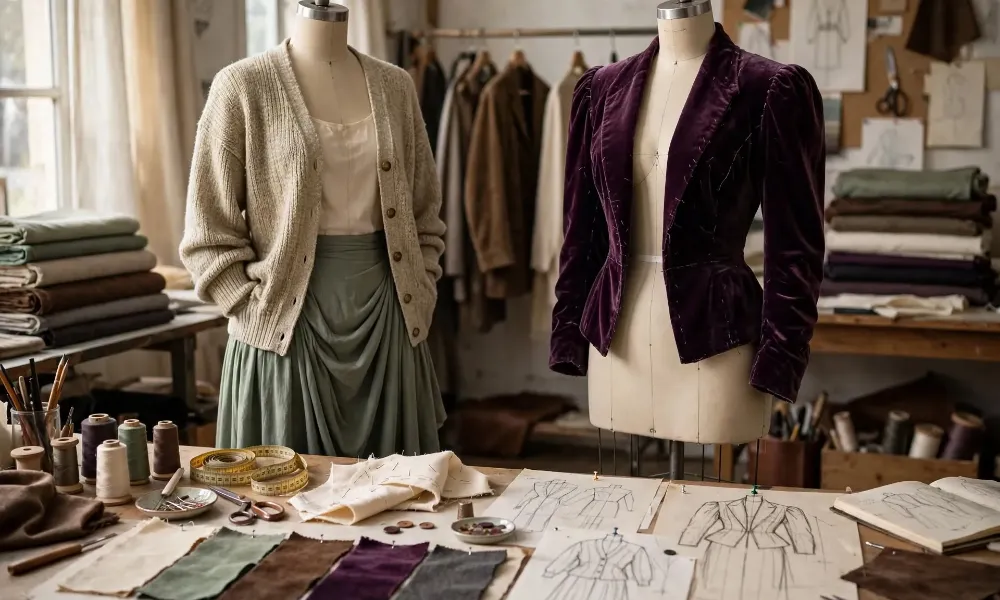
Judianna Makovsky designed the original film’s costumes. In a 2026 interview with Air Mail, she explained that she had aimed for clothes that would resist dating and remain specific to the characters.
That is a more useful foundation than treating the wardrobe as a checklist of fashionable objects.
The lesson we take from her approach is to begin with the wearer. What do you do all day? Which clothes make you feel comfortable, expressive, or quietly put together?
Answer those questions before shopping for a particular colour of velvet. Character is what gives the inspiration somewhere to go.
Should you take inspiration from Sally or Gillian?
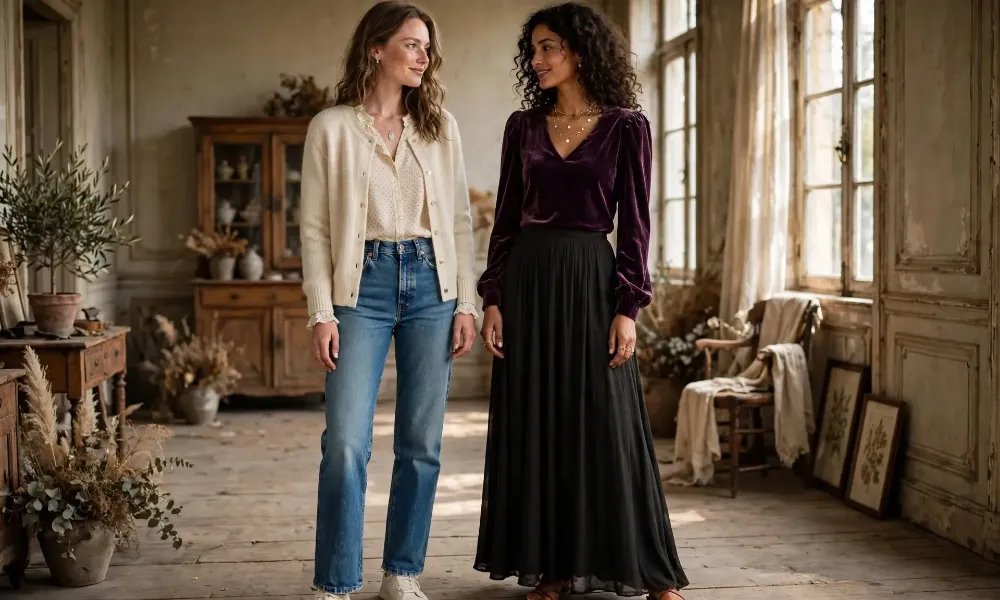
You can borrow from either without choosing a permanent side.
Makovsky’s account in ELLE distinguishes Sally’s understated approach from Gillian’s more expressive wardrobe. The point is that the sisters belong to the same world while retaining different identities.
Our everyday translation offers two directions: familiar pieces with a romantic accent, or a stronger statement balanced by something simple.
| Direction | Original outfit suggestion | What to watch |
| Understated and soft | Straight jeans, a fine cardigan, and a small pendant | Whether the neckline and jewellery sit comfortably together |
| Romantic everyday | A flowing skirt, plain top, and relaxed knit | How the layers move when you walk |
| Richer and more dramatic | A velvet piece with restrained trousers or a simple skirt | Whether you enjoy the texture in ordinary daylight |
| Evening interpretation | A fluid dress, familiar outer layer, and one personal accessory | Whether the complete outfit suits the setting |
| Warm-weather version | An airy skirt or dress with a lightweight cardigan | Whether each layer has a useful role |
These are editorial outfit ideas, not a catalogue of exact film costumes.
Which pieces should you try first?
Begin with the garment you already love wearing. It might be a cardigan, jeans, a plain dress, or a skirt that makes you feel good every time you put it on.
Then introduce a contrasting detail. A substantial knit can sit beside a lighter skirt; a small lace accent can change a simple neckline.
This works particularly well when the familiar piece keeps the outfit grounded. You are adding possibility to your wardrobe rather than replacing your entire way of dressing.
A cardigan is a useful starting point
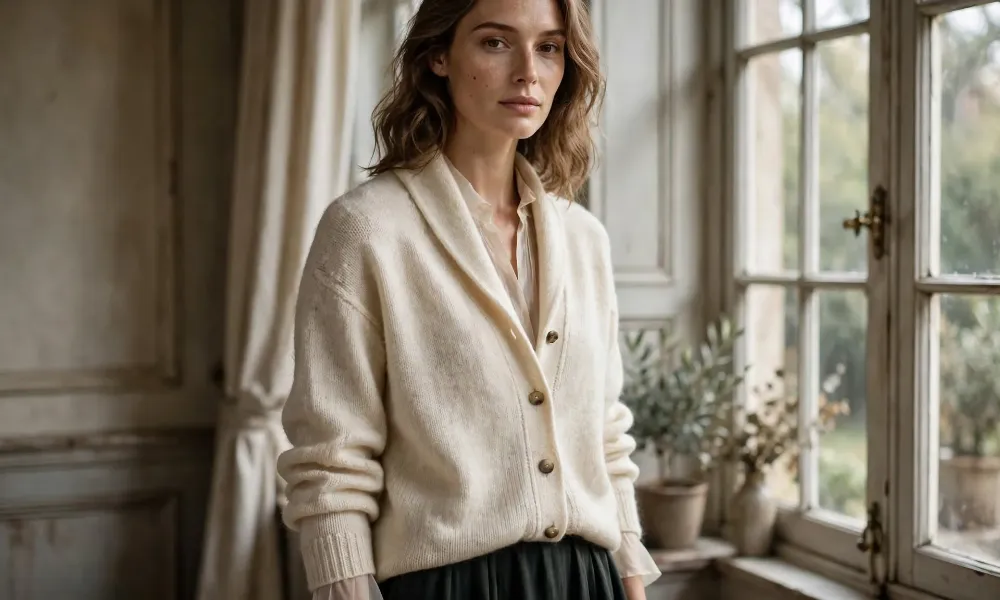
Try the cardigan both open and closed with the proposed outfit. Notice the hem, neckline, and how the sleeves sit beneath your coat.
A cardigan that looks lovely alone may bunch beneath another layer or cover the part of a dress you wanted to show.
Make the decision while wearing the complete combination. The pleasure of a soft layer should survive leaving the bedroom mirror.
Let skirts earn their place through movement
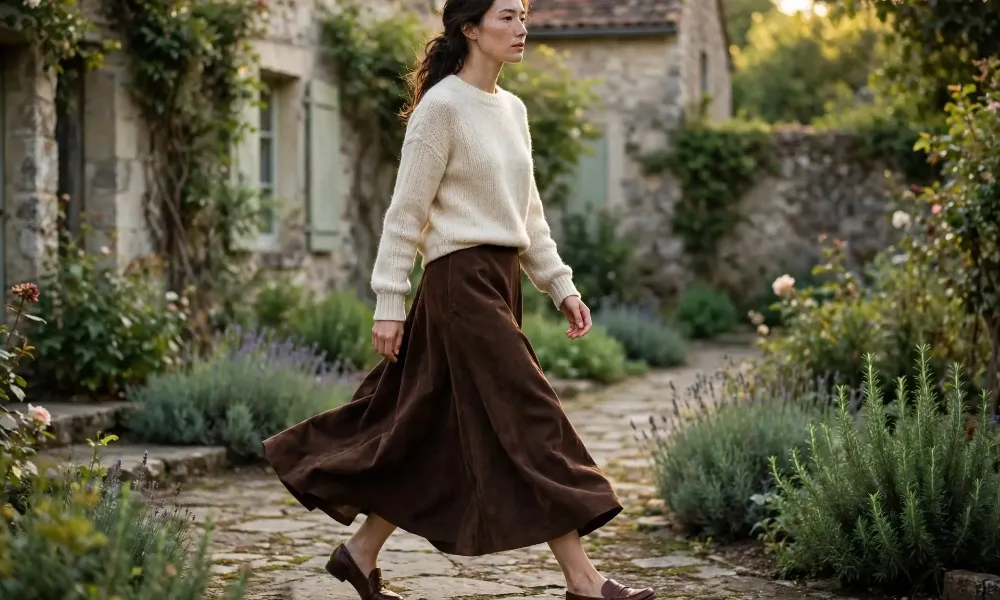
Walk, sit, and stand in the skirt with your chosen shoes. Check the hem from behind, especially if the outfit includes a long coat.
A flowing shape can be beautiful without being practical for every day. Give it a role you will actually enjoy.
There is no single required length. The right one is the length that works with your preferences, activities, and footwear.
How do you wear velvet without making the outfit feel theatrical?
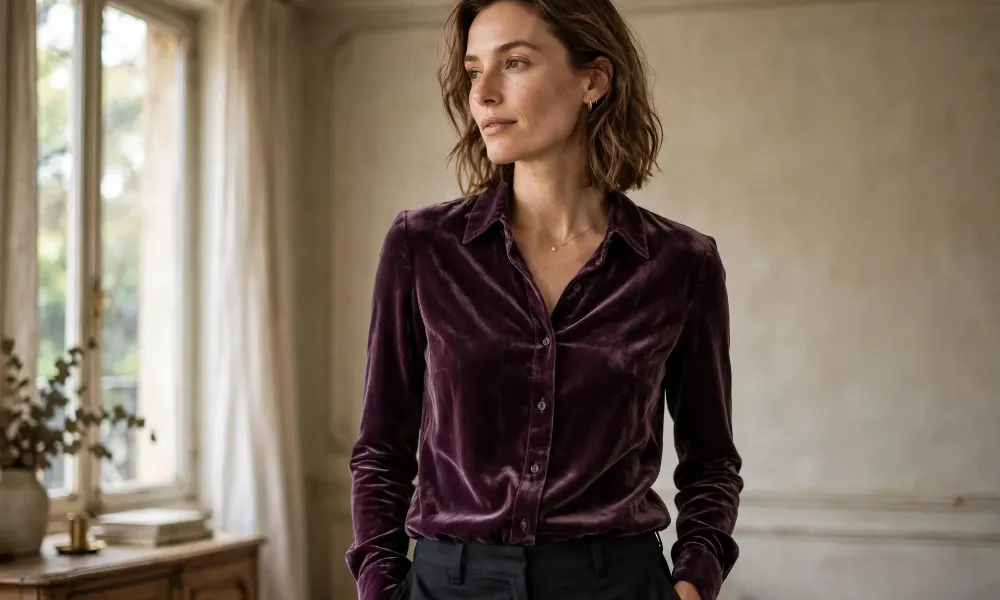
Choose one velvet element first. It might be a top, skirt, dress, or small accessory.
Pair it with a fabric and shape you already find easy to wear. A velvet top with familiar trousers gives you a different experience from a full romantic outfit.
Our suggestion is to assess colour and texture separately. You might love a deep green shade but prefer it in a simpler fabric, or enjoy velvet most in a quieter colour.
There is no reason to buy both decisions at once if only one makes you happy.
The famous green dress has a design history
An interview with dressmaker Monah Li traces Gillian’s green look to a garment sourced through Fred Segal and reworked for the film by Makovsky.
That history is a reminder that a screen look can involve sourcing, adaptation, and several people’s creative work.
A contemporary green dress should not be described as the original design merely because it resembles an image. If provenance matters to your purchase, ask what is documented and what is simply inspired by the film.
Which colours make the look feel personal?
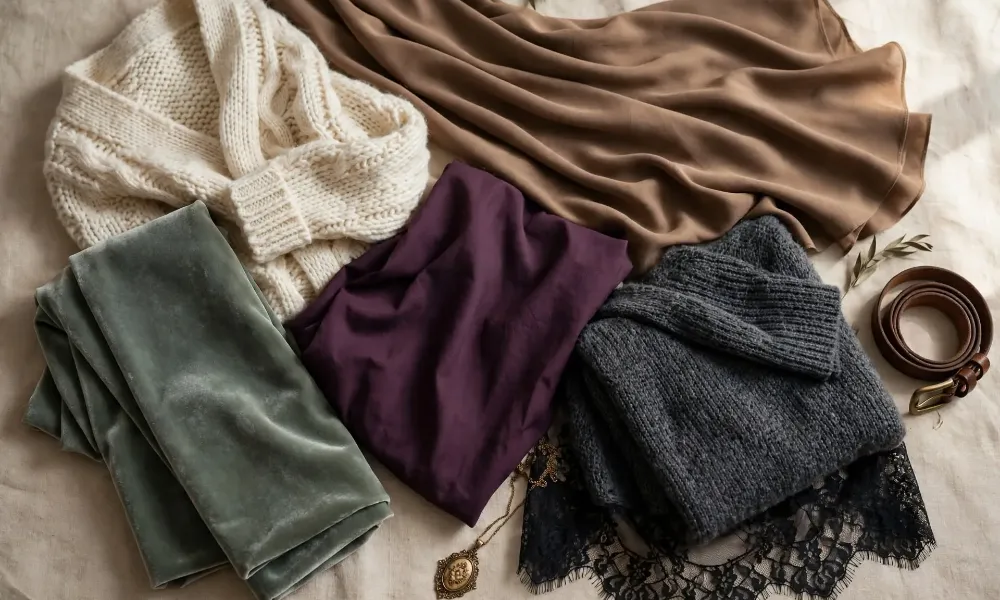
Our suggested palette includes cream, brown, muted green, charcoal, plum, and black. These are styling options rather than a claim about every costume in the film.
Choose a familiar base before adding a richer shade. You may prefer a pale cardigan with darker clothes, or a deeper colour beside light denim.
If those colours do not suit your wardrobe, keep the texture and movement while using shades you already love.
The aesthetic should make getting dressed more enjoyable. It should not require you to tolerate a colour that never feels right.
How much lace is enough?
Start with one detail: a neckline, a cuff, a small panel, or another accent you enjoy.
Then look at the entire outfit. Ask whether the lace contributes something you want to notice or competes with several other details.
You can also choose a lining or an additional layer where you want more coverage. Check the result in daylight, while seated, and beneath the outerwear you intend to use.
The useful question is how comfortable and confident you feel wearing it. There is no compulsory degree of sheerness or exposure.
What jewellery works with the Practical Magic aesthetic?
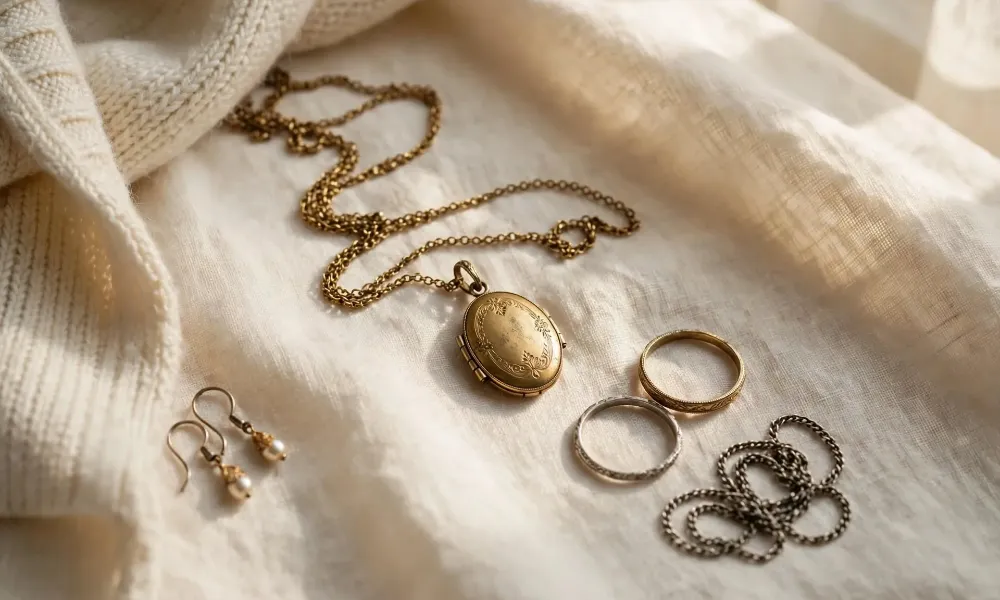
Start with something you have a reason to wear. A familiar ring, a pendant from someone dear, or an inherited piece can provide more personality than a newly assembled collection of themed accessories.
You do not need to invent symbolism. Enjoying the shape or remembering who gave it to you is enough.
Our guide to styling luxury accessories explores how to give a detail space within an outfit.
If you prefer several pieces, try them together rather than assuming layering always improves the result. Notice tangling, competing lengths, and whether you can comfortably wear them throughout the day.
Can you wear the look to work?
Translate the mood into the requirements of your workplace.
One option is a simple trouser outfit with a textured cardigan and understated jewellery. Another is a plain dress with a restrained romantic detail.
Keep the silhouette as familiar as you need it to be. A small change can provide the enjoyment without requiring an explanation.
Check dress codes, footwear needs, and how the layers behave at your desk. A reference should not make ordinary tasks inconvenient.
How do you shop vintage without buying a problem?
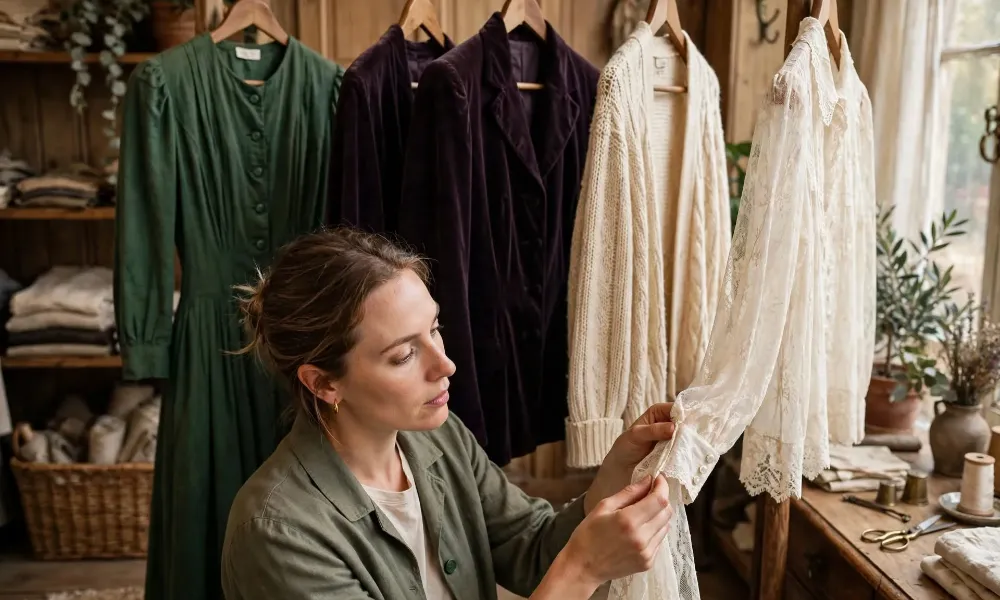
Look beyond the appealing description. Request measurements, composition labels, condition photographs, and the seller’s return terms.
For a dress or skirt, inspect the hem and closure. For a knit, ask about holes, repairs, and changes in shape. With velvet or lace, request clear close-ups of any wear the seller mentions.
If a garment needs work, obtain a realistic alteration estimate before buying. A bargain that requires extensive changes may not suit your budget or plans.
Our guide to affordable luxury fashion brands offers another route when you want a considered purchase without relying on vintage availability.
Separate “vintage” from “screen worn”
A seller may use a film name to describe a mood. That is different from claiming the garment appeared in the production or came from a particular designer.
Ask what supports any specific attribution. Photographs, labels, and provenance deserve scrutiny when the price depends on the story.
You can love an inspired piece without paying for an undocumented connection.
How can you tell whether you are buying clothes or buying the mood board?
Try this editorial wardrobe exercise before making a purchase.
First, build an outfit from your own clothes that captures the feeling. Identify what you enjoy: softness, colour, movement, or a particular detail.
Next, name the actual gap. “I need a cardigan that works over this dress” is more useful than “I need the whole aesthetic.”
Finally, imagine the proposed purchase with two unrelated outfits. If it has a place beyond this reference, it is easier to judge on its own merits.
The purpose is not to remove emotion from shopping. It is to give the emotion something lasting to attach to.
Your Practical Magic wardrobe checklist
Before buying or leaving home, ask:
- Have I started with something I already enjoy wearing?
- Does each layer work with the next?
- Can I move and sit comfortably?
- Have I checked coverage in ordinary daylight?
- Do the shoes suit my actual plans?
- Does the jewellery feel personal rather than obligatory?
- Would I enjoy the outfit without anyone recognising the film?
- Is any claimed vintage or designer provenance supported?
- Can a new piece work elsewhere in my wardrobe?
Frequently asked questions
Who designed the original Practical Magic costumes?
Judianna Makovsky designed the costumes for the 1998 film.
Do you need to wear black?
No. You can explore softer colours, richer shades, or your usual palette while borrowing texture and relaxed layering.
Is this only an autumn look?
No. Lighter fabrics and fewer layers offer a warm-weather interpretation. Dress for the conditions rather than a seasonal label.
Do you need a replica of Gillian’s green dress?
No. A replica is one possible fan purchase, not a requirement for enjoying the broader inspiration.
Can modest outfits work with this aesthetic?
Yes. Longer skirts, opaque layers, covered necklines, and comfortable knits can all belong in your interpretation.
The editorial read
The most appealing part of this style is the sense that clothes have been chosen over time. Something familiar sits beside something treasured, and the combination belongs to its wearer.
You can build that feeling slowly. Wear the cardigan again. Bring out the necklace you had almost forgotten. Try the skirt with a different pair of shoes.
The inspiration becomes meaningful when it helps you see your own wardrobe with a little more affection.