Katniss Everdeen fashion is most interesting when you borrow its sense of purpose. Start with clothes you can move in, add texture, and let one detail carry the story.
A jacket with useful pockets. A knit that changes the outline of an outfit. Boots you would actually choose for the day ahead.
There is something appealing about clothes that seem connected to a person’s life. You can enjoy that feeling without dressing for a fictional arena or buying an entirely new wardrobe.
The best everyday interpretation keeps your own habits at the centre. Katniss supplies the reference; you decide what belongs in your day.
What makes Katniss Everdeen’s style worth revisiting?
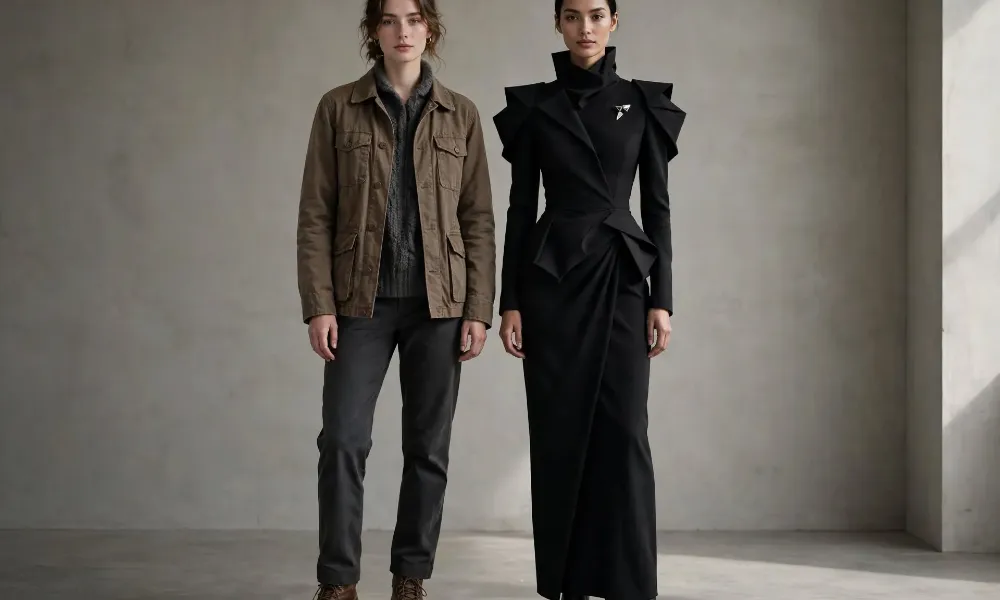
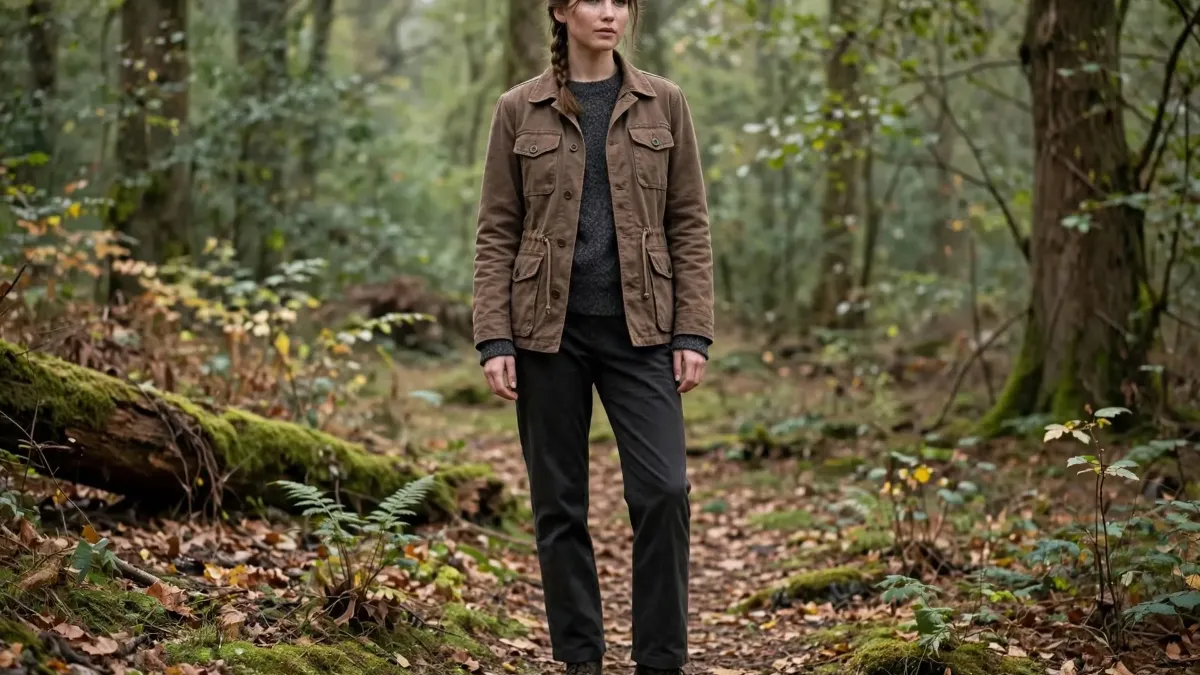
Our reading of the character’s wardrobe begins with the contrast between practical clothing and the spectacle created around her. That contrast is more useful than reducing her style to a braid and a brown jacket.
Some outfits suggest movement and protection. Others place her in a highly controlled public image. Looking at both gives the clothes a narrative beyond whether they are attractive.
For everyday dressing, we would borrow the relationship between function and expression: a useful foundation with a detail that has character.
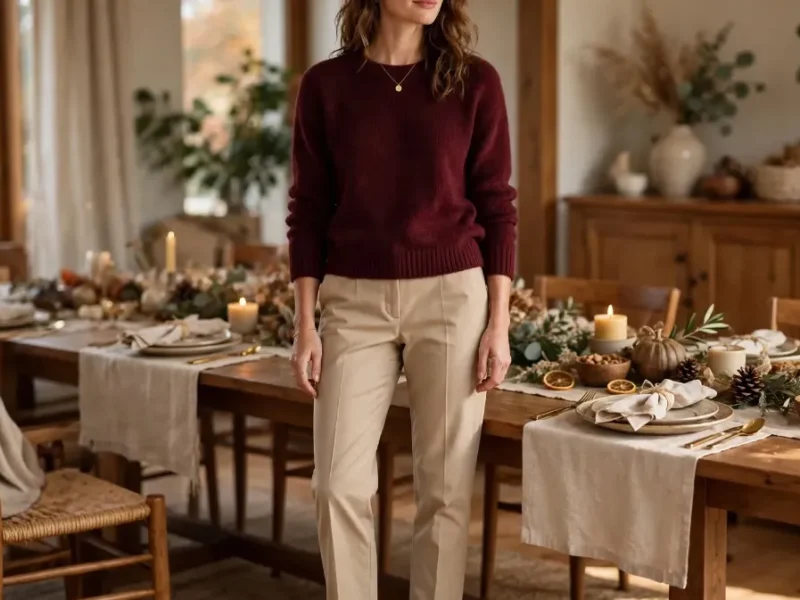
You might begin with a familiar jacket, a textured sweater, and straightforward trousers. The outfit does not need to announce its reference to feel considered.
Give the costume designers their credit
Judianna Makovsky designed the costumes for the first Hunger Games film. Trish Summerville took on costume design for Catching Fire.
That matters because a screen wardrobe is created through deliberate work. It is not simply a collection of clothes the actor happened to wear.
The real fashion connection also predates the latest conversation. In 2013, Lionsgate announced a Net-a-Porter collaboration featuring 16 ready-to-wear pieces, alongside jewellery and leather goods, designed by Summerville and inspired by Catching Fire.
Treat that as part of the history, rather than a current shopping recommendation.
How do you translate Katniss Everdeen fashion into everyday outfits?
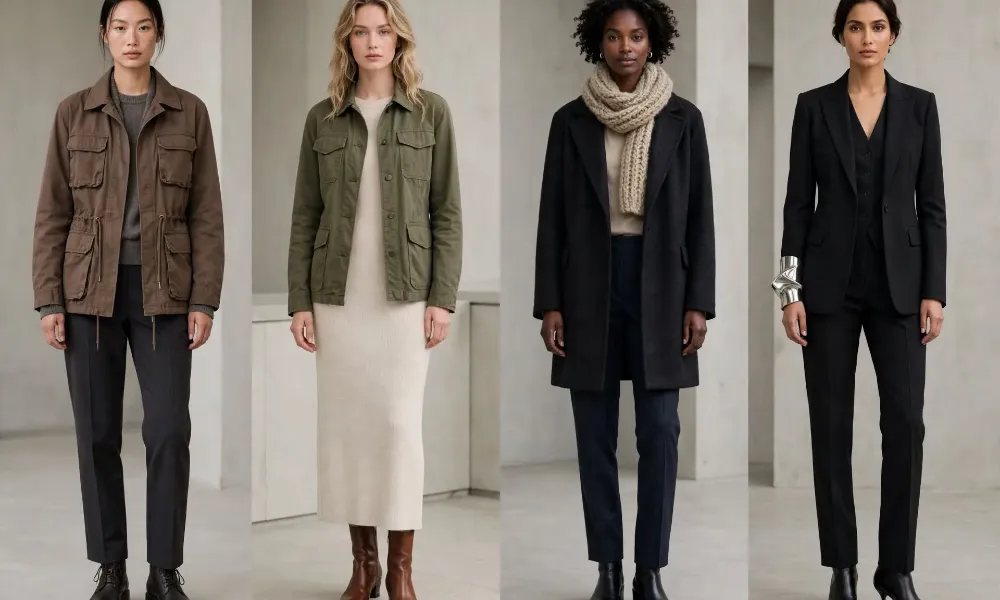
Choose the part of the reference that appeals to you before choosing an item.
Perhaps it is the practical layering. Perhaps it is a sculptural knit, a restrained palette, or the idea of one meaningful accessory.
The table below offers original styling interpretations. These are not claims that Katniss wears each exact combination on screen.
| Direction | A starting combination | What makes it useful |
| Everyday utility | A pocketed jacket, fine knit, straight trousers, and comfortable boots | Familiar pieces that can work independently |
| Textured layering | A simple coat, substantial scarf, plain top, and dark trousers | Interest concentrated around texture |
| Softer contrast | A practical jacket over a simple skirt or dress | A balance between different clothing moods |
| Evening reference | A restrained outfit with one sculptural or symbolic accessory | A nod to dramatic dressing without a costume replica |
Begin with the direction that sounds like something you would enjoy wearing. You do not need every version.
Which jacket should you start with?
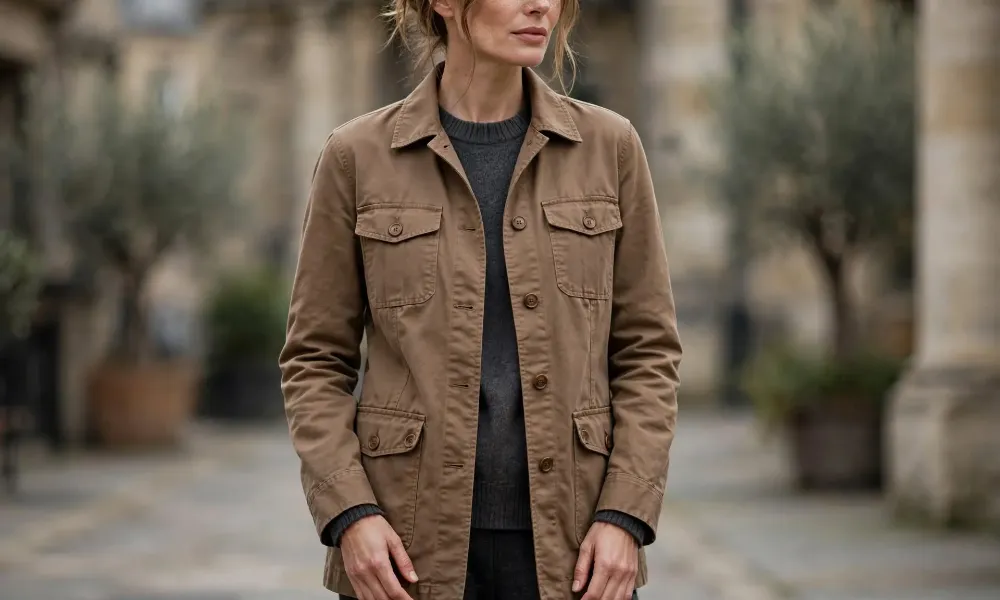
Start by opening your wardrobe. A jacket you already love may give you more character than a new piece bought solely to resemble a still from a film.
Look at its length, pocket placement, fastening, and how it sits over knitwear. Can you move your arms comfortably? Can you use the pockets once you are carrying a bag?
Our styling suggestion is to choose the job first. A city commute, a country weekend, and a dinner outing may call for different outer layers.
Leather is one possible direction, but a cotton jacket, wool coat, or another familiar layer can provide the practical foundation you want. Inspiration need not become a material requirement.
Avoid shopping by colour alone
Two brown jackets can create quite different outfits. One may be sharply fitted; another may have enough room for a substantial knit.
Try the candidate with the layers you intend to wear beneath it. The useful comparison is the complete outfit, rather than a matching shade on a screen.
A convincing reference is not worth an uncomfortable fit.
How do you make textured knitwear feel intentional?
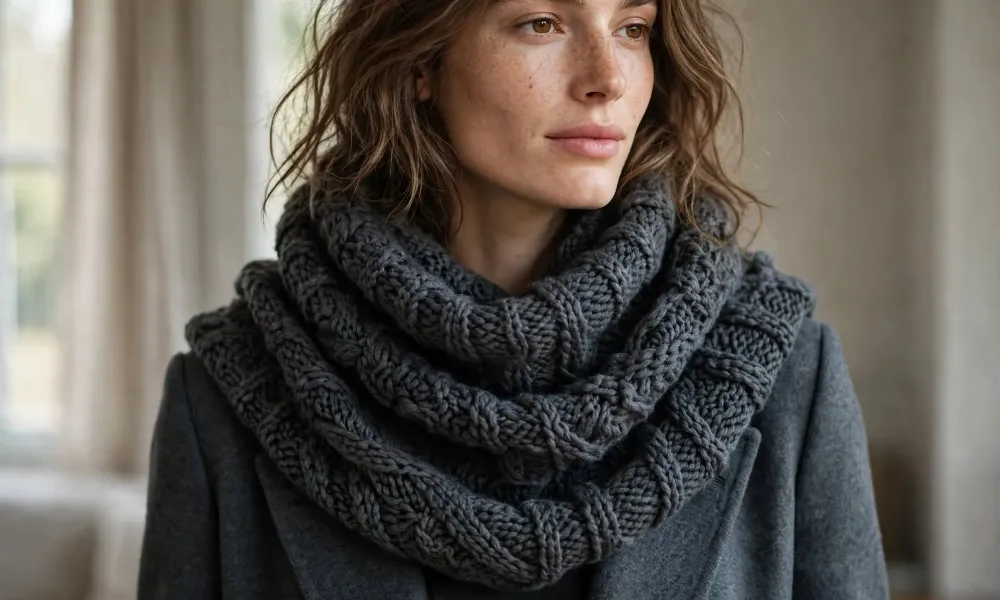
Give it room to be seen. A substantial scarf, cowl, or textured sweater can become the main visual detail while the other pieces stay relatively simple.
Our preference is to choose one strong knitted element first. Then assess whether a second texture adds something or merely makes the outfit busier.
Look at the shoulder and neckline together. A knit that sits beautifully over a thin top may compete with a structured coat collar.
Sit down, turn your head, and carry your usual bag before deciding. Texture is enjoyable when it works through ordinary movement as well as in the mirror.
You do not need the exact cowl
A replica can be a pleasure for someone who wants a recognisable costume reference. It is not essential to this approach.
A scarf you wrap differently, a sweater vest, or an interesting neckline can provide a similar styling opportunity: changing the outline near the face and shoulders.
Choose the detail you enjoy in your own proportions. That is interpretation, rather than imitation.
Which colours belong in the palette?
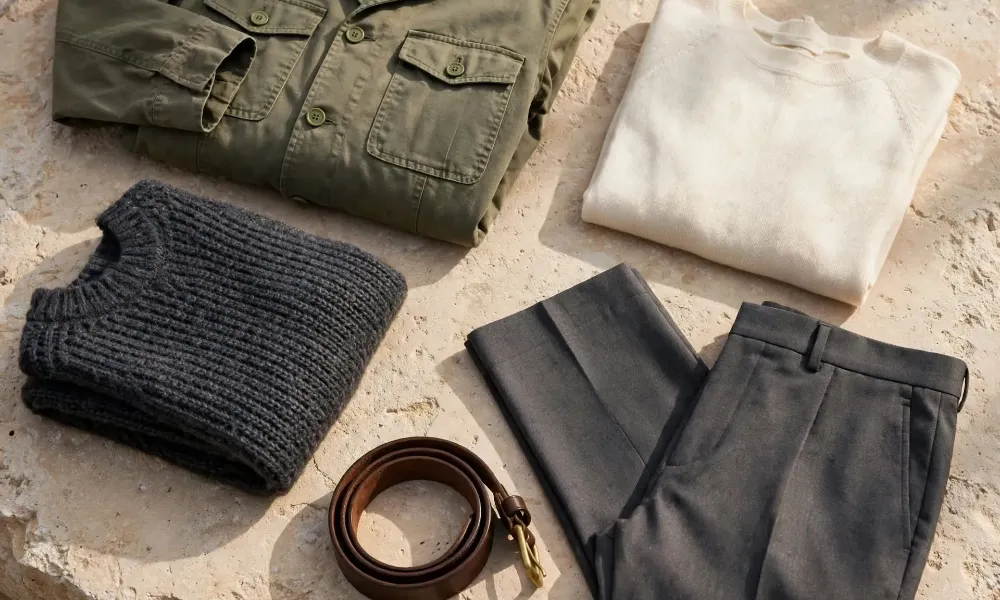
For our everyday interpretation, start with colours such as charcoal, brown, olive, cream, and muted grey. This is an editorial palette suggestion, not a rule governing every costume in the films.
Choose two main colours before introducing an accent. You may find that texture supplies enough interest without adding another shade.
If dark clothing makes you feel unlike yourself, introduce a lighter layer near the face. If you love colour, keep the functional structure and use your own palette.
The aim is a wardrobe reference that feels personal. You are not required to disappear into someone else’s visual world.
How can you make the look softer?
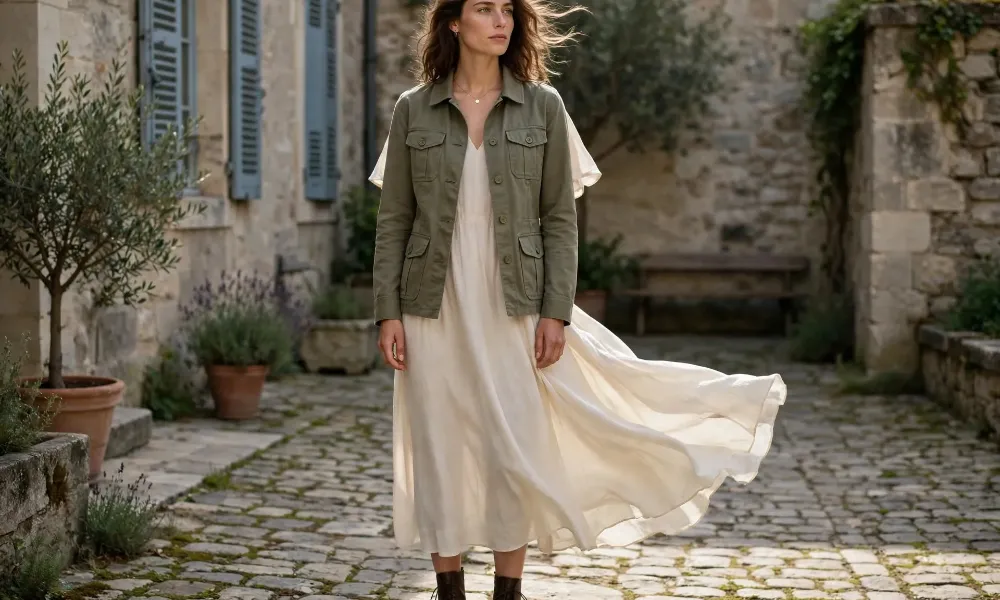
Try placing a practical layer beside something with a different mood.
A pocketed jacket over a plain dress is one option. A substantial knit with a fluid skirt is another. You can also keep the clothes simple and choose a small piece of jewellery you wear often.
Assess how the pieces move together. A skirt that catches beneath outerwear or a scarf that repeatedly slips may distract from the ease you wanted.
Our guide to styling luxury accessories explores how a finishing detail can shift an outfit without requiring a complete change of clothes.
What should you do about boots?
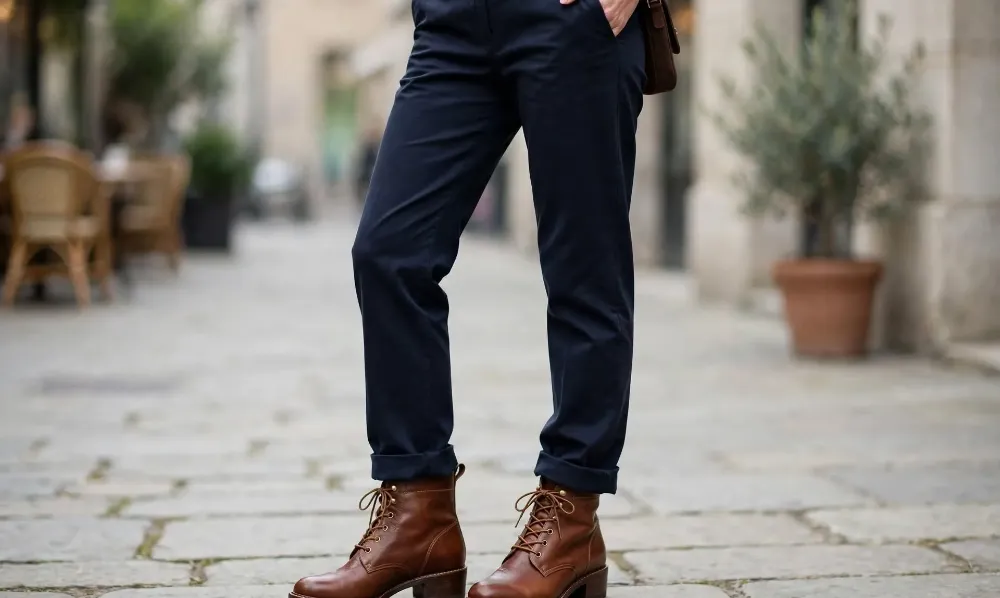
Choose footwear for the day, then see whether you enjoy it with the outfit. A rugged appearance does not establish walking comfort, weather protection, or traction.
Try the boots with your intended socks and trouser hems. Notice pressure, slipping, or rubbing rather than assuming the fit will improve enough later.
Also check how the trousers meet the shaft. You may prefer a straight leg falling over it, a shorter hem, or another pair entirely.
There is no need to force every outfit into tucked trousers. The practical mood can survive a different silhouette.
Can the inspiration work for an evening out?
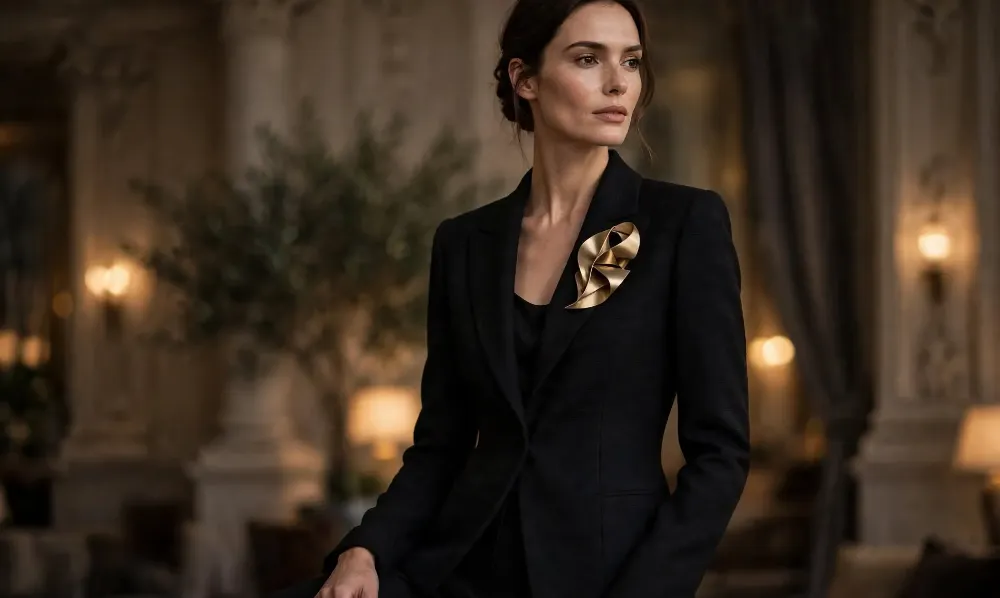
Yes, if you choose a smaller part of the reference.
Our suggestion is a restrained base with one expressive element: a sculptural brooch, an unusual neckline, a textured outer layer, or a piece of jewellery with personal meaning.
You do not need to reproduce a dramatic film gown to borrow the idea that clothing can communicate something.
Consider the setting, too. A detail that feels right for dinner may need a different scale for a formal event. Let the occasion help you edit.
Personal symbolism can be more interesting than merchandise
A recognisable emblem can be meaningful to a fan. A personal object can also carry the role of a signature detail.
Perhaps it is an inherited pin, a ring connected to someone you love, or a small piece you always wear when you want to feel composed.
The point is not to invent a story for an accessory. It is to notice the stories your own wardrobe already contains.
How can you avoid turning the outfit into a costume?
Use our suggested three-part framework: purpose, texture, and a signature.
Purpose: Choose the garment that answers the practical needs of the day.
Texture: Add one material or layer that makes the outfit visually interesting.
Signature: Include one detail that makes it feel like yours.
Then ask whether the combination still works when nobody recognises the film reference. If the answer is yes, you have an outfit with a life beyond the mood board.
This is a styling exercise, not a formula for how everyone should dress. You can change the balance until it feels natural.
What is worth buying, and what can you use already?
Try at least two complete outfits before identifying a gap. You may discover that the missing element is simply a different combination.
If you do need a purchase, give it an independent role. Would the jacket, scarf, or boot work with clothes outside this particular idea?
Our guide to affordable luxury fashion brands offers a broader starting point for considered shopping. A film reference should help you see possibilities, rather than create a list of things you suddenly need.
Avoid deliberately damaging clothes to make them look more convincing. Wear and personal history do not need to be manufactured.
What should a thoughtful interpretation leave behind?
Katniss’s circumstances are not a shopping aesthetic. It is possible to admire the costume work without presenting deprivation or conflict as something to recreate.
Borrow the design decisions that interest you: practical layering, changes in silhouette, texture, and meaningful detail.
That approach also gives the clothes more freedom. You can enjoy the reference without pretending to inhabit the character’s experience.
Your outfit checklist
Before leaving home, ask:
- Does the outfit suit what I will actually do today?
- Can I move comfortably in the layers?
- Do the coat collar, knit, and bag work together?
- Are the shoes appropriate for the route and weather?
- Have I chosen texture deliberately?
- Is there one detail that feels personal?
- Would I still enjoy the outfit without the film reference?
- Can any proposed purchase work elsewhere in my wardrobe?
Frequently asked questions
Who designed Katniss Everdeen’s film costumes?
Judianna Makovsky designed costumes for the first Hunger Games film. Trish Summerville designed the costumes for Catching Fire.
Do you need a braid to wear the look?
No. A hairstyle can be part of an intentional reference, but the outfit can stand independently.
Do you need to wear brown and olive?
No. Those are useful colours for one interpretation. You can borrow practical layering and texture while keeping your own palette.
Is this the same as outdoor performance clothing?
No. A film-inspired outfit does not establish technical protection. Choose equipment and clothing suited to the activity when travelling outdoors.
Can you create the look without shopping?
Yes. Start with a useful outer layer, a knit, familiar trousers or a skirt, and footwear you already enjoy.
The editorial read
What makes this inspiration worth keeping is the possibility of dressing with intention. Clothes can help you feel ready, carry a little history, and leave you comfortable enough to focus on your day.
You do not need to become Katniss Everdeen to enjoy that idea.
Choose a layer that works, a texture you love, and a detail that belongs to you. The strongest version of the outfit is the one you can live in.