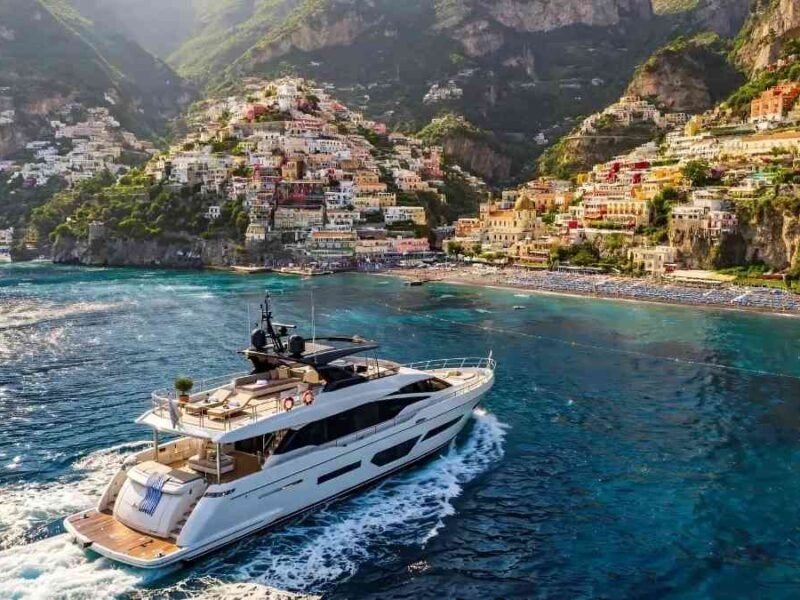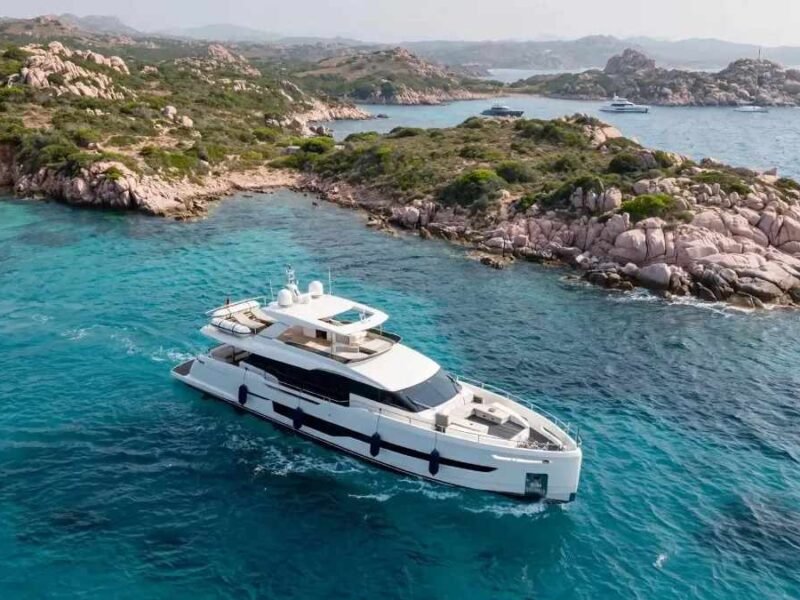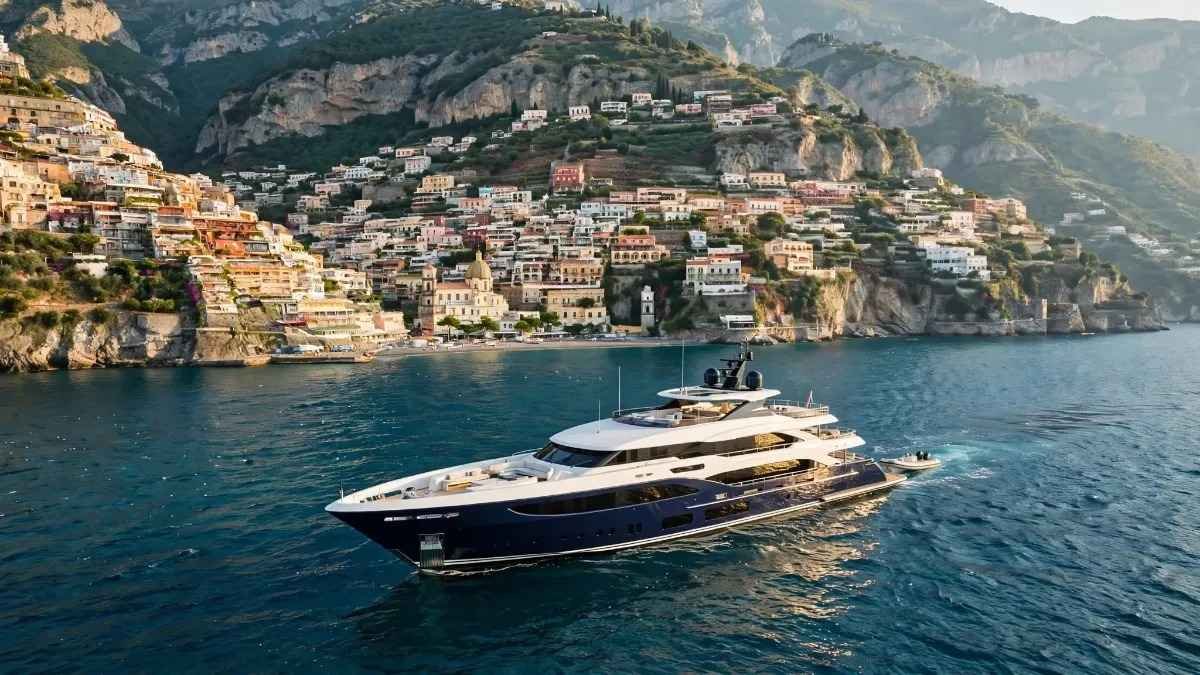
A luxury yacht charter in Amalfi Coast begins with an obvious truth. Anyone who has stood on its single coastal road knows it. Yet many visitors still miss it: this coast was built facing the sea and can only be understood from the water.
The famous, white-knuckle road is a nineteenth-century afterthought. It was carved into cliffs that rise a thousand feet in places. Positano, Amalfi, and Praiano were built as maritime republics, with churches and watchtowers facing the water that made them rich. Their architecture presents a grand facade to approaching sails.
Here, a yacht is not merely a convenience, as it is in Antibes or Sardinia. It restores the coast’s original relationship with its visitors. It is the difference between seeing a theater from the street outside and taking the seat its builders designed.
A captain based in Sorrento shared the Amalfi Coast’s perspective with me. His family has worked these waters for four generations. We spoke over coffee on the Marina Grande terrace as the first hydrofoils departed for Capri.
“Everyone arrives by road now,” he said, “and complains about it. That’s fair, because the road is a calamity.” But the coast never moved. The people who mattered always arrived by water. Traders, admirals, emperors, and grand tourists all followed this route. Tiberius ruled an empire from Capri and never used the road once.
He gestured towards the cliff face behind the harbor. “From the sea, every town stands up and introduces itself. From the road, you see its back door.”
This guide follows his logic. It explores what the coast offers, the week it provides, who it suits, and the method, in the series’ established order.
The Coast the Charter Actually Buys
Four stretches, each with its own register.
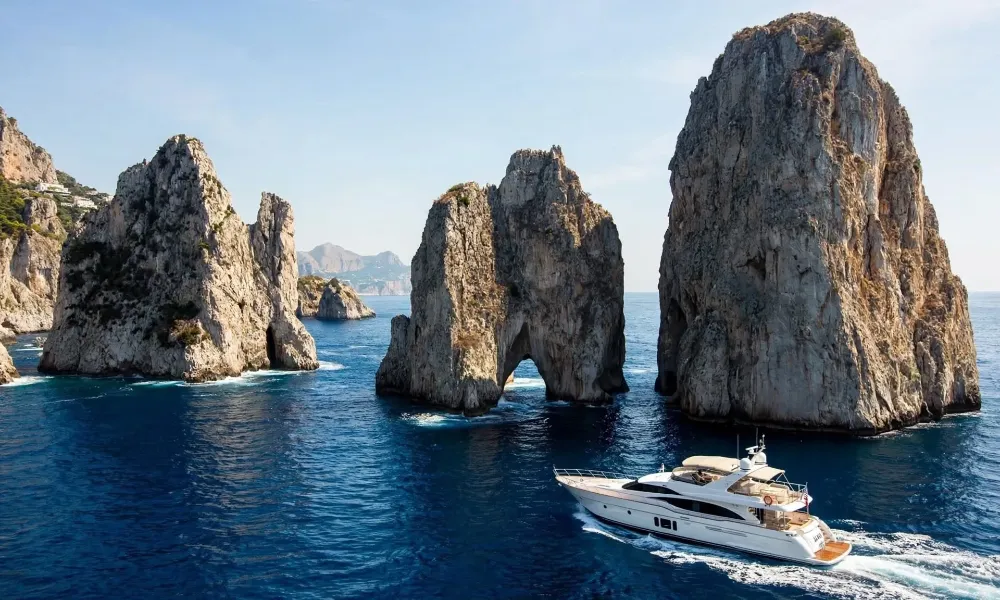
Capri first, though it is technically an island, because no Amalfi week escapes it and none should. The faraglioni rocks at the island’s eastern point, the white grotto and the green, the Marina Piccola beneath the cliffs, and the town above with its piazzetta and its long history of emperors, exiles, and beautiful idlers.
The island also carries a perfume tradition of its own, the monastery scents of Capri that became one of Italy’s quiet contributions to the century’s great houses, a thread Pravi Celer has followed in its history of the fragrances that defined decades, and a bottle from the island’s old pharmacy makes a better souvenir than anything in the boutiques.
The vertical coast comes second and forms the heart of the week. Positano is the vertical postcard, with colorful houses stacked against the cliffs. The dome of Santa Maria Assunta stands between them.
Praiano and its fjord of Furore follow. This fishing hamlet lies hidden within a cleft of rock. Then comes Amalfi, the ancient republic, with its cathedral’s striped facade rising above the main square.
Above them all stands Ravello. Though not on the water, it belongs to the week. Its terraced gardens at Villa Rufolo and Villa Cimbrone inspired Wagner’s garden of Klingsor. The view from the Terrace of Infinity became one of Italy’s most painted scenes.
The islands of the gulf third: Ischia, with its thermal gardens and its castle, and tiny Procida, the most colorful and least visited, the Bay of Corricella a fishing harbor that film directors keep rediscovering.
And Naples fourth, at the week’s edge, for those who extend it: the city that invented the modern world in so many ways, best approached and abandoned by sea, its waterfront revealing the logic of three thousand years in a single sailing.
Why the Week Feels Different Here
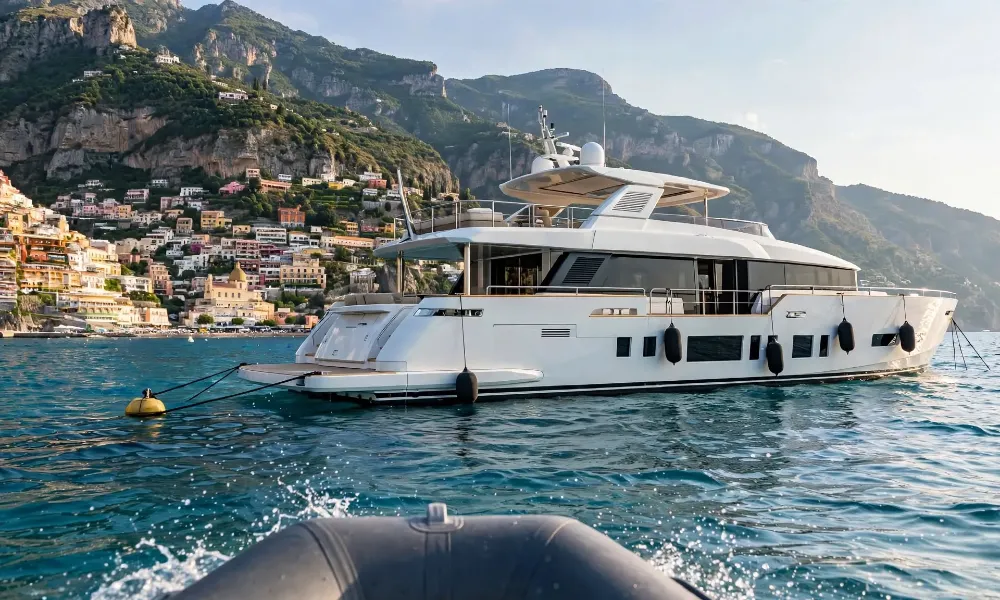
The Amalfi Coast differs from the western coasts in three ways. All three come down to intensity.
First, its vertical scale is unmatched. Nothing on the Riviera prepares guests for this dramatic cliff scenery. Towns hang against limestone cliffs rising a thousand feet. The yacht’s deck becomes a grandstand no hotel terrace can rival.
Second, the traffic works in reverse. Here, the water is the quiet road, while the land is crowded. Buses queue along Positano’s bends, while yachts anchor in waters that were empty that morning.
Third, the culture sets it apart. The Amalfi Coast is not simply a resort. It is a civilization that learned the art of hospitality. Its lemons grow as large as fists, its ceramics come from Vietri, and Ravello hosts music festivals every summer. Its cuisine helped shape Italy’s international culinary reputation.
Guests are not simply visiting an attraction. They are briefly welcomed into an ancient way of living well. It has survived emperors, republics, and the invention of package tours. Today, it welcomes visitors arriving by sea with the same ceremonial ease once offered to the grand tourists of the last century.
The Week’s Shape
The classic itinerary begins in Sorrento or Naples. Day one is for boarding and settling in. The evening ends with dinner ashore beneath Sorrento’s lemon pergolas.
Day two takes the yacht across to Capri. Sail past the Faraglioni, explore the grottoes by tender, and enjoy a long lunch at Marina Piccola. Spend the evening anchored beneath the cliffs.
Day three follows the coast to Positano. Arrive from the water, as the builders intended. Spend the afternoon exploring its steep lanes. Enjoy a swim from the yacht’s platform before dinner at a table overlooking the sea.
Day four explores the middle coast. Visit the fjord of Furore, Amalfi’s cathedral, and its historic paper mills. In the evening, climb to Ravello for its gardens and the Terrace of Infinity.
Day five visits Procida or Ischia. Enjoy lunch at Corricella’s fishing harbor or explore Ischia’s thermal gardens.
Day six offers a leisurely return along the coast. Take in its full facade once more and enjoy a final hour in Positano.
Day seven closes the journey at the home port. Visit the local market, say farewell, and watch the familiar cliffs welcome the yacht home.
Who It Suits
The Amalfi charter first suits romantics who love dramatic scenery. No European coast creates a more spectacular setting.
It also appeals to food lovers. The local cuisine, from its lemons to scialatielli and sfogliatelle, rewards exploration just as Liguria’s does.
It suits travelers who find the Riviera too polished. Here, the Mediterranean feels warmer, louder, and more human. Couples celebrating special occasions will also feel at home. The coast has understood celebration for two thousand years.
However, it may not suit those seeking calm waters and uncrowded anchorages in August. During that month, every cove becomes part of a festival. Such guests should explore this series’ Sardinia guides instead. Alternatively, book in June or September to experience the Amalfi Coast at its kindest.
A Method for Booking Well
First, choose a base that suits your itinerary. Sorrento offers the classic balance of Capri and the coast. Naples provides the largest fleet and access to the city. Salerno suits an east-focused itinerary.
Second, hire a captain with local seasonal experience. Grotto timings, Positano’s buoy fields, and summer anchoring restrictions require local knowledge and careful compliance.
Third, book in June or September, when the coast is quieter. Choose August only if you book a year ahead and enjoy busy festivals.
Fourth, provision for the local cuisine and let the chef work with fresh lemons. The coast’s food is as much a destination as its views.
Finally, time every arrival by sea and departure for the golden hour. The coast’s facade at sunset is one of the main reasons to charter a yacht.
Frequently Asked Questions
Can you charter a yacht on the Amalfi Coast?
Yes, from Sorrento, Naples, or Salerno; Positano has no working harbor for yachts, so the fleet bases around it and the coast’s towns are visited by sea.
Where do yachts go from the Amalfi Coast?
The classic week covers Capri and its faraglioni, Positano, the fjord of Furore, Amalfi and Ravello above it, the islands of Ischia and Procida, and, on longer charters, Naples itself.
What is the best base for an Amalfi Coast yacht charter?
Sorrento for the classic balance, Naples for the largest fleet and serious marina infrastructure, Salerno for an east-weighted week.
Can you anchor off Positano?
In the summer season, the town’s waters are a managed buoy field, and yachts take a buoy rather than anchor; a professional captain arranges this as routine, and the view from the buoy is the same.
Is the Amalfi Coast crowded in summer?
On land, famously; on the water, far less so, which is the charter’s argument, though August’s buoy fields and grotto queues are real, and the shoulder months are this series’ advice. The towns themselves receive day visitors by road and release them by evening, and the yacht’s party, sleeping at anchor or at the base, meets the coast in its hours of possession, early and late, when the lanes belong again to those who stayed.
When is the best season for an Amalfi Coast yacht charter?
June and September for warm water and breathing towns; May and October for the quiet coast at its gentlest rates; August for the full festival at full price.