On a Friday afternoon in late June, if you stand on the observation deck of any Midtown skyscraper and look toward the East River, you can watch one of the great migrations of American wealth.
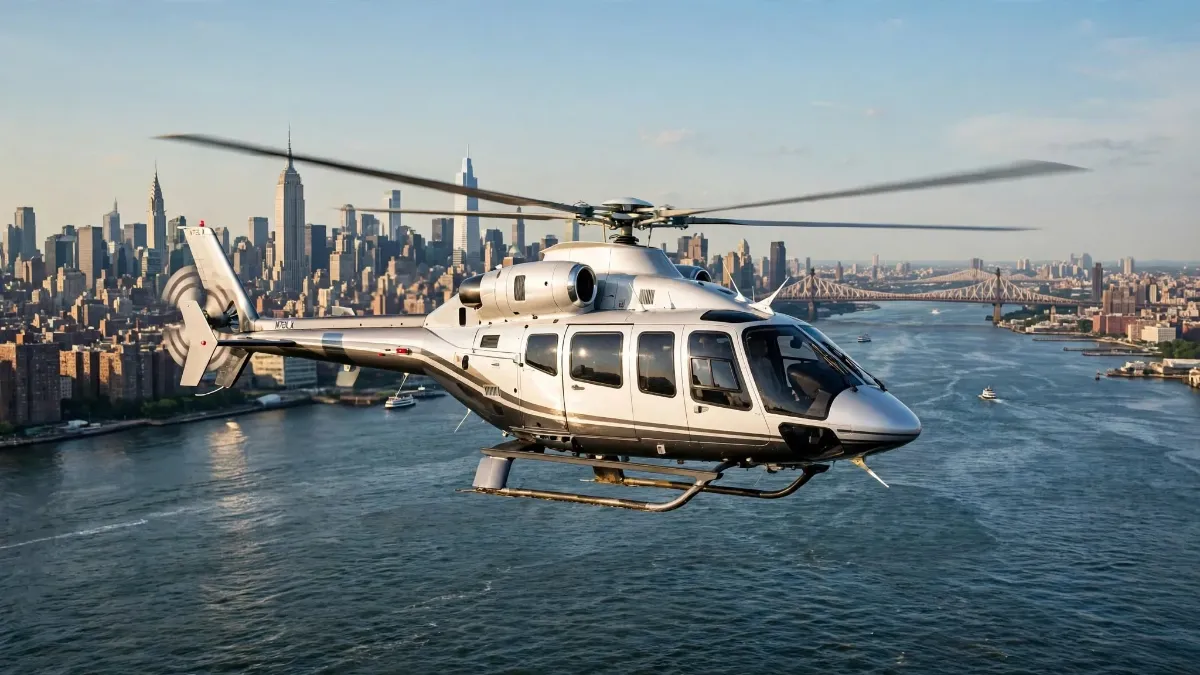
Beginning around two o’clock, helicopters rise from the riverside heliports in loose formation, one every few minutes, banking south and then east, noses pointed toward Long Island.
Each one carries a handful of passengers who have decided that the three hour drive to the Hamptons is the one thing in their lives they refuse to do. For them, the season does not begin when they reach the beach. It begins when the wheels leave the pad at East 34th Street.
The Hamptons helicopter run is the most famous short haul luxury flight in America, and arguably the most compressed seasonal market in private aviation anywhere. Roughly one hundred miles separate Manhattan from East Hampton.
By car on a summer Friday, that journey can take four hours or more. By helicopter, it takes about thirty five minutes. That single equation, hours for minutes, has built an entire industry, provoked a decade of legal warfare, and turned a few small municipal airports into some of the most contentious pieces of real estate in the country.
This is how the airlift works, who flies it, what it costs, and why the future of the route is being fought over in courtrooms as much as in the sky.
How the Route Works
The geography is simple and unforgiving. Long Island stretches east from the city like a fish, and the Hamptons sit along its southern fork near the far end. There is one primary road, the Long Island Expressway, which narrows into local routes through Southampton, Bridgehampton, East Hampton, and finally Montauk at the tip. On summer Fridays, that road becomes a parking lot.
The Long Island Rail Road offers the Cannonball, a Friday express to Westhampton, but even the train cannot beat the geometry of a helicopter flying a straight line at 140 miles per hour.
So the helicopters fly. They depart from the Manhattan heliports at East 34th Street, West 30th Street, and Downtown Manhattan at Wall Street, cross the East River, track over Queens and the North Shore or along the ocean, and land at one of three eastern airfields:
East Hampton Airport in Wainscott, the smaller Montauk Airport at the far tip, or Westhampton’s Francis S. Gabreski Airport for those headed to the western Hamptons. The entire flight rarely exceeds forty minutes, and passengers are typically on the ground in Amagansett before their friends have cleared the Midtown Tunnel.
The Players: Blade, HeliFlite, and the Charter Fleet
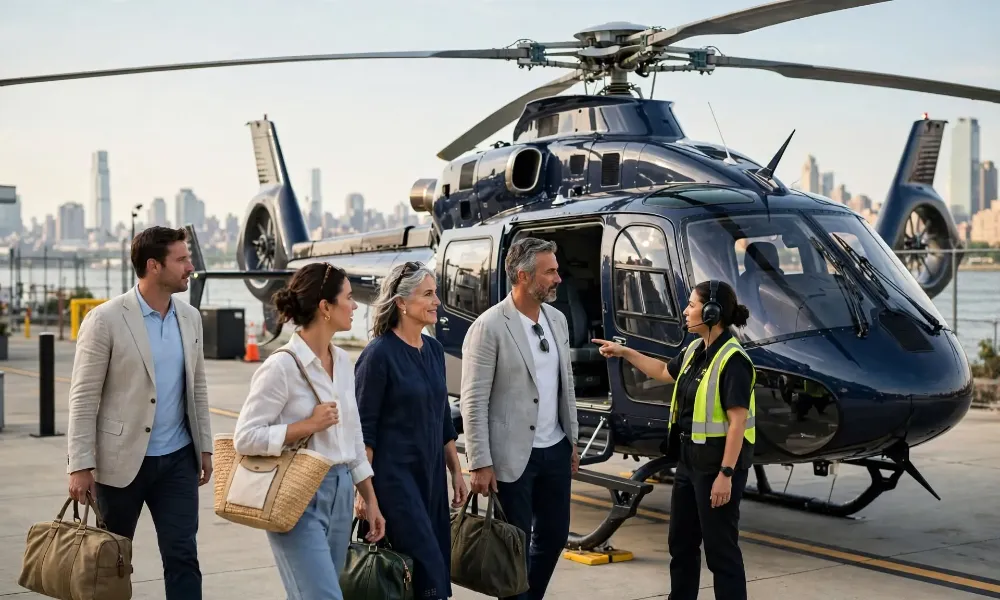
The modern Hamptons helicopter market was reinvented in 2014 by Blade Urban Air Mobility, which applied the logic of an app to a business that had always run on phone calls and relationships. Blade does not own helicopters.
It sells seats by the flight on aircraft operated by partners, aggregating demand so that a single customer can book one seat on a scheduled Friday departure rather than chartering an entire aircraft.
A one way seat to the Hamptons typically runs between $700 and $1,100 depending on the weekend, with holiday peaks commanding more. Blade’s model also created the Hamptons’ most famous aviation ritual: the rosé fueled lounge scene at its departure lounges, where the weekend effectively starts the moment you check in.
HeliFlite and the Full Charter Market
At the other end of the market sit the full charter operators. HeliFlite, based at Newark and Farmingdale, has flown the corridor for decades with a fleet of twin engine Sikorsky S-76s and Bell 407s, serving clients who want the entire aircraft, their own schedule, and the discretion of a private manifest.
Chartering a twin engine helicopter for the family one way typically runs from $3,000 to $7,000 depending on aircraft type, operator, and demand. Around these two poles orbits a constellation of on demand charter brokers, and beyond them the private owners, executives and financiers whose own aircraft, often an S-92 or a Leonardo AW109, make the crossing as routinely as a taxi ride.
The economics are telling. A summer’s worth of Friday seats for a couple, roughly fifteen weekends round trip on Blade, can approach the cost of a small car, and yet the flights sell out.
On peak weekends, operators add aircraft and still turn passengers away. If you are weighing the broader question of access versus commitment, our guide to private aviation experiences without owning an aircraft maps the full spectrum, and our helicopter etiquette guide covers what first timers should know before their first flight.
The Noise Wars
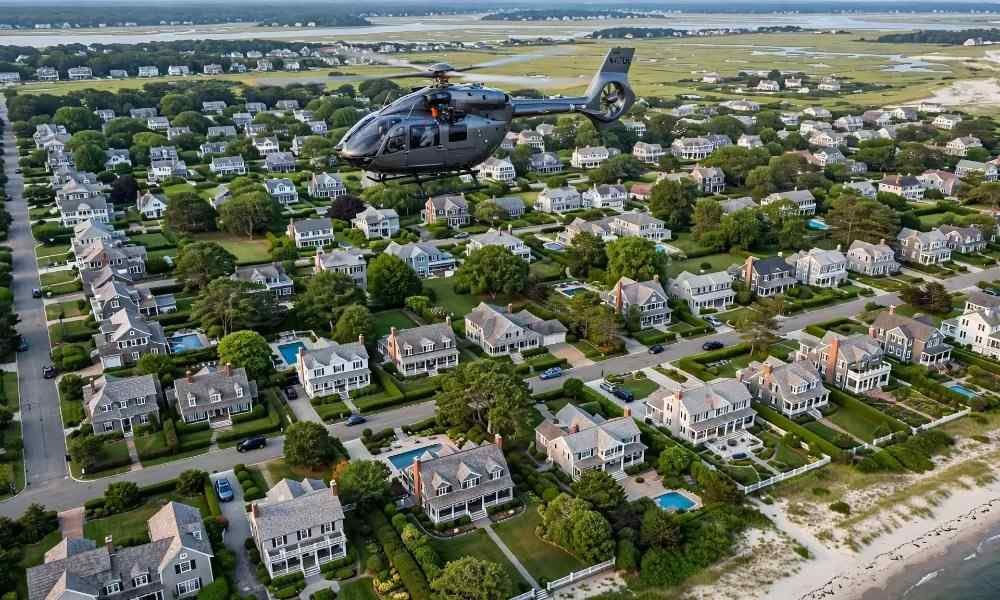
No account of the Hamptons helicopter season is complete without the noise wars, because they may ultimately decide how the season ends.
Helicopter noise over the North Fork, the South Fork, and the communities beneath the flight paths has been a grievance for decades, but the conflict sharpened dramatically as flight volumes grew through the 2010s.
Residents organized, most visibly through the Quiet Skies Coalition, and complaints logged into noise tracking systems ran into the tens of thousands per season.
East Hampton, which owns its airport, tried repeatedly to regulate the traffic. After years of litigation that struck down earlier restrictions, the town took a more radical path: in 2022 it moved to close the public airport entirely and reopen it as a private facility, a maneuver that would give the town far greater control over aircraft operations.
The legal battle consumed years, with aviation groups arguing that federal obligations tied to airport funding prevented the closure. Courts ultimately blocked the town’s plan, and East Hampton Airport remains open to the public, but the war is not over.
Flight path agreements have pushed traffic over the ocean and along the North Shore, voluntary curfews limit the earliest and latest movements, and every season brings fresh complaints, fresh counts, and fresh political pressure.
The irony is hard to miss. The same aircraft that make the Hamptons accessible to Manhattan’s weekend elite are the single most divisive technology in the Hamptons themselves.
What a Season Costs, and Who Is Actually Flying
The passenger mix breaks into three broad tribes. First, the seat buyers: younger finance and tech professionals, often splitting a Blade seat as a lifestyle splurge, who treat the flight as the opening scene of the weekend.
Second, the regulars: families with houses in Bridgehampton or East Hampton who charter by the flight or buy seasonal packages, effectively commuting by air the way suburbanites commute by rail.
Third, the owners and fractional flyers, for whom the helicopter is simply the family car with a rotor on top, and whose aircraft also make the longer hops, Nantucket, the Vineyard, even direct runs back to Manhattan’s airports via helicopter transfer when the season ends.
For context, the thirty five minute flight replaces a drive that can consume an entire Friday afternoon. Priced against an hour of a hedge fund principal’s time, the math needs no justification.
Priced against the median American vacation budget, it is pure extravagance. The Hamptons helicopter season lives precisely in that gap, which is why it has survived every attempt to regulate, shame, or litigate it out of existence.
The Future: Quieter, Greener, and Possibly Unrecognizable
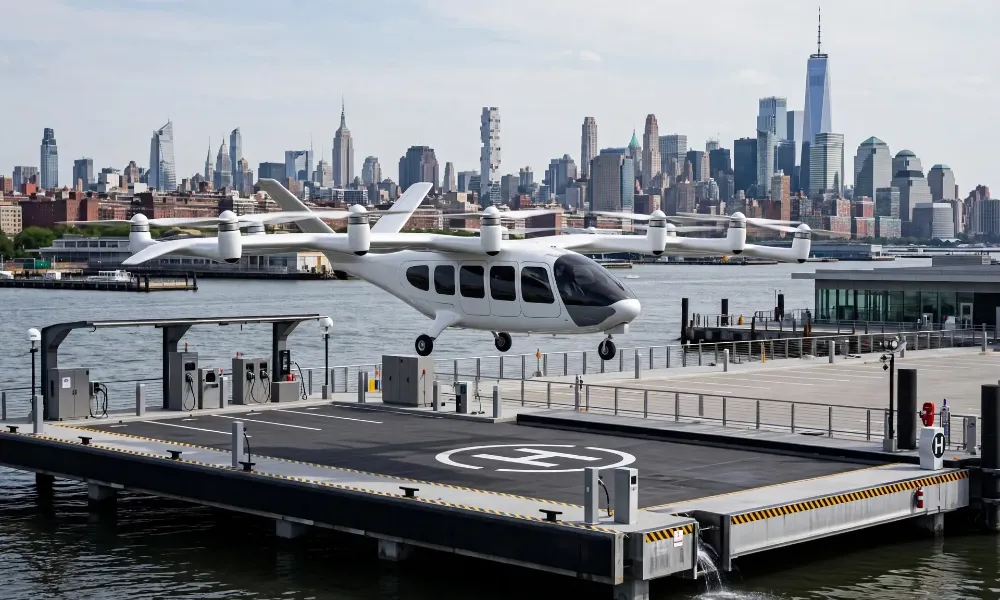
Change is coming from two directions at once. The first is technology. A new generation of electric vertical takeoff aircraft, led by Joby Aviation and Archer Aviation, promises flights that are dramatically quieter than any helicopter, and both companies have identified New York, including Hamptons routes, as a launch market for mid decade service.
Archer has specifically outlined Manhattan to East Hampton as a flagship early route, with flight times around fifteen minutes and per seat pricing aimed at today’s helicopter charter market. If the aircraft deliver even half their promised noise reduction, the loudest objection to the airlift weakens considerably.
The second direction is regulatory. The Federal Aviation Administration’s evolving rules for powered lift aircraft, New York State’s own noise legislation, and East Hampton’s unextinguished appetite for control mean the route’s next decade will be negotiated in hearings as much as flown.
For now, though, the ritual holds. Every Friday from Memorial Day to Labor Day, the helicopters rise off the East River, the rosé flows in the lounges, and a hundred miles of gridlock becomes somebody else’s problem.
For more on the region itself, our guide to the eight Hamptons villages and how they differ will help you decide where to land, and our Hamptons summer luxury itinerary covers the season beyond the flight.
FAQs
How long does a helicopter take from Manhattan to the Hamptons?
The flight typically takes between 30 and 40 minutes, depending on the departure heliport, the destination airfield, and routing. Flights to Westhampton are shorter; flights to Montauk are at the longer end. Either way, the flight replaces a drive that can take three to four hours on a summer Friday.
How much does a helicopter seat to the Hamptons cost?
A single one-way seat on a shared flight such as Blade typically costs between $700 and $1,100, with premium pricing on peak holiday weekends. Chartering an entire helicopter for a private one-way flight generally runs from $3,000 to $7,000 depending on aircraft type and operator.
Where do helicopters depart from in Manhattan?
The three main departure points are the East 34th Street Heliport, the West 30th Street Heliport, and the Downtown Manhattan Heliport at Pier 6 near Wall Street. Operators assign heliports based on aircraft, routing, and schedule, so confirm your exact departure point when booking.
Where do helicopters land in the Hamptons?
The primary landing point is East Hampton Airport in Wainscott, convenient to East Hampton, Amagansett, and Bridgehampton. Montauk Airport serves the far eastern tip, and Francis S. Gabreski Airport in Westhampton serves the western Hamptons, including Quogue, Westhampton Beach, and Southampton’s western side.
What is the East Hampton Airport controversy about?
Local residents have long objected to helicopter noise, filing tens of thousands of complaints per season. In 2022, the Town of East Hampton attempted to close the public airport and reopen it as a private facility to gain control over flight operations. Courts blocked the plan, and the airport remains publicly accessible, though flight paths have been adjusted over water and voluntary curfews are in place.
Can I bring luggage and pets on a Hamptons helicopter?
Yes, within limits. Shared flights typically allow one carry-on-sized bag per passenger, with larger luggage accommodated on chartered aircraft, subject to weight and balance calculations. Most operators welcome pets, often with advance notice, and dogs are a common sight on summer Friday departures. Always confirm baggage weight limits when booking, since helicopters are far more weight-sensitive than airliners.
Do Hamptons helicopter flights run year-round?
Yes, but the schedule contracts dramatically outside the season. Between Memorial Day and Labor Day, operators run frequent scheduled flights, especially Thursday through Monday. In the off-season, service shifts toward on-demand charter, and shared-seat availability becomes limited.
Will electric air taxis replace helicopters on this route?
That is the stated plan of companies like Joby Aviation and Archer Aviation, which are developing quiet electric vertical takeoff aircraft and have identified New York to the Hamptons as an early route. Archer has floated flight times around 15 minutes. Certification and infrastructure timelines remain fluid, but the route is widely expected to be among the first in America to see commercial electric air taxi service.