The Waldorf Astoria was born from a family feud, and New York glamour has been dining out on the story ever since. In 1893, William Waldorf Astor built the Waldorf Hotel on Fifth Avenue partly, the story goes, to spite his aunt, whose neighboring mansion suddenly found a thirteen story hotel looming over her garden.
His cousin John Jacob Astor IV answered in 1897 by building the even grander Astoria next door, and the two properties, connected by a marble corridor three hundred feet long called Peacock Alley, fused into a single institution: the Waldorf-Astoria, with its hyphen later replaced by history’s more famous double bar.
From that quarrel emerged the hotel that would invent room service, host every president from Hoover onward, give the world the Waldorf salad, and become the address where New York’s idea of itself was polished nightly.
Nearly a century after its Park Avenue incarnation opened in 1931, and newly reborn after a restoration for the ages, the Waldorf Astoria remains what it has always been: the hotel that taught America what grand means.
The Original Palace on Fifth Avenue
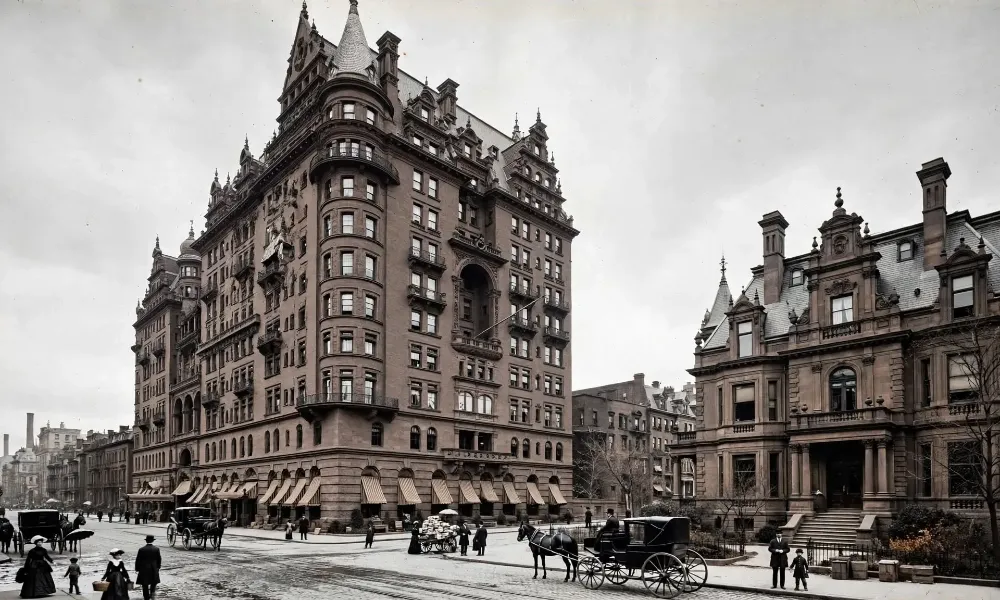
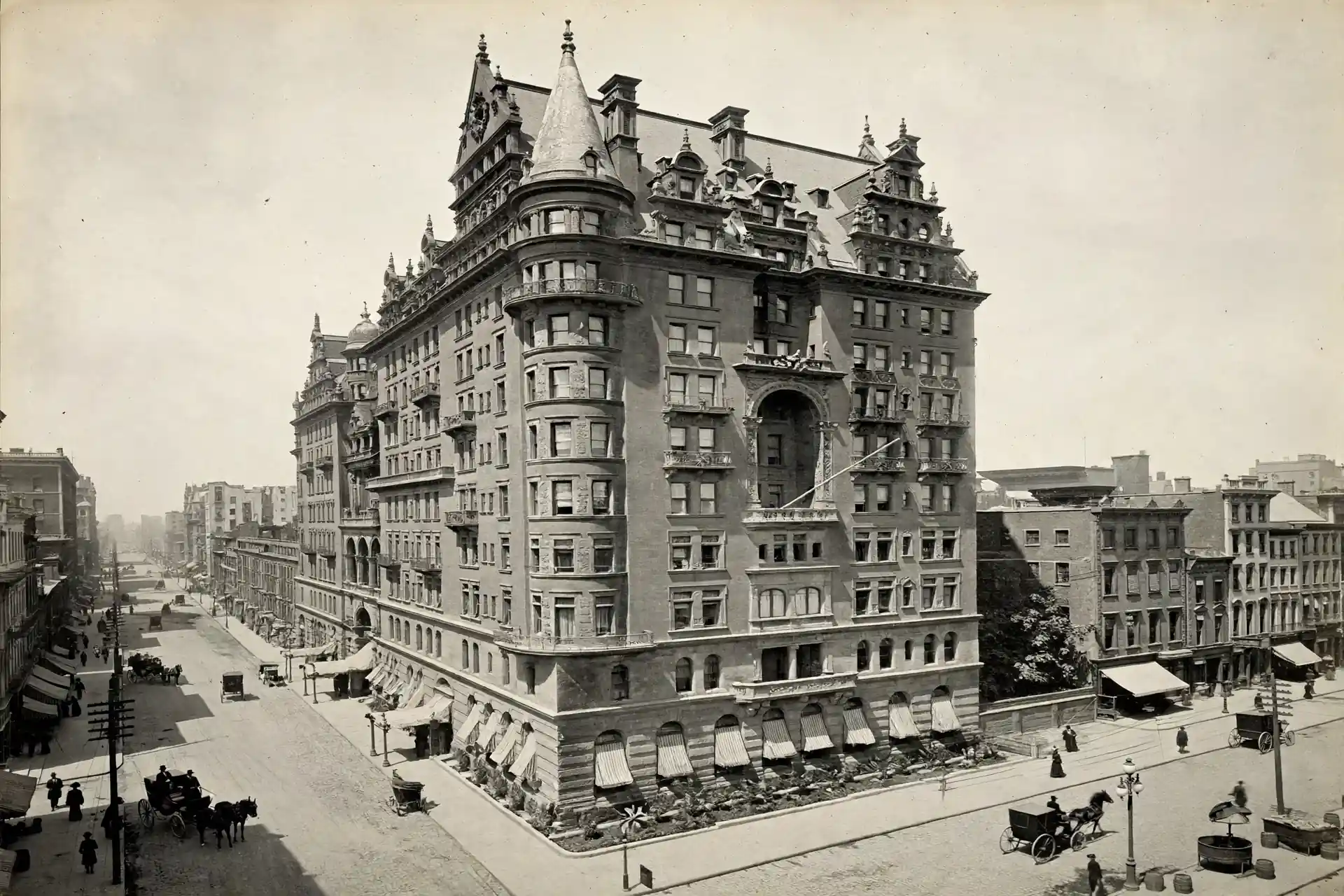
The original Waldorf-Astoria at Fifth Avenue and 34th Street was less a hotel than a social revolution. Gilded Age New York had great restaurants and great mansions, but the Waldorf-Astoria invented the space between them: a public stage where society could see itself.
Peacock Alley became the city’s runway, where the four hundred paraded. The maître d’hôtel Oscar Tschirky, known as Oscar of the Waldorf, became America’s first celebrity host, and his kitchen’s creations, the Waldorf salad of 1896, Thousand Island dressing, and eggs Benedict among the claims, embedded the hotel in the national vocabulary.
The building introduced room service to America, private bathrooms en masse, and the idea that a hotel could be a destination rather than a lodging. When the site was sold in 1929 to make way for the Empire State Building, the transaction itself became legend: the palace of the old century demolished to raise the tower of the new one, and the hotel decamping uptown to begin its second and greater life.
Park Avenue, 1931: The Art Deco Summit
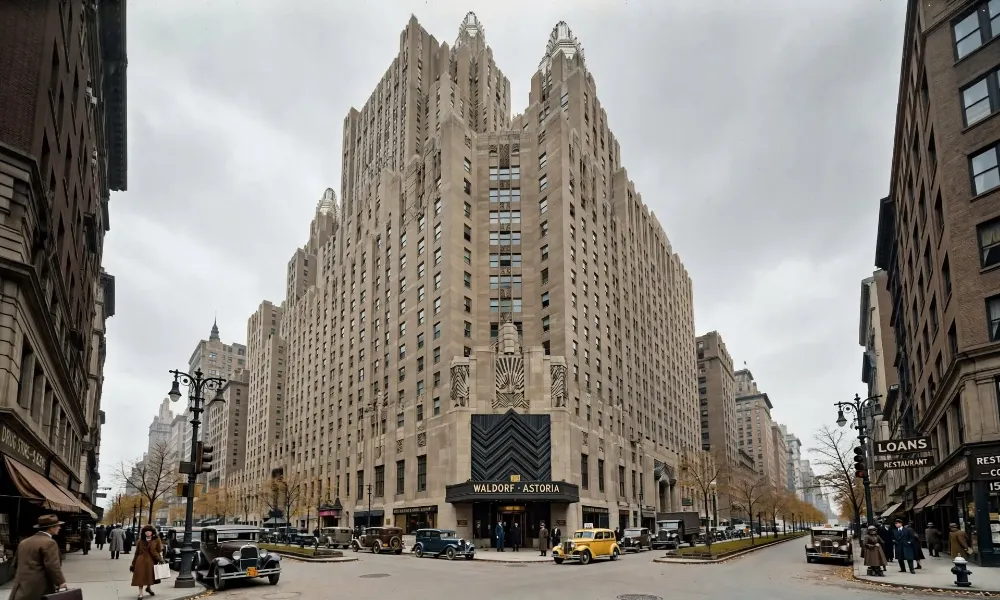
The new Waldorf Astoria, opening on Park Avenue in 1931 in the teeth of the Depression, was an act of defiance disguised as a hotel.
The largest and tallest hotel in the world at its opening, the Art Deco colossus filled an entire block, with 2,200 rooms, ballrooms of impossible scale, and a private rail siding beneath it, Track 61, built for the armored presidential train car that carried Franklin Roosevelt to the hotel without facing the public stair.
The suite floors above, the Waldorf Towers, became a residential court: Cole Porter lived there for decades with his piano, Herbert Hoover retired there, the Duke and Duchess of Windsor kept a suite, and Marilyn Monroe, Frank Sinatra, and a parade of heads of state made the address their New York.
The hotel functioned as unofficial infrastructure of the American century: presidential suites maintained for visiting leaders, the site of the first UN General Assembly’s early gatherings, and the stage of the April in Paris Ball and a thousand society nights.
Every American president through the modern era stayed within its walls, a streak unmatched in the hotel world and the reason the address features in any serious accounting of the best hotels in New York.
Hilton, Anbang, and the Great Restoration
The ownership story mirrors the century. Conrad Hilton acquired management in 1949, calling the Waldorf his crown jewel, and the hotel anchored the Hilton empire’s prestige for generations.
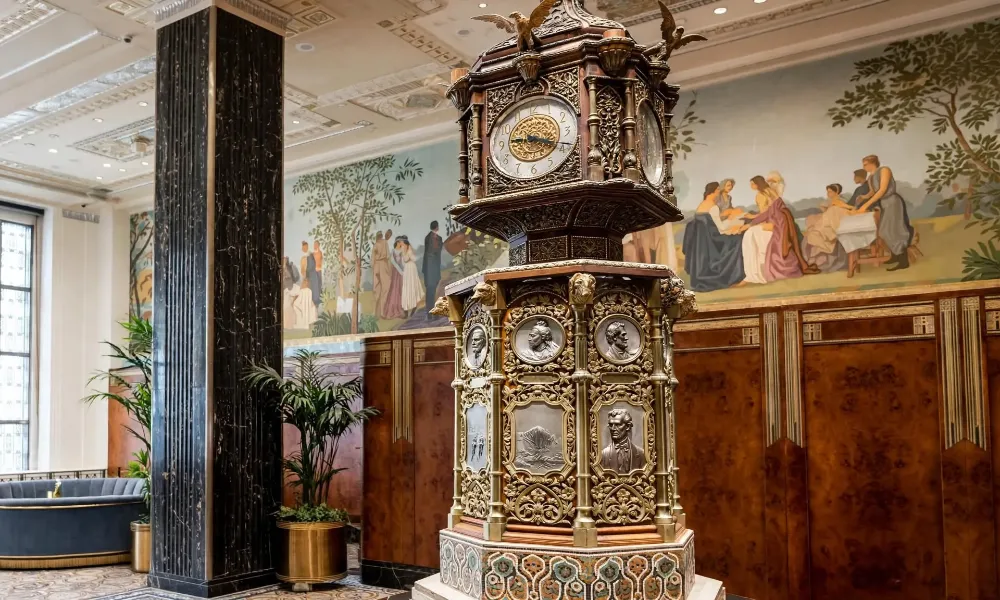
In 2014, the property sold to a Chinese insurance group for 1.95 billion dollars, then a record for an American hotel, and in 2017 the great building closed for the most ambitious restoration in hospitality history: a conversion dividing the property between luxury condominiums in the towers and a restored hotel below, with artisans repairing the park avenue Art Deco fabric, the mosaics, murals, and the famous clock from the 1893 Chicago World’s Fair, piece by numbered piece.
The restoration stretched years beyond schedule, as love always costs more than expected, and the hotel’s reopening in 2025 returned the grand public spaces, Peacock Alley, the Grand Ballroom, and a new generation of suites to the city’s hospitality crown.
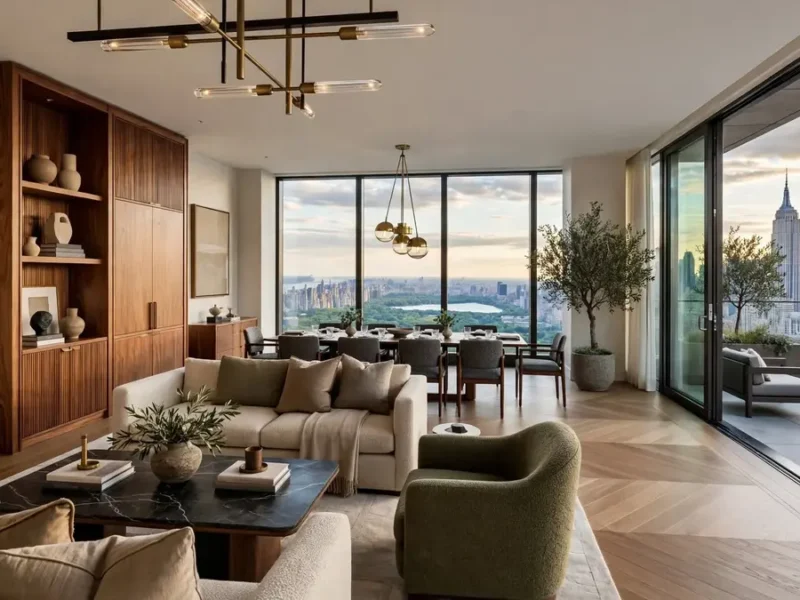
The reborn Waldorf has reclaimed its position in the conversation around where to stay in New York, now offering something no glass tower can replicate: ninety years of ghosts in full working order.
The Legends in the Walls
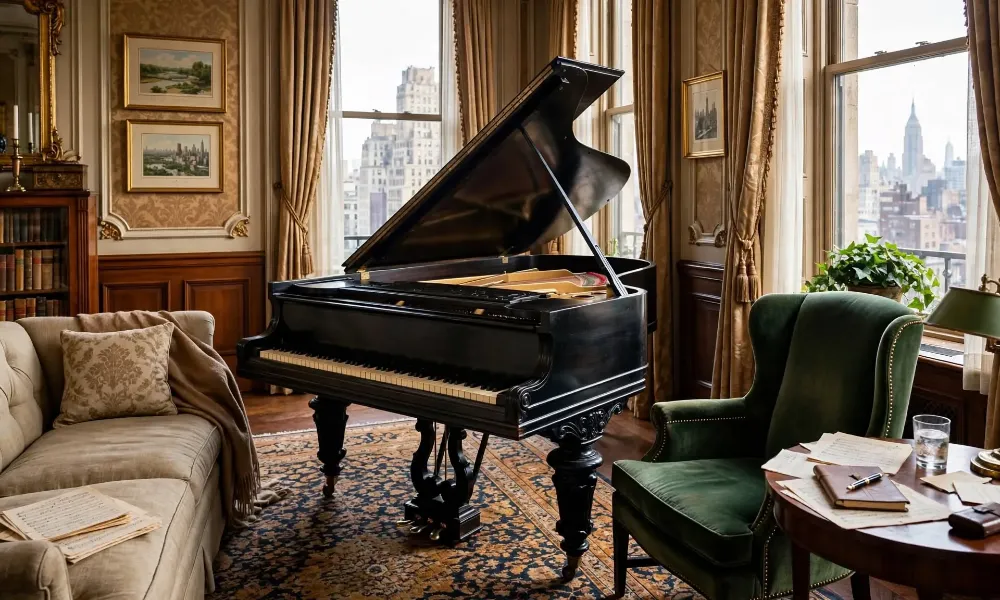
No American hotel holds more stories per square foot. Track 61 remains beneath the building, a piece of secret New York that presidents used into the modern era. The Cole Porter piano, on which he composed in his tower suite, remains a talisman of the house. The Waldorf salad is served where it was invented. And the guest register reads as a century of power: kings, queens, presidents, and the particular New York royalty of theater and finance that made the Towers their permanent address.
The deeper legacy is institutional. The Waldorf invented the luxury hotel’s modern grammar: the celebrity chef culture Oscar pioneered, the branded experiences, the residence above the hotel, and the idea that hospitality could be theater with beds. Every grand hotel since, from the addresses in our guide to the best hotels in NYC to the palace hotels of Europe and Asia, operates on principles the Waldorf established.
Why the Name Still Commands
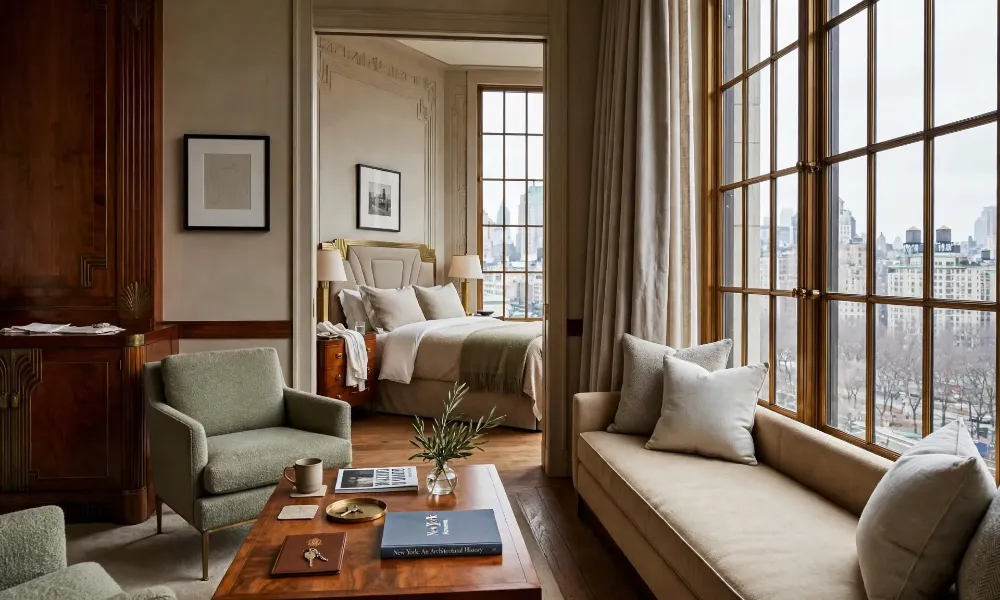
The Waldorf Astoria brand has since become a global flag, with luxury properties from Beverly Hills to Bangkok carrying the name, but the Park Avenue original remains the source. What the name still promises is a specific tone: grandeur without intimidation, ceremony without stiffness, and the confidence of a place that has hosted everything and is impressed by nothing. In a city that reinvents itself relentlessly, the Waldorf endures by having become part of what New York reinvents itself toward.
For the traveler, the calculus is simple. New York offers newer hotels, and some now exceed it in amenity or fashion. But only one address lets you sleep inside the machine that invented the idea, where the corridor outside your room once carried peacocks, presidents, and Cole Porter to dinner. Glamour, like all great inventions, has a birthplace, and it keeps a hotel on Park Avenue.
FAQs
When did the Waldorf Astoria open?
The original Waldorf Hotel opened in 1893 and joined with the neighboring Astoria in 1897 at Fifth Avenue and 34th Street. The current Art Deco building on Park Avenue opened in 1931 as the largest and tallest hotel in the world, on the site it occupies today.
Why was the original Waldorf Astoria demolished?
The original hotel was demolished in 1929 after the site was sold for the construction of the Empire State Building. The Waldorf Astoria relocated to its purpose built Park Avenue home, which opened in 1931 during the Depression as an act of architectural defiance.
What is Track 61 beneath the Waldorf Astoria?
Track 61 is a private rail siding beneath the hotel, built as part of the Park Avenue infrastructure, which allowed presidents, most famously Franklin D. Roosevelt, to arrive by armored train car and reach the hotel without public exposure. It remains one of New York’s great hidden spaces.
Did the Waldorf Astoria invent room service?
Yes. The original Waldorf-Astoria is credited with introducing room service to America, along with popularizing private bathrooms en suite and culinary creations including the Waldorf salad, invented by maître d’hôtel Oscar Tschirky in 1896.
When did the Waldorf Astoria reopen after renovation?
The hotel closed in 2017 for a restoration that converted the towers to luxury condominiums while meticulously restoring the hotel’s Art Deco public spaces, and it reopened in 2025. The project ranks among the most ambitious hotel restorations ever undertaken.
Who has lived at the Waldorf Astoria?
The Waldorf Towers housed Cole Porter, who composed at his suite’s piano, Herbert Hoover in retirement, the Duke and Duchess of Windsor, Frank Sinatra, and Marilyn Monroe. Every American president since Hoover has stayed at the hotel.
Who owns the Waldorf Astoria now?
The property was purchased in 2014 by a Chinese insurance group for 1.95 billion dollars, then a record price for an American hotel. The Waldorf Astoria brand operates under Hilton’s luxury portfolio, which has managed the hotel since Conrad Hilton’s era.
What is the Waldorf salad?
The Waldorf salad, invented at the original hotel in 1896 by Oscar Tschirky, combines apples, celery, and mayonnaise, with walnuts added later to the canon. It remains on the menu where it was invented, one of the oldest continuously served dishes in American hospitality.