
Jet cards versus charter apps is the defining choice of modern private aviation, a contest between two philosophies that both promise simplicity and deliver it in opposite ways. A tech founder I know uses both, and his explanation over dinner in Palo Alto was the clearest I have heard.
The app is my opportunist, he said, finding me deals when my schedule bends. The card is my insurance policy, guaranteeing me a jet when the world goes mad. He pays more than he needs to for the redundancy, and he considers it among the best money he spends.
His setup reveals the truth that the industry’s marketing obscures: neither model is universally better, because they solve different problems. One sells certainty at a premium; the other sells access at the market’s mercy. Here is how both really work, what they actually cost, and how to know which one belongs on your phone.
The Jet Card: Certainty, Prepaid

The jet card model predates the smartphone and endures because its promise never ages. You deposit funds or prepay for hours with a provider, typically in 25 hour increments, locking in fixed or capped hourly rates on a specified aircraft category.
In return, the provider guarantees availability with contracted notice, usually 24 to 72 hours, delivers a consistent service standard, and absorbs operational headaches like recovery aircraft when mechanicals strike. One relationship, one invoice, no surprises.
The economics trade price for peace of mind. Card rates typically run above the sharpest ad hoc charter quotes for equivalent aircraft, because the provider prices in the guarantee, the consistency, and the risk it carries on your behalf.
The sophisticated buyer’s scrutiny falls on the contract’s edges: peak day calendars that restrict or surcharge holiday flying, fuel surcharge clauses, minimum daily flight times, expiration policies on unused hours, and the financial soundness of the provider holding your prepayment.
The card is a promise, and promises are only as strong as the promiser, a principle that applies equally across the broader economics of private flying.
The Charter App: The Market in Your Pocket
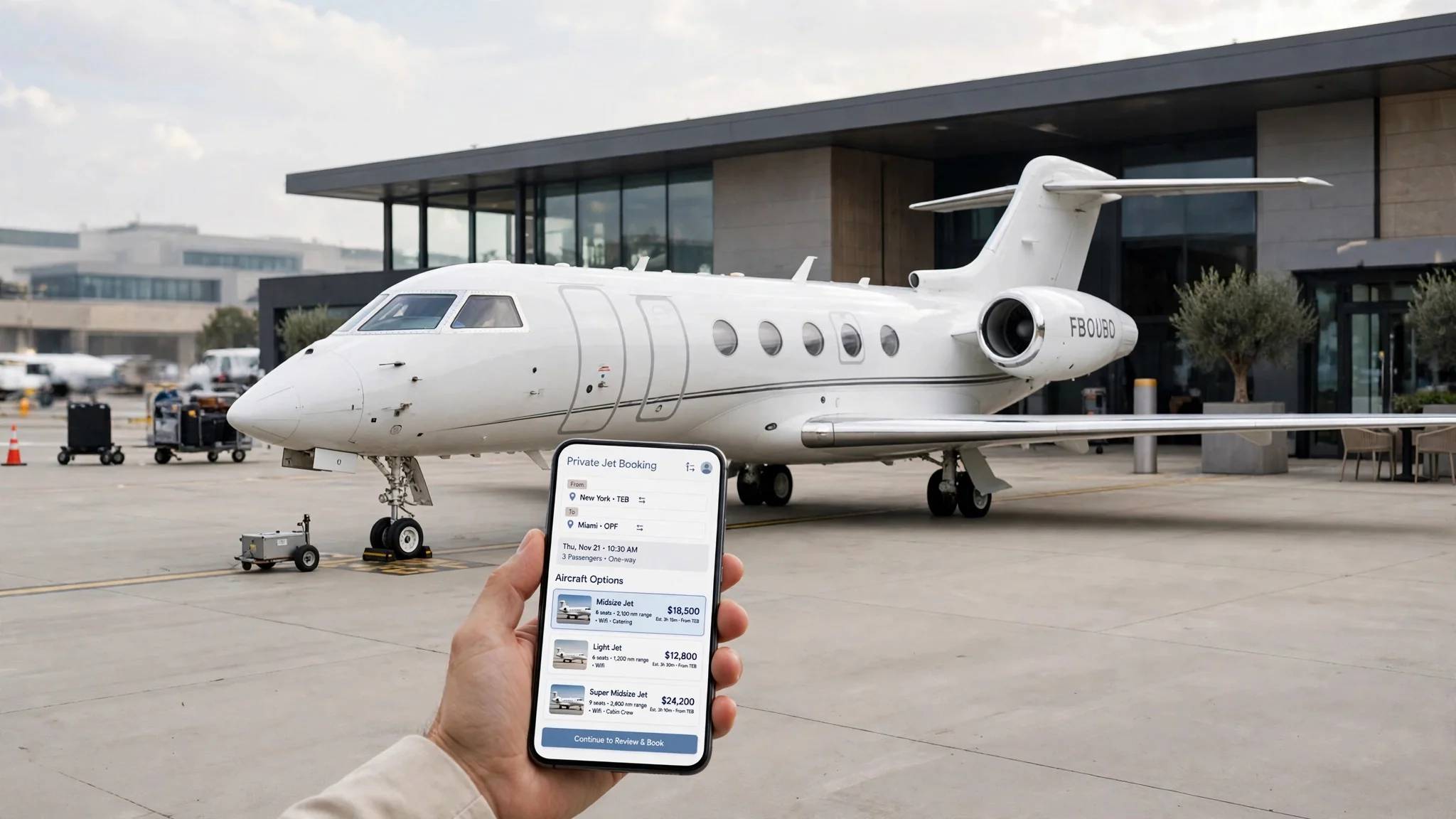
Charter apps and digital brokers brought the smartphone era to private aviation, and their pitch is intoxicating: real time pricing, instant booking, and access to thousands of aircraft from your phone.
Open the app, enter your route, and receive live quotes from operators competing for your trip, with aircraft photos, safety ratings, and pricing that reflects the market’s actual state at that moment. For the flexible traveler, the model unlocks genuine value, particularly on one way routes and empty legs, where repositioning aircraft sell at discounts of 30 to 75 percent.
The catch is the mirror image of the card’s strength. Dynamic pricing means your Tuesday quote says nothing about your Friday price. Availability evaporates exactly when you need it most: holidays, major events, and weather recovery days, when the same aircraft everyone wants prices accordingly.
Service consistency varies by operator, and the app itself, however elegant, ultimately connects you to a rotating cast of carriers. The traveler who books through apps learns to read beyond the price: the operator’s certificate, the aircraft’s year, the cancellation terms, applying the diligence mapped in our guide to private jet charter costs to every digital quote.
The Head to Head: Where Each Model Wins
The honest comparison runs across five dimensions. Pricing: apps win on individual trips when demand is soft, cards win on total spend when demand spikes, because the cardholder’s rate holds while the market surges. Availability: cards guarantee it with notice; apps offer it until everyone else books first.
Consistency: cards deliver known aircraft standards and service; apps vary by operator. Flexibility: apps allow aircraft shopping trip by trip and charge nothing to hold; cards lock capital and commitment. And risk: cards concentrate funds with one provider; apps spread exposure but shift vetting responsibility toward you.
The usage pattern settles the contest. The executive who flies the same corridor twice monthly, values the identical experience, and cannot tolerate a failed departure belongs in a card. The founder with an unpredictable calendar, a taste for deal hunting, and the flexibility to shift dates by a day belongs on the apps. And the growing class of sophisticated flyers runs the founder’s dual setup: a card for the mission critical trips, apps for everything else.
The New Middle Ground
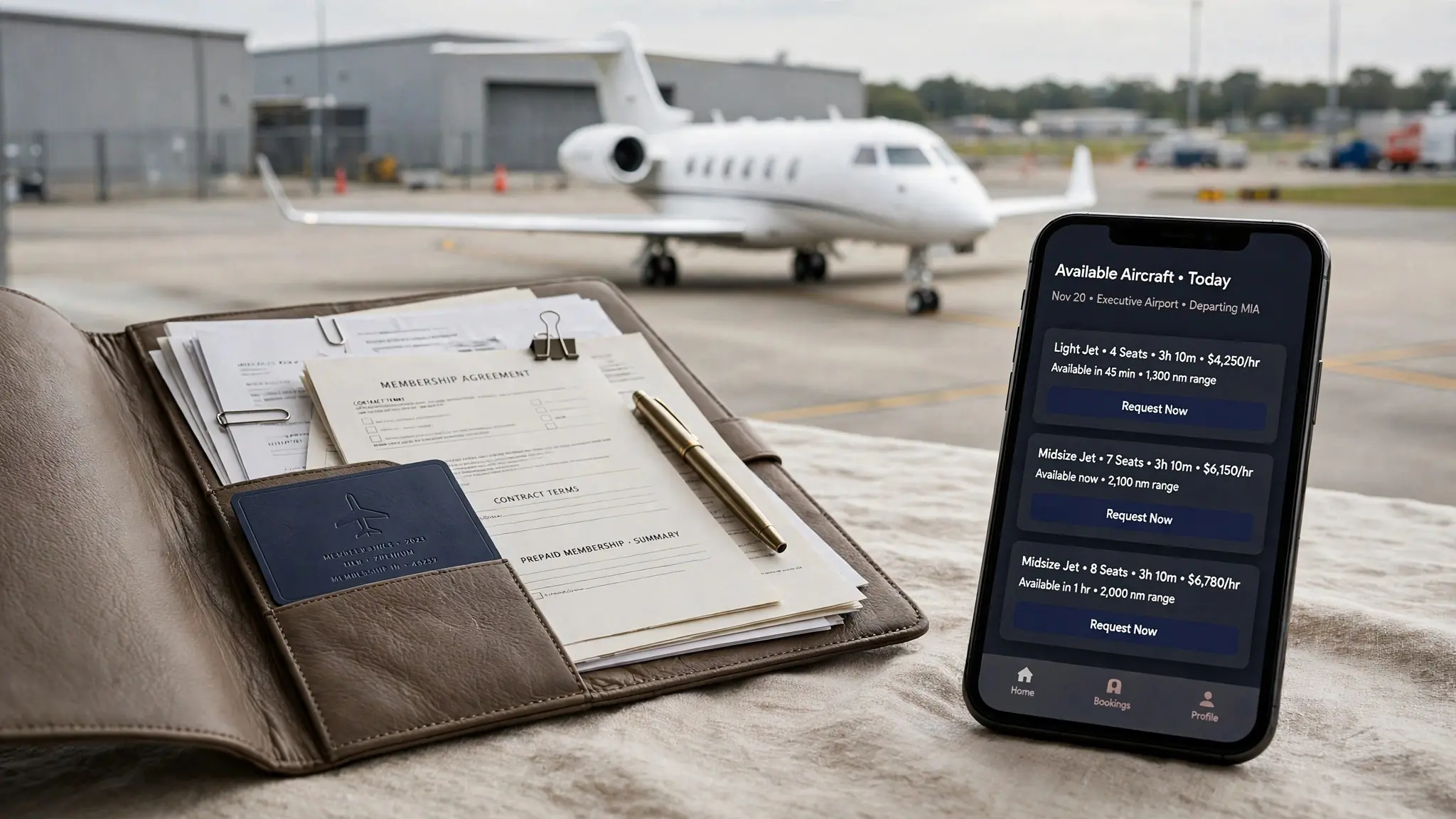
The market, sensing the gap, has produced hybrids worth knowing. Membership programs now blend elements of both models: lower commitment than cards with more consistency than pure ad hoc booking. Dynamic pricing cards offer market linked rates with service guarantees.
And the major fractional and charter houses have built their own apps, wrapping digital convenience around fleet consistency, a convergence visible in the pricing structures tracked across our private jet charter pricing guide.
The technology keeps moving. Instant booking now covers a growing share of the charter market, AI driven tools match travelers with empty legs automatically, and some platforms experiment with shared charter, splitting aircraft between parties on the same route.
The direction is unmistakable: the friction between wanting a jet and boarding one keeps shrinking, and the winners are the travelers who understand what each model prices and what each one leaves out.
The Flyer’s Checklist
Before committing to either model, run the honest audit. Count your actual annual hours and the share of trips that are truly fixed versus flexible. Price your five most frequent routes on both models, including peak dates, because the holiday premium is where the models diverge most.
Read the card contract’s peak day and expiry clauses with care, and vet any app by asking who the operating carrier is, every time. And keep the perspective that New York’s private aviation ecosystem illustrates so well: the tools serve the mission, never the reverse. In private aviation, as in every luxury category, the smartest money is the money that knows exactly what it is buying.
FAQs
What is the difference between a jet card and a charter app?
A jet card is a prepaid program offering fixed hourly rates, guaranteed availability with contracted notice, and consistent service from one provider. A charter app provides on demand booking from a marketplace of operators at dynamic, trip by trip pricing with no commitment or consistency guarantee.
Which is cheaper, a jet card or booking through an app?
It depends on timing. Apps often win on individual trips when demand is soft, particularly one ways and empty legs. Jet cards win across a full year of flying when peak demand arrives, because card rates hold while market prices surge twenty to fifty percent during holidays and events.
What are empty leg flights on charter apps?
Empty legs are repositioning flights flown without passengers, listed on apps at discounts of 30 to 75 percent off standard charter rates. They suit flexible travelers, but they follow another client’s schedule and can cancel or change if that client’s plans shift.
How much money do jet cards require upfront?
Most jet cards sell blocks of 25 hours, with light jet programs typically starting around 150,000 to 200,000 dollars and larger cabin categories rising substantially. Membership style variants with lower deposits exist, though hourly rates run higher than traditional prepaid structures.
Are charter apps safe to book through?
Reputable apps display operator certification, aircraft details, and safety ratings, but the diligence responsibility shifts toward the traveler. Verify the operating carrier’s FAA Part 135 certificate and third party safety ratings on every booking, regardless of how polished the booking experience feels.
What happens if my jet card provider fails?
Prepaid funds carry provider risk, which is why sophisticated buyers choose financially strong providers and favor programs with escrow protections or backed by major operators. Review the contract’s refund and protection clauses before depositing, and treat implausibly low card rates as a warning sign.
Can I use both a jet card and charter apps?
Yes, and sophisticated flyers increasingly do exactly that: a card for mission critical trips where certainty matters, apps for flexible travel and deal hunting. The dual approach costs more in total commitment but optimizes both reliability and value across a full flying year.
Do charter apps guarantee availability?
No. Apps offer availability until the market absorbs it, and during peak periods, holidays, major events, and weather recovery days, options thin and prices surge. Guaranteed availability with contracted notice remains the defining jet card advantage and the core of its premium.