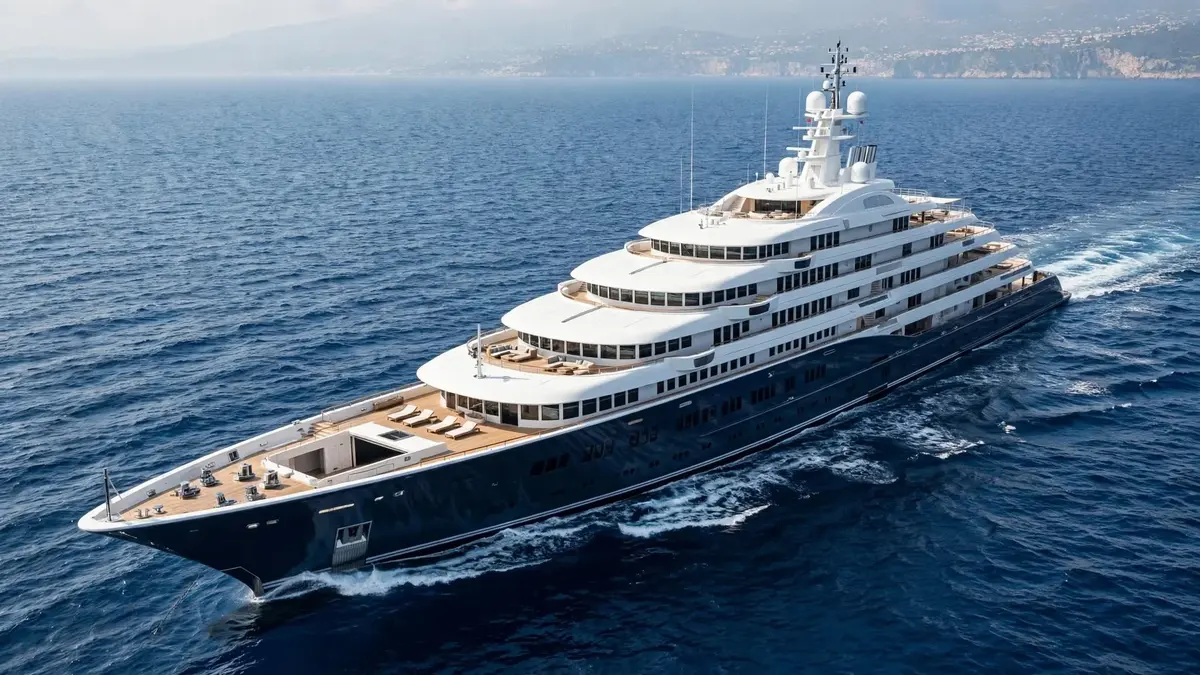
The 100 metre club is yachting’s most exclusive tier, a category of vessels so large that the industry invented a new word for them: gigayachts. A broker who has sold several members of the club once explained the threshold to me with a shipbroker’s precision.
Below a hundred metres, he said, you own a yacht. Above it, you own a maritime institution, with a crew of forty, an engineering department, a helicopter, submarines, and an annual budget that rivals a small hotel group.
As of today, fewer than one hundred yachts in existence exceed one hundred metres, and the overwhelming majority of them emerged from a tiny circle of Northern European shipyards whose names function as a password among the ultra wealthy. This is the story of that circle: who builds the giants, what the giants cost, and why the club keeps growing despite every prediction of its excess.
The German Powerhouse: Lürssen
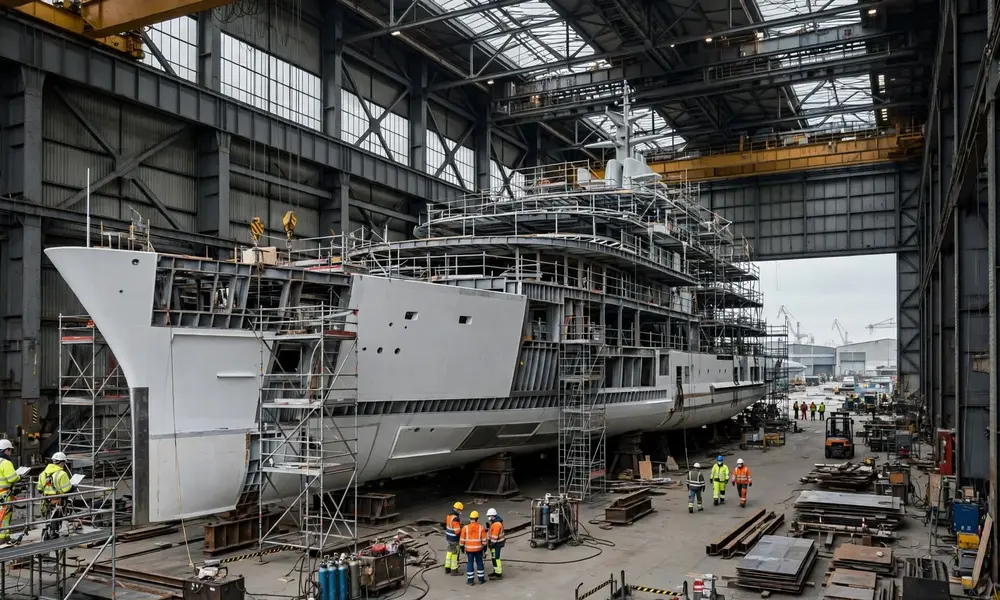
Lürssen, the family owned shipyard from Bremen with roots stretching back to 1875, dominates the 100 metre club so completely that the category might fairly be called its private preserve. The yard builds naval vessels and fast patrol craft alongside yachts, and that military engineering DNA shows in its gigayachts: immense, technically flawless, and delivered on schedule.
Lürssen’s delivered fleet includes Azzam, at 180 metres the longest private yacht in the world, capable of more than 30 knots despite her size, a speed that remains one of the great engineering feats in yachting history.
The same yard launched Dilbar, whose 156 metres conceal the largest interior volume ever measured in a private yacht, and Blue, a 160 metre giant delivered in 2022 that ranks among the largest yachts afloat.
When the owners of the world’s most consequential fortunes decide to build at the maximum scale, the conversation almost always begins in Bremen, a fact that secures Lürssen’s place at the summit of the world’s most significant yacht builders.
The Dutch Masters: Oceanco, Feadship, and Royal Huisman
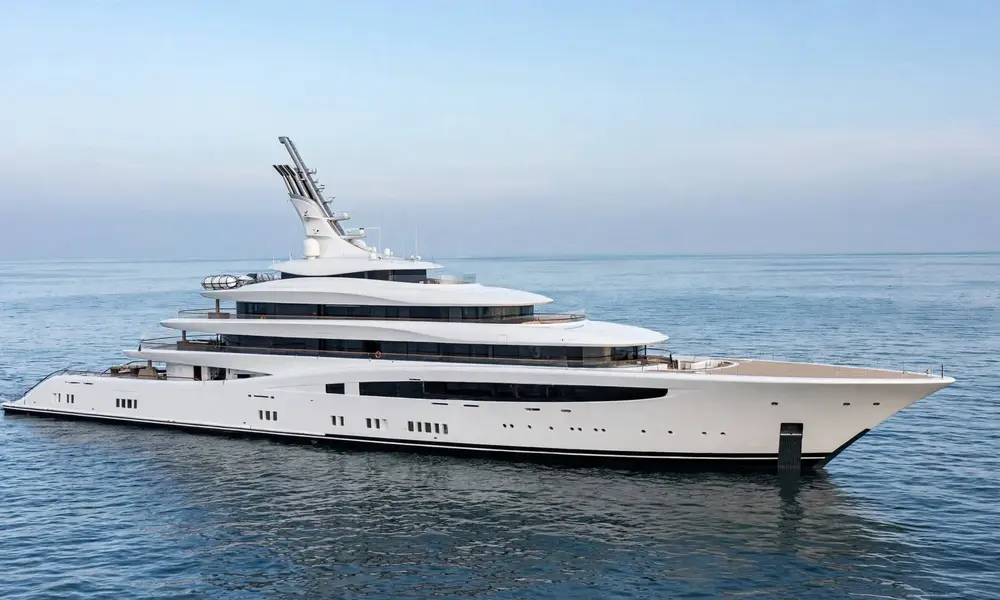
The Netherlands answers Germany’s scale with artistry. Oceanco, based in Alblasserdam, has built a remarkable share of the modern gigayacht conversation, including the 127 metre sailing yacht Koru, delivered in 2023 as the largest sailing yacht in the world, a three masted schooner built for Jeff Bezos that revived the age of sail at gigayacht scale.
Oceanco’s motor yacht portfolio pushes design boundaries with equal confidence, partnering with the world’s leading exterior designers to produce hulls that look like sculpture and perform like commercial tonnage.
Feadship, profiled in our earlier feature, contributes its pure custom philosophy to the club with vessels like the hydrogen pioneering Breakthrough, while Royal Huisman builds the finest large sailing yachts on earth, carrying the tradition of Dutch craftsmanship into rigs and carbon spars.
The Dutch cluster, explored across our ranking of the top yacht manufacturers, proves that in yachting, engineering excellence travels with aesthetic ambition.
Blohm+Voss and the Hamburg Tradition
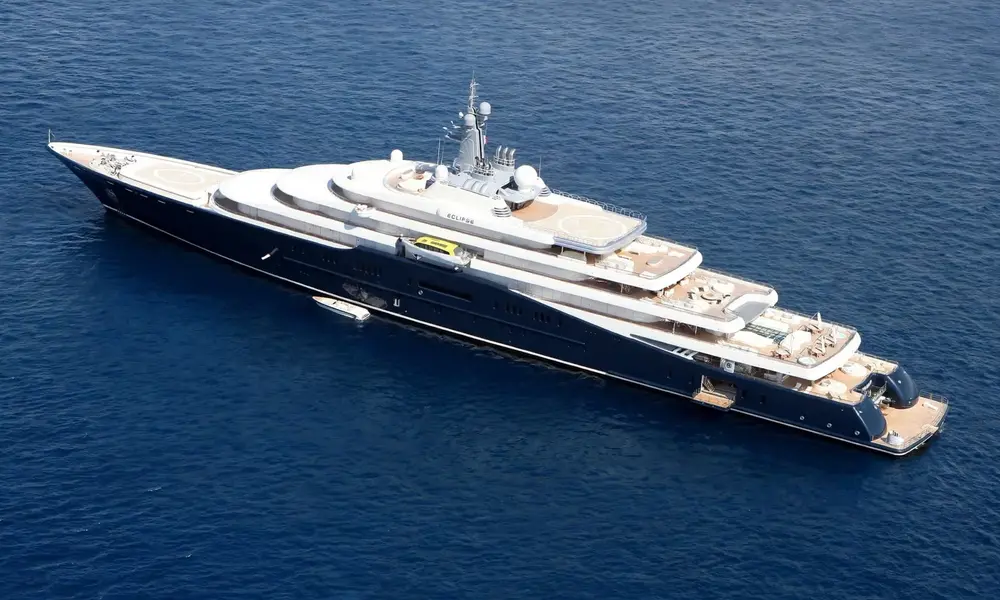
Hamburg’s Blohm+Voss holds a singular place in gigayacht history as the builder of Eclipse, the 162 metre yacht delivered in 2010 for Roman Abramovich that effectively announced the modern gigayacht era.
Eclipse’s reported defensive systems, dual helicopter pads, and sheer presence redefined what a private vessel could be, and her delivery triggered the building race that filled the following decade. The same yard later delivered A, the 119 metre Philippe Starck designed motor yacht whose radical inverted bow made her the most photographed yacht of her generation.
The Hamburg tradition extends to Nobiskrug, the yard that built the 143 metre Sailing Yacht A, Starck’s even more radical sailing machine with masts taller than Big Ben, a vessel that exists somewhere between yacht, artwork, and engineering provocation. These German yards brought industrial shipbuilding muscle to private yachting, and the club’s largest members still carry their DNA.
The Challengers: Italy and Beyond
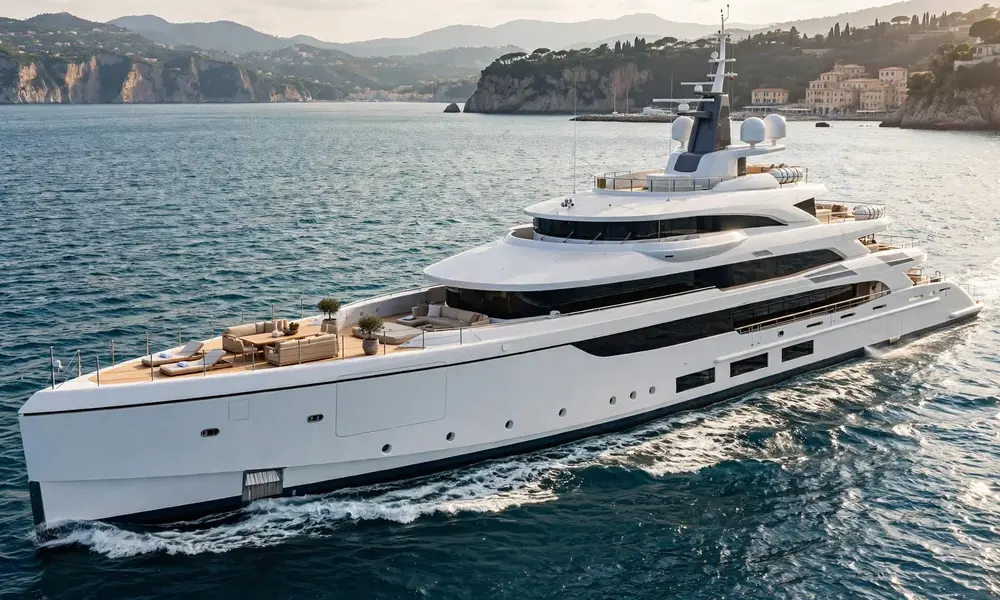
Italy’s approach to the 100 metre threshold reflects its design culture: fewer giants, more beauty. Benetti, the historic Livorno builder, has delivered yachts exceeding 100 metres with interiors of unmistakable Italian warmth, while the broader Italian industry dominates the segments just below the club, feeding owners upward toward the gigayacht tier.
Admiral and other Italian yards continue to push into the category with ambitious new builds.
Beyond Europe, the map is shifting. Turkish yards have emerged as serious builders of large custom yachts at competitive pricing, and shipyards in the Gulf and Asia watch the market with ambition.
Yet the club’s center of gravity remains stubbornly Northern European, because the gigayacht is ultimately a referendum on trust: when an owner commits three to five years and hundreds of millions of dollars, the choice of yard is the one decision that cannot be undone.
The Real Economics of the Giants
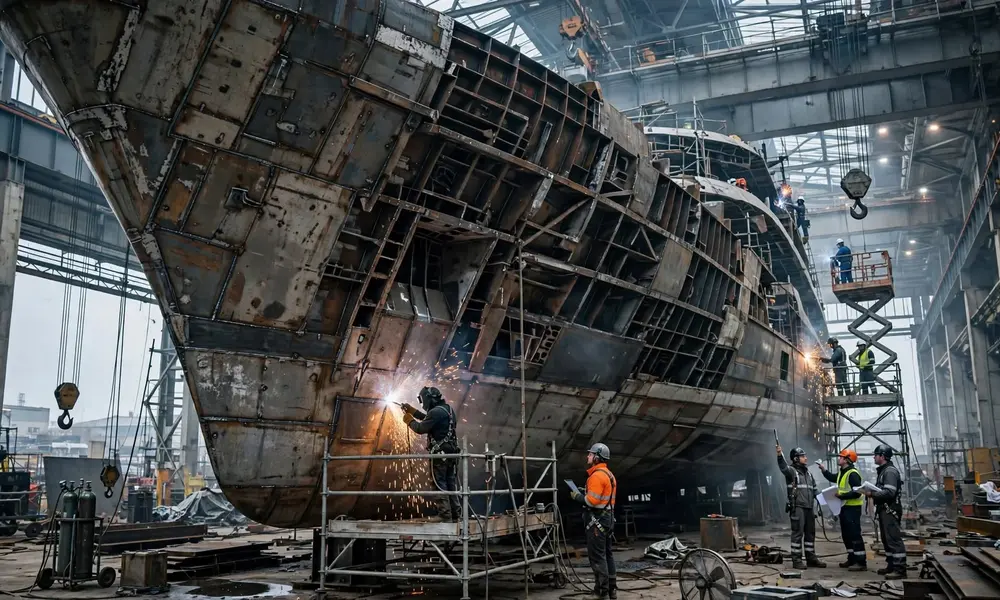
Building a member of the 100 metre club starts where most yacht budgets end. New build gigayachts typically cost between 300 million and 600 million dollars depending on size, complexity, and interior ambition, with the most elaborate projects reportedly exceeding those figures.
The purchase, however, is merely the entry fee. The industry’s enduring rule of thumb holds that annual operating costs run roughly ten percent of build cost: crew salaries for forty to sixty professionals, fuel measured in hundreds of thousands of litres, maintenance, insurance, and the constant cycle of surveys and refits.
These numbers explain why the engineering behind superyachts has become as much about efficiency as luxury, with hybrid propulsion, waste heat recovery, and now hydrogen systems reducing both cost and footprint.
They also explain the market’s rhythm: gigayachts trade rarely, hold value unevenly, and reward buyers who understand the discipline outlined in our superyacht valuation guide. For everyone else, chartering the world’s finest yachts delivers the experience at a fraction of the commitment, though true 100 metre members almost never charter.
Why the Club Keeps Growing
Every decade produces confident predictions that the gigayacht era has peaked, and every decade the club adds members. The reasons are structural. Wealth at the summit has concentrated faster than the supply of berths, privacy has become the scarcest luxury on earth, and a gigayacht offers what no penthouse can: a completely controlled environment that moves. Add the genuine engineering romance of building the largest private object one can own, and the order books fill themselves.
The next frontier is already visible on the yards’ drawing boards: cleaner propulsion, explorer capable hulls reaching Antarctica in comfort, and designs that treat the yacht as a research vessel with a spa. The 100 metre club began as an ostentation story. It has matured into something more interesting: the place where private capital funds genuine advances in naval architecture, one impossible commission at a time.
FAQs
What is a gigayacht?
A gigayacht is the informal term for private yachts exceeding 100 metres in length. Fewer than one hundred such vessels exist, and the category includes the longest, largest volume, and most technically complex private yachts ever built, typically crewed by forty to sixty professionals.
What is the largest yacht in the world?
Azzam, built by Lürssen and delivered in 2013, is the longest private yacht in the world at 180 metres. Remarkably, she is also among the fastest, capable of exceeding 30 knots, an extraordinary achievement for a vessel of her displacement.
How much does a 100 metre yacht cost to build?
New gigayacht builds typically cost between 300 million and 600 million dollars, with the most complex projects exceeding that range. Design, engineering, and construction take three to five years, and annual operating costs average roughly ten percent of the build cost.
Who builds the most gigayachts?
Lürssen of Germany has delivered more members of the 100 metre club than any other yard, including Azzam, Dilbar, and Blue. The Netherlands’ Oceanco and Feadship, and Hamburg’s Blohm+Voss and Nobiskrug, complete the core group of gigayacht builders.
What is the largest sailing yacht in the world?
Koru, delivered by Oceanco in 2023 for Jeff Bezos, is the largest sailing yacht in the world at 127 metres. The three masted schooner is a modern interpretation of classic sailing yacht design, built with naval architecture by Dykstra and interior design by Mlinaric.
How much does it cost to run a gigayacht each year?
Annual operating costs for a 100 metre plus yacht typically run 30 to 60 million dollars, covering crew, fuel, maintenance, insurance, berthing, and periodic refits. The industry’s rule of thumb is ten percent of build cost per year, though usage patterns shift the figure.
Can you charter a 100 metre yacht?
Almost never. True gigayachts are nearly all private use vessels whose owners have no interest in charter income. The largest charter yachts typically top out around 90 to 100 metres, and even those command weekly rates in the millions during peak season.
How many gigayachts exist?
Fewer than one hundred private yachts exceeding 100 metres exist worldwide, though the order books of Lürssen, Oceanco, and Feadship add new members regularly. The club’s scarcity is part of its meaning: it represents the absolute ceiling of private maritime ownership.