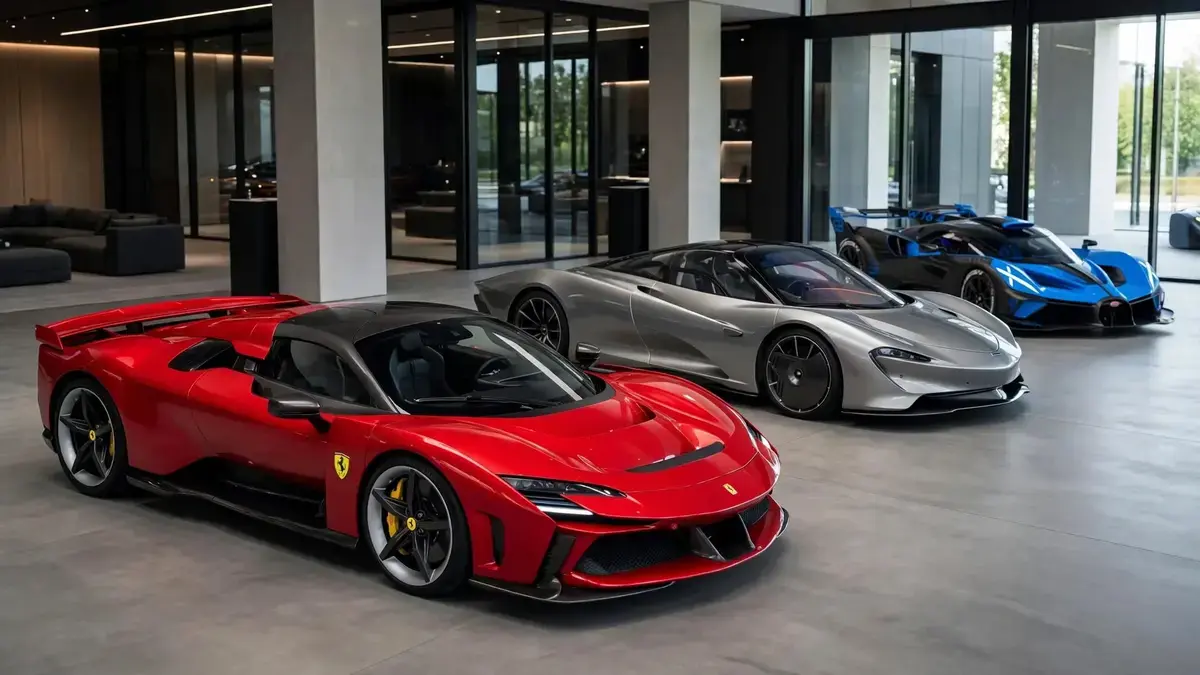
The rarest hypercars on earth share a humbling trait: money alone cannot buy them. Every car on this list sold out before most people knew it existed, allocated to collectors who had spent years, and often millions, earning the right to be asked.
A dealer principal at one of the great marques once described the process to me with perfect candor. He said the modern hypercar is not sold but assigned, like a place in a private club, and the waiting list begins long before the waiting list opens.
For the manufacturers, this is not arrogance but arithmetic: when you build one hundred cars and ten thousand people want one, the price tag stops being the barrier and becomes a formality.
These seven machines represent the summit of that system, cars so allocated that the secondary market is now the only door, at premiums that redefine the word.
1. Ferrari F80, The Sold Out Successor
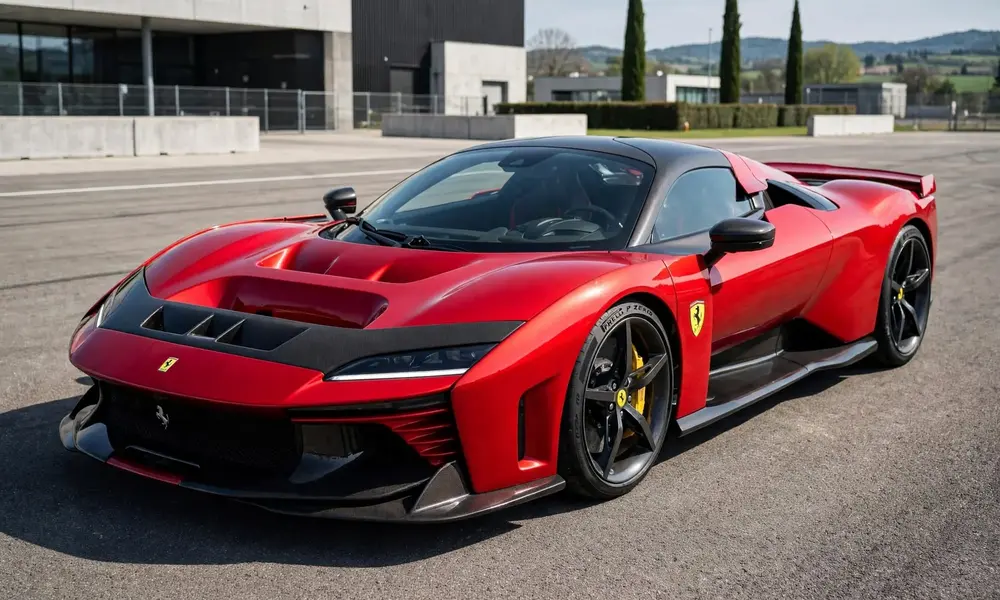
Ferrari’s F80, the successor to the LaFerrari, arrived with 1,184 horsepower from a hybrid V6 powertrain. The engine draws on the brand’s endurance racing program. Ferrari priced it at around $3.9 million and limited production to 799 coupes.
Every single one was spoken for before the public unveiling concluded. Ferrari’s allocation process ranks clients using loyalty metrics the company never officially explains. These include years of ownership and participation in racing programs. Relationships with the factory also play a role. A buyer’s purchase history serves as a curriculum vitae.
The F80’s specification justifies the frenzy. Its three electric motors pair with a twin turbo V6 to deliver acceleration that challenges physics’ patience, while active aerodynamics generate genuine race car downforce. For collectors, it represents something rarer than speed: membership in the unbroken lineage of Ferrari flagships, from the 288 GTO through the Enzo to today, a chain that defines what makes a car a true hypercar in the modern era.
2. Aston Martin Valkyrie, Formula One for the Road
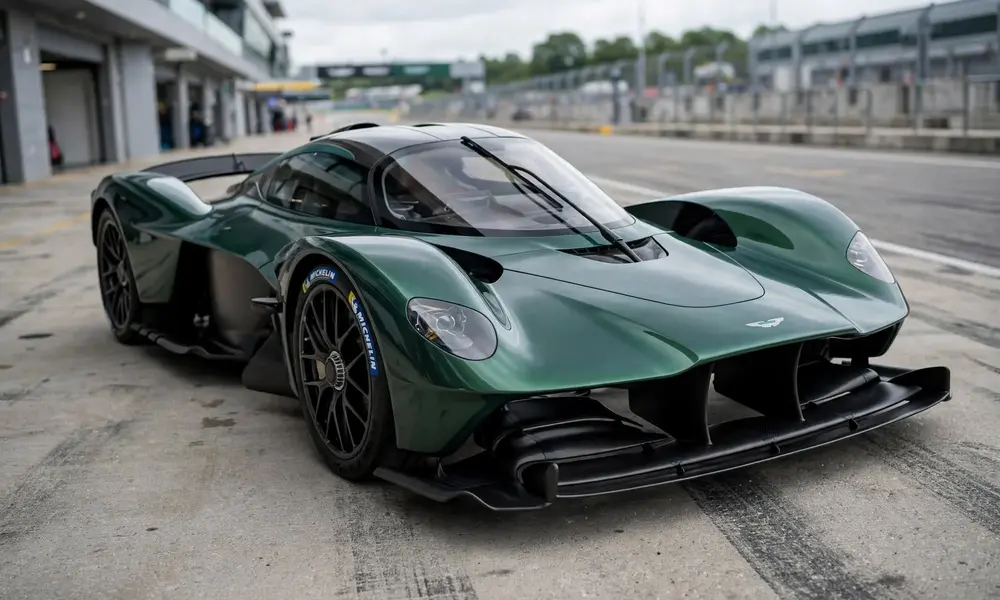
The Valkyrie began as a conversation between Aston Martin and Red Bull Racing’s legendary designer Adrian Newey, and it ended as the closest thing to a Formula One car ever licensed for public roads.
Its naturally aspirated 6.5 liter Cosworth V12 revs past 11,000 rpm and produces, with hybrid assistance, around 1,160 horsepower in a car weighing barely more than a city hatchback. Production was capped at 150 coupes and 85 spiders, priced around 3.5 million dollars, and allocated years before deliveries concluded.
Owning one required more than funds. Buyers underwent seat fittings like racing drivers, committed to factory support programs, and joined an ownership community managed as carefully as the car’s aerodynamics. The Valkyrie’s proportions, with its venturi tunnels and teardrop cabin, make it instantly recognizable as the flagship of everything covered our guide to the world’s hypercars, and its sold out status was settled long before the first car reached its first driveway.
3. McLaren Speedtail, The Three Seat Ghost
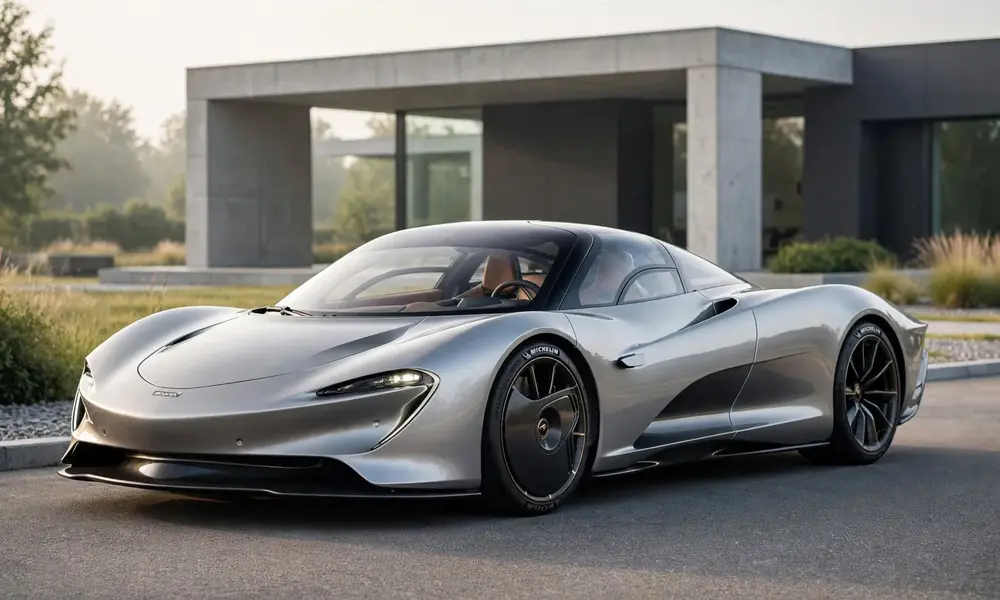
McLaren built exactly 106 Speedtails, matching the production count of the legendary F1, and like its ancestor, the Speedtail seats the driver in the center with two passengers flanking behind.
Its hybrid powertrain delivers 1,035 horsepower, its top speed reaches 250 miles per hour, and its elongated carbon body, nearly seventeen feet of teardrop, was sculpted for one purpose: slipping through air with the least disturbance physics allows. Priced around 2.25 million pounds, all 106 found homes through McLaren’s client allocation process almost immediately.
The Speedtail’s rarity compounds through details: flexible carbon fiber ailerons with no seams, cameras replacing mirrors, and a velocity mode that lowers the car and retracts the cameras for maximum speed. It is less a car than a demonstration of what happens when a race engineering team is told that cost and convention are not constraints. The used market occasionally offers one, at multiples of the original price.
4. Lamborghini Veneno, Poison by Design
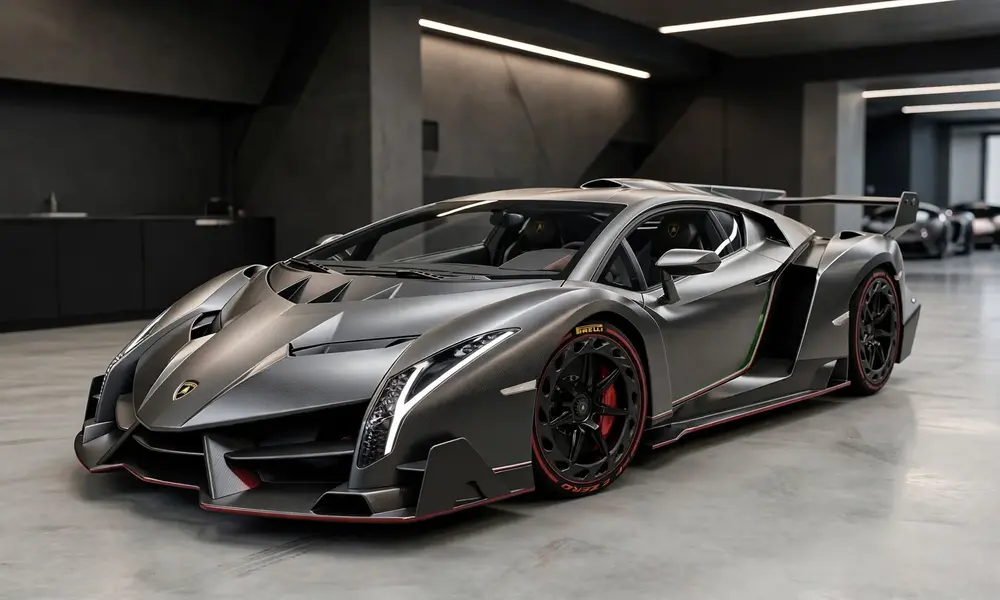
Lamborghini created the Veneno in 2013 to celebrate its fiftieth anniversary, and the production numbers explain the name: three customer coupes, one factory prototype, and later nine roadsters. At around 4.5 million dollars when new, it was among the most expensive production cars ever offered, and all twelve were allocated to the brand’s closest collectors before any public order book existed.
Based on the Aventador’s architecture with its 6.5 liter V12 tuned to 740 horsepower, the Veneno’s value lies in its extremity. The body is a storm of wings, fins, and channels that looks like a Le Mans prototype that escaped the circuit. On the rare occasions one appears at auction, results have climbed toward eight figures, a trajectory that places it firmly among the most coveted collectible cars on earth.
5. Bugatti Bolide, The Track Only Answer
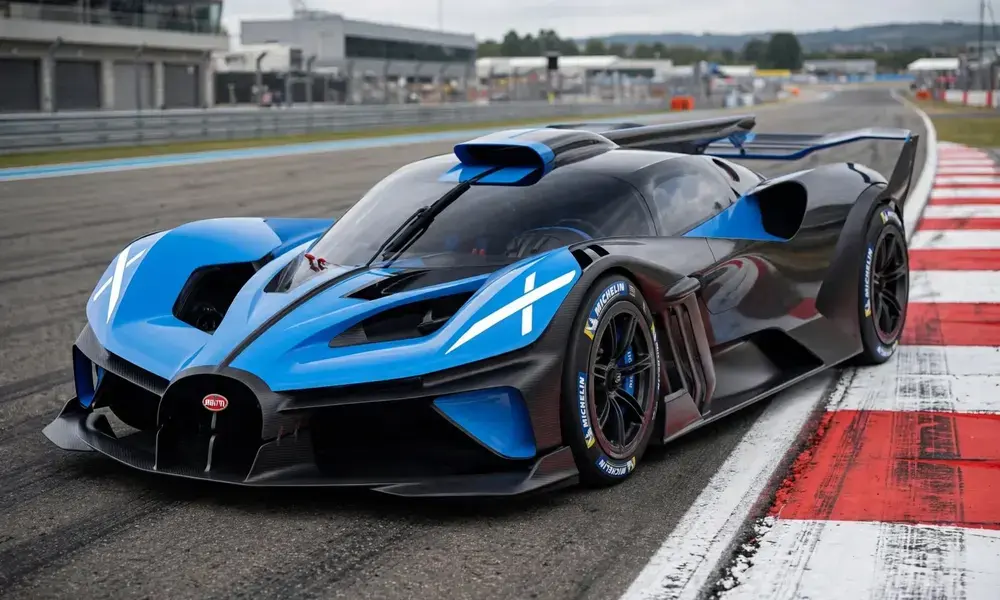
Bugatti’s Bolide asked a simple question: what would the brand’s 8.0 liter quad turbo W16 achieve if freed from every road car compromise? The answer was 1,578 horsepower in a track only machine weighing around 1,450 kilograms, producing power to weight figures that belong to top level motorsport.
Production was limited to 40 units at approximately four million euros each, and the allocation closed rapidly among Bugatti’s existing clients.
The Bolide cannot be driven to dinner. It requires a circuit, a support team, and a commitment that filters owners as thoroughly as the price. That is precisely its appeal.
It represents the W16 engine’s final and purest expression as Bugatti moves toward new powertrains, making it an instant historical artifact. It is the last of a dynasty, kept in climate controlled collections and exercised at private track days.
6. Gordon Murray T.50, The Professor’s Masterpiece
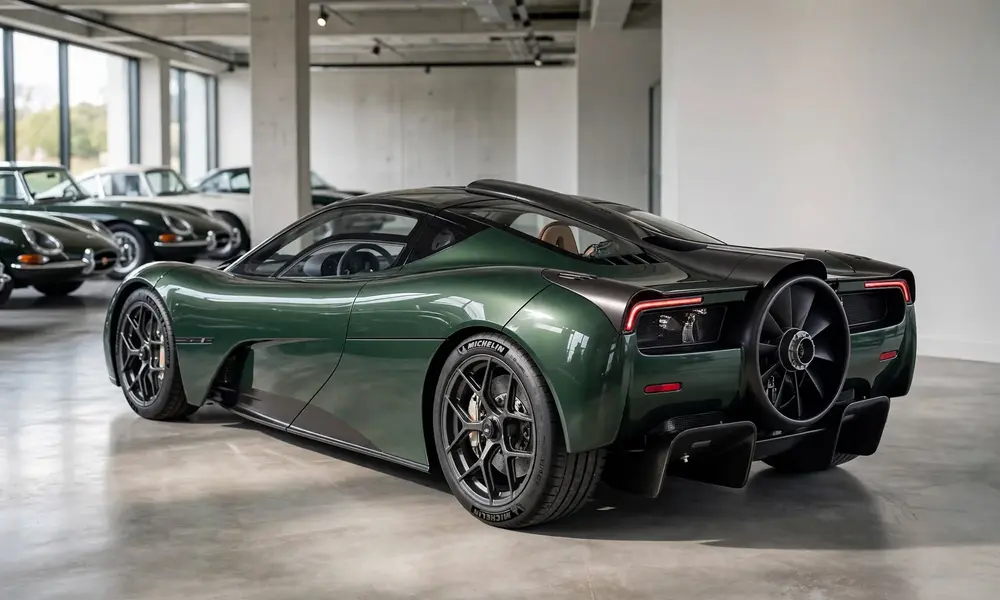
Gordon Murray designed the McLaren F1 in 1992 and then spent thirty years being asked to do it again. The T.50 is his answer: one hundred cars priced at roughly three million dollars each. At its heart sits a naturally aspirated 4.0-liter Cosworth V12.
It revs to 12,100 rpm, the highest of any production road car. A rear-mounted fan actively manages airflow beneath the car, using technology Murray pioneered in Formula One in 1978.
Every T.50 was allocated through a personal application process. Murray’s team selected owners who would drive the cars rather than simply store them. The specification reads like a manifesto against modern excess. It weighs under one ton and has no hybrid system.
It features a manual gearbox and an engine many consider the finest ever built for the road.It sold out instantly and trades, when it trades at all, at profound premiums.
7. Ferrari Daytona SP3, The Icona Invitation
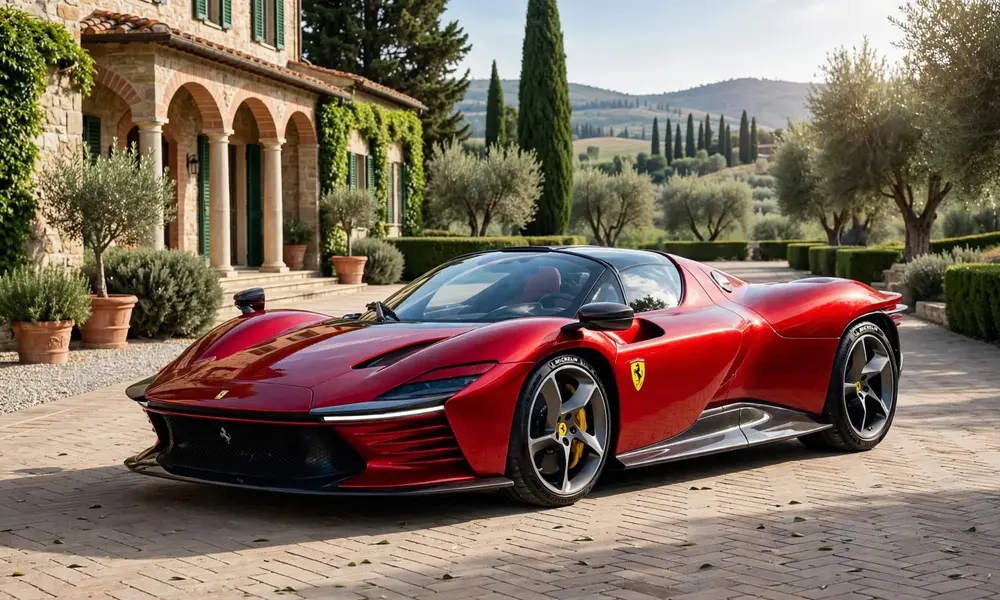
Ferrari’s Daytona SP3 belongs to the Icona series. This program reinterprets the brand’s racing heritage for its most devoted clients. Inspired by the 330 P4 and the 1967 Daytona 24 Hours sweep, the SP3 wraps a mid mounted 6.5 liter V12 producing 829 horsepower. Its bodywork stops conversation at every concours lawn it visits.
Production: 599 cars, around 2.25 million dollars each, available only by factory invitation to clients with established Ferrari collections.
The SP3 illustrates the modern allocation economy perfectly. The invitation was the product. Owners describe the call from Maranello as a career moment, the acknowledgment that years of loyalty had been noticed. The car’s presence at events now draws larger crowds than cars costing twice its price, proof that in the upper reaches of the market, story and scarcity outrun specification.
For context on where such machines sit in the broader performance landscape, our ranking of the fastest supercars provides the speed obsessed counterpoint to the SP3’s beauty first philosophy.
What the Allocation Game Really Means
These seven cars reveal how thoroughly the top of the automotive market has changed. The transaction is no longer customer and product but candidate and membership.
Manufacturers curate owners the way galleries curate collectors. The right first owner protects the car’s provenance, the brand’s image, and every other owner’s residual value.
The system frustrates newcomers by design, and it rewards patience, loyalty, and genuine enthusiasm over raw spending power.
For those outside the velvet rope, the lesson is clear. The path to owning a sold-out hypercar begins years before the car exists. It starts with purchases, relationships, and participation that make you the client the factory calls first. In the modern hypercar economy, you do not find the car. The car finds you.
FAQs
Why do hypercars sell out before production?
Manufacturers produce hypercars in limited runs of dozens to hundreds of units, while demand can reach thousands. As a result, cars are often allocated to established clients through loyalty programs before any public sale. By the time most launches are announced, the entire production run may already be assigned.
What is the most expensive hypercar on this list?
The Lamborghini Veneno had an original launch price of around $4.5 million. This made it one of the most expensive production-based cars at launch. On the secondary market, several cars on this list, including the Veneno and Ferrari F80, can command prices well above their original figures.
How does Ferrari decide who can buy limited models?
Ferrari never publicly discloses its allocation criteria, but eligibility is understood to depend on ownership history, participation in factory racing and driving programs, dealer relationships, and long-term brand loyalty. Owning multiple production Ferraris over several years is generally considered an important step toward receiving an invitation.
What is the Ferrari Icona series?
Icona is Ferrari’s limited-production series that reinterprets the brand’s classic racing heritage through modern engineering. It began with the Monza SP1 and SP2 and continued with the Daytona SP3. These cars are offered strictly by invitation to some of Ferrari’s most established collectors.
Is the Bugatti Bolide street legal?
No. The Bugatti Bolide is a track-only hypercar without road certification. Its 40 owners use the cars on race circuits, supported by factory programs. The Bolide was designed to showcase the Bugatti W16 engine without the restrictions imposed by road-car regulations.
How fast is the McLaren Speedtail?
The McLaren Speedtail reaches a top speed of 250 miles per hour, making it the fastest McLaren ever built. Its 1,035-horsepower hybrid powertrain, central driving position, and streamlined carbon-fiber body were engineered specifically to deliver high-speed stability and minimal aerodynamic drag.
What makes the Gordon Murray T.50 special?
The Gordon Murray T.50 combines a high-revving 12,100-rpm Cosworth V12 engine with a fan-assisted aerodynamic system and a curb weight of under one ton. Only 100 examples were produced, and designer Gordon Murray considers it his definitive work following the McLaren F1.
Can you buy these hypercars on the used market?
Occasionally, these hypercars become available through auction houses and specialist dealers, but buyers should expect significant premiums. Sold-out limited-production hypercars often trade above their original prices, sometimes for multiples of their launch values. Some owner agreements also include first-refusal clauses, giving the factory or dealer the option to purchase the car before it is offered elsewhere.