The search for the best food near me is really a search for a feeling. You want the meal that matches your mood, your budget, and the hour, and you want someone to point you to it without wasting your evening on a disappointment.
Let me tell you what changed my own answer to that search. Years ago, in a city I was visiting for one night only, I asked a taxi driver where he ate. Not where he took visitors. Where he ate on his own birthday. He thought for a moment, named a place three streets away, and added that I should order what the grandmother at the counter told me to order.
The room had six tables, a menu written on a chalkboard, and no name on the door that I can remember. The food was staggering. Not fancy. Staggering. I have thought about that meal at least once a month ever since.
That is the real subject of this guide. Not a ranked list, because lists expire and neighborhoods change. A way of seeing. The best food near you shares the same fingerprints everywhere on earth, and once you know them, you will find a great meal in any postcode, in any country, often within a single block of where you are standing right now.
What the Word Best Actually Means

Before the method, one honest word about the word. Best does not mean most expensive, most photographed, or most reviewed. Best means a dish with identity, a room with warmth, and one small surprise. Those three things together are what your memory keeps. Everything in this guide is a way of finding them.
Notice what is absent from that definition: novelty. The meal you remember is rarely the strangest thing you ate. It is the simplest thing, done at a level of care you did not expect. A bowl of soup that tastes like it began before sunrise. A taco from a cart where the cook has made the same three items ten thousand times. Food made by repetition and pride, not by trend.
Follow the Specificity
The first law of finding great food anywhere: the more specific the menu, the better the kitchen. A cart that sells one thing has made that one thing more times than a large restaurant makes its entire menu in a month. A diner with forty pages of laminated promise has mastered nothing. A place that serves the food of one region, one tradition, one family, has found its voice and will defend it.
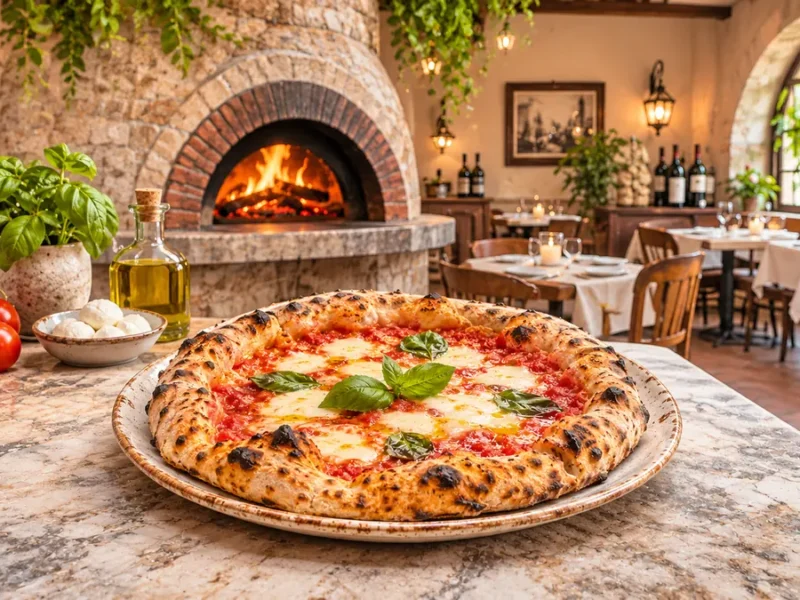
This is why the best pizza comes from rooms that argue about dough fermentation, why the best tacos come from kitchens that argue about corn, and why the best breakfast comes from places that close by early afternoon because they have said what they came to say.
We examine each of those in this series, and the laws never change: how to find the best pizza near you, where the best tacos hide, and how to find the best breakfast near you. Read the menu the way you would read a biography. Specificity is the signature of a cook with conviction.
Follow the Queue, but Read It Correctly
A line out the door is information, not a verdict. The skill is in reading the line. If the people in it look like regulars, if some of them greet the staff by name, if the wait is mostly locals speaking the language of the cuisine they are about to eat, you have found something real.
If everyone in line is holding a phone at arm’s length, filming, you have found something marketed. Both can taste good on the day. Only one of them will still be worth eating in five years, because only one of them exists for a reason deeper than the algorithm.
Time of day matters here too. A queue at noon on a weekday, made of people who had to leave their desks for it, outweighs a queue on a Saturday made of people with nowhere else to be. Hunger with a deadline is the most honest review a kitchen can receive.
The Bread Rule and the Broth Rule
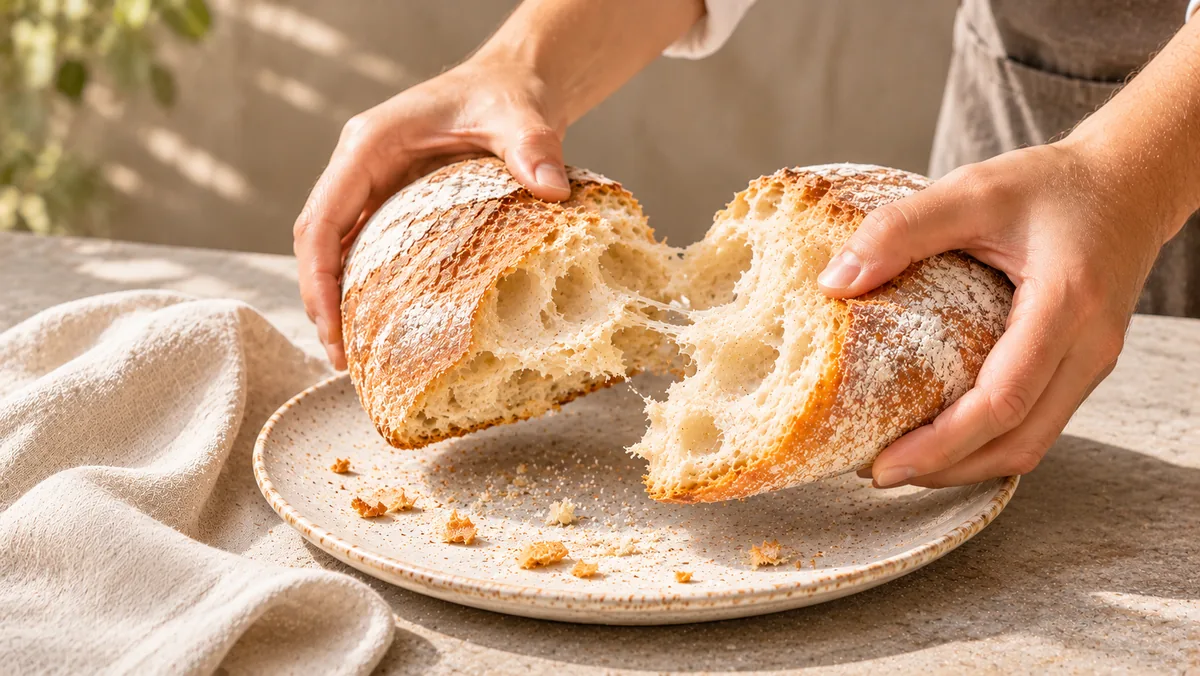
Two cheap ingredients will reveal a kitchen faster than anything else on the menu: bread and broth. Remember both and you are protected almost everywhere. Bread costs a kitchen hours and earns it almost nothing. Dough must be started long before service, proofed, baked, and refreshed, all for a basket most people will barely acknowledge.
When bread arrives warm, with a crust that shatters and a crumb that pulls apart, the kitchen is making an announcement: we care about the details you are not paying for. Cold bread, bread that came from a plastic sleeve, bread that tastes like yesterday, is the opposite announcement.
The same generous instinct appears wherever people eat well in unglamorous settings, which is why the best ideas ended up among eighteen easy boat snacks for a day on the water: the kitchens and cooks worth following are the ones who take simple ingredients seriously.
Broth is the second witness. A proper stock takes the bones of yesterday’s cooking and gives them hours of patience. It cannot be faked at the last minute, and it cannot be rescued once rushed. If the soup of the day tastes thin and one note, the kitchen is managing time badly, and the rest of the menu will be managed the same way.
The Provenance Test

Menus, like people, reveal themselves through their verbs. Read for facts over adjectives. A menu that names its supplier, its region, its method is a menu written by people who made decisions and can defend them. Crispy is a claim. Fried to order in olive oil is a fact. Fresh is noise. Line caught this morning is information.
Season is the second half of the test. A menu offering asparagus in a northern November is telling you about its supply chain, and what it is telling you is not flattering.
The best food near you is cooked from what the week gives, which means the best menus are restless, changing as the market changes. A laminated menu that has not evolved in two years is a museum, and you do not eat in museums.
Match the Food to the Hour

Great food at the wrong hour is a wasted meal. This sounds like etiquette. It is actually physics. Rich, slow food, braises and roasts and long simmered sauces, rewards an unhurried evening. Bright, acidic food, ceviche and salads and anything dressed in citrus, rewards midday when your palate is awake and the sun agrees.
Fried food is at its best within minutes of leaving the fryer, which is why the smartest fried things on earth are served standing up. And breakfast food is the most honest food of all, served to people who have not had coffee yet and cannot be fooled, which is why it deserves its own study in our companion guide to finding the best breakfast near you.
When the evening calls for elevation rather than ease, the same judgment scales upward. Our editors’ notes on ten luxury restaurants in New York worth planning an evening around show how specificity and restraint behave beautifully at every price point, from the corner room to the grand one. The principles do not change with the thread count.
The Local’s Question and the Three Star Reviews
Two tools will finish your education. The first is the question from the beginning of this article, the taxi driver’s question, and it has never failed me: where do you eat on your own birthday? Put it to a hotel concierge, a shopkeeper, a stranger at a bar.
You will receive, within three answers, at least one meal worth crossing town for. People guard their birthday restaurants the way they guard family recipes, and they only hand them over when asked correctly.
The second tool is the three star review. Five star reviews are written in the glow of the evening. One star reviews are written in anger and often about things the kitchen cannot control. Three star reviews are written by people who wanted to love the place, mostly did, and can tell you precisely where it fell short.
They are the most honest documents on the internet. Read twenty of them for any candidate restaurant and you will know the kitchen’s weaknesses before you sit down, which means nothing on the menu can surprise you badly.
A Method for Your Next Search
Here is the whole guide folded into one plan. First, decide what the hour calls for: fast or slow, bright or rich, seated or standing. Let the clock choose the cuisine. Second, shortlist three specific places, not three popular ones. One dish done forever beats ten dishes done adequately. Third, if you can, walk past and read the queue. Regulars over cameras, always.
Fourth, at the table, run the bread rule and ask the server what they ate before service. The answer, fast and opinionated or slow and rehearsed, tells you everything the menu will not.
Fifth, when the meal is right, remember it, return to it, and tell one other person. That is how the best food near anyone survives: not through rankings, but through the oldest network there is, one hungry person talking to another.
Frequently Asked Questions
How do I find the best food near me quickly?
Filter for places open now, rated four stars or higher, then choose the one with the most specific menu. Specificity beats ratings as a signal of quality, because a short menu means a kitchen that has made real decisions.
What is the best food to order at an unfamiliar restaurant?
Order the dish the restaurant is named for, or the regional specialty of the cuisine it serves. Kitchens put their whole reputation into their signature, and it is rarely the most expensive item on the menu.
Is street food as good as restaurant food?
Often, yes. Street food has one structural advantage no dining room can buy: the cook repeats the same few dishes hundreds of times a week, and repetition is the mother of excellence.
How can I tell if a highly rated place is worth the hype?
Read the three star reviews. Five star reviews are written in the glow of the evening. Three star reviews are written by people who can tell you precisely why the place almost earned a fourth star, and that precision is worth more than praise.
What time of day is food usually best at a restaurant?
During the middle of a busy service, when the kitchen is at its peak rhythm. Very early seatings catch the kitchen warming up, and very late ones catch it after the rush, so reserve the ambitious ordering for the heart of the evening.
How do locals find the best food in their own neighborhood?
The same way you can in theirs: they ask each other. Word of mouth about food travels on trust, not on rankings, and the question that unlocks it is where do you eat on your birthday.