Everybody has typed best pizza near me at least once, usually hungry, usually at the exact moment hunger makes us optimistic. And everybody who has searched it has been disappointed at least once, standing over a floppy, forgettable slice wondering how something so simple went so wrong.
Pizza is the most democratic food on earth and the easiest to do adequately and the hardest to do beautifully. Adequate pizza fills you. Beautiful pizza makes you quiet for a minute, the kind of quiet usually reserved for good news. The difference is not money. It is not neighborhood.
It is not even, mostly, talent. It is three quiet commitments: the dough gets time, the tomatoes get seasons, and the oven gets respect. Learn to ask about those three things and you will find the best pizza in your town within a month, every single time.
I learned this the way most people learn it, by being wrong for years. I grew up believing pizza quality was a ranking of toppings, that the best slice was the one carrying the most. Then, on a work trip I had not wanted to take, in a city I will not pretend to remember well, a colleague dragged me to a shop with six seats and a queue out the door. He ordered two margheritas.
I argued for something with more on it. He told me to trust him, which is the most powerful sentence in the entire history of pizza. What arrived had almost nothing on it, and it rearranged my understanding of the food completely. I have never ordered the same way again.
The Dough Tells the Truth
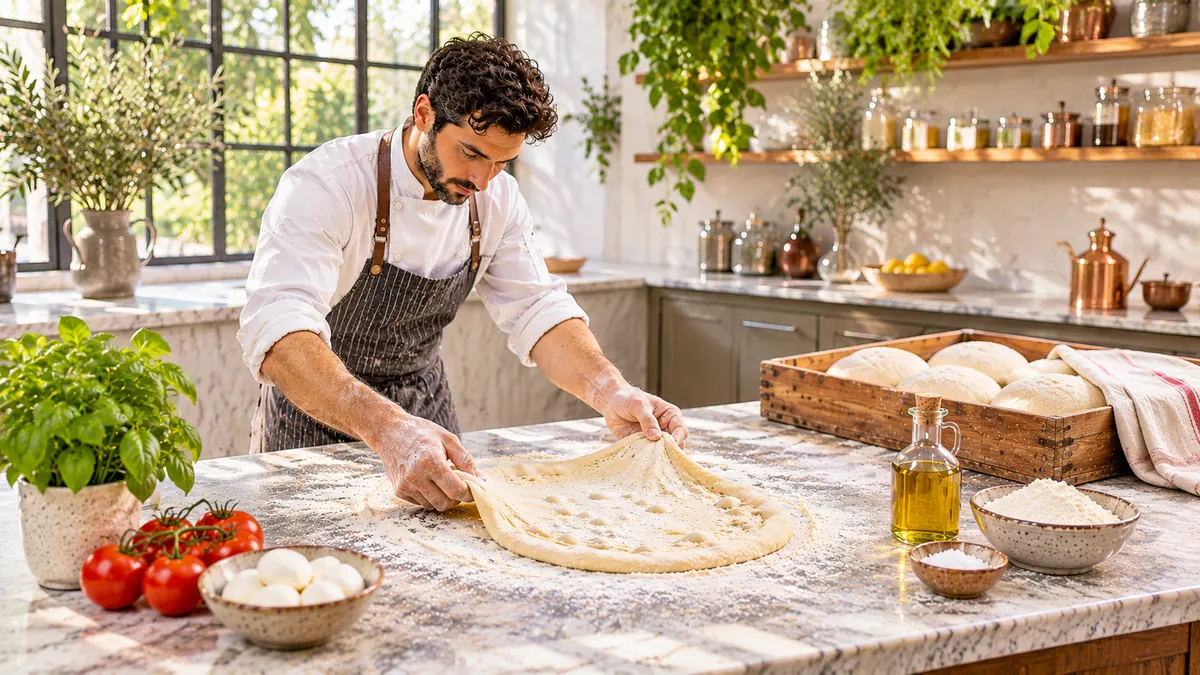
Ask any serious pizzaiolo how long their dough ferments and watch their face. It will light up or it will go carefully flat, and either way you will have your answer. Good dough takes time. Twenty four hours is the honest minimum, seventy two is where flavor really begins.
During those hours, yeast and bacteria do slow, patient work: they develop the faint sourness under the sweetness, the digestibility that lets you eat three slices without regret, and those blistered, leopard spotted rims that signal a crust with character. Time is the one ingredient no shortcut can substitute, which is exactly why it is the one ingredient most shops will not give.
A place that mixes dough in the morning for the evening does not make bad pizza necessarily. But it makes simple pizza, a crust that is a vehicle rather than a companion. The slice people cross town for comes from dough with a history. If a menu or a website mentions fermentation, cold proofing, or dough that is days old, pay attention. That kitchen is telling you it understands the foundation of the whole art.
This is the same law we keep meeting across this series. The best food near you always protects its base, whether that base is a tortilla, a batter, or a bread basket, and the restaurants worth keeping are the ones that give their cheapest components the most time. Dough is simply where the law is easiest to see.
Tomatoes Are a Season, Not an Ingredient
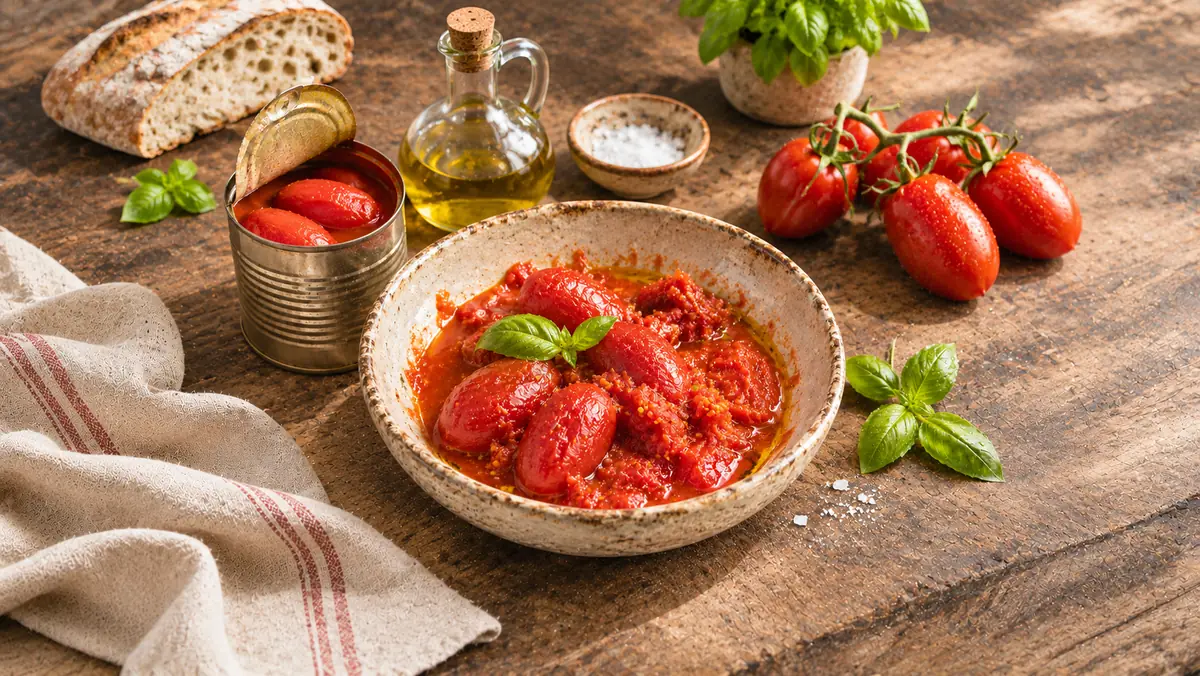
The second commitment is the tomato, and the tomato has a calendar. Serious shops build their sauce from canned San Marzano tomatoes, picked ripe in the volcanic soil south of Naples and preserved at the height of the season. This is not snobbery. It is arithmetic.
A fresh tomato in the wrong month is watery, acidic in a flat way, and forgettable, and no amount of cooking will change its mind. A tomato picked ripe in August and sealed that week carries summer into February.
So the sign to look for is not the word fresh. It is the word source. If a menu names its tomatoes, if a pizzaiolo will tell you where the cans come from unprompted, that kitchen has thought about one of the three ingredients that matter. And pizza has exactly three ingredients that matter: dough, tomato, cheese.
A kitchen that names its supplier for one of the three is almost certainly serious about all of them. Judge the sauce on the slice itself. It should taste bright and slightly sweet, with enough salt to make you want the next bite. It should never taste cooked down into paste, and it should never, under any circumstances, taste like it came from a jar with a long ingredient list.
Heat Is the Third Ingredient
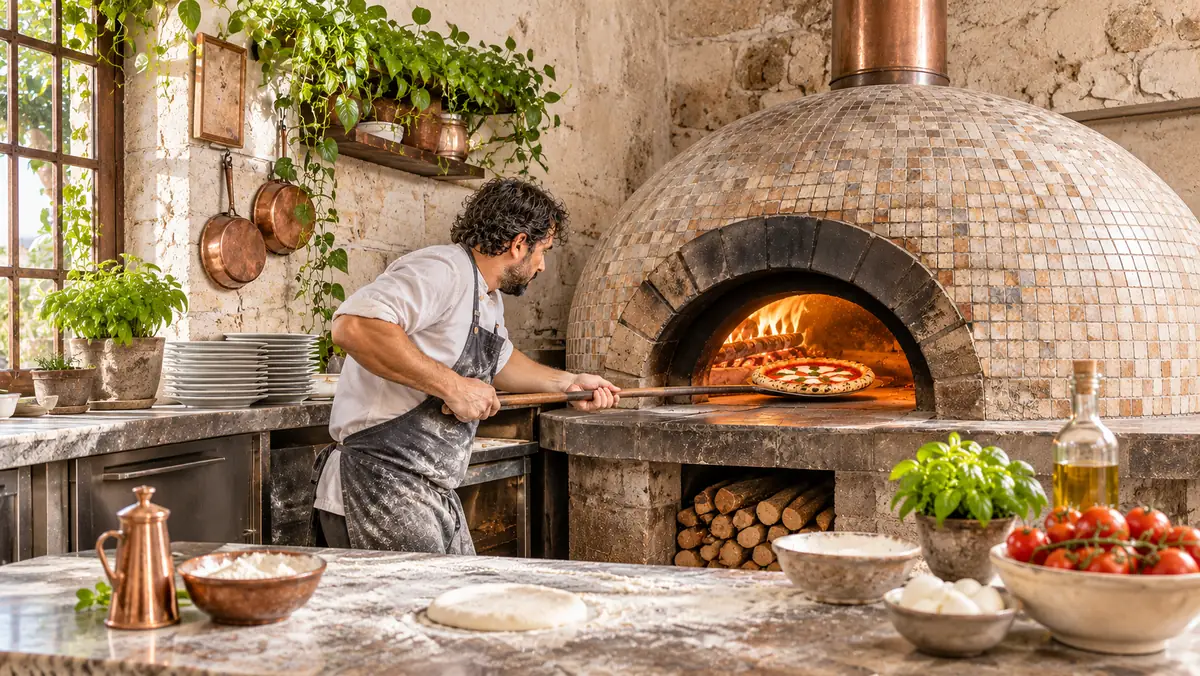
Here is the real reason great pizza is hard to copy at home, and it is not skill. It is temperature. A proper pizza oven runs far hotter than anything a home kitchen can produce. At that heat, the entire bake lasts only a few minutes, the crust balloons and blisters, the rim chars in spots, and the interior stays soft and moist with a crumb closer to good bread than to cracker.
That combination, crisp outside and tender inside, simply cannot happen at lower temperatures, no matter how good the recipe.
Which is why the oven is the first thing to look at when you walk in. A visible flame. A darkened stone that has seen thousands of pies. A pizzaiolo who turns the pizzas with confident, unhurried movements, reading the oven the way a captain reads water.
When a kitchen respects heat this visibly, it respects everything else too. The same reverence for fire shows up wherever dough meets it, from the best tacos near you, where carne asada is judged by its char, to the griddles that decide the best breakfast near you, where eggs are won or lost in thirty seconds. Fire is honest. It keeps score.
What to Order First at a New Pizzeria

Order the margherita. Every time. This is not a preference. It is a diagnostic. The margherita is dough, tomato, cheese, and nothing else, which means there is nowhere for a kitchen to hide. No pepperoni to distract, no stuffed crust to forgive, no drizzle to apologize.
If the margherita is good, everything else on the menu is a safe bet, because every other pizza is just the margherita wearing a costume. If the margherita is not good, no topping will save it, because the problem will be in the foundation.
There is a second reason, and it is older than the internet. The margherita is the pizza by which pizzaiolos measure each other. Making one well is the whole craft compressed into a single plate, and every serious shop knows it. When you order it, you are not being boring.
You are announcing that you understand the game, and kitchens respond to that. Ask anyone who has spent time in great dining rooms, including the ones in our guide to ten luxury restaurants in New York worth planning an evening around: the regular who orders the simplest thing with conviction gets the kitchen’s best attention.
The Signs, Collected
Here is the whole examination in one pass, for the next time you are standing on a sidewalk deciding where to eat. First, the oven. Flame visible, stone dark, pizzaiolo calm. Heat respected.
Second, the dough. Fermentation mentioned somewhere, by someone, with pride. Time given. Third, the tomato. A source named, a season respected. Summer carried forward.
Fourth, the menu. Short enough to mean it, with the margherita treated as the flagship rather than the cheap option. And fifth, the room. Not the decor, the rhythm. A pizzeria that hums rather than shouts, where slices leave the counter the second they are cut, has a kitchen that understands timing, which is the one thing pizza cannot be given later.
A Note on Style, Not Ranking
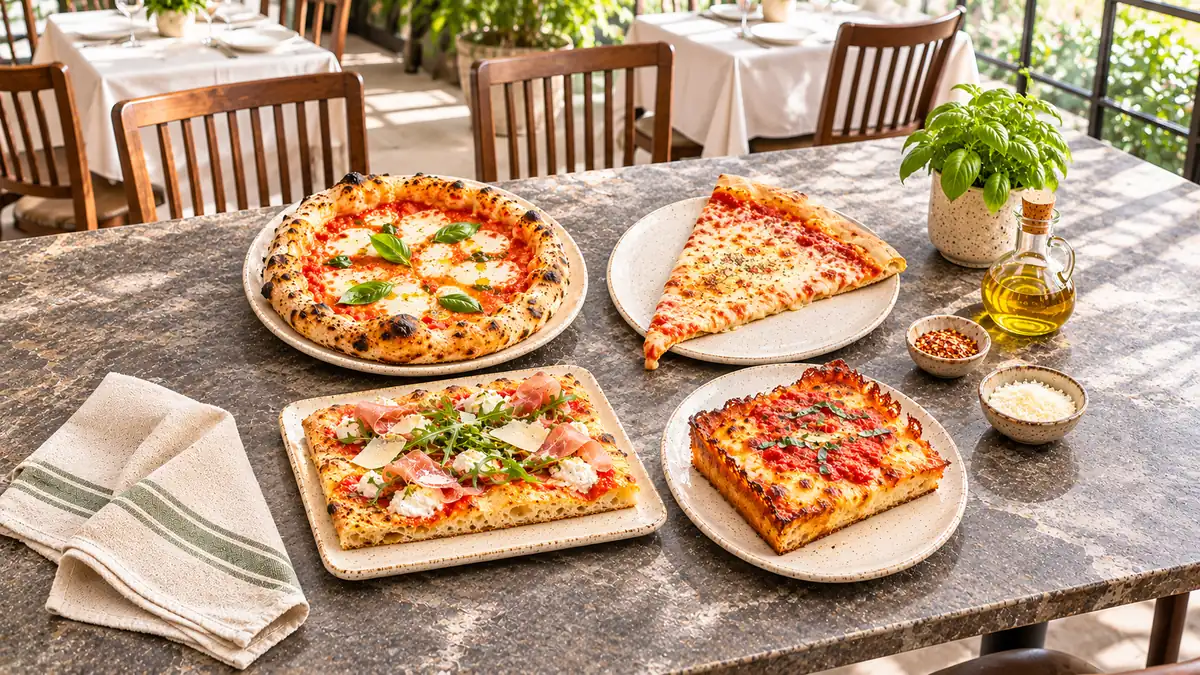
People love to argue about styles, Neapolitan against New York against Roman against Detroit, as if one crown existed. There is no crown. There is only conviction. Neapolitan pizza is soft centered, blistered at the rim, baked in seconds at ferocious heat, and eaten with a knife and fork without shame.
New York pizza is large, thin, foldable, built for walking and for optimism. Roman pizza is crisp and disciplined. Detroit pizza is a crispy edged, corner piece miracle born in a steel pan. Every one of these can be transcendent and every one can be lazy. The style is the accent.
The commitments, dough, tomato, heat, are the grammar, and grammar is where quality actually lives. Judge the grammar and the style will take care of itself.
Frequently Asked Questions
How do I find the best pizza near me?
Look for a pizzeria that mentions dough fermentation on its menu or website, bakes in a visible flame oven, and offers a margherita as a point of pride. Those three signs predict quality better than star ratings.
What is the best pizza to try at a new pizzeria?
The margherita. It exposes the quality of the dough, the tomato, and the oven with nothing to hide behind, and it is the pizza by which serious kitchens measure themselves.
Is expensive pizza better than cheap pizza?
Not automatically, but the price floor matters. Very cheap pizza is cheap because of the ingredients. The best value lives in the mid range, at shops that charge enough for real cheese and enough time.
Should pizza dough be fermented?
Yes. Fermentation of at least twenty four hours develops flavor and makes the crust easier to digest. It is the single strongest quality signal a pizzeria can give you.
What is the difference between New York style and Neapolitan pizza?
New York style is larger, thinner, foldable, and baked longer at a lower temperature. Neapolitan is smaller, soft in the center, blistered at the rim, and baked very fast in extreme heat. Both are excellent when made with conviction.
Is the margherita the most authentic pizza?
Yes. It comes from Naples, carries only tomato, mozzarella, basil, salt, and olive oil, and it remains the reference pizza against which pizzaiolos judge themselves and each other.
What does a good pizza crust look like?
Golden with darker blisters, called leopard spotting, crisp enough to hold a slice horizontal, and tender, almost bread like inside. Pale, uniform, cracker thin crusts usually mean a dough without time.