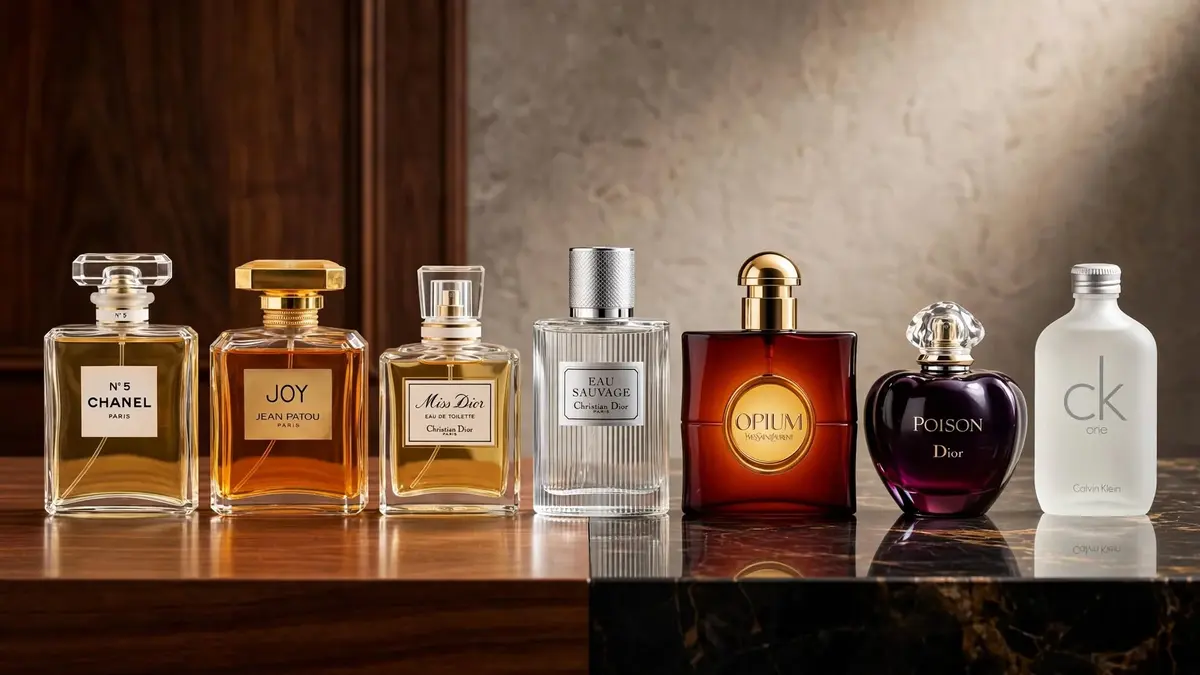
A great fragrance is a time machine. One breath of Chanel No. 5 returns you to the 1920s; one spray of CK One and it is 1994 again, all minimalism and possibility. These are the scents that make fragrances that defined entire decades more than just perfumes; they are lasting symbols of the culture, style, and spirit of their eras.
The seven perfumes below did more than sell well. Each one captured the spirit of its decade so completely that smelling it today is the closest thing we have to time travel.
This is not a list of the bestselling perfumes, though several of these qualify. It is a list of the fragrances that explained their era to itself, each one a small work of cultural history in a bottle.
1. The 1920s: Chanel No. 5 (1921)
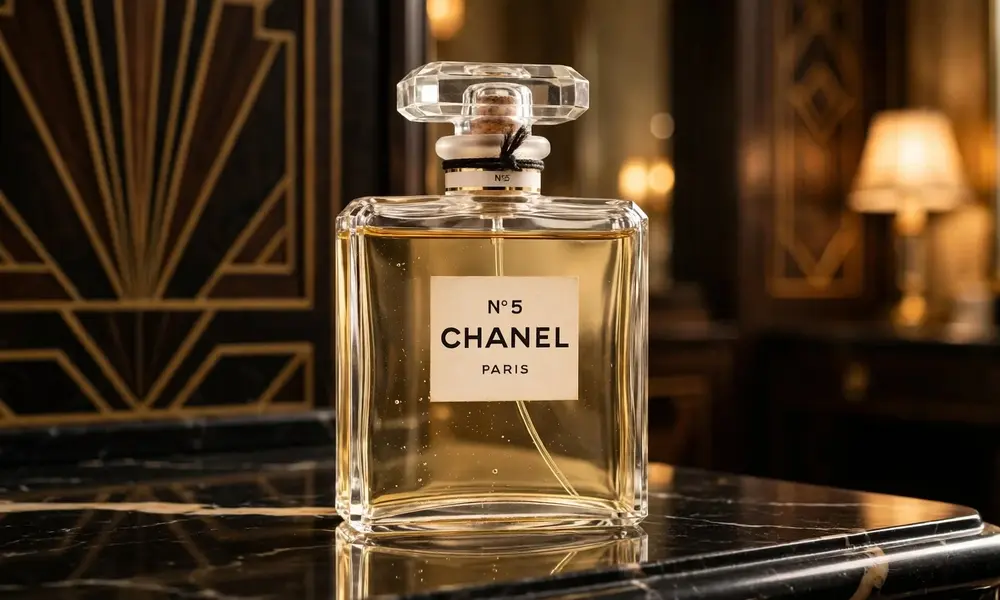
The decade of the flapper, the jazz club, and the newly liberated woman demanded a scent that broke with the flower gardens of the Victorian past. Ernest Beaux answered with an abstract composition built on an unprecedented overdose of aldehydes, a perfume that smelled of no single flower and everything modern at once.
The square bottle, the numeral name, and the refusal to imitate nature made No. 5 the olfactory equivalent of the little black dress, and a century later it remains the reference point of the entire category. The full story of its creation and survival appears in our feature on the Chanel story, and its place among today’s finest is confirmed in our guide to luxury perfume.
2. The 1930s: Joy by Jean Patou (1930)
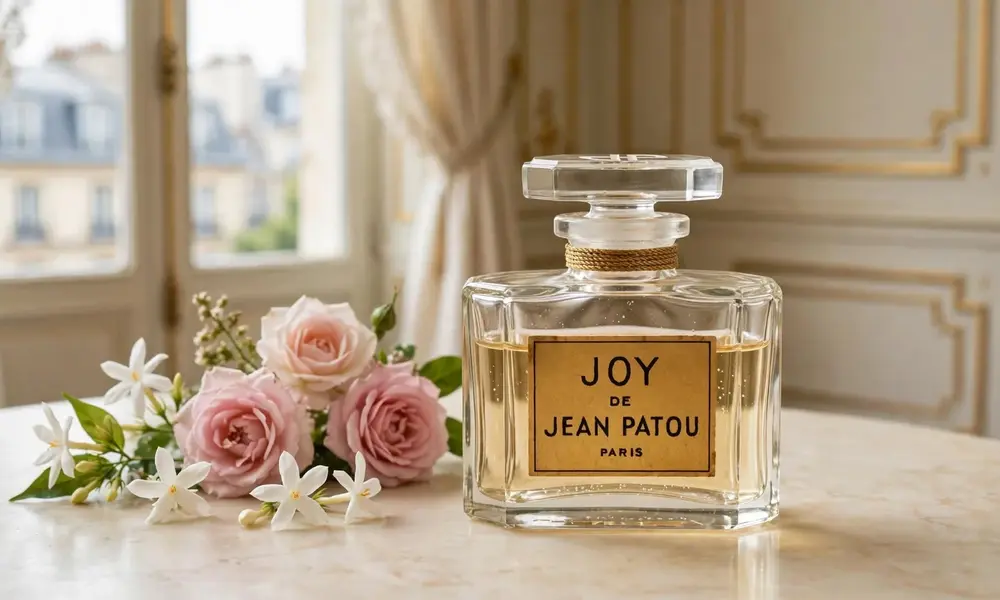
Joy was born in the worst year of the Great Depression, and its audacity was the point. Jean Patou presented it as the costliest perfume in the world, built on an extravagance of Bulgarian rose and Grasse jasmine, tens of thousands of flowers in every ounce, at the precise moment when extravagance had become scandalous.
The gamble succeeded because it understood its audience: the women who could still afford beauty deserved the best of it, and a small bottle of concentrated optimism sold hope to an era that had little. Joy held the title of the world’s greatest floral for decades, and its proposition, that true luxury defies hard times, became a permanent theme of the industry.
3. The 1940s: Miss Dior (1947)
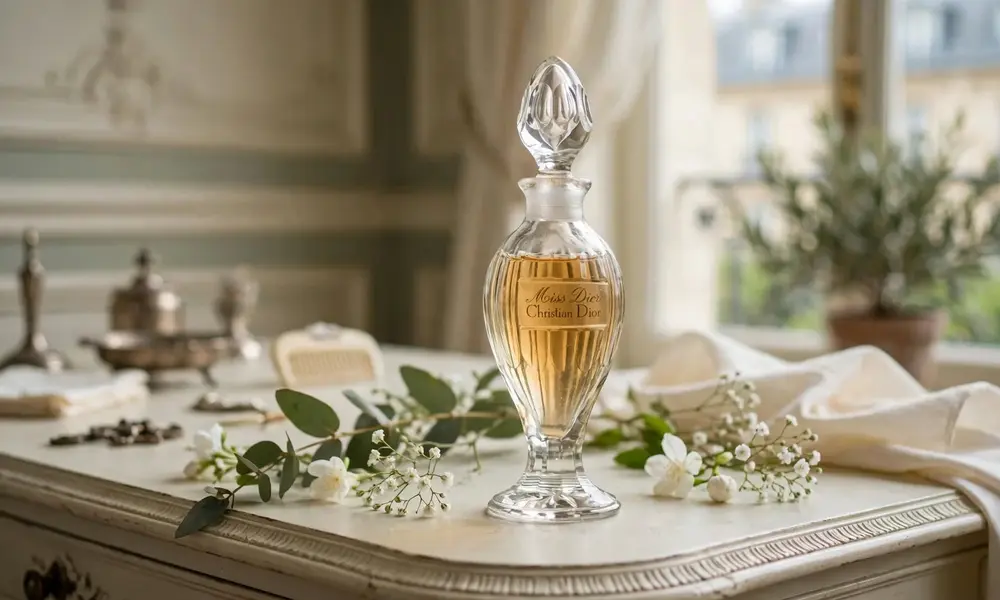
Launched alongside Christian Dior’s New Look, the silhouette that restored Paris to the center of fashion after the war, Miss Dior was perfumery’s equivalent: an elegant green chypre that smelled like optimism structured by discipline. Named for the designer’s sister Catherine, a heroine of the French Resistance, it carried emotional weight that no marketing could manufacture.
The fragrance taught the industry that a scent could be a manifesto. Postwar Europe wanted beauty back, and Miss Dior announced that beauty had returned with principles intact. The chypre structure it perfected, bergamot brightness over an oakmoss depth, influenced generations of perfumers that followed.
4. The 1960s: Eau Sauvage by Dior (1966)
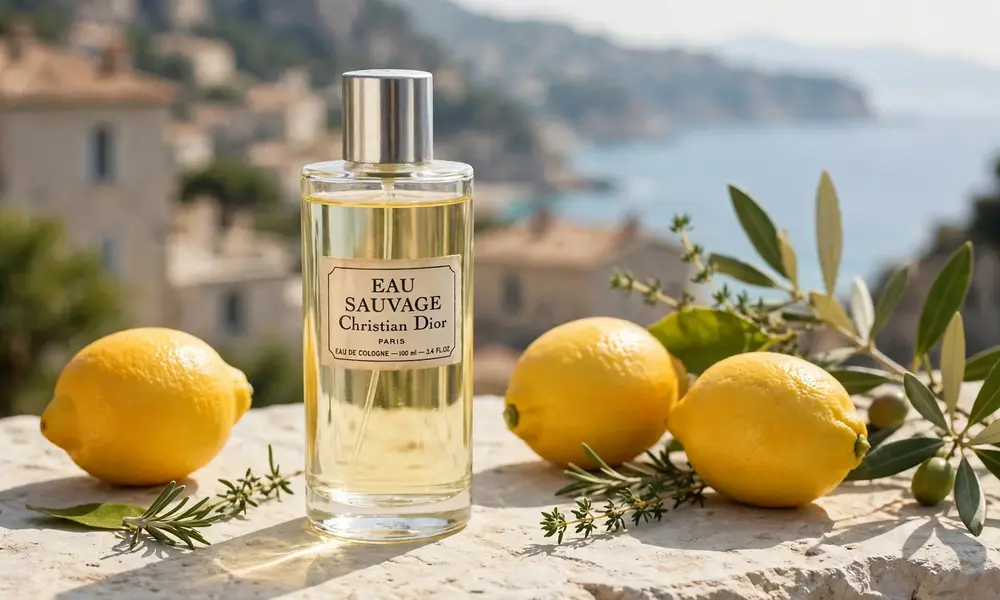
The sixties belonged to the youthquake, and men’s fragrance found its liberation in Eau Sauvage, the first great citrus hedione composition and arguably the most influential masculine scent ever made. Its creator, Edmond Roudnitska, built a perfume of sparkling lemon and herbal clarity that smelled like the Riviera in a decade obsessed with freedom and the sun.
Eau Sauvage broke the era’s heavy masculine conventions and introduced a transparency that perfumers still study as a masterclass. That men and women alike adopted it only confirmed the decade’s dissolution of old boundaries. Its DNA runs through nearly every fresh fragrance on the modern counter.
5. The 1970s: Opium by Yves Saint Laurent (1977)
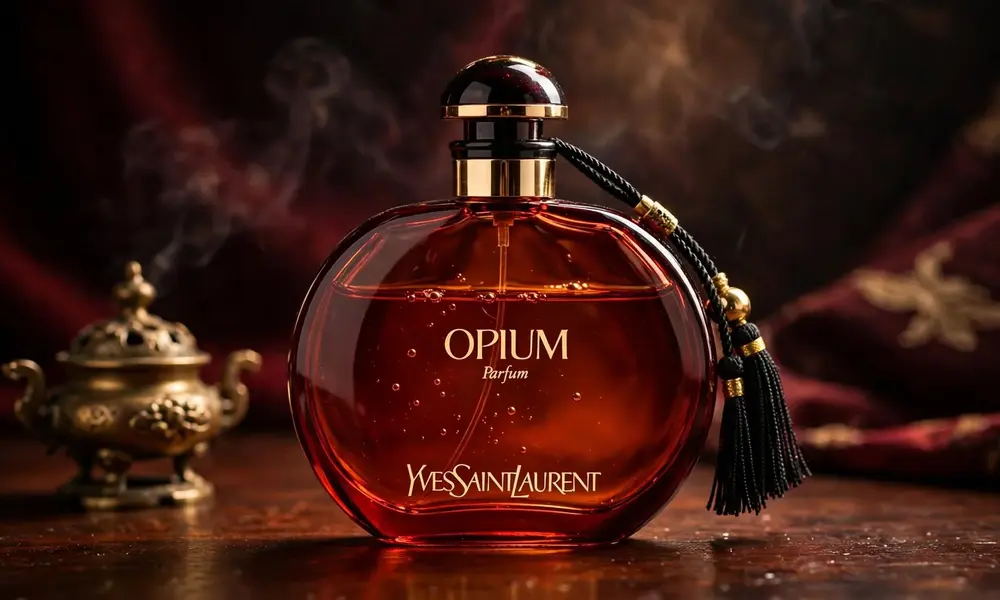
If any perfume captured the seventies’ appetite for excess, provocation, and oriental mystery, it was Opium. The name alone caused international controversy, with protests and even bans in some markets, and the scent matched the outrage: a dense, spiced oriental of cloves, incense, and amber that announced itself across a room.
Opium understood that the decade did not want to be tasteful. It wanted to be unforgettable, and Yves Saint Laurent, at the height of his powers, gave permission for perfume to be dangerous. It remains the definitive oriental, the fragrance against which all spiced opulence is measured.
6. The 1980s: Poison by Dior (1985)
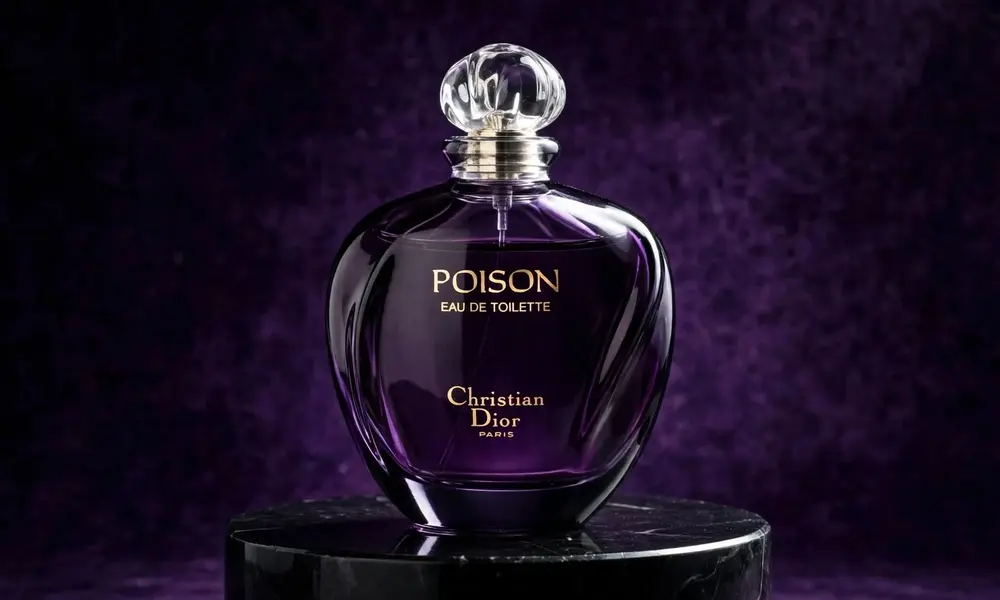
The eighties were the decade of power dressing, and Poison was power in a bottle: a monumental tuberose of almost confrontational intensity, in a purple flacon shaped like a forbidden fruit.
Sillage, the trail a fragrance leaves behind, became a competitive sport in the eighties, and Poison was its undisputed champion.
The scent divided rooms and defined an era in which perfume was armor, worn by women who were taking their places in boardrooms and expected to be noticed doing it.
Modern perfumery’s quiet minimalism is partly a reaction against Poison’s magnificent excess, which makes it the most historically important polarizer ever bottled.
7. The 1990s: CK One by Calvin Klein (1994)
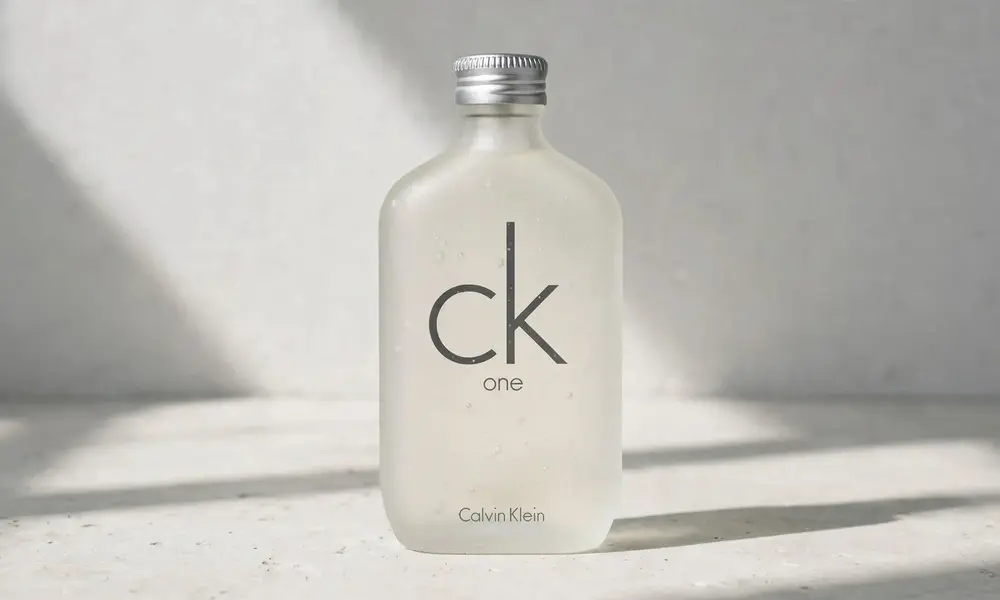
The reaction arrived with CK One, the fragrance that erased everything the eighties built. A clean, transparent citrus musk, marketed as unisex, sold in a minimalist frosted bottle, and advertised with androgynous models who looked like nobody and everybody: CK One was the nineties distilled into scent, the perfume of grunge, minimalism, and the first generation to question gendered marketing.
It sold in quantities the industry had never seen, proving that a fragrance could be a democratic object without losing desirability, and it established the clean musk register that dominates shelves to this day.
Readers tracing how these classics sit among contemporary releases can turn to our editors’ selection of the best fragrances of the current season.
What the Seven Teach Us
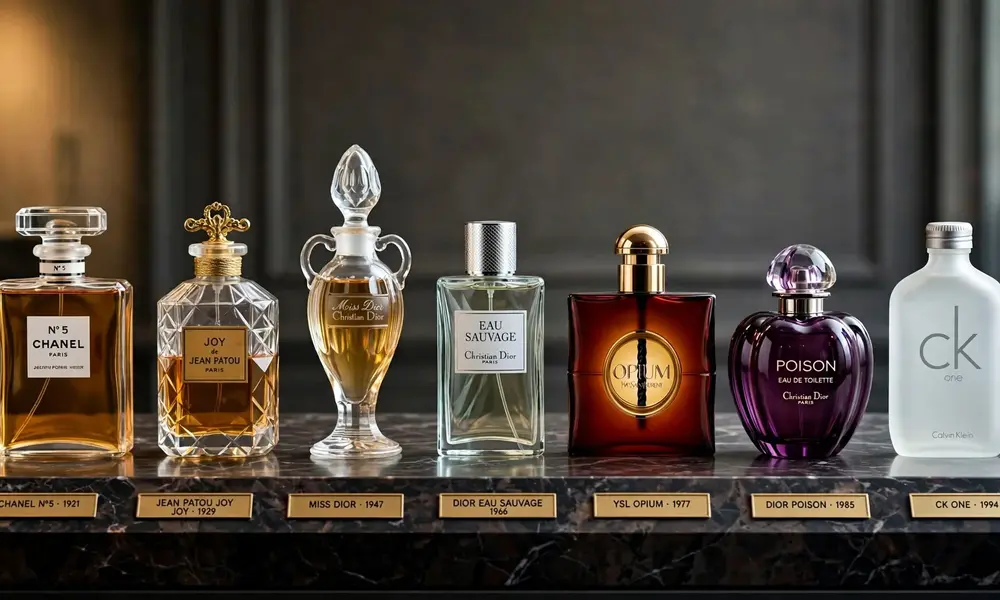
Read in sequence, these bottles tell a history of the twentieth century more vivid than most textbooks: the liberation of the twenties, the defiant elegance of the thirties, the principled optimism of the forties, the sunlit freedom of the sixties, the provocation of the seventies, the armored power of the eighties, and the stripped-back honesty of the nineties.
The deeper lesson is that fragrance, alone among luxury goods, cannot be faked by marketing. A scent either captures the mood of its time or it disappears, and the seven survivors above earned their immortality by understanding something true about the people who first wore them.
That is why, decades later, a single breath still works like a key in a lock. The era is gone. The door, remarkably, still opens.
Frequently Asked Questions
What is the most iconic fragrance of all time?
Chanel No. 5, created in 1921, is widely considered the most iconic fragrance ever made. It remains a reference point in fine perfumery and one of the best-known scents in history.
Which perfume defined the 1980s?
Dior’s Poison, launched in 1985, defined the decade with its intense tuberose notes and became an emblem of the power-dressing era’s bold glamour.
What was the first unisex designer fragrance?
CK One, launched by Calvin Klein in 1994, popularized the unisex fragrance concept and became one of the best-selling perfumes of its decade.
Why was Opium by Yves Saint Laurent controversial?
Its name provoked international protests and restrictions in some markets following its 1977 launch. However, the controversy only amplified its fame as a defining oriental fragrance of the seventies.
What was the costliest perfume in the world when it launched?
Joy by Jean Patou, launched in 1930 during the Great Depression, was presented as the costliest perfume in the world. Its original formula used thousands of jasmine and rose flowers.
Who created Eau Sauvage?
Edmond Roudnitska created Eau Sauvage for Dior in 1966. Its transparent citrus structure helped influence generations of men’s fragrances.
Are these classic fragrances still sold today?
Many of these classic fragrances remain available today, although their formulations have changed over the decades to reflect evolving tastes and ingredient regulations.
What makes a fragrance define a decade?
A distinctive scent, perfect cultural timing, and memorable marketing can make a fragrance define an era. Such a fragrance does more than reflect its decade’s spirit; it helps shape it.