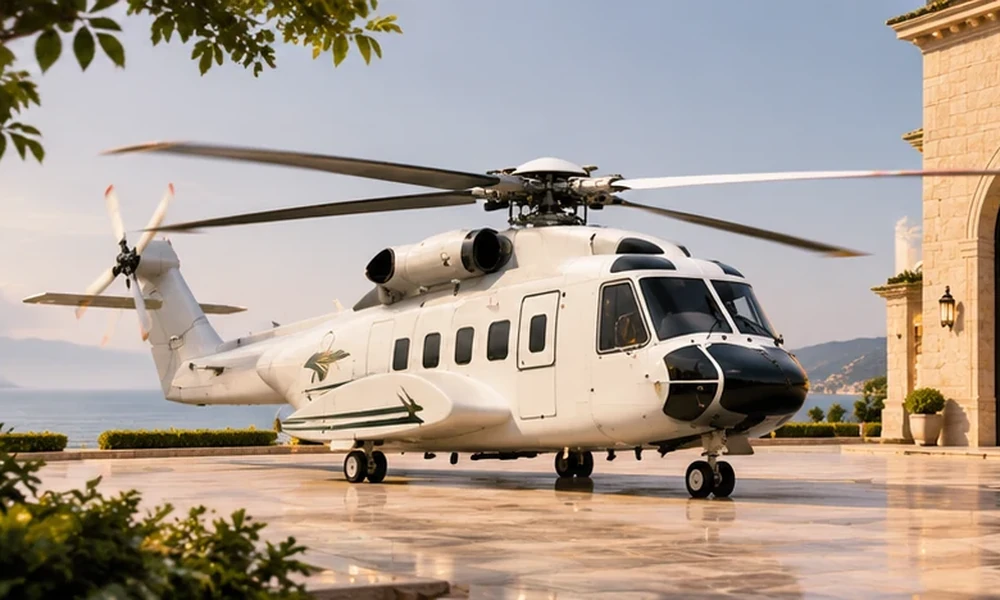
There is a particular kind of weather that sorts machines from legends. It arrives over the North Sea in January, when waves stand as tall as buildings and the sky closes to a grey ceiling barely above the water. On nights like these, when an alarm sounds on an oil platform two hundred miles from land, the aircraft that lifts into the darkness is very often a Sikorsky S-92.
It has rescued sailors in hurricane winds, ferried crews through Arctic winters, and carried the presidents and kings of more than a dozen nations. Among large helicopters, none carries a heavier burden of trust, and none has earned it more thoroughly.
The S-92 is not the newest luxury helicopter, nor the flashiest. It is something more valuable. It is the machine the world reaches for when failure is not an option.
Born From a Legend
To understand the S-92, you must begin with its maker. Igor Sikorsky, the Russian-born pioneer who built his company in America, gave the world its first practical helicopter in 1939 and spent the rest of his life proving that the whirring, improbable machine could become an instrument of rescue and service.
He famously said that if a man is in need of rescue, an airplane can come over and drop flowers, but a helicopter can come in and save his life. That conviction runs through everything his company has built since.
The S-92 first flew in 1998 as the modern successor to that philosophy. Where earlier Sikorsky designs had grown from military programs adapted for civilian use, the S-92 was conceived from the start as a machine that would serve both worlds with equal seriousness.
It would fly oil workers to platforms in the world’s angriest seas. It would stand ready for search and rescue in conditions that ground lesser aircraft. And in its most refined form, it would carry heads of state and government with a level of assurance few aircraft of any kind can claim.
The Architecture of Trust
Ask the pilots and engineers who know the S-92 why it inspires such confidence, and the answers converge on the same theme: redundancy, taken further than almost anyone else bothers to take it.
Twin General Electric CT7 engines, drawn from a family with one of the longest and most proven service records in aviation, give the aircraft genuine single-engine capability. The transmission and gearbox were engineered with an obsessive focus on fault tolerance, incorporating lessons drawn from decades of helicopter operations in the harshest environments on earth.
The aircraft was designed from the outset to meet the most demanding safety standards in commercial aviation, the same tier of certification applied to the airliners that carry hundreds of passengers daily.
Beneath the engineering lies a philosophy. Every critical system assumes that something, someday, will fail, and prepares the aircraft for that moment in advance. It is a way of thinking that the offshore industry demands, that rescue services depend upon, and that a presidential flight crew considers the entire point of the exercise.
The cabin reflects the same seriousness at a larger scale. The S-92 offers the largest cabin in its class, a space closer to a private railcar than to a typical helicopter, with a stand-up height that allows passengers to walk rather than shuffle.
In government and VIP configuration, that volume accepts full executive interiors with proper seating, work tables, and the quiet that heads of state require to govern from the air. A rear baggage hold, accessible in flight, swallows the luggage that smaller helicopters must leave behind.
The Presidential Pedigree
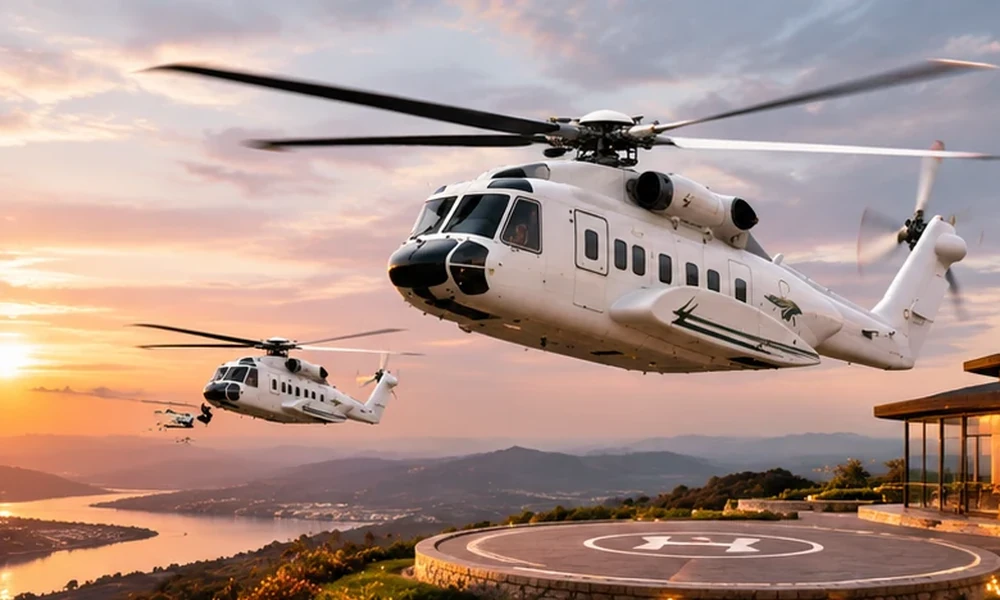
The truest measure of the S-92’s standing is the company it keeps. The aircraft serves in the government and royal fleets of nations across Europe, the Middle East, and Asia. In the United States, the S-92 was selected as the basis for the presidential helicopter fleet, chosen above all rivals for the most security-obsessed mission in aviation.
When the stakes are measured in the safety of a head of state, the selection committees that weigh these decisions study every accident record, every system, and every hour of service history. The S-92 keeps winning those studies.
This matters for private owners in a way that goes beyond prestige. An aircraft chosen to carry presidents is an aircraft whose support infrastructure, pilot training pipelines, and spare parts networks will remain deep and well funded for decades. In the world of luxury helicopter models, longevity of support is one of the most underappreciated forms of value, and the S-92 possesses it in abundance.
Life in the Harshest Office on Earth
The S-92’s everyday heroism happens far from red carpets. Offshore crew change operations in the North Sea and the North Atlantic ask a helicopter to fly hundreds of miles over water in winter, hover in gale winds, and return with the same reliability as a commuter train.
Search and rescue units in countries including Norway, Ireland, and Canada have built their services around the aircraft, trusting it to hover above storm-tossed seas while a winch operator lowers a rescuer into the chaos below.
Every one of those hours accrues to the machine’s reputation. When a private owner boards an S-92 for a short flight from a city helipad to a coastal estate, they are flying in an aircraft whose weekly routine includes conditions most travelers will never imagine. That inheritance of proven hardship is, in the end, what a buyer in this class is actually purchasing.
The Ownership Question
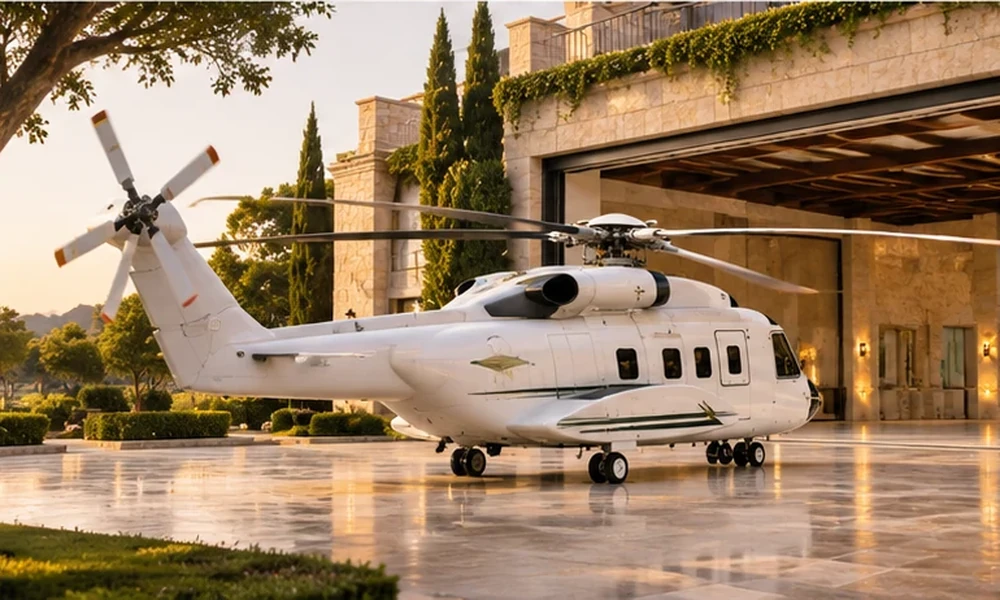
An S-92 in executive configuration represents a serious commitment. Acquisition pricing for a well-appointed VIP example sits comfortably in the eight figures, and annual operating costs reflect a large, sophisticated twin with a worldwide support standard. This is not the helicopter for occasional use.
It belongs to owners and operators whose flying is frequent, whose passengers are important, and whose tolerance for cancelled flights is zero.
The decision also deserves context within the broader question of private mobility. For journeys beyond a few hundred miles, the conversation naturally turns toward private jet aviation, where speed and range transform the economics.
For the missions where a helicopter is irreplaceable, namely city centers, yacht decks, island estates, and anywhere a runway does not reach, the calculus inverts completely. Buyers weighing the true costs on either side will find our analysis of private jet charter costs a useful companion to the helicopter decision.
Within the helicopter market itself, the S-92 occupies a distinct position. The Leonardo AW139 and the newer generation of super-medium machines offer agility and economy in a smaller frame. The Airbus flagship offerings bring European refinement.
The S-92 counters with something none can fully replicate: the largest cabin in the class, the deepest safety heritage, and the unique assurance of a machine that presidents trust.
A Changed Company, An Enduring Machine
The Sikorsky story took a modern turn in 2015, when the company became part of Lockheed Martin, folding the helicopter pioneer into one of the largest aerospace enterprises on earth. For owners, the change has brought stability of the most valuable kind: the backing of an organization for whom rotorcraft are a crown jewel rather than a sideline.
The S-92 continues in production and support, its fleet accumulating hours across every ocean and climate, its record speaking in the quiet language of completed journeys.
The Verdict
Luxury is often confused with novelty. The Sikorsky S-92 makes the opposite argument. It proposes that the highest form of luxury in aviation is not the newest design or the boldest styling, but the profound peace of mind that comes from a machine proven across millions of hours in the world’s worst conditions.
Leather seats and champagne cabinetry can be commissioned anywhere. Trust must be earned, one storm at a time, and the S-92 has been earning it for a quarter of a century.
For the owner who measures luxury in certainty rather than spectacle, there is simply no substitute.
FAQs
What is the Sikorsky S-92 used for?
The S-92 serves three principal missions worldwide: offshore oil and gas crew transport, search and rescue operations, and VIP or head of state transport. Its design excels equally at all three.
How many passengers does the S-92 carry?
In utility configuration the cabin seats up to nineteen passengers. VIP and government interiors typically seat eight to twelve in spacious executive comfort with the largest cabin in its class.
Is the S-92 used as a presidential helicopter?
Yes. The S-92 was selected as the basis for the United States presidential helicopter fleet, and it serves in the government and royal fleets of numerous other nations.
What engines power the Sikorsky S-92?
Twin General Electric CT7 engines, a proven powerplant family with one of the longest service records in aviation, provide genuine single-engine capability.
How much does a Sikorsky S-92 cost?
A VIP-configured S-92 represents an investment comfortably in the eight figures, with annual operating costs reflecting a large, globally supported twin-engine aircraft.
How safe is the S-92?
The aircraft was designed to the most demanding commercial aviation safety standards, with extensive system redundancy and fault tolerance. It is trusted for overwater rescue and head of state missions, the two most safety-critical roles in helicopter aviation.
How does the S-92 compare to the Leonardo AW139?
The AW139 is smaller and more agile with lower operating costs. The S-92 offers a significantly larger cabin, stand-up headroom, and the deepest heritage of safety-critical operations in its class.
Who owns Sikorsky today?
Sikorsky has been part of Lockheed Martin since 2015, giving the S-92 program the long-term backing of one of the world’s largest aerospace companies.