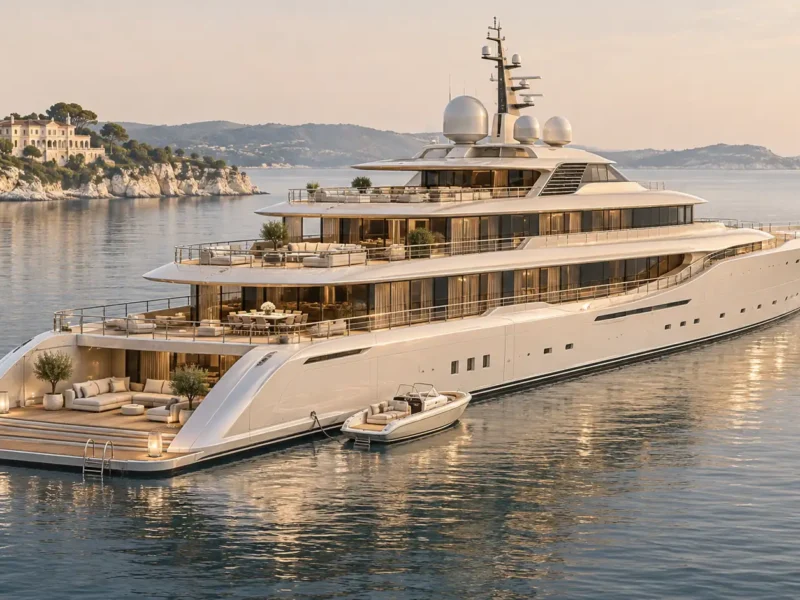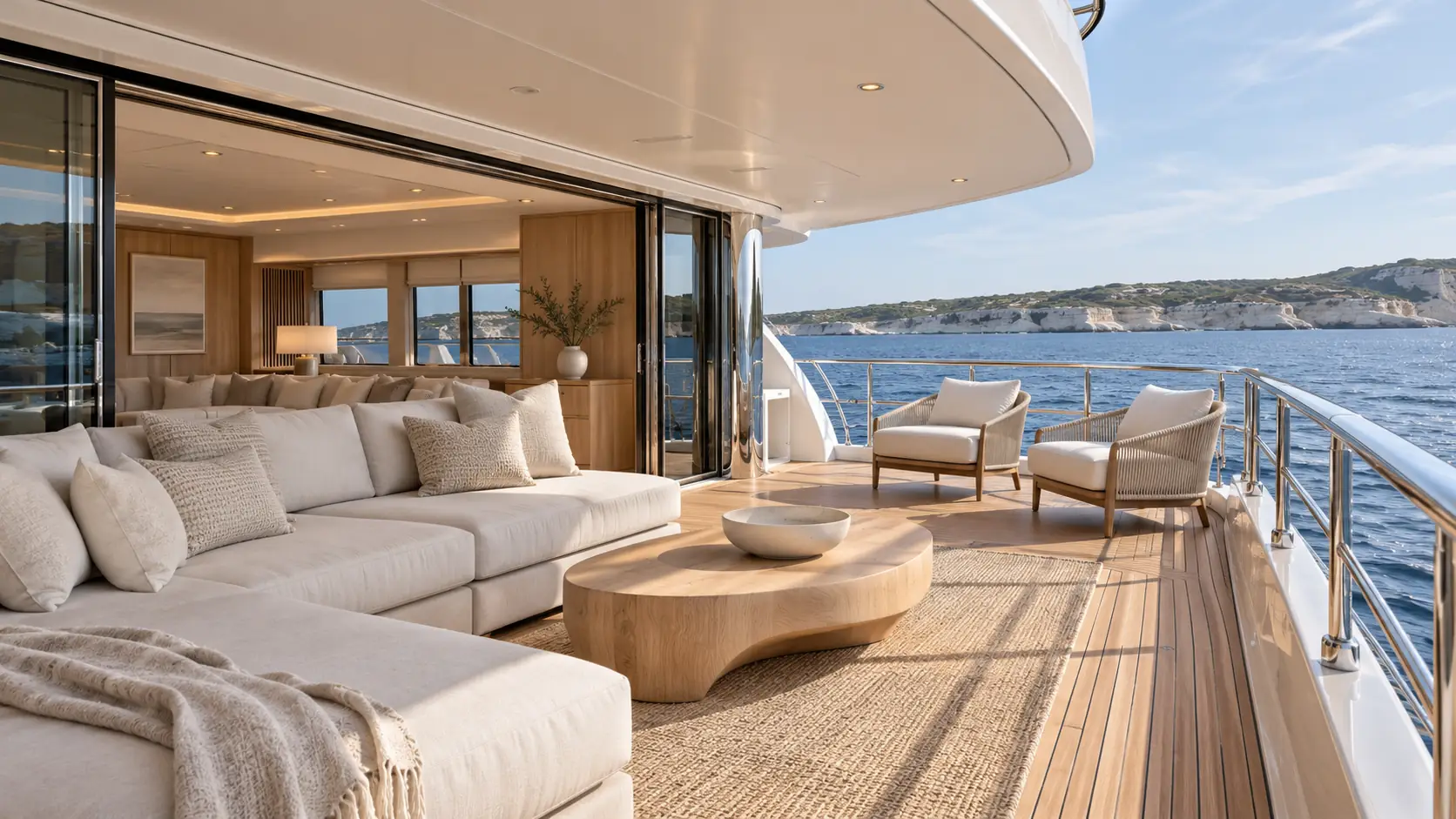
There’s something rather wonderful about the first five minutes aboard a beautiful yacht, especially when exploring spacious 100 ft boats designed to deliver exceptional comfort, elegance, and luxury.
You step over the gangway, feel the gentle movement beneath your feet, and enter a world where the sea suddenly becomes part of the architecture.
The windows frame a constantly changing view. The breeze moves softly across the deck. Somewhere nearby, breakfast is being prepared.
Everything feels beautifully effortless.
At least, that’s how it should feel.
Because here’s something many people misunderstand about 100 ft boats.
Spending millions on polished marble, Italian furniture, gold-plated fittings, and enormous televisions doesn’t automatically create a luxurious yacht.
It can simply create a very expensive boat.
Real luxury begins when the yacht makes life aboard feel genuinely comfortable.
When the bedroom is quiet enough for a beautiful night’s sleep. When guests can move between indoor and outdoor spaces naturally. When the crew can deliver exceptional service without turning every corridor into a busy workplace.
And when the owner feels less like they’re managing an enormous machine and more like they’re enjoying a private residence that happens to travel across the sea.
To make a 100 ft boat truly luxurious, focus on intelligent space planning, sound insulation, comfortable cabins, climate control, layered lighting, marine-appropriate materials, seamless crew service, and beautifully designed outdoor living areas.
At approximately 30.48 metres, a 100-foot vessel offers significant possibilities for personalized luxury.
But every inch needs to earn its place.
Here’s how to transform that space into something extraordinary.
Can a 100 Ft Boat Feel Like a Superyacht?
Absolutely. A 100-foot motor yacht can offer many experiences associated with substantially larger superyachts.
Consider the Sunseeker 100 Yacht.
The builder’s design includes a forward owner’s suite with a private bow terrace, extensive glazing, a flybridge connected to the foredeck, and a convertible beach-club seating arrangement.
The model can accommodate up to twelve guests and five crew, depending on its configuration and applicable operating limits.
That is a remarkable amount of accommodation for a yacht in this category.
But here’s the interesting detail.
The Sunseeker achieves much of its appeal through circulation and layout, rather than simply filling every available area with furniture.
Its flybridge connects to the foredeck through walk-around access, while the main-deck arrangement emphasizes uninterrupted views and indoor-outdoor living.
It’s a reminder that beautiful yacht design is really the art of making limited space feel generous.
And that philosophy should guide every luxury upgrade.
1. Create an Owner’s Suite That Feels Like a Private Apartment
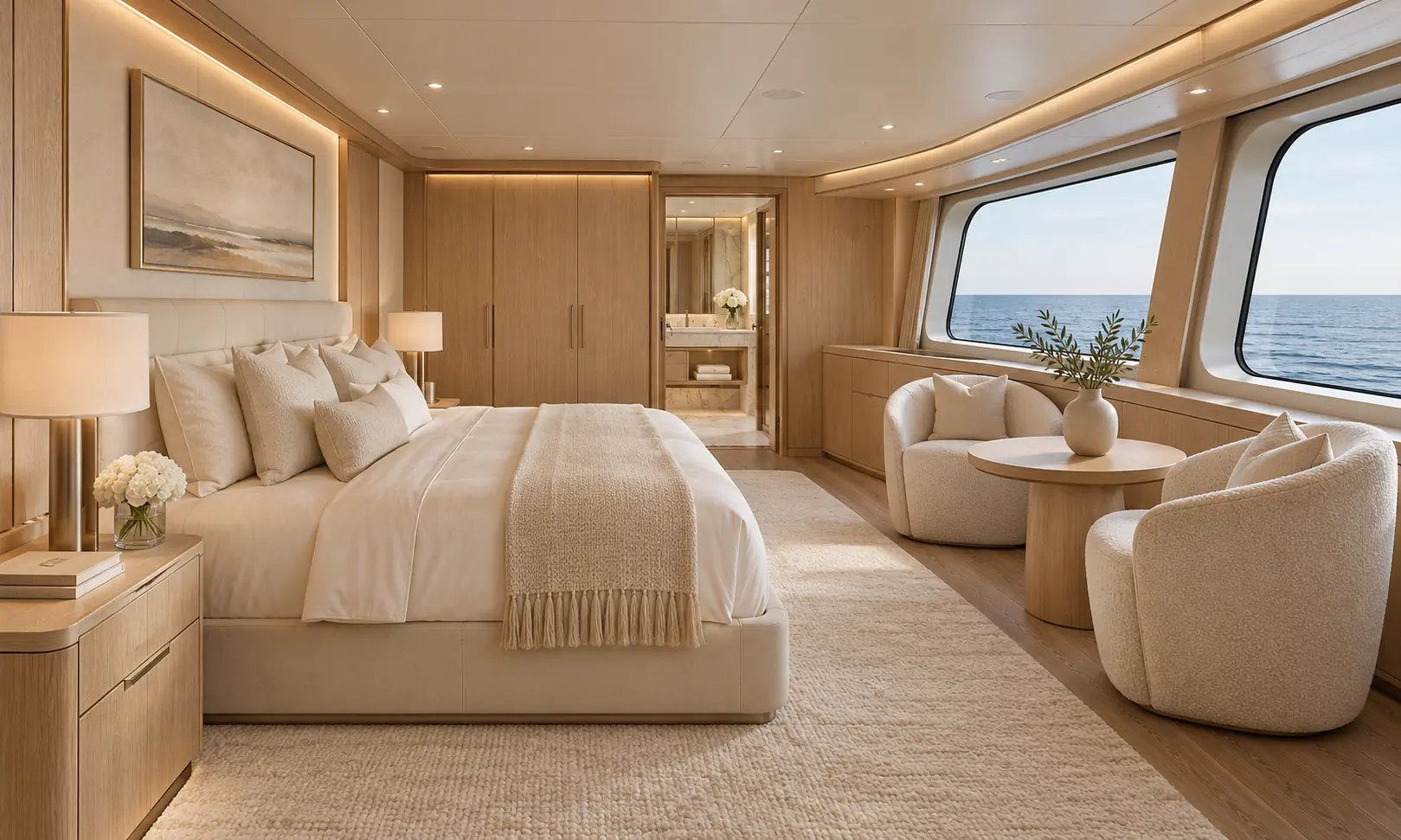
Imagine waking up on a yacht anchored near the Italian coast.
You open your eyes and see the water through an enormous window.
Your wardrobe is organized. There’s a beautiful bathroom nearby. And you can step outside for a quiet morning without walking through the main guest lounge.
That’s a lovely experience.
But the secret is the layout.
A well-designed owner’s suite needs comfortable circulation, practical storage, good ventilation, appropriate sound insulation, and carefully positioned lighting.
A private terrace can be extraordinary where the existing structure and arrangement support one.
But don’t sacrifice essential cabin space simply to add a fashionable feature.
An overlooked question: Can the owner enjoy privacy while the crew prepares the yacht for the day?
That answer matters far more than the dimensions of the television.
2. Make the Yacht Quiet Before Making It Beautiful
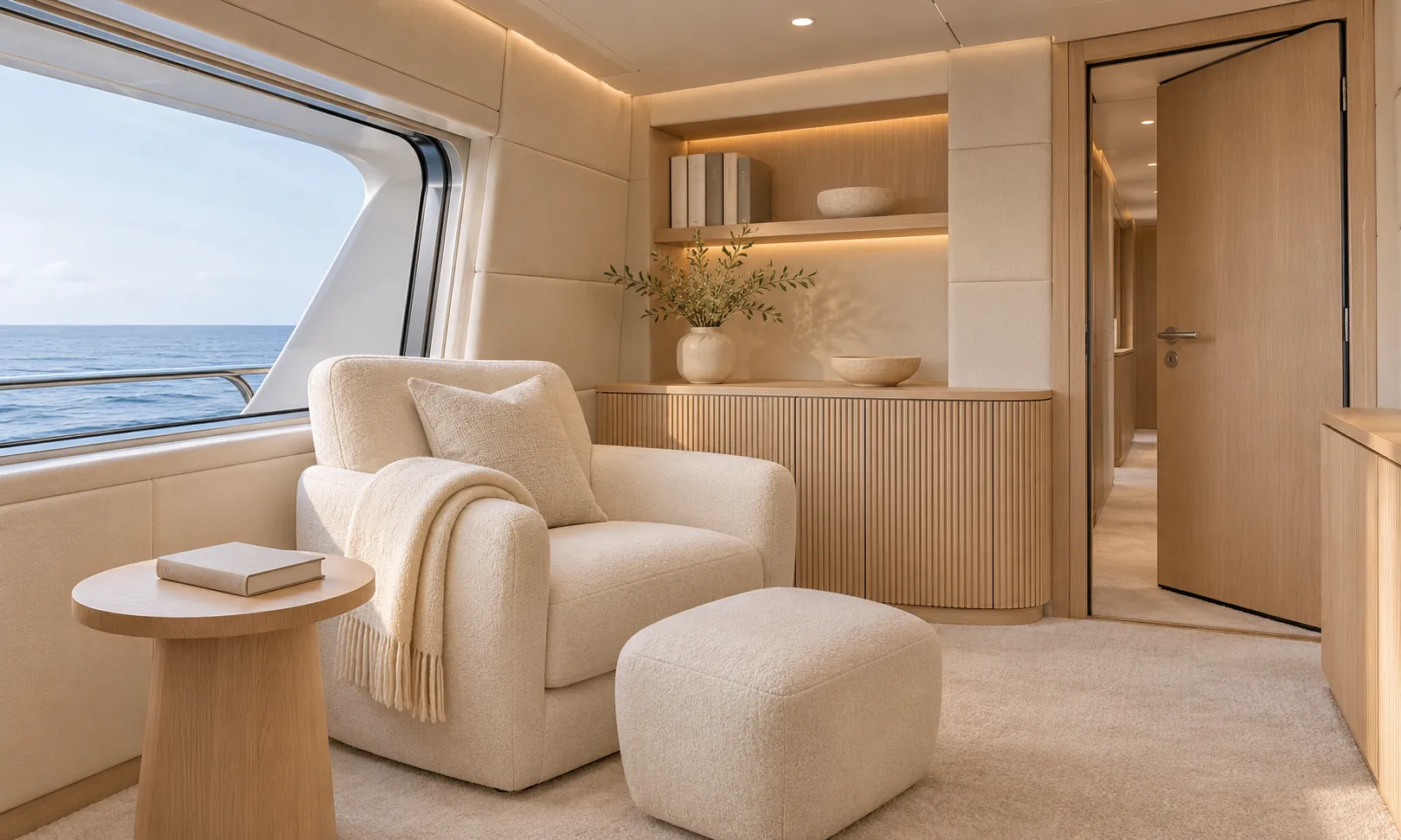
Here’s my favorite luxury yacht design secret.
The most expensive upgrade may be something nobody ever sees.
Sound insulation.
A yacht contains engines, generators, ventilation equipment, pumps, refrigeration systems, and countless mechanical components.
Even when everything works correctly, noise and vibration can change how comfortable the yacht feels.
BOAT International’s review of the Sunseeker 100 Yacht describes the use of sound-deadening materials, including foam and high-density cork, particularly near machinery spaces.
The review also discusses how lower cruising speeds can improve onboard comfort by reducing noise and vibration.
For an existing 100-foot yacht, worthwhile improvements may include reviewing generator mounts, HVAC vibration, machinery insulation, door seals, and acoustic separation between cabins.
These upgrades require marine engineering expertise.
You don’t want to compromise cooling, ventilation, fire protection, or access to mechanical systems.
The real luxury: Hearing the sea instead of the equipment keeping your floating residence running.
3. Turn the Main Salon Into a Beautiful Living Room
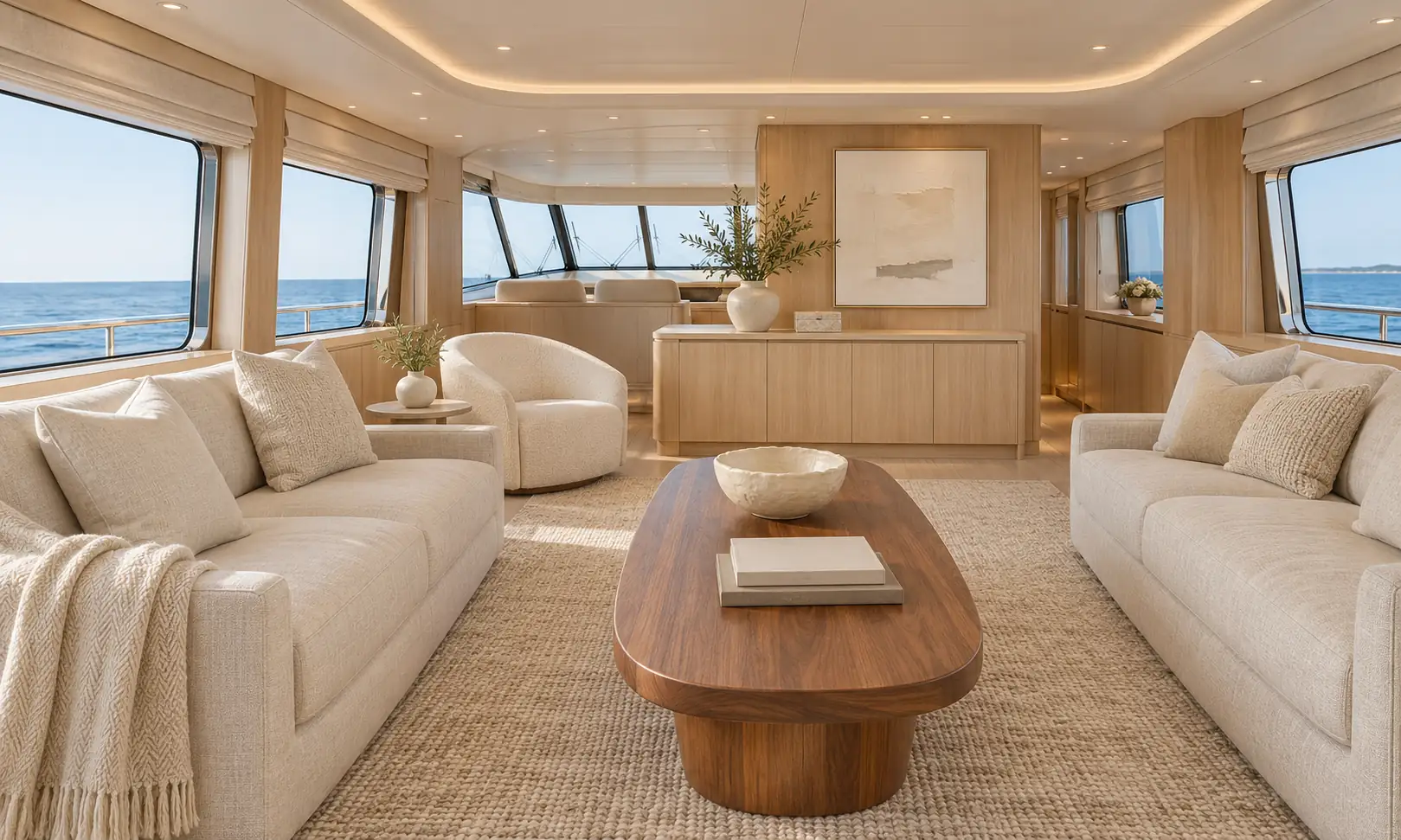
Forget the idea that every yacht lounge needs mirrored ceilings and glossy furniture.
Some of the most beautiful contemporary interiors are wonderfully restrained.
Think warm oak, carefully selected leather, beautiful woven fabrics, and a comfortable sofa arranged around the view.
The main salon should feel like somewhere you want to spend an afternoon.
Not simply somewhere you photograph.
Start by understanding how the space will be used.
Will guests watch films together?
Enjoy long dinners?
Read quietly?
Or move constantly between the salon and aft deck?
The furniture arrangement should follow those answers.
A wonderfully comfortable sofa can be more valuable than an elaborate sculptural table that makes walking through the room difficult.
And because a yacht moves, furnishings must be appropriately secured and suitable for marine use.
Beautiful design shouldn’t create hazards underway.
4. Make Indoor and Outdoor Living Feel Connected
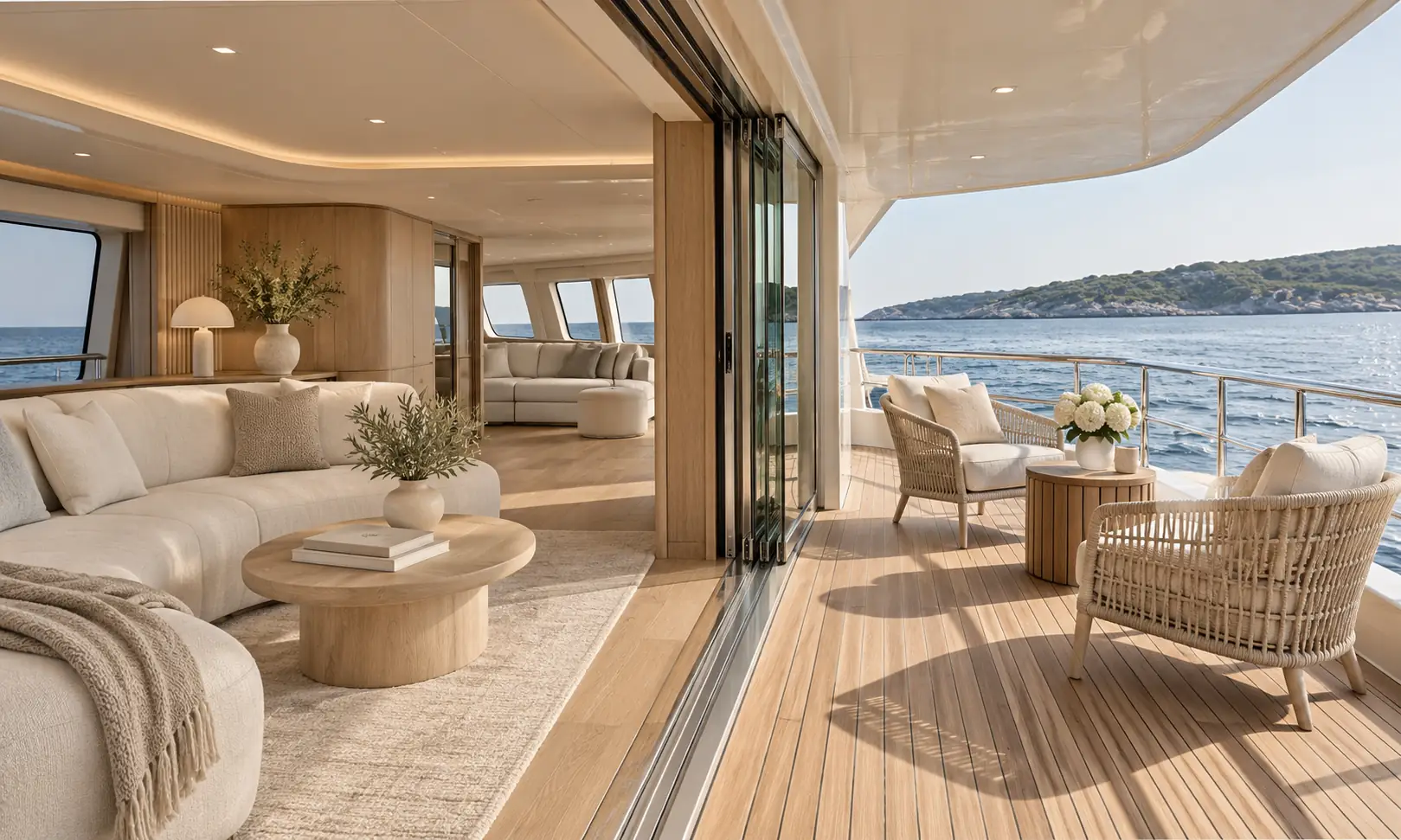
One of the greatest advantages of a yacht is that the surrounding landscape never stays the same.
So why design the interior as though the windows are simply decorations?
Where the existing structure allows, emphasize sightlines between the salon and exterior deck.
Choose compatible floor finishes and a coordinated material palette.
Use carefully designed doors, seating arrangements, and transitions to make the spaces feel connected.
But don’t confuse openness with removing structural elements.
Major changes to bulkheads, windows, doors, or deck openings can affect the vessel’s strength, watertight integrity, fire protection, and compliance.
Those decisions belong with qualified naval architects and the relevant approval authorities.
For a cosmetic project, coordinated furnishings and improved circulation may create a significant visual difference without major structural work.
5. Design a Beach Club That Guests Actually Enjoy
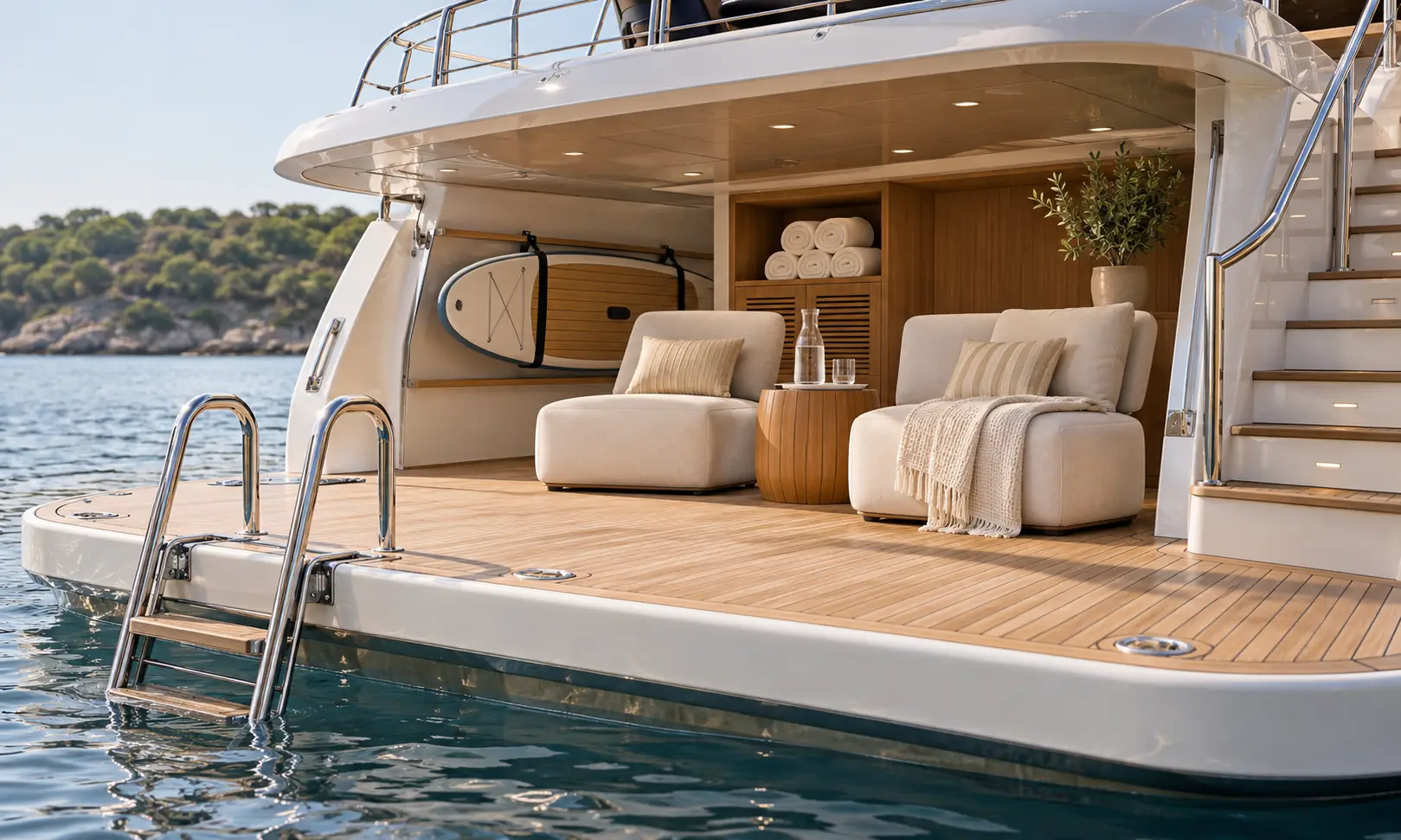
Picture the perfect afternoon.
You’ve been swimming in clear water. The sun is warm, and the yacht’s swim platform is only a few strokes away.
You climb aboard, find somewhere comfortable to sit, rinse off, and enjoy a cold drink.
That uncomplicated experience is the foundation of a wonderful beach club.
The best designs consider more than sun loungers.
They include safe boarding arrangements, nonslip surfaces, useful storage, shade, appropriate lighting, and practical access to swimming equipment.
Where the yacht already has a tender garage or convertible transom, the space may offer opportunities for more flexible use.
But adding an enormous platform or changing the stern structure is an engineering project, not simply an interior-design decision.
The overlooked question: Where does everything wet go after swimming?
If the answer is the beautifully upholstered main salon, the layout deserves another look.
6. Use Luxury Materials That Belong at Sea
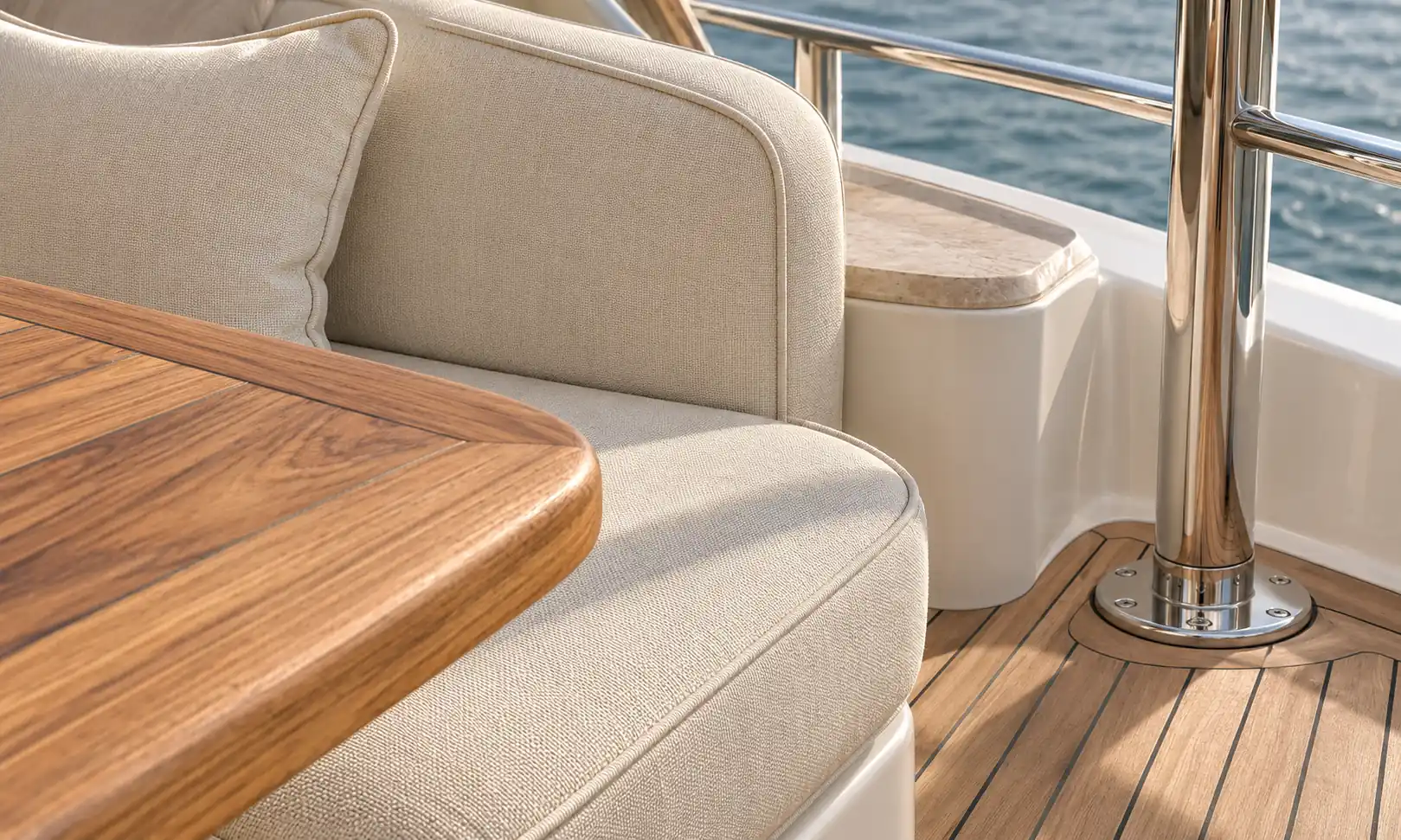
A beautiful material isn’t automatically appropriate for a yacht.
Natural marble can be magnificent.
But it can also add substantial weight, require careful support, and demand maintenance.
Solid wood has enduring appeal, yet some uses may be better served by carefully engineered substrates and high-quality veneers.
Marine environments expose materials to humidity, salt, movement, sunlight, and frequent cleaning.
So the smartest luxury interiors combine visual beauty with performance.
Consider professionally specified marine upholstery, durable fabrics, carefully finished timber, corrosion-resistant hardware, and surfaces that suit their location.
Fire-performance requirements also matter, depending on the vessel and applicable rules.
The aim isn’t to avoid fine materials.
It’s to select them intelligently.
Because the most luxurious interior should still look beautiful after years of real use.
7. Replace Harsh Lighting With a Hotel-Quality Atmosphere
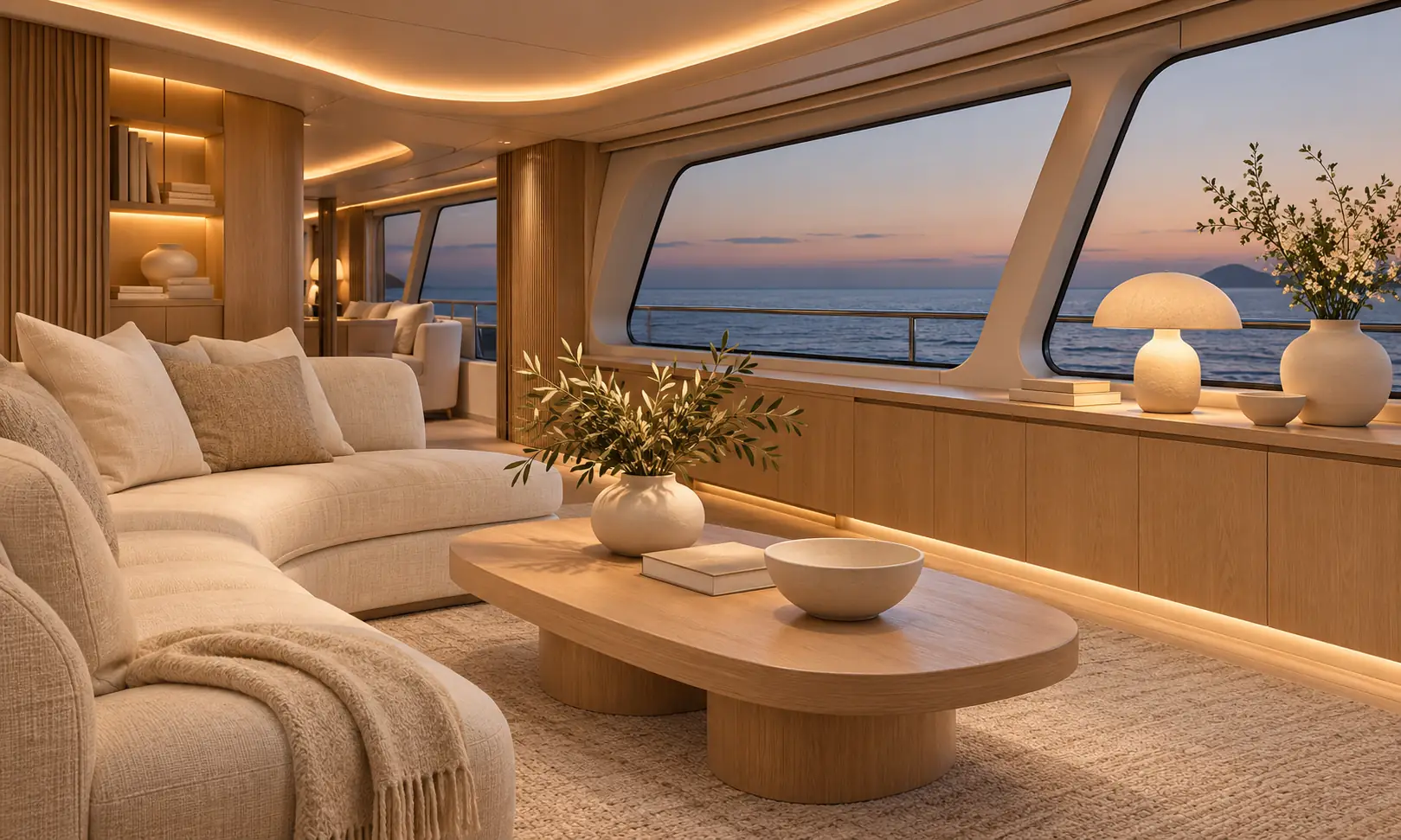
Lighting may be the most visually transformative upgrade on an otherwise attractive yacht.
Imagine one enormous, bright ceiling light illuminating an entire salon.
Everything is visible.
But nothing feels particularly special.
Now imagine a different arrangement.
Warm indirect lighting emphasizes the woodwork.
Small reading lights illuminate individual seating areas.
The dining table receives gentle, focused light.
And the exterior deck has subtle lighting that supports safe movement without overwhelming the night sky.
That’s a completely different atmosphere.
A well-designed lighting scheme should include functional, ambient, accent, and night lighting.
It must also preserve appropriate emergency illumination and navigational safety.
Retrofitting electrical circuits or integrated control systems requires qualified marine electricians.
And personally, I’d choose a beautifully lit, comfortable lounge over a dozen unnecessarily complicated decorative features.
Every time.
8. Make Climate Control Feel Effortless
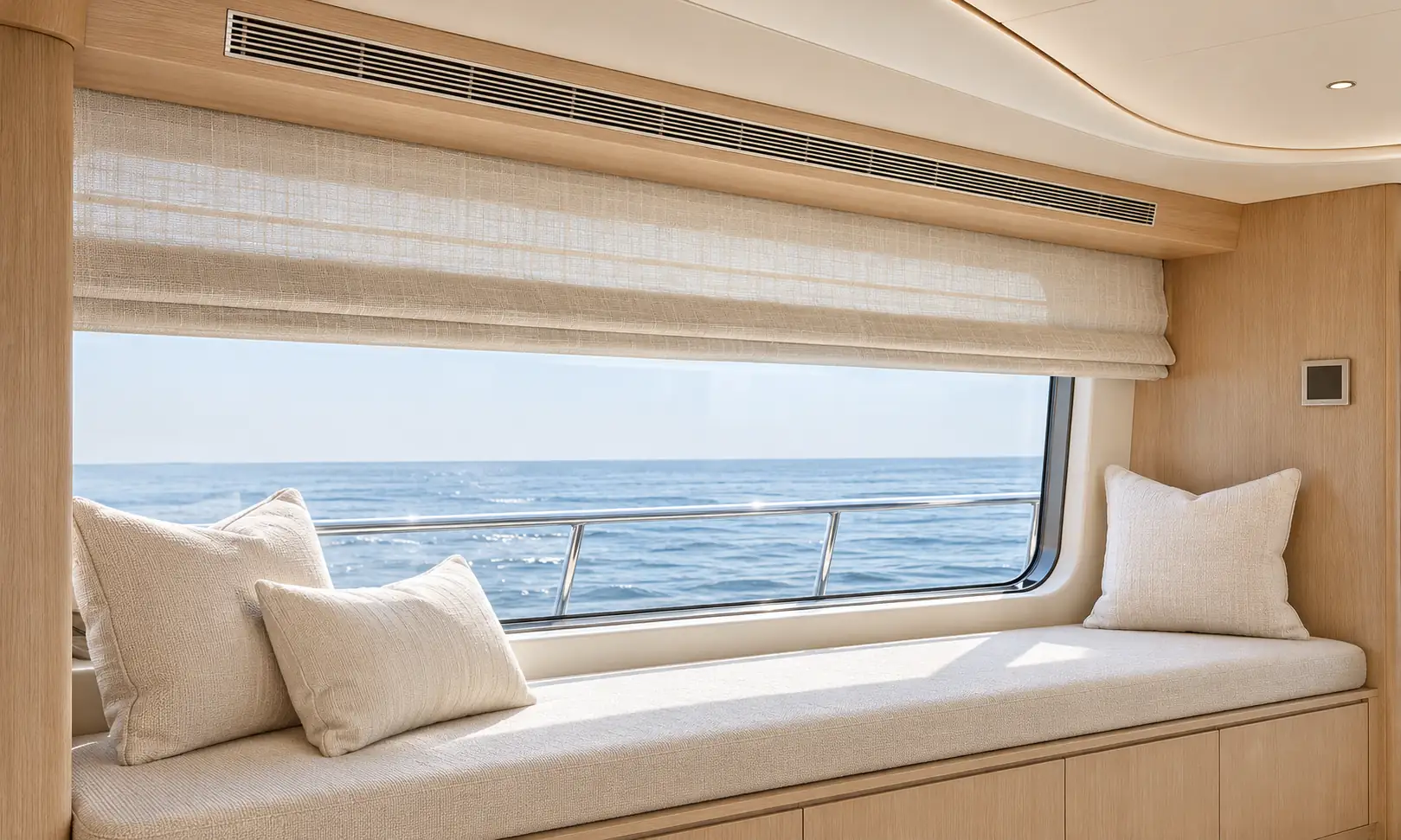
A luxurious yacht shouldn’t have a beautifully decorated cabin that becomes uncomfortable every afternoon.
Air conditioning is central to guest comfort, especially in warm cruising destinations.
But it’s not simply a question of installing larger units.
The entire system needs to work efficiently.
Air distribution, temperature control, humidity, noise, maintenance access, and condensation management all matter.
A poorly designed system can create drafts, uncomfortable temperature differences, or unwanted machinery noise.
Before investing in expensive new upholstery, have qualified specialists assess the existing HVAC system.
Sometimes a quieter, better-balanced system can improve the experience more meaningfully than a complete salon redesign.
9. Give Every Guest Cabin Its Own Personality
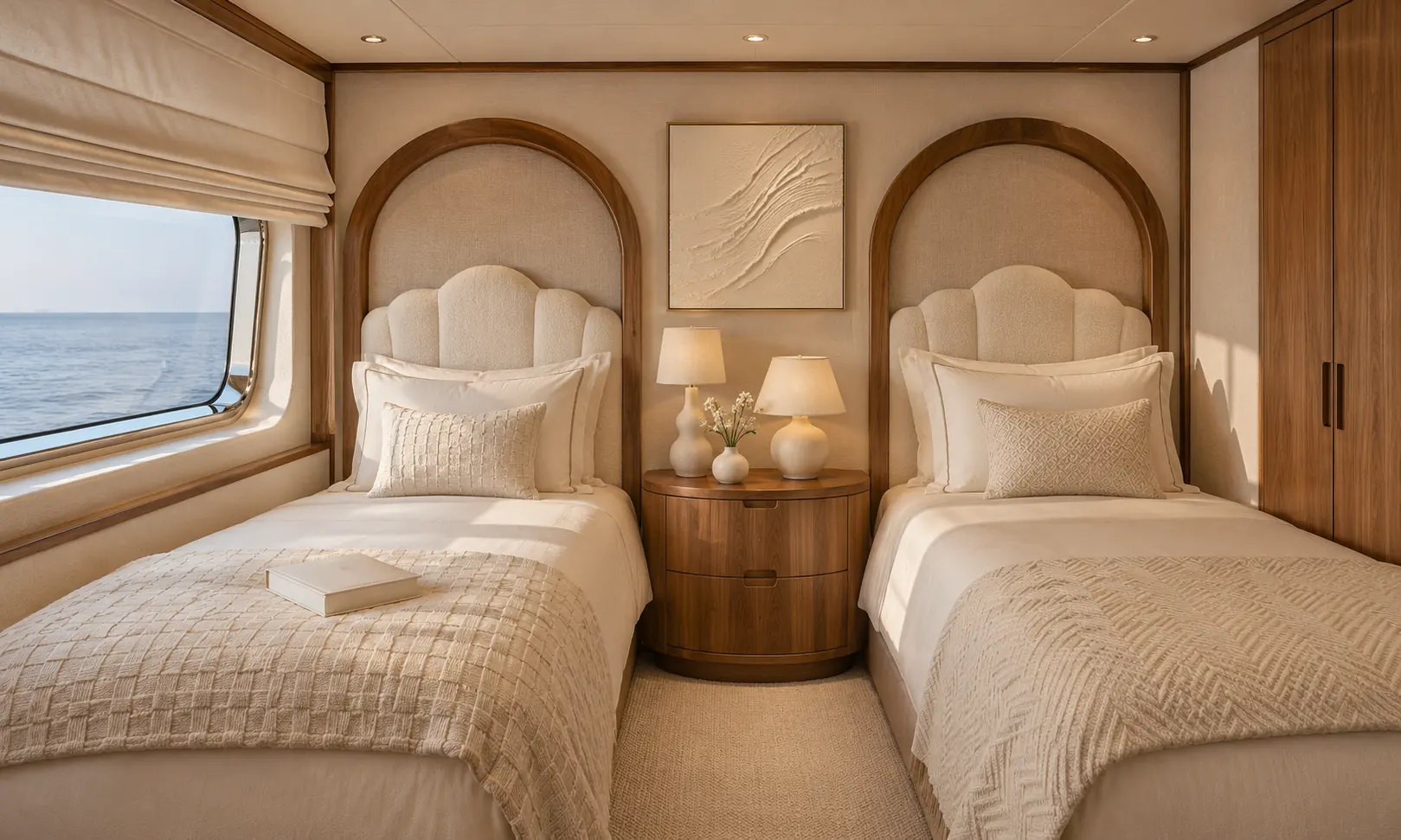
On a yacht with four or five guest cabins, it’s tempting to decorate every room identically.
Perfectly matching beds.
The same fabric.
The same artwork.
But a more thoughtful approach can feel warmer.
One cabin might use soft cream fabrics and light timber.
Another could introduce muted green and walnut.
A third might favor beautifully tailored contemporary finishes.
The rooms should remain visually connected, but they don’t need to be indistinguishable.
The practical details matter even more.
Reading lights.
Charging points.
Accessible storage.
Comfortable mattresses.
Useful bedside surfaces.
And enough space to unpack properly.
A wonderful question: Can guests spend three nights aboard without living out of their suitcases?
If not, another decorative mirror probably isn’t the solution.
10. Design for Excellent Crew Service
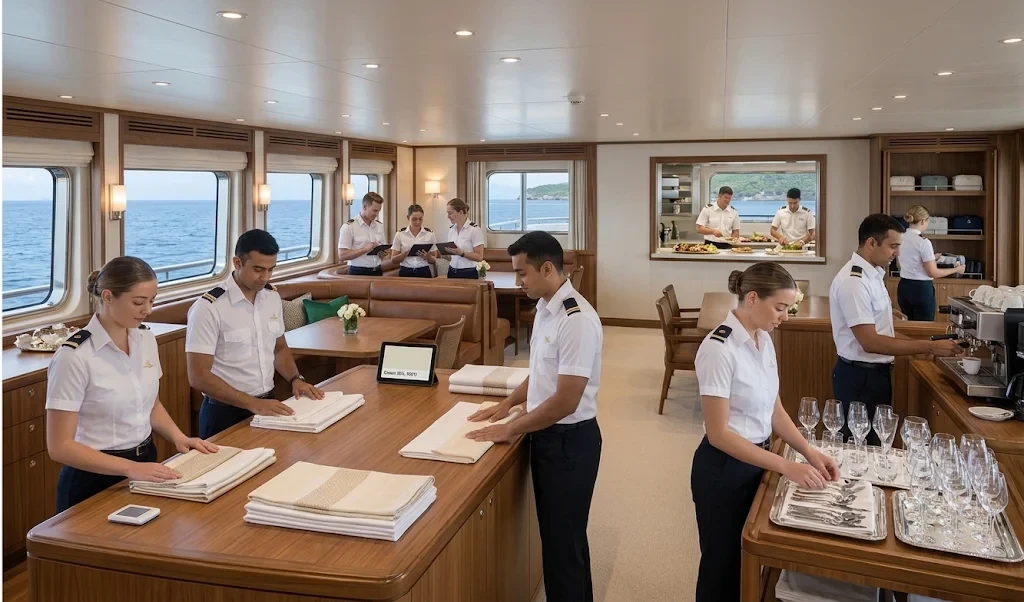
A beautiful yacht can still feel surprisingly awkward if the service routes don’t work.
Imagine enjoying dinner while crew members repeatedly need to pass through the center of the dining space carrying dishes and supplies.
That isn’t ideal for anyone.
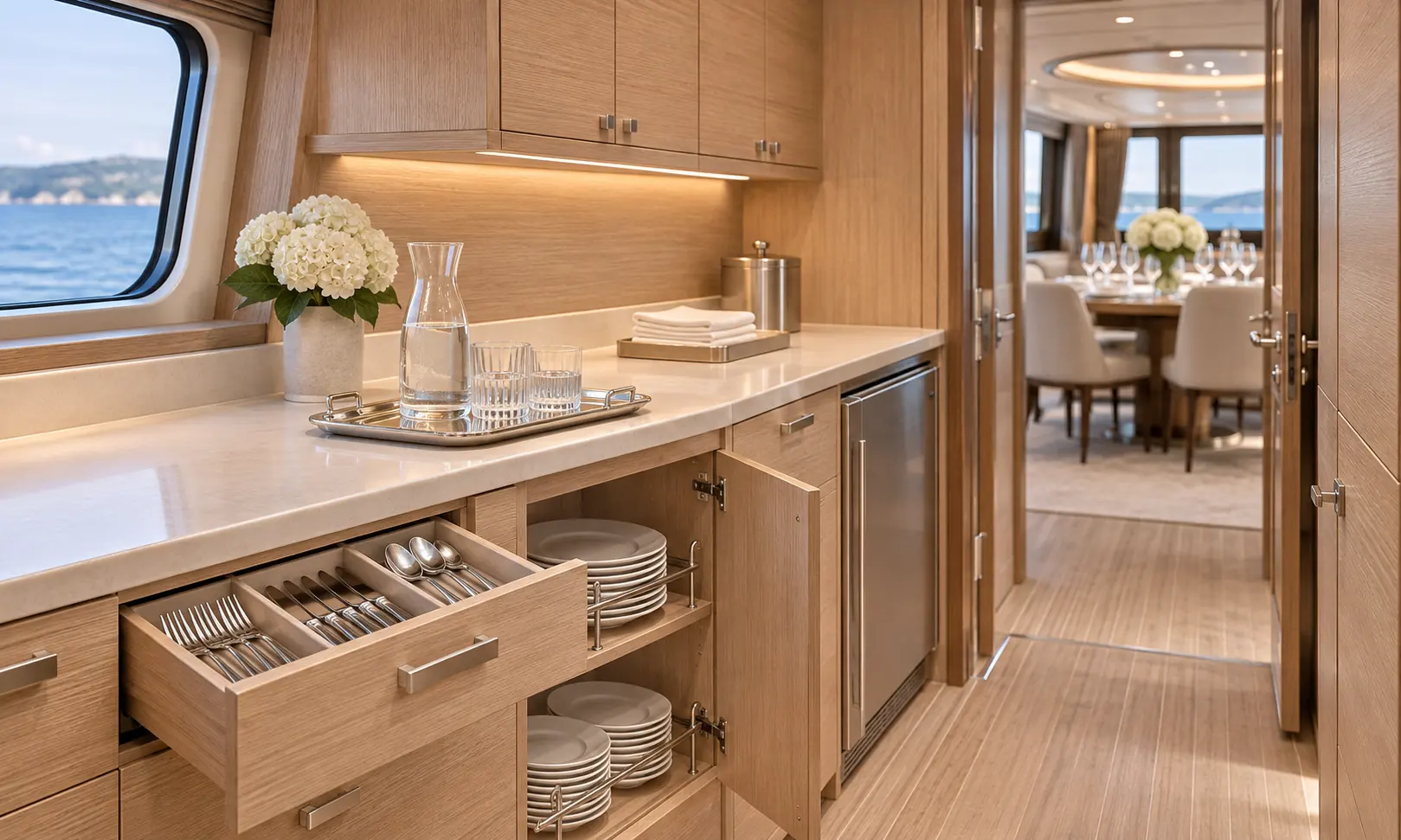
Well-planned yachts consider the relationship between the galley, pantry, dining areas, crew accommodation, laundry, and service storage.
The crew should have appropriate working conditions, and guests should experience smooth, attentive hospitality.
For an existing yacht, improving service may involve storage organization, galley equipment, communication systems, or modest layout adjustments.
Not every improvement requires a structural rebuild.
In fact, some of the smartest changes are almost invisible.
They simply make the yacht easier to operate.
11. Create a Private Wellness Corner Instead of an Impractical Spa
A full spa sounds wonderful.
But on a 100-foot yacht, space is precious.
Before installing an enormous sauna or decorative wellness room, ask what you will actually use.
Perhaps it’s a compact fitness area with carefully secured equipment.
Maybe it’s a comfortable massage space.
Or an outdoor relaxation corner with shade and appropriate privacy.
Every additional system creates weight, electrical load, maintenance, ventilation, and potentially water-management requirements.
Hot tubs are particularly demanding because of the mass and movement of the water, structural loading, plumbing, and stability implications.
Never add one without proper marine engineering review and required approvals.
The most enjoyable wellness feature may be the simplest one that can be used regularly.
12. Add Technology That Disappears Into the Experience
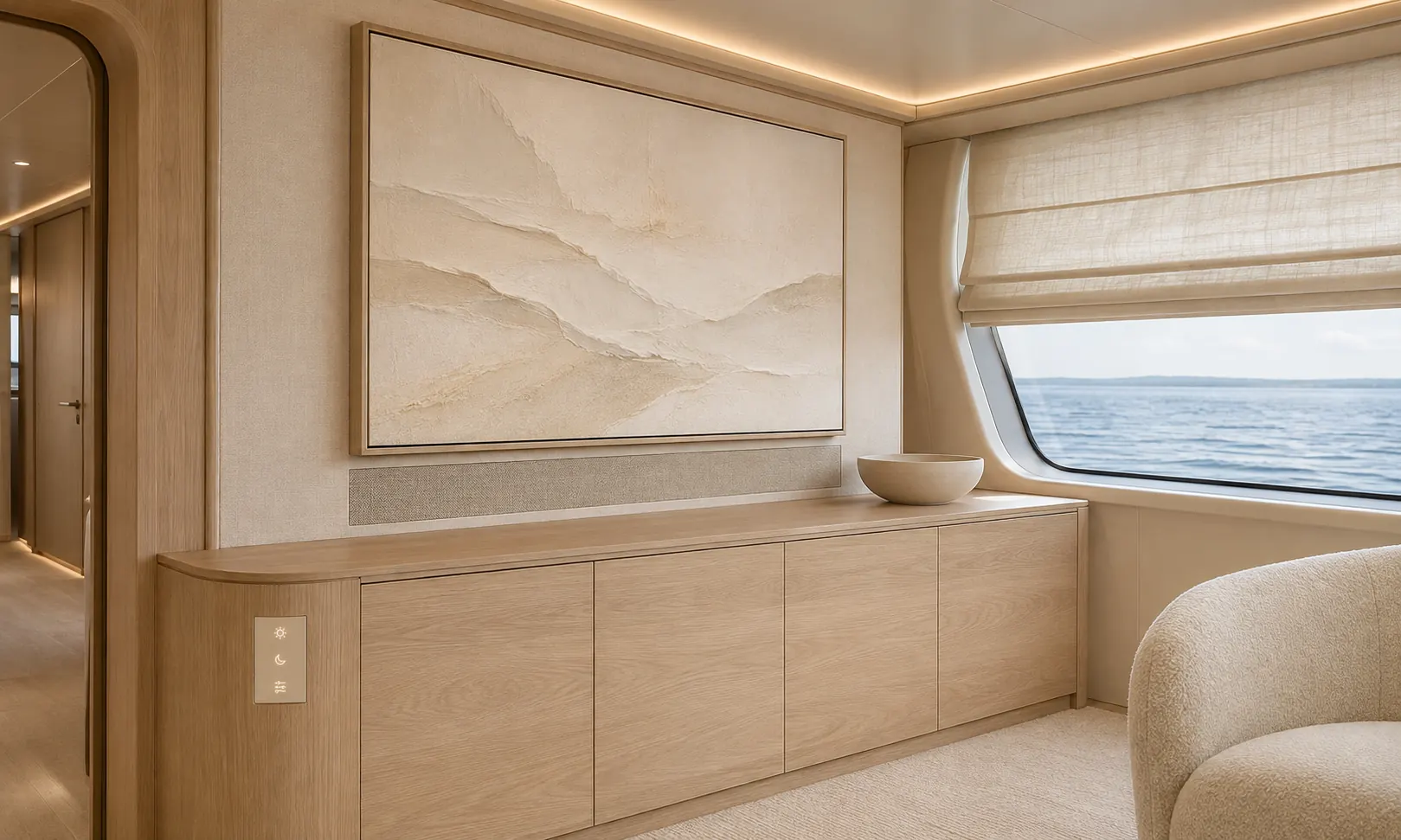
A modern yacht can include impressive entertainment systems, connectivity, integrated lighting controls, and sophisticated monitoring equipment.
But good technology should make the experience simpler.
Not more frustrating.
Guests shouldn’t need a lengthy explanation to adjust the cabin lights.
A music system shouldn’t depend on one complicated tablet that nobody understands.
And essential vessel operations should not rely solely on consumer entertainment controls.
Prioritize reliable connectivity, straightforward interfaces, properly secured networks, and practical backup arrangements.
Separate guest entertainment systems from critical vessel systems in accordance with appropriate marine engineering and cybersecurity guidance.
The goal is technology that quietly supports comfort.
Not technology that becomes the center of attention.
Which Upgrades Give a 100-Foot Yacht the Biggest Luxury Improvement?
Here’s a practical comparison.
| Upgrade | Main benefit | Typical complexity |
| Lighting redesign | Better atmosphere | Low to moderate, depending on wiring |
| Upholstery and soft furnishings | Immediate visual improvement | Low to moderate |
| Cabin sound reduction | Better sleep and comfort | Moderate to high |
| HVAC modernization | Improved climate control | High |
| Guest storage redesign | Easier extended stays | Moderate |
| Beach-club refurbishment | Improved water access | Moderate to high |
| Main-salon furniture redesign | Better daily living | Moderate |
| Crew-service improvements | Smoother hospitality | Moderate to high |
| New exterior deck structure | More usable space | High; structural approval may be needed |
| New hot tub or heavy stone installation | Added amenities | High; weight and stability review needed |
The complexity categories are editorial assessments, not fixed engineering classifications. Actual work depends on the vessel’s construction, class status, and existing systems.
The Pravi Celer 24-Hour Luxury Test
Here’s the original approach I’d use before approving any major redesign.
Don’t judge the yacht at its most photogenic moment. Imagine living aboard for one complete day.
I’ve developed the Pravi Celer 24-Hour Luxury Test around five moments.
7:00 AM — Waking up: Is the owner’s suite quiet, comfortable, and private?
10:00 AM — Getting ready: Are bathrooms, wardrobes, lighting, and climate control genuinely convenient?
2:00 PM — Returning from the sea: Is it easy to board, rinse off, change, and relax without disrupting the salon?
7:00 PM — Hosting dinner: Can the crew serve everyone efficiently? Is the dining space comfortable and beautifully lit?
11:00 PM — Going to sleep: Can guests adjust lighting and temperature easily? Are mechanical noise and vibrations controlled?
For each moment, identify one frustration that could reasonably be improved.
Then rank those frustrations by how often they occur and how significantly they affect comfort.
This is an original editorial planning method, not a substitute for professional design or technical assessment.
Its advantage is simplicity.
Instead of asking, “What expensive feature should we add?” you’re asking, “What would make life aboard more enjoyable?”
And that’s a far better foundation for luxury.
How Much Does It Cost to Make a 100-Foot Boat Luxurious?
The answer depends on the yacht’s current condition and the work involved.
A cosmetic refresh is entirely different from a technical refit or major structural modification.
In an April 2026 industry guide, refit consultancy Foreland Marine placed standard winter refits on 30–50 metre yachts in a broad range of approximately £500,000 to £1.5 million.
More extensive projects can cost several million.
The actual price of a 100-foot yacht refurbishment depends on the scope, region, condition, approvals, materials, and shipyard.
A Sample $1 Million Luxury Refit Budget
To illustrate how priorities might be organized, consider a hypothetical $1 million project.
| Workstream | Illustrative allocation |
| Marine survey, design and project planning | $75,000 |
| Acoustic and HVAC improvements | $175,000 |
| Interior joinery, upholstery and furnishings | $250,000 |
| Lighting, entertainment and connectivity | $100,000 |
| Exterior seating and deck refurbishment | $100,000 |
| Guest storage and service improvements | $100,000 |
| Planned work subtotal | $800,000 |
| Contingency reserve (25% of subtotal) | $200,000 |
| Total planning budget | $1,000,000 |
These figures are an original budget-allocation example, not shipyard quotations or verified market prices for individual work packages.
They assume no major hull reconstruction, engine replacement, or unforeseen structural problems.
If a survey reveals significant machinery or safety issues, the scope and budget would need to change.
A contingency is not a license to spend more on decoration.
It’s protection against the uncertainties of working inside an existing vessel.
What Must Be Checked Before Renovating a 100-Foot Yacht?
A yacht is not a house.
That’s the most important technical distinction.
Changing its structure, weight distribution, electrical systems, fire protection, or watertight boundaries can affect safety and compliance.
Lloyd’s Register’s 2025 guidance explains that alterations materially affecting a vessel’s stability information can require updated calculations and approval.
For commercially operated yachts under relevant Red Ensign jurisdictions, the REG Yacht Code provides applicable safety and construction requirements.
Not every yacht falls under the same rules.
Private versus commercial use, flag state, certification, age, and size all matter.
Before major changes, involve a qualified naval architect, marine surveyor, experienced refit yard, and the relevant flag or class representatives as appropriate.
For more on the engineering behind extraordinary vessels, our guide to superyacht engineering explores how structure and technical systems support luxury at sea.
Five Questions Most Yacht Owners Should Ask Before a Refit
Can you make an older 100-foot yacht look modern?
Yes. Upholstery, lighting, finishes, furniture, and selected technology upgrades can transform its appearance without rebuilding the entire vessel.
Should you replace all the original woodwork?
Not automatically. High-quality original joinery may be worth preserving or restoring, particularly when it remains structurally sound and suits the design.
Does adding marble make a yacht more luxurious?
Only when the material is appropriate. Weight, maintenance, securing methods, and stability may make lighter alternatives more suitable.
Can you add a jacuzzi to a 100-foot yacht?
Possibly, but feasibility depends on structure, capacity, weight distribution, plumbing, electrical systems, and stability approval. It’s not a simple decorative upgrade.
Will a luxury refit increase the yacht’s resale value?
It may improve appeal, but the cost isn’t automatically recovered. Technical condition, buyer preferences, documentation, and comparable sales influence value. Our superyacht valuation guide explains those factors in greater detail.
Final Thoughts: Make the Yacht Feel Like a Life Worth Living
There’s a beautiful difference between owning a luxurious yacht and creating a luxurious life aboard one.
The first can be measured through materials, dimensions, and expensive equipment.
The second is more personal.
It’s the quiet morning when you wake up without hearing the generator.
The comfortable lounge where everyone naturally gathers.
The ease of returning from the sea without worrying about wet towels or slippery surfaces.
The dinner that appears beautifully organized because the layout allows the crew to work comfortably.
And the wonderful feeling that every part of the yacht seems to understand what you need.
That’s what makes a 100-foot boat special.
It offers enough room to create something extraordinary, but still demands thoughtful decisions.
You can’t simply keep adding more.
You have to choose better.
And perhaps that’s the most elegant way to think about yacht design.
Real luxury isn’t filling every available foot with something expensive. It’s making every foot feel wonderful to live in.