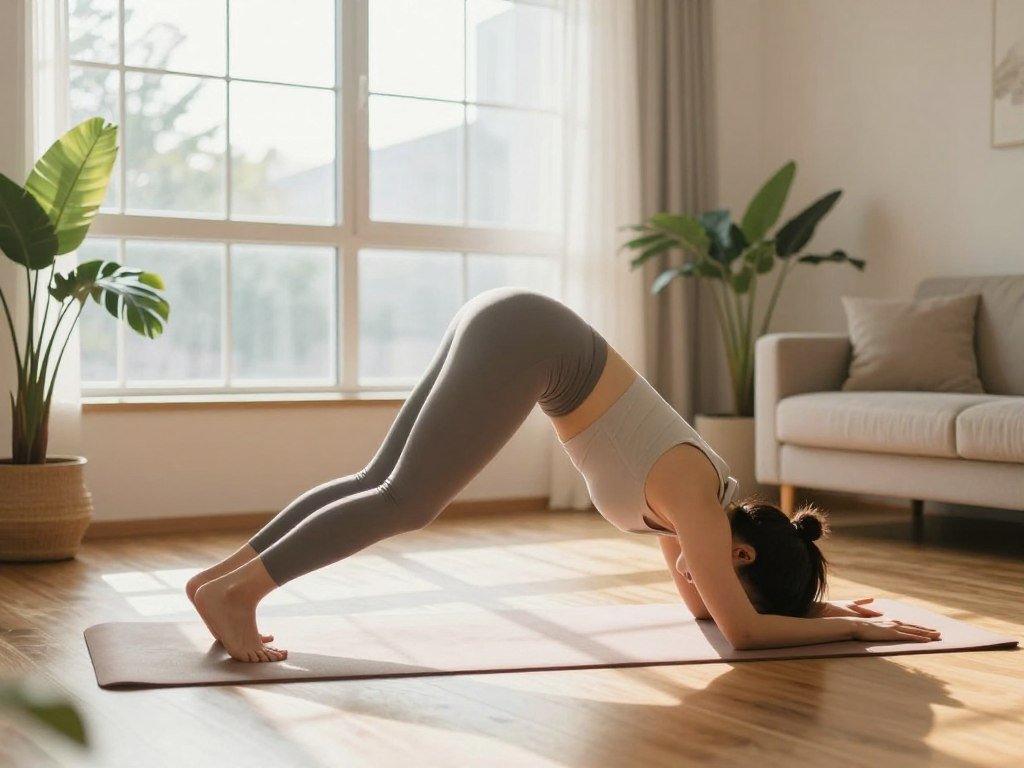
You can start a morning routine at home with a small patch of floor and movements that match your current fitness level. A bodyweight move uses your own body, rather than external weights, for resistance. That makes it easy to begin without setting up equipment or leaving home.
Choose gentle mobility, strength, or cardio moves based on how you feel when you get up. You can keep the session brief, then adjust the pace as your mornings change. These ten options give you a flexible way to start day without chasing a perfect workout or a promised result.
Key Takeaways
- Pick movements that suit your energy and fitness level.
- Use bodyweight moves to train without external weights.
- Mix mobility, strength, and cardio as you like.
- Scale the moves to make a routine feel manageable.
- Choose a version you can repeat comfortably rather than making the first morning your hardest workout.
Does Morning Exercise Improve Sleep and Heart Health?
A 12-week timing trial found benefits in both exercise groups, but some cardiovascular measures improved more with evening sessions. Morning exercise can help with sleep and body-fat measures, though the results came from sedentary young men. The trial does not show that morning workouts are best for everyone.
Researchers assigned 58 sedentary men to morning exercise, evening exercise, or a control group. The exercise groups did at least 150 minutes of moderate-intensity cardio each week. Morning sessions ran from 6 to 8 a.m.; evening sessions ran from 6 to 8 p.m.
These results do not establish a female-specific weight-loss effect or prove that one workout time suits everyone.
Both exercise groups reduced body fat after 12 weeks. The morning group showed significant reductions as early as week four. Both groups also fell asleep faster, while the morning group shifted its melatonin timing and sleep schedule earlier.
What the timing trial found about men and women
The body-fat and sleep findings apply to the male participants in this trial. They do not establish a weight-loss effect for women, so a morning exercise routine at home for women should not be framed as a proven way to lose weight. Men do not need a special set of morning moves based on these results.
How sleep and cardiovascular outcomes differed
Evening exercise led to larger gains in blood-flow rate, center-line blood speed, and carotid artery dilation. It also lowered systolic blood pressure more than morning exercise. The morning group’s earlier sleep schedule may suit some people, but timing should fit your rest and daily schedule.
The 12-week exercise timing trial compared sleep and heart measures in sedentary men. A second report describes the same trial and its body-composition findings in more detail.
Keep a morning session only if it fits your sleep needs and is a time you can maintain.
Best Morning Exercises at Home for a Quick No-Equipment Routine
A quiet morning can start with a slow Cat-Cow and build toward a squat or a short cardio burst. Ten movement options give you a mix of strength, mobility, and cardio for different muscle groups. They support general fitness, not guaranteed fat loss.
For a 10-minute routine, do one minute of jumping jacks, then two minutes of stretching. Use the other seven minutes for a few moves at an easy pace. Fifty jumping jacks can raise your heart rate, but that number is optional, not a required target.
The ActiveSG exercise guide offers form tips for moves such as squats and push-ups. Here are five options to start with:
| Exercise | Main focus | Easier adjustment |
|---|---|---|
| Cat-Cow | Spine mobility | Use a smaller stretch |
| Glute Bridge | Hips and glutes | Lift hips only a little |
| Dead Bug | Core control | Move one limb at a time |
| Bodyweight Squat | Leg strength | Use a chair for support |
| Downward-Facing Dog | Shoulders and back | Bend your knees |
Try the next five with steady form and a pace you can control:
- Plank: Set your hands under your shoulders, brace your middle, and hold a straight line.
- Jumping Jacks: Start with feet together, then jump your feet apart as your arms rise. Replace jumps with marching or step jacks.
- Mountain Climbers: Begin in a high plank and bring one knee toward your chest at a time.
- Reverse Lunges: Step one foot back, bend both knees, then press through the front foot to stand.
- Incline Push-Ups: Place your hands on a sturdy counter or wall, then lower your chest toward it.
A gentle daily option is Cat-Cow, glute bridges, dead bugs, squats, Downward-Facing Dog, planks, and easy marching. If you want guided sessions, compare home workout apps that offer low-equipment options. Alternate hard strength efforts instead of pushing hard every day.
Stop a movement that causes sharp pain and choose an easier variation instead.
How Can You Adjust These Moves for Your Fitness Level?
A beginner can make the routine easier by shortening each movement and choosing a supported or low-impact variation. Start with control, then increase the range or pace as your body gets used to the work. You do not need to push hard every day to build a steady routine.
For balance, hold a wall or sturdy chair during a squat or lunge. Keep your knees in a comfortable range, and swap jumps for marching if impact feels tough. A shorter plank or a push-up against a wall can also help you build strength while keeping the effort manageable.
The 3-3-3 strength-training rule is one simple template: three workouts per week, three movements each workout, and three sets per movement. Squats, presses, and pulls are compound choices that work several muscle groups. Treat the template as an option, not a required plan for every body or schedule.
Scale the movements for beginners at home
Build a beginner morning exercise routine at home by keeping the first sessions easy enough to finish with good form. Rest when your breathing or balance needs a reset. As your strength and flexibility grow, add time or effort in small steps rather than changing everything at once.
Find more manageable home workout ideas for different experience levels and schedules.
Set realistic expectations for weight loss and belly fat
Spot reduction means trying to lose fat from one body area by exercising that area. A 2023 trial found a trunk-fat change in the abdominal-exercise group, but total-fat decreases were similar between groups. The abdominal exercise trial included only 16 overweight men, so its result does not establish the same effect for women or other groups.
Morning exercise for belly fat in women can support overall activity, but no move can be promised to target fat from one area. Exercise can build strength and support general fitness without controlling where body fat changes first.
Add difficulty gradually, and ask a clinician about a suitable starting point if a medical condition affects exercise.
Conclusion
A useful morning routine is one that fits your body and your real schedule. A comfortable plan is easier to keep than a workout that leaves you dreading the next day. You can build a mix of mobility, strength, and cardio, then adjust it as your energy and needs shift.
Some mornings may call for stretching, while others suit a brief strength session or a brisk march. Your back, legs, and endurance can all benefit from different kinds of movement over time. You do not need to turn every morning into a test of willpower.
Pick one move tonight, then try it at a comfortable pace tomorrow.
FAQ
How to train your body to workout in the morning?
How does exercise affect sleep?
What is the 3-3-3 rule for working out?
What is the 5-5-5-30 morning workout routine?
Is it good to workout as soon as you wake up?
What are the only 5 exercises you’ll ever need?
What is one exercise that works everything?
What are five good exercises to do every morning?