There’s something almost impossible to resist about a beautiful sailboat.
Not the kind you rent for an afternoon, with a tiny cabin and just enough space for a weekend bag.
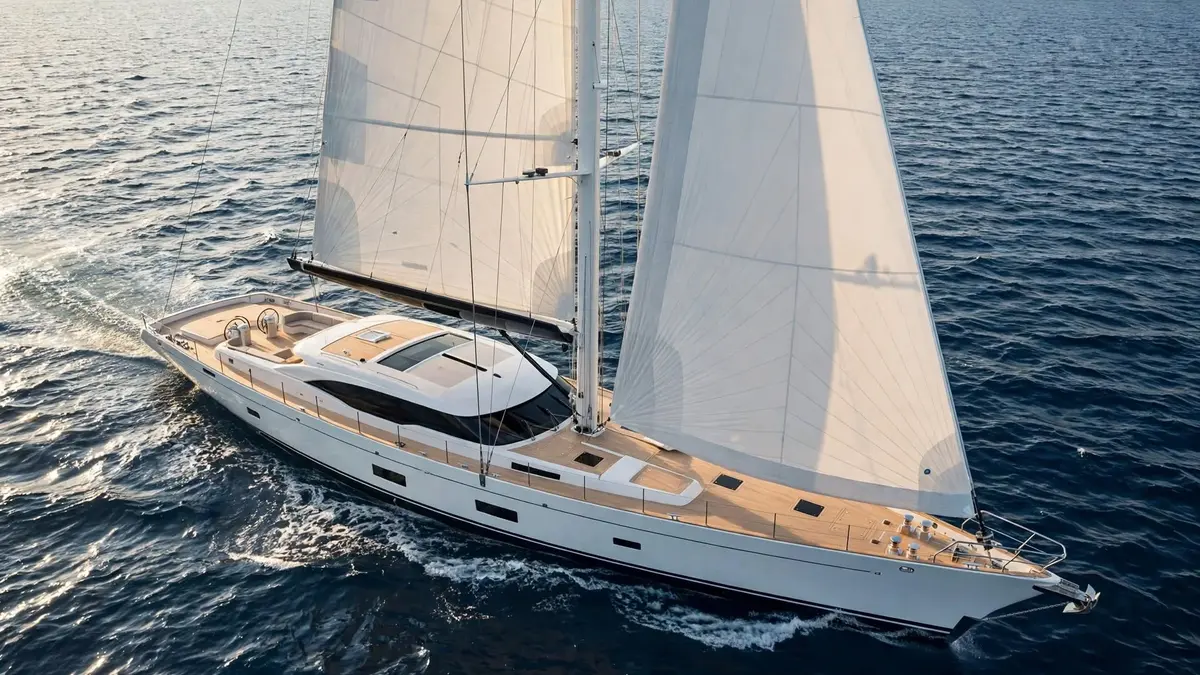
I’m talking about a magnificent 100 foot sailboat.
Thirty metres of beautifully engineered sailing machinery, a towering mast, an elegant interior, and enough deck space to make an ordinary afternoon feel like a private adventure.
Picture yourself leaving a Mediterranean harbor just after sunrise.
The crew prepares the sails. A gentle breeze moves across the cockpit, and the coastline slowly becomes smaller behind you.
Then the engine goes quiet.
The sails begin doing their work.
And the yacht moves forward with that wonderful feeling only sailing can provide.
No enormous engine roar. No need to rush toward the next destination.
Just the wind, the water, and the extraordinary pleasure of being somewhere you genuinely want to be.
But here’s the question that makes owning a vessel of this size so interesting.
What actually changes when your sailboat reaches 100 feet?
Quite a lot.
A 100-foot sailboat is approximately 30.48 metres long and can accommodate luxurious guest cabins, professional crew, sophisticated sailing systems, and the equipment needed for extended ocean voyages.
But it’s also a complex vessel.
The sails are enormous. The mast can restrict where you travel. The keel may prevent access to shallow marinas. And managing the yacht requires careful planning, specialist maintenance, and experienced people.
That’s why buying one isn’t simply about choosing the most beautiful interior.
It’s about understanding what kind of freedom you’re purchasing—and the responsibilities that come with it.
How Big Is a 100 Foot Sailboat?
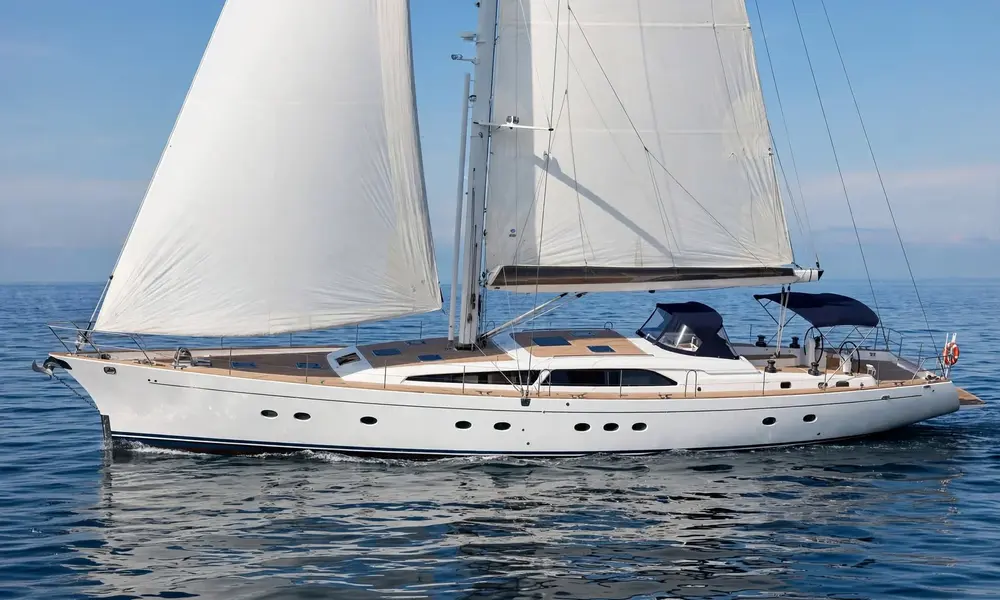
One hundred feet sounds impressive, but the dimensions become much more interesting when you compare actual yachts.
Consider two sailing yachts offered through established builders’ brokerage programs.
| Specification | Oyster 100 | Southern Wind SW100DS Starfall |
| Length overall | 30.73 m | 30.20 m |
| Beam (maximum width) | 7.85 m | 6.70 m |
| Draft | 4.10 m | 3.60 m |
| Published displacement | 110 tonnes | 59.2 tonnes |
| Construction year | 2012 example | 2006 |
| Published asking price | €5,500,000 | €5,100,000 |
Figures reflect the published specifications of the models and individual brokerage examples. Prices are asking prices and may change.
Here’s what I find fascinating.
These sailboats are almost the same length.
Yet the Oyster has a beam 1.15 metres wider than the Southern Wind.
Their published displacement figures are also dramatically different.
That doesn’t mean one yacht is automatically safer, faster, or more luxurious.
Displacement figures may refer to different loading conditions, and sailing performance depends on many factors.
But it reveals something important.
A sailboat’s length doesn’t tell you how it will feel, sail, or accommodate the people aboard.
And that’s why serious buyers study the entire design rather than just the headline measurement.
What Does Life Aboard a 100 Foot Sailboat Actually Feel Like?
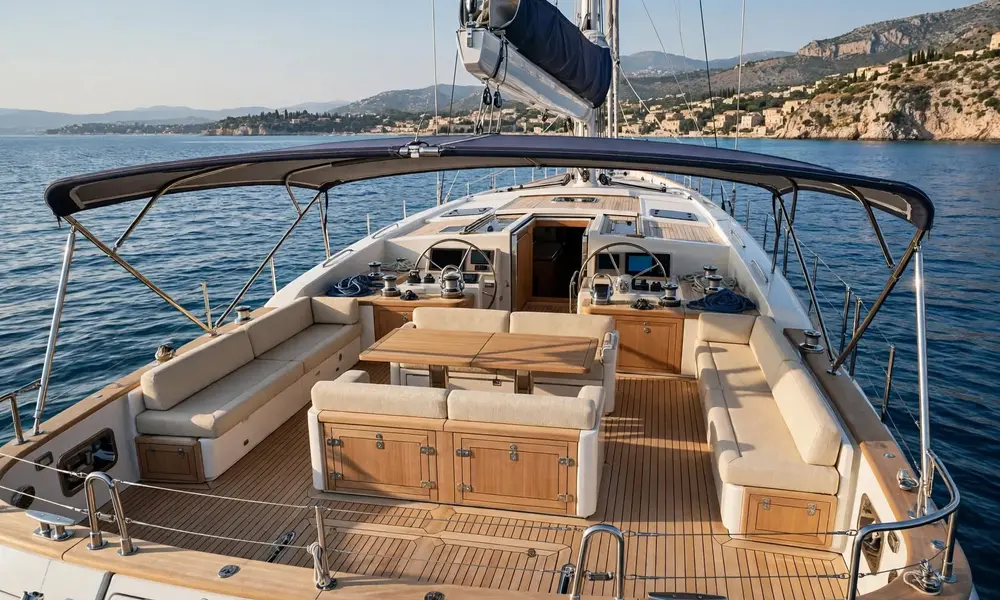
Imagine spending a week aboard a beautiful 100-foot sailing yacht.
Not a quick afternoon viewing.
Not an hour examining impressive furniture.
An entire week.
On the first morning, you might wake up in a comfortable owner’s cabin and enjoy breakfast in the cockpit.
By lunchtime, the crew has raised the sails.
The yacht begins heeling gently as it moves through the wind.
You notice how naturally everyone adjusts to life aboard.
Drinks are placed securely. Doors are latched. People move around using the handholds built into the interior.
By evening, you’re anchored somewhere quiet.
The boat settles into a different rhythm.
Dinner is served outdoors, and the surrounding coastline becomes part of the experience.
This is where sailing differs from simply staying in a beautiful hotel.
The journey isn’t an inconvenience between destinations.
It’s part of what you’re paying to enjoy.
But a truly luxurious sailboat needs to make both experiences comfortable.
The afternoon under sail.
And the peaceful evening at anchor.
Can a 100 Foot Sailboat Have Five Luxury Bedrooms?
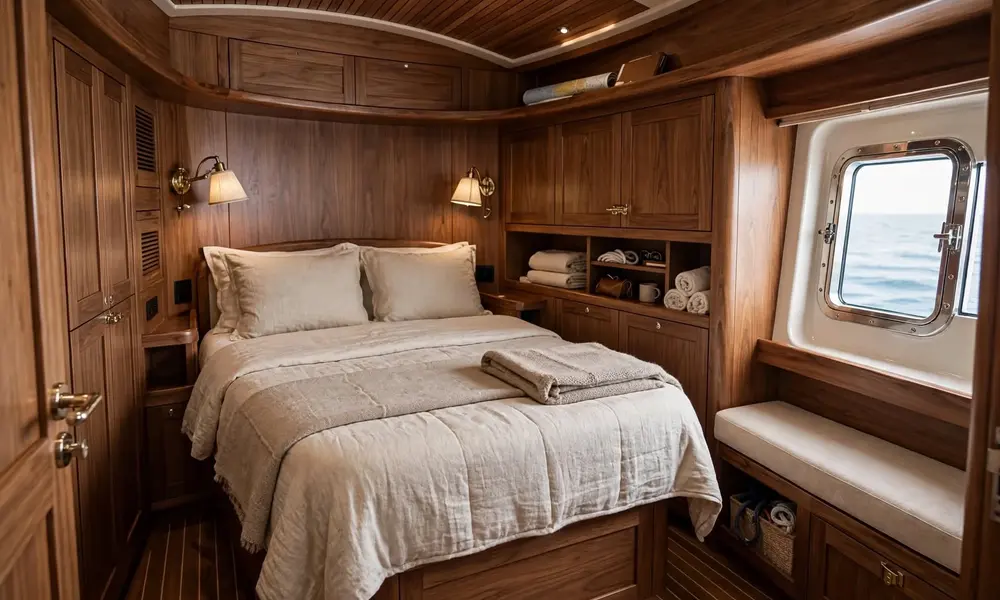
Yes, although the exact accommodation arrangements vary.
Here’s a detail buyers often misunderstand.
A listing might advertise five cabins.
That doesn’t necessarily mean five guest bedrooms.
The Oyster 100 Maritimo 100, for example, is described as having ten berths in five cabins.
But its detailed arrangement provides accommodation for six guests in three aft cabins and four crew in two forward cabins.
That distinction matters enormously.
Imagine planning to invite eight friends for a long holiday, only to discover that several advertised cabins are dedicated to essential crew.
An experienced buyer looks beyond the headline cabin count.
Ask how many people can be comfortably accommodated as guests while the vessel is properly crewed.
Also examine the location of the cabins.
A spacious owner’s suite can feel far more luxurious when separated from noisy machinery and busy service areas.
The number of rooms matters.
But privacy matters more.
What Are the Most Important Luxury Features on a 100 Foot Sailboat?
There are certain details worth prioritizing before considering decorative upgrades.
Comfortable Guest Spaces Under Sail
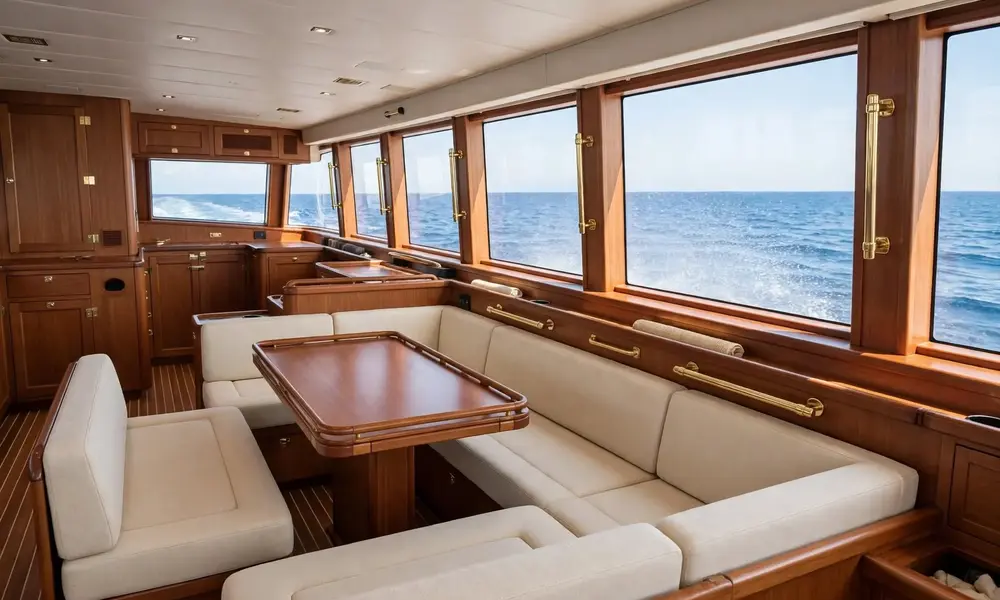
A sofa that looks wonderful in a marina might be uncomfortable when the yacht is heeling.
Seating, handholds, storage, and furniture securing arrangements should suit life underway.
The most beautiful interior is one guests can actually use while sailing.
A Cockpit Designed for Real Living
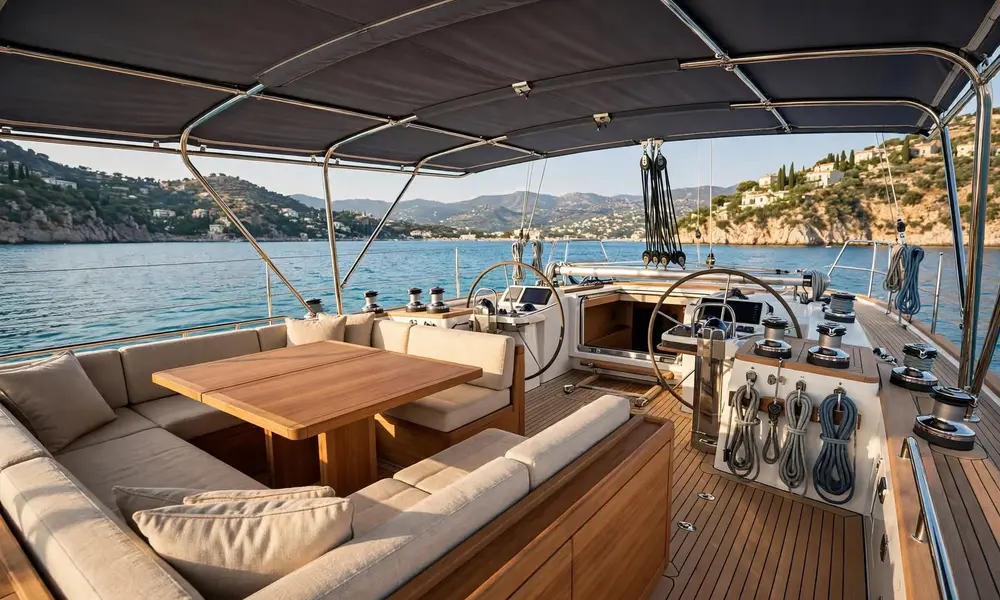
The cockpit often becomes the most important social space.
Look for comfortable seating, protection from the sun, safe movement, and a practical relationship between dining areas and sail-handling equipment.
Guests should be able to enjoy the voyage without interfering with the crew’s work.
Reliable Climate Control
A luxurious cabin should remain comfortable in warm weather and during humid passages.
Ventilation, air conditioning, condensation control, and machinery noise all influence comfort.
Practical Storage

A long voyage requires more than a beautiful wardrobe.
Think about provisions, personal belongings, sailing equipment, spare parts, and laundry.
A yacht designed for extended cruising needs sensible places for everything.
Thoughtful Crew Accommodation
Professional crew make much of the experience possible.
Their living spaces, working arrangements, and access to essential equipment deserve the same attention as the guest areas.
A yacht is far more enjoyable when the people operating it can do their jobs efficiently.
Why Does a 100 Foot Sailboat Need Such a Deep Keel?
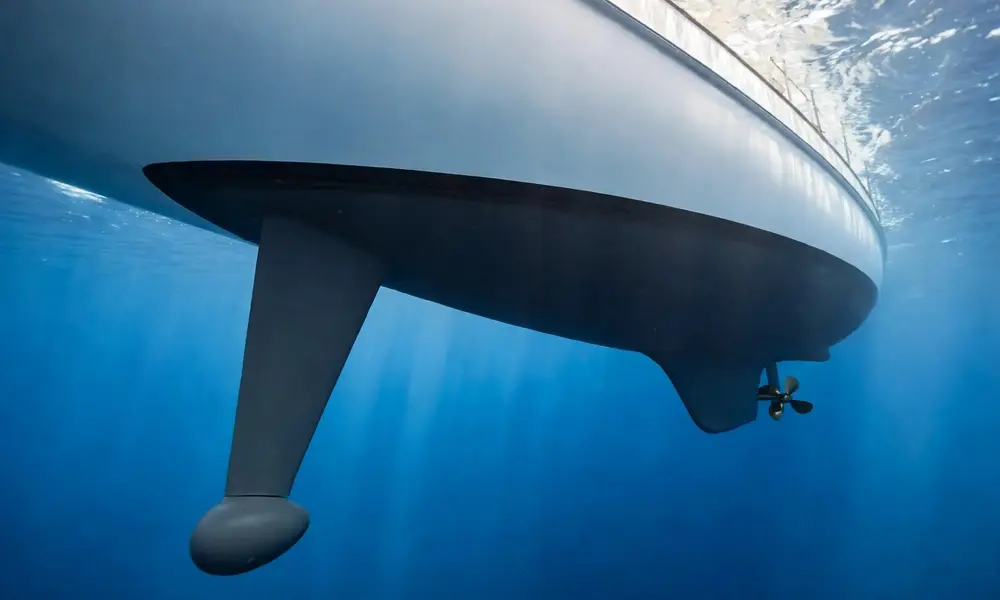
This is where the beauty of sailing meets the science behind it.
A sailing yacht’s keel helps provide stability and resistance to sideways movement as the wind pushes against the sails.
Many large sailing yachts use substantial ballast and deep keel arrangements to support their design requirements.
But keel depth creates a practical trade-off.
The Oyster 100 has a published draft of 4.10 metres.
Southern Wind’s Starfall has a published draft of 3.60 metres.
That’s a difference of half a metre.
And half a metre can matter enormously when entering a marina or navigating a restricted channel.
A deeper keel may prevent access to shallower locations.
However, a shallower draft doesn’t automatically make a yacht better or less capable.
Each vessel’s performance and stability must be assessed as a complete design.
The overlooked question: Can you reach the beautiful places you’ve been dreaming about?
Check the answer before purchasing.
How Tall Is the Mast on a 100 Foot Sailboat?
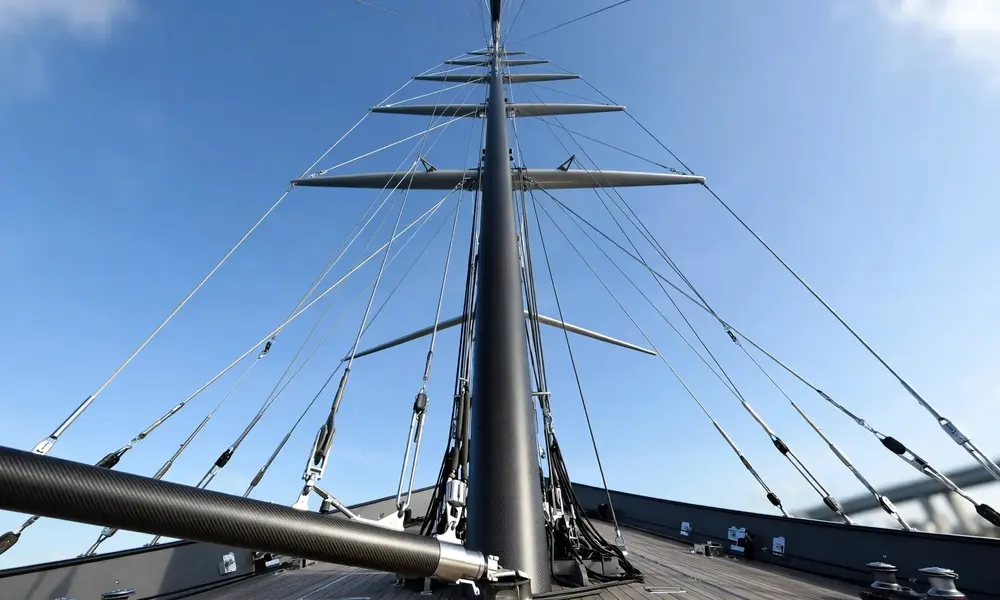
A 100-foot sailboat may carry a mast that extends substantially higher than the vessel’s length might suggest.
But there isn’t one universal mast height for the category.
Different sailing rigs, designers, and performance requirements produce different measurements.
The critical figure for navigation is air draft—the vessel’s height above the waterline, including relevant equipment at its highest point.
Why does this matter?
Bridges.
Overhead cables.
Some harbor entrances.
And certain waterways with fixed vertical restrictions.
A yacht can fit comfortably into a marina berth by length and width yet be unable to reach it because of insufficient bridge clearance.
Before planning routes, confirm the vessel’s actual air draft, local clearance data, water levels, and navigational restrictions.
Never assume that a bridge shown on a map provides adequate clearance.
For large sailing yachts, the safest route may require approaching a destination from open water instead of using an inland passage.
What Does a 100 Foot Sailboat Cost in 2026?
There is no universal purchase price.
A yacht’s value depends on its builder, age, construction, sailing equipment, condition, ownership history, and recent maintenance.
For example, two currently advertised brokerage references provide useful context.
The 2012 Oyster Maritimo 100 has been listed at €5.5 million.
The 2006 Southern Wind Starfall has been advertised at €5.1 million.
Those figures do not mean all 100-foot sailboats cost approximately €5 million.
Some older yachts may cost substantially less, while newer or highly customized vessels may cost much more.
The condition and technical history of each yacht are essential.
A vessel with recently serviced machinery and documented rigging work presents a different ownership proposition from one facing major overdue maintenance.
And the asking price isn’t the final transaction price.
For a deeper explanation, our guide to superyacht valuation explores why yachts of similar size can command very different market values.
How Much Does It Cost to Run a 100 Foot Sailboat?
This is the part of yacht ownership that deserves more attention.
Even when the wind provides propulsion, the yacht still requires substantial support.
A professional captain and crew may be necessary.
The vessel needs insurance, marina arrangements, machinery servicing, and ongoing care.
The sails and rigging require specialist inspection.
And electrical systems, generators, freshwater equipment, and navigation electronics still need maintenance.
Here’s a useful way to organize the operating budget.
| Expense category | What owners should account for |
| Crew | Salaries, training, travel, insurance, and benefits |
| Berthing | Home marina, visitor berths, and seasonal arrangements |
| Sailing systems | Sails, rigging, winches, furlers, and hydraulic equipment |
| Machinery | Engine, generators, pumps, and servicing |
| Insurance | Hull and machinery, liability, and applicable coverage |
| Maintenance | Hull coatings, teak, interiors, and periodic repairs |
| Professional services | Yacht management, surveying, legal, and compliance |
| Voyages | Fuel, provisions, communications, ports, and itinerary expenses |
A reliable budget should be prepared for the actual vessel and intended cruising schedule.
An arbitrary percentage of purchase price can be useful as a preliminary discussion point, but it isn’t a substitute for real quotations.
How Many Crew Do You Need on a 100 Foot Sailboat?
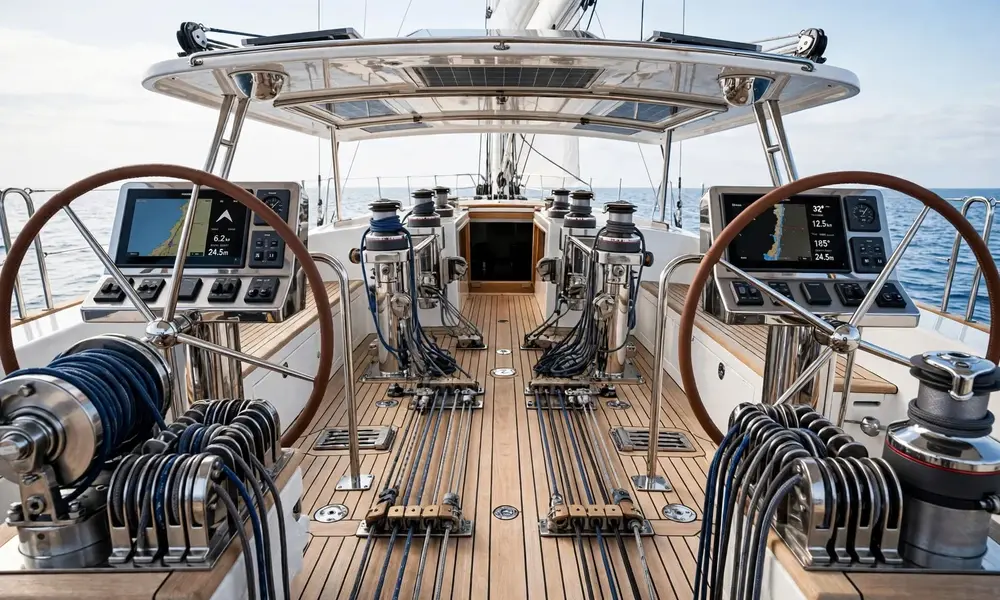
A yacht of this size ordinarily benefits from professional crew.
But the exact number depends on its equipment, flag, registration, operating area, and whether it is used privately or commercially.
Some vessels can operate with relatively small teams thanks to centralized sail-handling systems.
Others require more people for safe navigation, maintenance, guest service, and longer passages.
The UK Maritime and Coastguard Agency, for example, has specific certification and safe-manning rules for qualifying yachts over 24 metres.
These requirements must be assessed according to the vessel’s actual regulatory status.
The question buyers should ask isn’t, “How few people can run it?”
It’s, “What crew arrangement allows the yacht to be operated safely while delivering the experience I want?”
Those are very different questions.
The Pravi Celer Three-Clearance Test: An Original Way to Evaluate a Large Sailboat
Here’s a detail that traditional luxury yacht descriptions rarely bring together.
A 100-foot sailboat needs three different kinds of freedom.
And each can impose a limit on where you go and how you live.
For Pravi Celer, I’ve developed the Three-Clearance Test, an editorial planning framework for buyers.
1. Clearance Below the Water
Can the keel safely navigate your intended cruising grounds?
Consider charted depths, tides, loading, and the margin required beneath the keel.
2. Clearance Above the Water
Can the mast and equipment safely pass through planned routes?
Compare verified air draft with bridges, cables, and other overhead restrictions.
3. Financial Clearance
Can you comfortably manage the vessel’s operating expenses without compromising the experiences you purchased it to enjoy?
Ownership should leave room for maintenance, contingencies, crew, and travel.
Here’s the original insight.
A sailboat that fits your budget but cannot reach your favorite destinations may be a poor choice.
And one that can reach almost anywhere but requires financially uncomfortable maintenance may be equally unsuitable.
True freedom requires all three dimensions to work together.
This framework is not a navigation method or a substitute for professional financial and maritime advice.
It’s a way of asking better questions before buying.
How Do You Inspect a Used 100 Foot Sailboat?
A personal viewing is important, but it should be the beginning of the process.
The most valuable information may be found in documents and technical inspections.
Start with the maintenance records.
Review the history of sails, standing rigging, running rigging, hydraulic equipment, generators, and engines.
Ask whether recent surveys are available and whether known defects were addressed.
Next, arrange an independent marine survey.
For a large sailing yacht, the standing rigging, mast, keel structure, and steering system deserve specialized attention.
An appropriate sea trial can help assess handling, noise, equipment operation, and sailing performance under the conditions available.
Also review the yacht’s legal status.
Registration, title, liens, tax documentation, and any commercial certifications should be examined by qualified advisers.
Finally, request the general arrangement drawings.
A beautiful photograph cannot tell you whether the crew’s working areas and guest accommodation actually suit your plans.
Five Questions About 100 Foot Sailboats That Deserve Better Answers
Can a 100 foot sailboat travel across the Atlantic?
Many yachts in this category are designed for ocean cruising. However, any crossing depends on the individual vessel’s condition, seaworthiness, equipment, qualified crew, and appropriate weather planning.
Can you live aboard one throughout the year?
Yes, depending on the yacht’s equipment and operating arrangements. Long-term living also requires planning for marina access, maintenance, healthcare, provisioning, and local regulations.
Is a 100 foot sailboat bigger inside than a motor yacht?
Not necessarily. Motor yachts often provide different usable-volume arrangements, while sailing yachts allocate space to structural and sailing requirements. Compare actual deck plans and volume rather than length alone.
Can you operate a 100 foot sailboat without a professional crew?
The practicality and legality depend on the vessel and jurisdiction. At this scale, professional crewing is generally the sensible approach for safe navigation, maintenance, and guest service.
Does sailing mean you won’t spend money on fuel?
No. Engines, generators, tenders, and other systems may consume fuel even when wind provides propulsion during parts of the voyage.
Should You Buy a 100 Foot Sailboat or Charter One First?
If you’ve never spent meaningful time aboard a large sailing yacht, chartering can provide valuable experience.
A crewed charter allows you to understand how the yacht feels during real passages.
You discover whether you enjoy the movement under sail.
Whether the cabin layout suits your group.
And whether the daily rhythm matches your expectations.
You may realize that you love performance sailing.
Or that you prefer a quieter, heavier cruising design.
Perhaps you discover that chartering for several weeks each year suits your lifestyle better than full ownership.
That’s valuable information.
Our guide to the luxury yacht experience explores the differences between the appeal of a private yacht and the practical arrangements surrounding a luxury charter.
A little firsthand experience before buying can be far more useful than hours of admiring beautiful photographs.
Final Thoughts: A Hundred Feet of Freedom, If You Choose Wisely
There’s a wonderful difference between buying a large yacht and discovering that you genuinely love being aboard one.
The first may happen during a beautiful afternoon in a marina.
The second takes time.
It happens when you’ve experienced the yacht in different weather.
When you’ve spent a quiet evening at anchor and noticed how comfortable the cabins feel.
When you’ve discovered that the sailing itself is every bit as enjoyable as arriving somewhere extraordinary.
That’s what makes a 100-foot sailboat so fascinating.
It combines exceptional craftsmanship, serious engineering, and the possibility of truly memorable journeys.
But its greatest value isn’t necessarily found in the length, the price, or the reputation of its builder.
It’s in what the vessel allows you to experience.
The beauty of a coastline appearing on the horizon.
The pleasure of traveling under sail.
And the simple luxury of knowing that the journey belongs to you.
Because the most extraordinary thing about owning a 100-foot sailboat isn’t having a magnificent vessel beneath your feet. It’s having an entire world of beautiful places waiting beyond the bow.