There is a particular kind of luxury that announces itself the moment you arrive: the marble lobby, the chandelier, the uniformed line at the door, the logo repeated on every towel. Aman Resorts built the opposite. There is no sign at the gate, often no lobby at all, and nothing in the room that tells you what it cost.
Guests who have stayed at an Aman tend to describe it the same way, in the same hushed tone, as though they are letting you in on a secret. That is not an accident. It is the whole idea.
Aman is the quietest luxury on earth because quiet was the founding decision, not a style applied afterwards. Since the first resort opened in Phuket in 1988, the group has refused almost everything the hotel industry considers essential: scale, signage, loyalty programmes, advertising, and the theatre of arrival.
What remains is space, silence, architecture and attention and a following so loyal that the brand has grown, almost entirely by word of mouth, to 36 properties in 20 countries. This is the story of how that happened, what an Aman actually is, and why so few hotels have managed to copy it.
A Holiday Home That Became a Philosophy
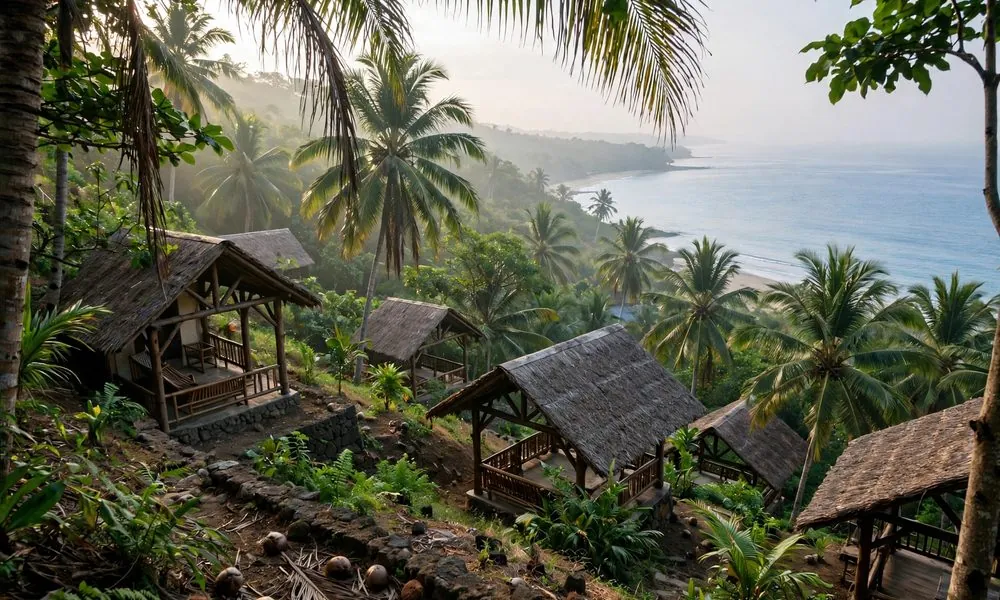
Aman began not with a business plan but with a holiday home. In the mid-1980s, the Indonesian hotelier Adrian Zecha went looking for a private retreat on a headland in Phuket, Thailand, and found a coconut plantation on Pansea Beach.
The site was too beautiful, and too large, to keep to himself, so the plan for a house became a plan for a small resort, developed with his friend Anil Thadani and two other partners. The name they chose was Amanpuri, meaning “place of peace” in Sanskrit aman itself means peace and it opened on 1 January 1988 with just 40 pavilions scattered through the grove above the Andaman Sea.
The banks, famously, would not lend on the project. A 40-room resort was considered uneconomically small; lenders wanted something closer to 500 rooms. Zecha and his partners financed it themselves, and the resort opened charging nightly rates reportedly five times higher than its local competitors. Against every convention of the time, it filled. The lesson was the one that has defined Aman ever since: scarcity, properly done, is not a limitation. It is the product.
Zecha came to hotels from journalism rather than from hotel school, and it shows. He thought of a resort the way an editor thinks of a page: composed, considered, edited.
Anything that could be removed should be. Working with the American architect Ed Tuttle, he drew on Thai temple architecture teak, local stone, long sightlines that dissolve the boundary between inside and outside to make a place that felt less like a hotel and more like a gracious private house that happened to welcome guests.
The Doctrine of Less
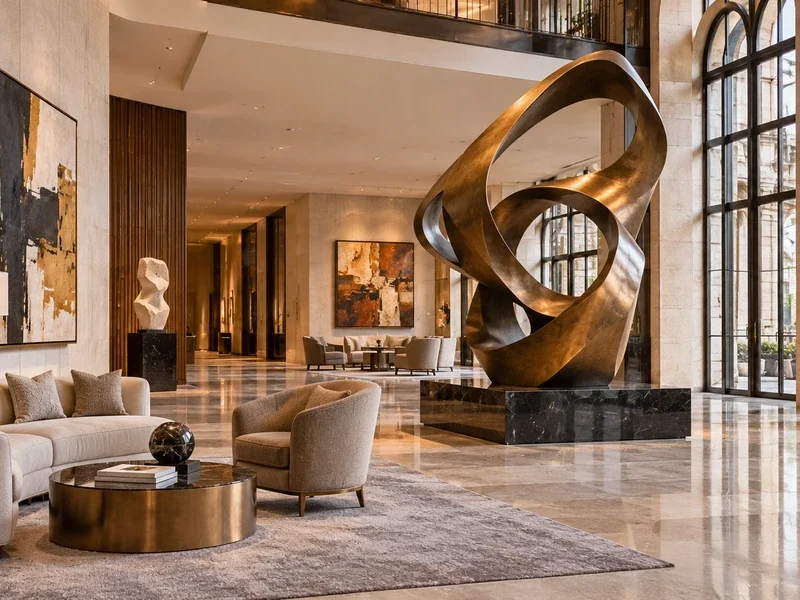
Most luxury hospitality is additive. More marble, more amenities, more services, more options, more spectacle. Aman is subtractive. Its properties are defined as much by what is absent as by what is present: no grand lobbies competing for attention, no signage at the entrance, no logos stamped on the slippers or the linen, no loyalty programme, no press office in the conventional sense, and no background music filling the public spaces.
There is no check-in desk in the usual sense; arrival is handled quietly, often in the pavilion itself, as though you have come to stay with a friend rather than to register at a hotel.
This restraint is not minimalism for its own sake. It is a working theory about what makes people feel at ease. A room with almost nothing in it except light, proportion and a view tells a guest that they are alone, unobserved and unhurried. Aman understood, earlier than almost anyone in hospitality, that privacy is a physical condition before it is a service promise.
You create it with walls, distance, courtyards and terraces, not with a do-not-disturb sign.
The same logic governs the brand itself. Aman has spent nearly four decades refusing the things that built every other luxury house on earth: heavy advertising, social-media noise, seasonal campaigns. Growth has come from guests telling other guests, and from travel advisers who know that a certain kind of client one who values discretion above display will ask for Aman by name.
The discovery of the brand is part of the experience, and the brand protects that feeling by staying hard to find.
Small by Design
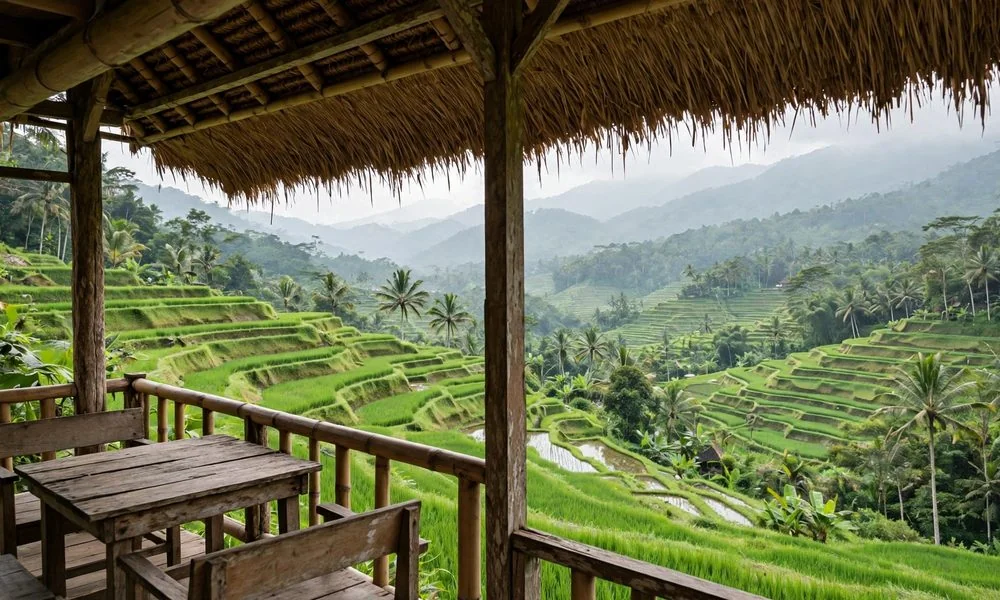
Each Aman property typically has a small number of rooms, usually fewer than 55, spread across a comparatively large site. That ratio is the engine of the whole experience. With so few guests and so much ground, you can walk for an hour and meet no one. You can swim alone at midday.
You can eat dinner with only the sound of the sea for company. Space is not only an amenity at Aman; it is the mechanism through which privacy is produced.
Low density also changes the economics in a way that matters. A small resort cannot survive on volume, so it must survive on rates and Aman has never been shy about that. Its rooms are among the most expensive in the world, not because they are the largest or the most ornate, but because the price buys something that cannot be added later: emptiness.
The portfolio has grown slowly and selectively, to 36 properties in 20 countries as of 2025, with the deepest roots in Asia Thailand, Indonesia, Cambodia, Laos, Vietnam, Japan, India, China, Bhutan, Sri Lanka and the Maldives and a widening presence in Europe, North Africa, the United States, the Caribbean and Mexico.
Every addition follows the same test: the location itself must be extraordinary, the access must require intention, and the architecture must merge with the landscape so that guests experience the place as a discovery rather than a construction.
For travellers weighing the wider field, the contrast is instructive: many of the best luxury resorts in the world compete on scale, spectacle or sheer amenity count, while Aman competes on the opposite on how little it needs to show you.
Architecture That Bows to Place
No two Amans look alike, and that is the point. The group has never imposed a global style or a repeatable room template. Instead, a small circle of architects Ed Tuttle, Kerry Hill and Jean-Michel Gathy above all has been asked, property after property, to answer the same question in a different landscape: what would a building look like here if it belonged here?
The answers are strikingly different. Amandari, which followed Amanpuri in Bali in 1989, sits in the upland rice terraces near Ubud rather than on the crowded beach, because Zecha believed the real heart of Bali was in the hills, near the temples and the cooler mountain air. Amankila and Amanusa followed in Bali in 1992; Amanjiwo, completed in 1997, frames the volcanoes of central Java in stone and stillness.
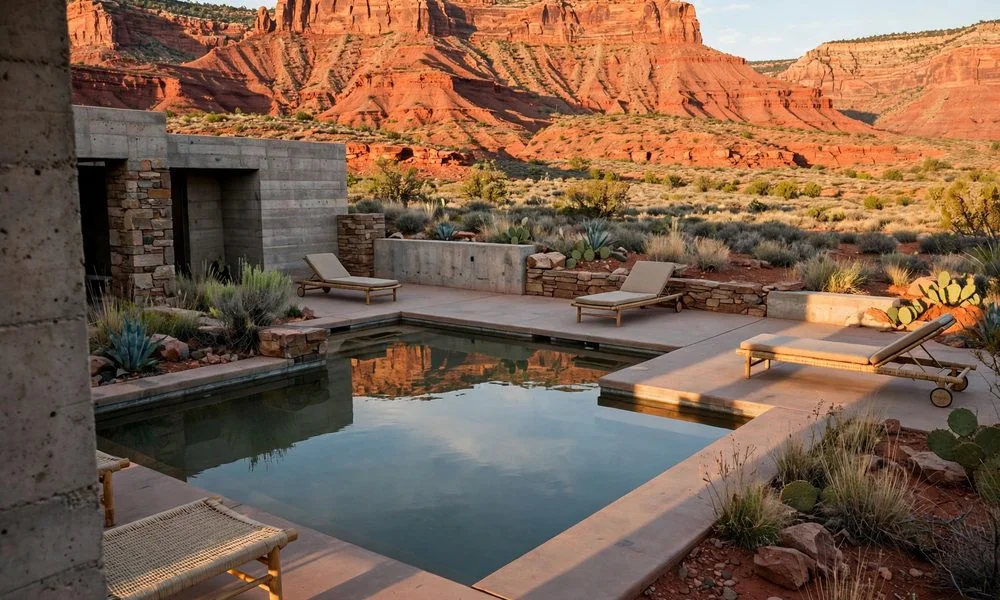
In Utah, Amangiri is a concrete-and-stone compound set low against red rock mesas, its pool a dark mirror of the desert. In Venice, Aman occupies a 16th-century palazzo on the Grand Canal, restored rather than rebuilt. In Japan, the properties draw on timber, paper screens and the bathing culture of the onsen.
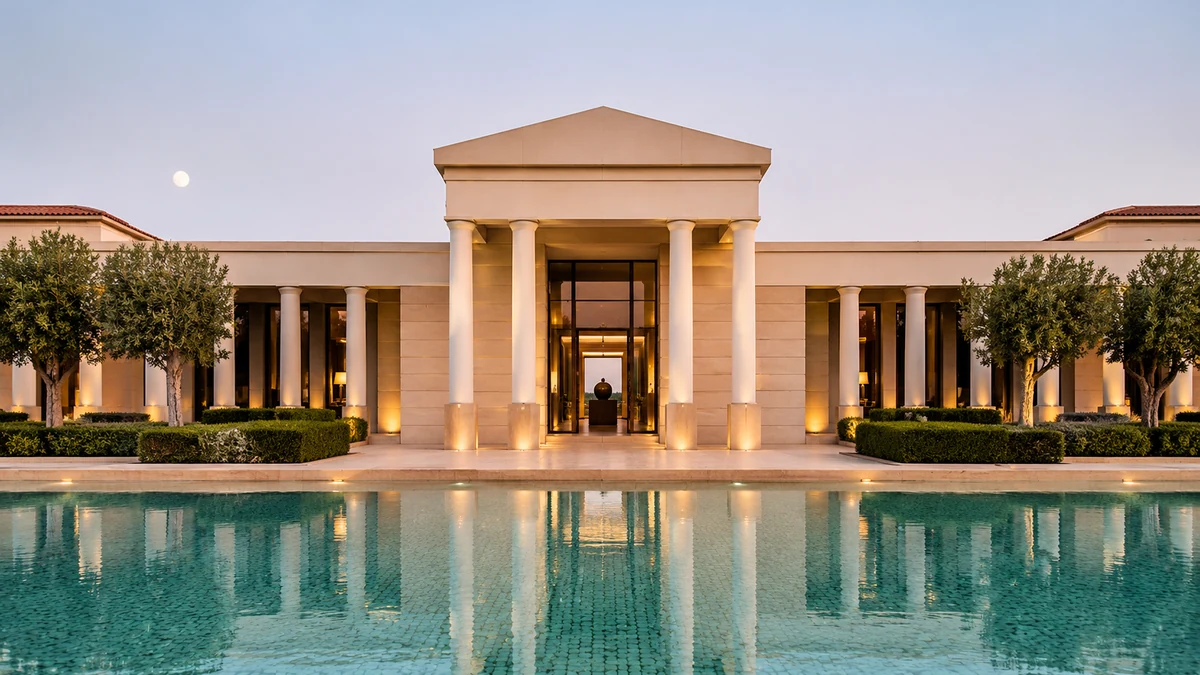
What ties these buildings together is not a look but a discipline: local materials, regional craft, restrained proportion and a refusal to date. Amanpuri still feels current decades after it opened, precisely because it was never fashionable. The architecture is meant to recede, so that the landscape can do the talking.
Inside the Pavilion: Rooms Like Residences
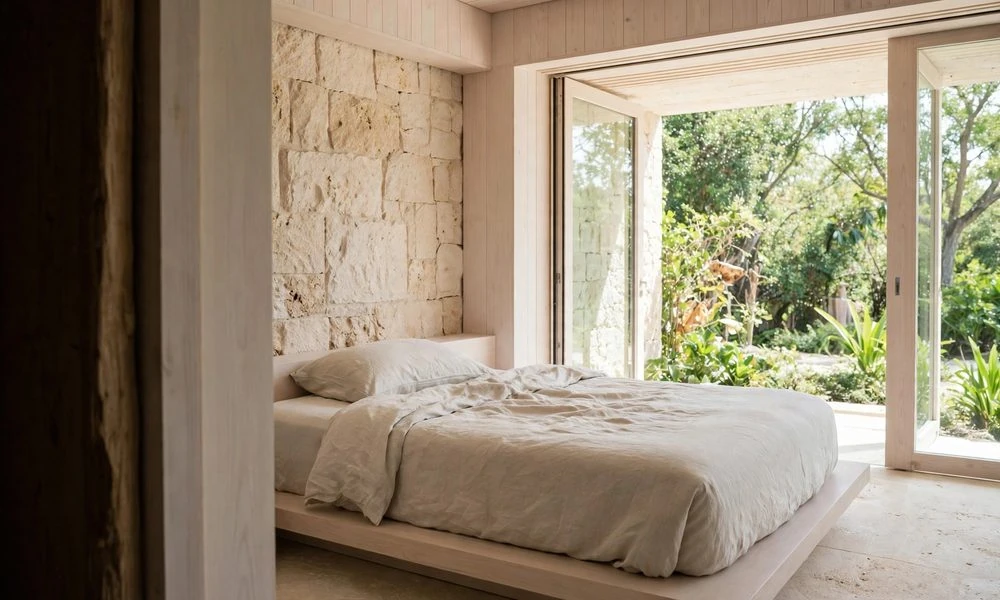
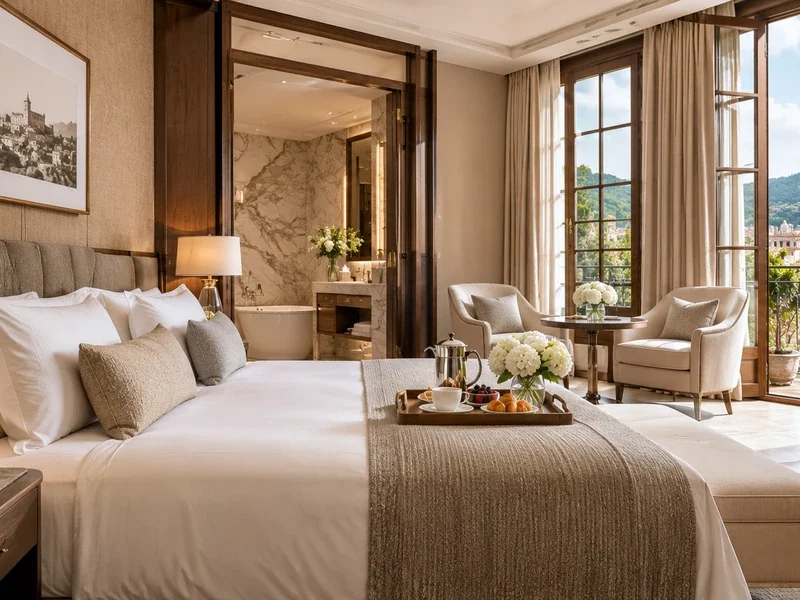
An Aman room is best understood as a small residence rather than a hotel room. Pavilions, villas and suites are large, self-contained and outward-looking, with terraces, private pools and direct access to the grounds, so that guests move through the property as though it were their own territory. There are no corridors full of doors, no floors stacked with identical rooms, and no sense of being one guest among hundreds.
The interiors follow the same subtractive logic as the architecture. Pale wood, natural stone, plain linen, a low bed, a single vase, a view.
Nothing is gilded, nothing is monogrammed, nothing competes with the landscape outside the window. The effect is calming in a way that is hard to describe until you have felt it: the room does not ask anything of you. It does not display wealth, it does not demand admiration, and it does not remind you that you are paying for it. That, for many guests, is the most luxurious feeling of all.
It is also a deliberate answer to a question the rest of the industry keeps answering differently. Where other luxury hotels add a pillow menu, a minibar theatre and a dozen branded toiletries, Aman removes them, on the grounds that a guest who wanted a shop would have gone to one. The room is the product, the location does the marketing, and everything else is edited away.
Service You Barely Notice
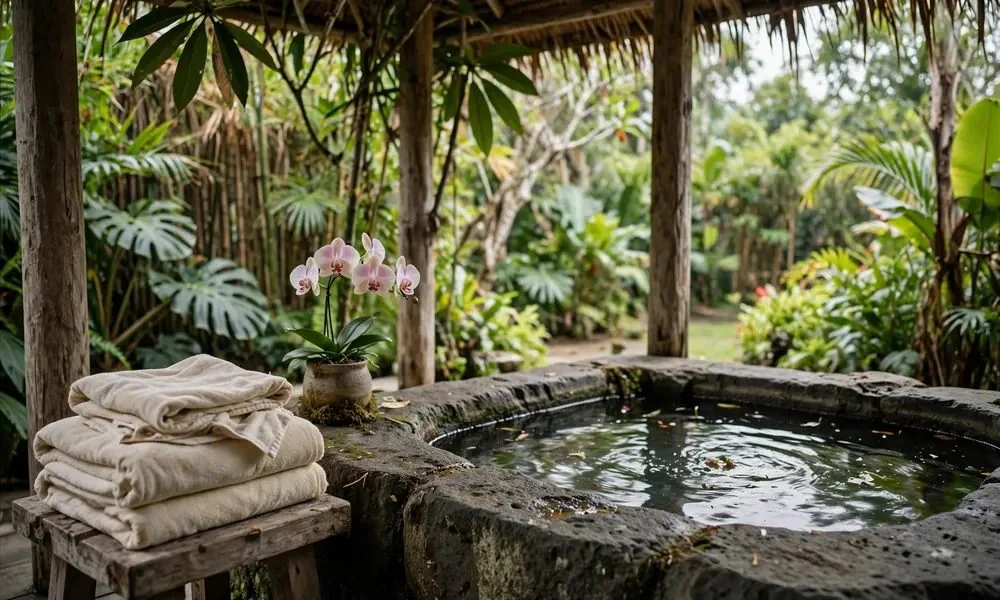
Aman service is choreographed to be invisible. Staff anticipate needs without hovering, appear when wanted and disappear when not, and conduct the whole stay at the pace the guest sets rather than the rhythm the property imposes. There is no ceremony around it no parade of managers at check-in, no scripted welcome, no performance of hospitality. The aim is for the guest to feel less like a customer and more like a returning friend of the house.
This is harder than it looks. Visible service is easy to measure and easy to train; invisible service requires staff who can read a guest, judge the moment, and act without being asked or seen. Aman has built its reputation on precisely that judgement, and on the continuity of it: many guests return to the same properties year after year and are remembered, not through a loyalty database but through people who were there last time.
The same discretion shapes the guest list itself. Aman properties are famously private, and the brand has long been a refuge for people whose lives are lived in public artists, founders, public figures who value a place where nobody stares, nobody photographs and nobody tells.
That privacy is protected by design, by low numbers and by a culture among guests themselves: at an Aman, discretion is the house rule, and everyone in the house keeps it.
Wellness, the Table and the Slow Day
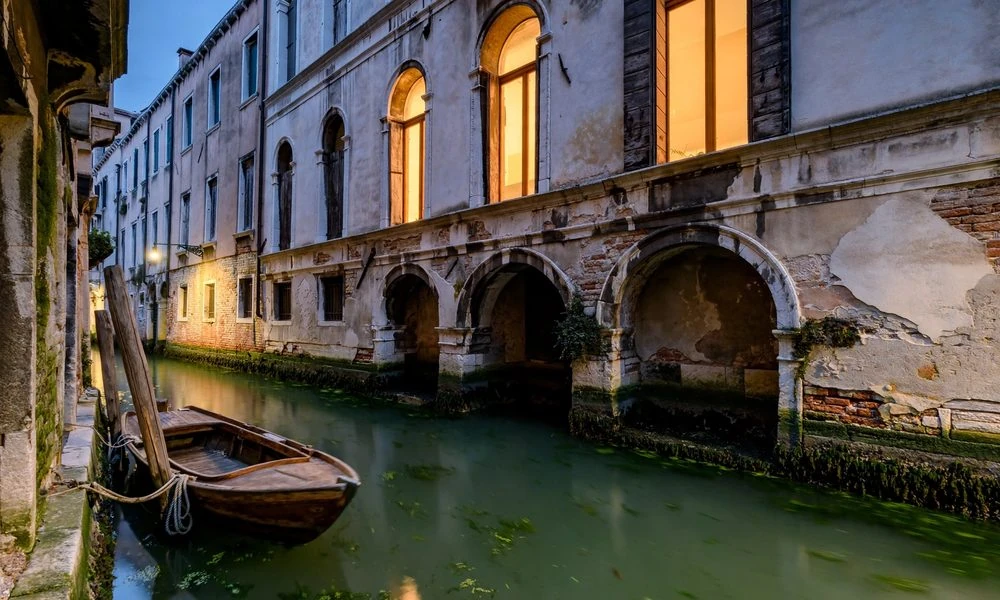
Wellness at Aman is not a programme bolted onto a hotel; it is close to the original idea. The first full-service Aman Spa opened at Amanpuri in 2001, and the approach has remained consistent since: treatments grounded in local tradition, delivered slowly, in spaces open to gardens, water and air. There is no noise, no rush and no sense of a schedule being kept. A spa day at an Aman is, like everything else there, an exercise in subtraction fewer appointments, more time, less doing.
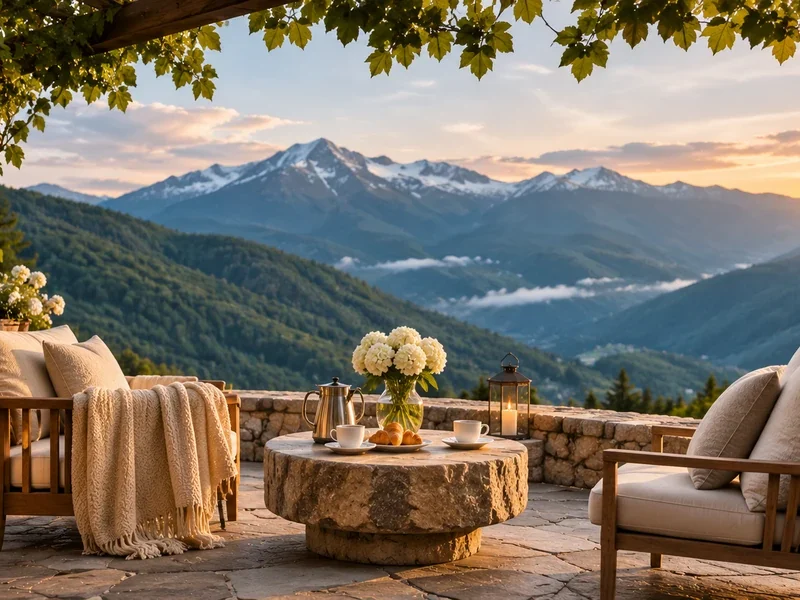
Dining follows the same principle. The kitchens work from regional ingredients and techniques rather than chasing celebrity chefs or star ratings, and meals are served where the setting is best on a terrace, on a beach, in a courtyard rather than in a formal dining room built to impress.
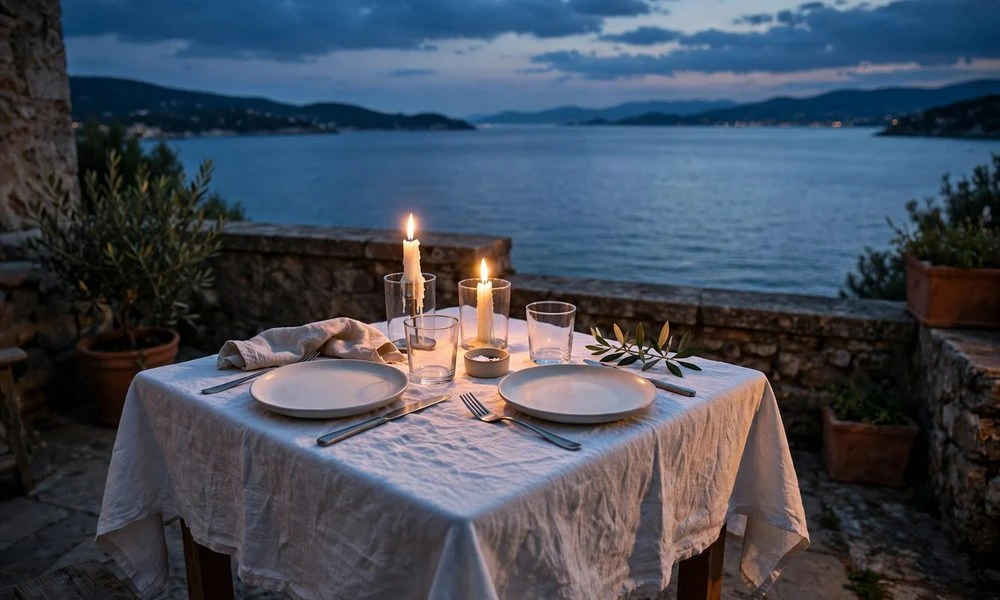
A candlelit table for two above the sea, with simple plates and no audience, is the Aman version of a grand restaurant, and for its guests it is the better one. The food is meant to be good, of course, but it is not the point. The point is the hour, the light and the quiet around it.
Days at an Aman are deliberately under-programmed. There is no activities desk pressing excursions, no entertainment schedule, no lobby scene to join. Guests swim, walk, read, bathe, eat and sleep and the resort is content to let that be enough.
The Cities Learn to Whisper
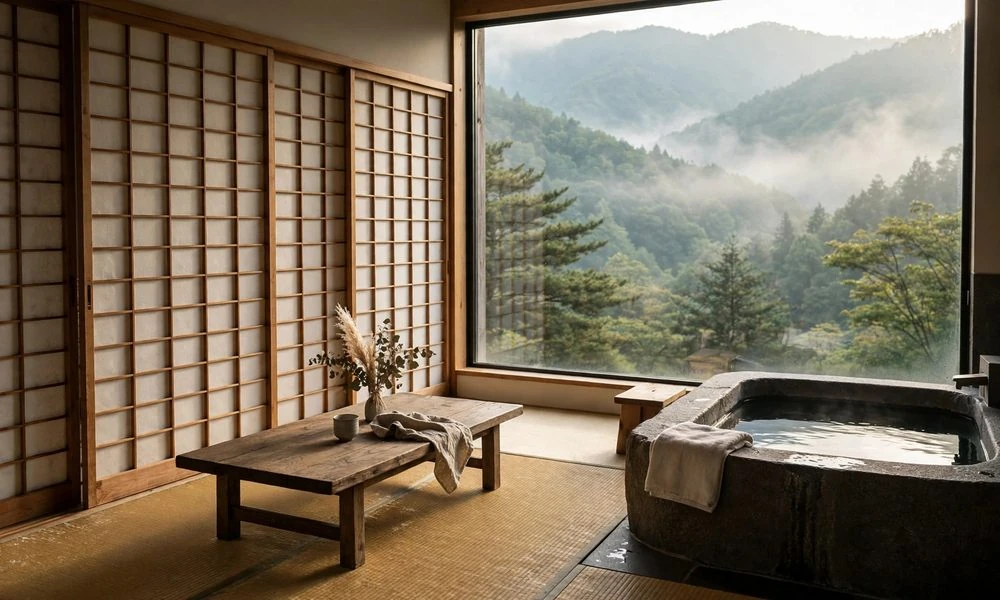
For its first quarter-century, Aman was a resort company, and its remoteness was part of the spell. The question was always whether the philosophy could survive a city. The answer began with Aman Tokyo, which opened in 2014 high above the Otemachi district, bringing the retreat logic space, privacy, controlled access, wellness into the heart of a megacity. It worked, because the formula turned out to be portable: quiet is not a property of the countryside. It is a property of design.
Aman New York followed in August 2022, in the Crown Building on Fifth Avenue, and Aman Nai Lert Bangkok opened in April 2025, completing a symbolic circle back to Thailand, where the story began.
The group has also grown sideways. Janu, a more contemporary sister brand, opened its first property in Tokyo in 2024, and Aman at Sea a superyacht is under construction for a debut expected in 2027. Ownership has changed hands along the way, most recently to a group led by Vladislav Doronin, who acquired the company in 2014 and now serves as its owner, chairman and chief executive.
Through each change, the operating idea has survived intact, which is itself unusual in luxury hospitality: the doctrine of less has outlasted its founder, its owners and several fashion cycles.
Who It Is For and Who It Is Not For
Aman is a weak fit for travellers who want visible entertainment, busy lobbies, points-based loyalty or a highly standardised chain experience. Many properties are intentionally quiet and can feel under-programmed to guests who equate luxury with nightlife or constant activity. There is no scene to join, no crowd to be seen in, and no story to post that will explain itself in a photograph.
For the traveller it is made for, though, there is nothing quite like it. Honeymooners, families who want a villa to themselves, writers and founders who need a week without interruption, and anyone who has grown tired of luxury that shouts these are the guests who return, year after year, property after property, collecting the collection the way others collect stamps.
They are not buying a room. They are buying a week in which the world goes quiet, and they are willing to pay for it precisely because so little of the modern world offers that any more.
The privacy at the heart of the experience is also the reason Aman properties sit so naturally beside the most secluded escapes in travel. Guests who dream of a whole island to themselves will find the same instinct in the finest private island resorts, and in the rare private islands you can rent outright for a week the same promise, kept at a different scale.
The Price of Silence
It would be incomplete to write about Aman without addressing the price, and the honest answer is that the price is the point and the barrier. Aman does not compete on value, and it does not apologise for that. A stay costs what it costs because the model admits no other way to exist: few guests, large sites, generous staffing and no volume to spread the cost across.
Whether that is worth it is a personal question, and it is the wrong question to ask in the abstract. The right question is simpler: what do you want a holiday to give you? If the answer is stimulation, variety, company and stories, there are better hotels for less money.
If the answer is rest real rest, of the kind that takes two days to arrive and leaves you slightly reluctant to return then there are few places on earth that deliver it as reliably as an Aman. The guests who keep coming back have answered that question for themselves, and their answer has kept the company in business since 1988.
That is, in the end, the quietest luxury on earth: not the thread count or the square footage or the view, but the removal of everything that stands between a person and a place. No signs, no logos, no noise, no crowds. Just a pavilion, a pool, a stretch of sea, and the time to notice them. Aman did not invent peace. It simply built hotels that get out of its way.
If this glimpse into Aman’s quiet world has stayed with you, may it follow you home into slower mornings, lighter rooms and the small pleasure of needing less. That, after all, is the souvenir Aman gives every guest, and it travels better than anything you could pack.