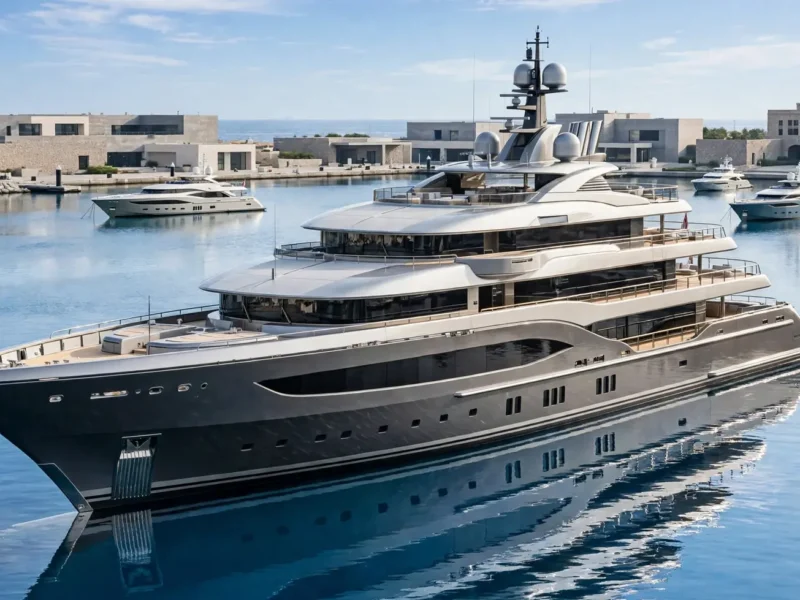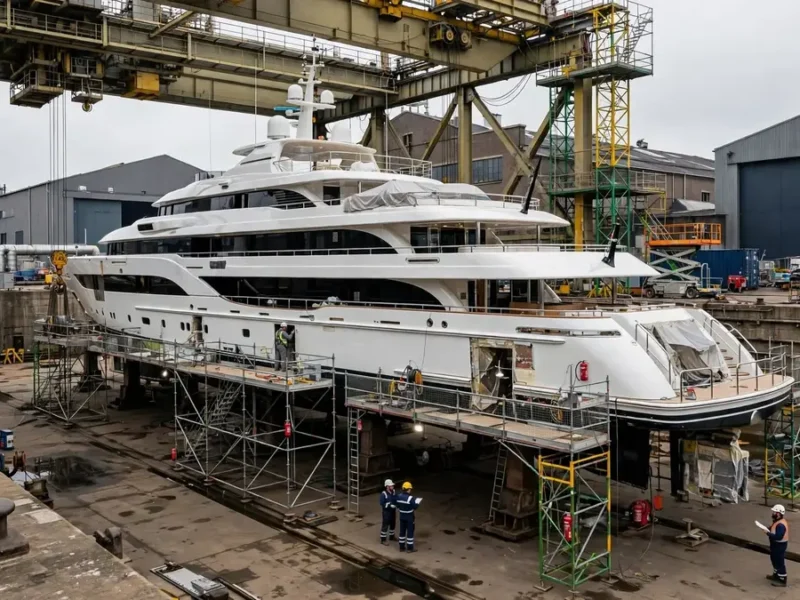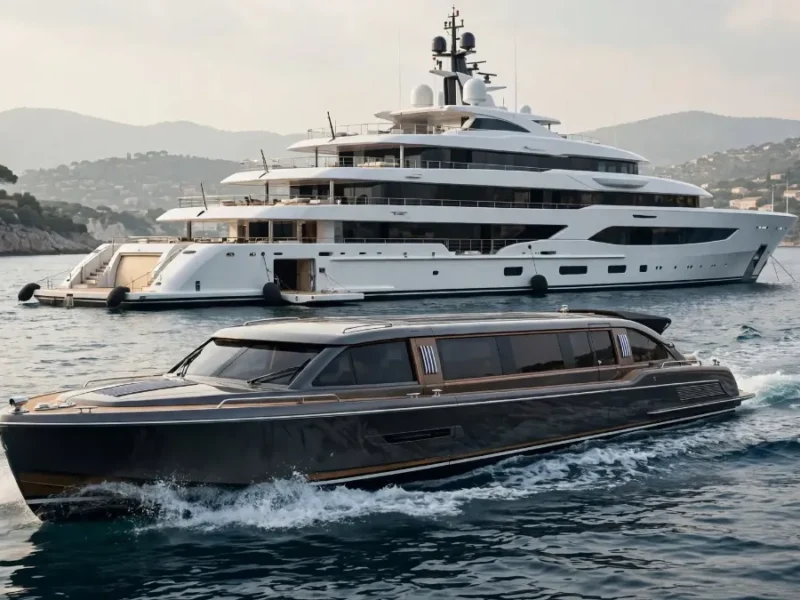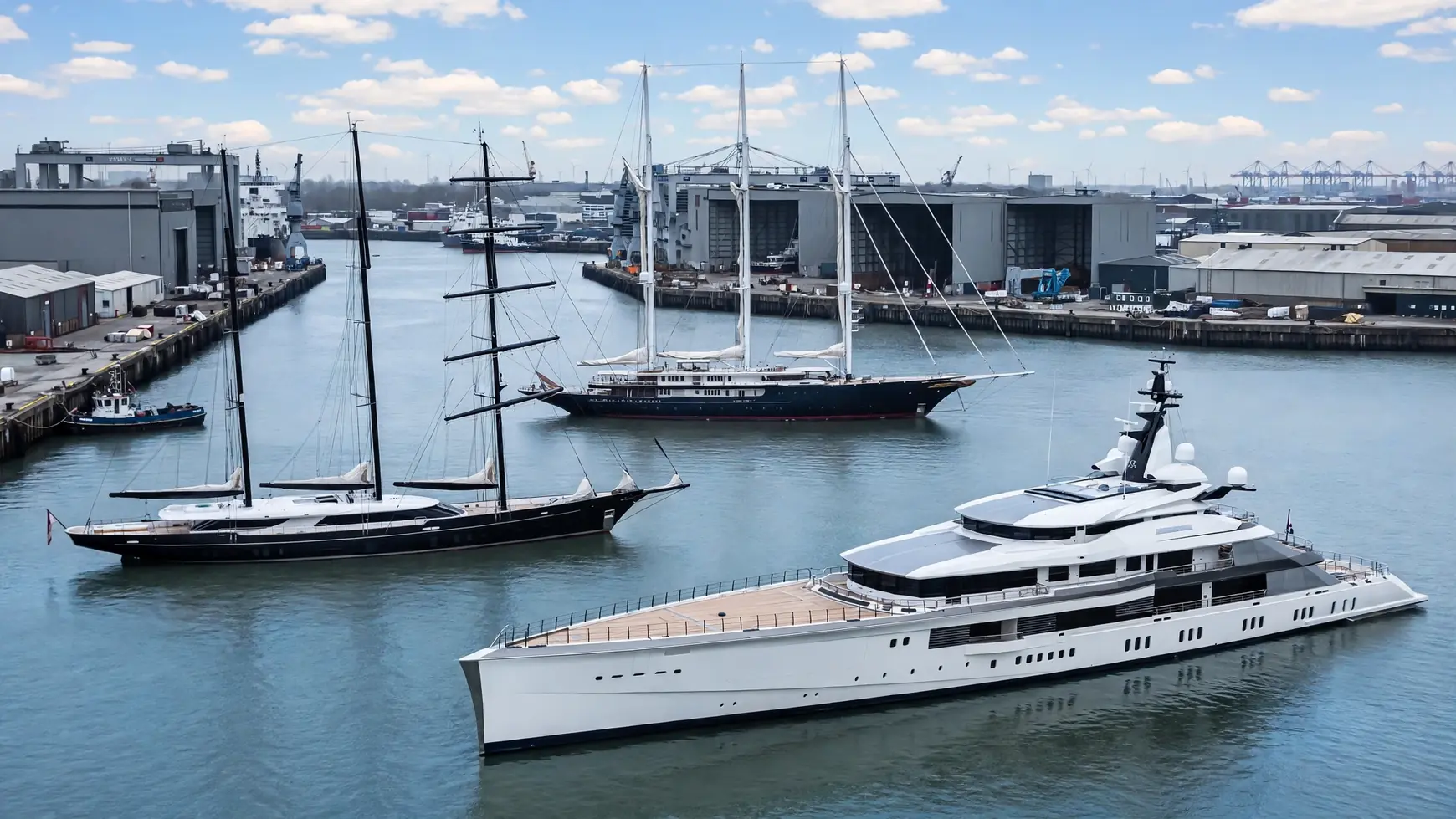
In the small town of Alblasserdam, on a river an hour from Rotterdam, shipbuilders have constructed vessels for four centuries. The tradition survives in a cluster of sheds where some of the world’s most recognizable superyachts took shape.
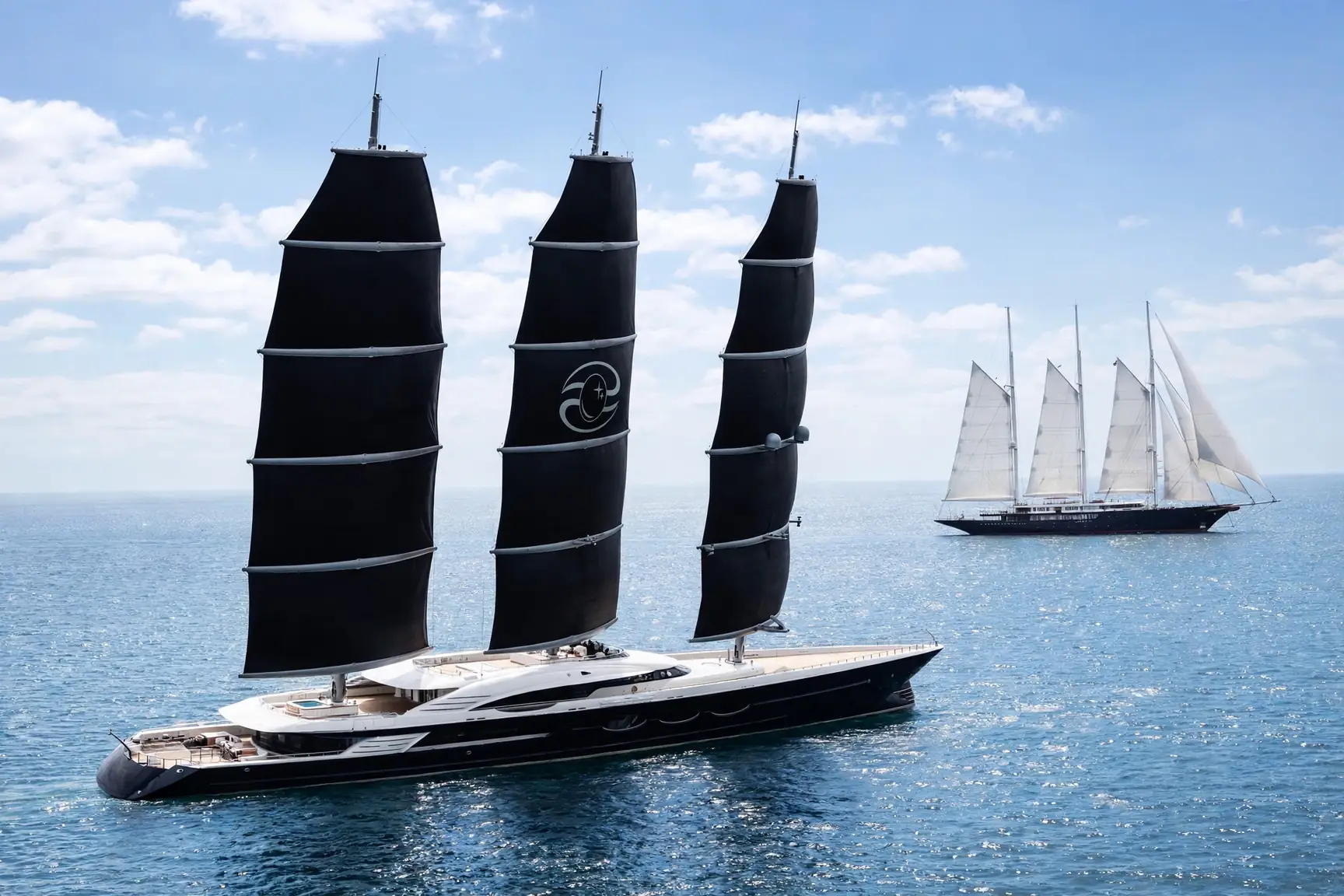
Oceanco is the youngest of the great Dutch builders, founded only in 1987. Yet its portfolio reads like a shortlist of the megayacht era’s defining creations: the 106-metre Black Pearl with its DynaRig sailing system, the 109-metre Bravo Eugenia, and the 127-metre Koru, the largest sailing yacht in the world.
In under four decades, Oceanco forced its way into a conversation that Feadship had dominated for a century. It did so with a single weapon: the willingness to build anything, at any scale, for any owner whose imagination met the yard’s standards.
Here is the story of the youngest giant, and how it changed what custom means.
The 1987 Beginning
Oceanco was founded in 1987 by a group of private investors. They recognized that the Dutch shipbuilding tradition was undervalued by the conglomerates retreating from the sector during the era’s recession. This tradition included deep engineering expertise, skilled craftsmen, and a discreet commercial culture.
The founders acquired a yard in Alblasserdam and began building yachts. Initially, the company produced series motor yachts and developed the project management discipline that would become its signature.
The first decade established competence. The second established ambition.
The Custom Turn
The turn that defined Oceanco arrived in the 2000s. The yard pivoted decisively from series production to full custom building, accepting commissions of increasing size and complexity.
The strategy aligned with the megayacht market’s maturation. Owners who had outgrown production builders’ formats were seeking yards that could translate a designer’s unconstrained vision into steel and aluminum. Oceanco positioned itself as the translator.
The results accumulated over the following years. The 88-metre Nirvana of 2012 became one of the era’s most discussed launches. The 106-metre Black Pearl followed in 2018, with its three DynaRig masts and sailing performance that rewrote the sailing yacht category.
Bravo Eugenia also launched in 2018. At 109 metres, it showcased sculptural minimalism. Then came Koru in 2023, the 127-metre, three-masted schooner that became the largest sailing yacht in the world. Its commissioning was one of the most scrutinized in the industry’s history.
The Dutch System
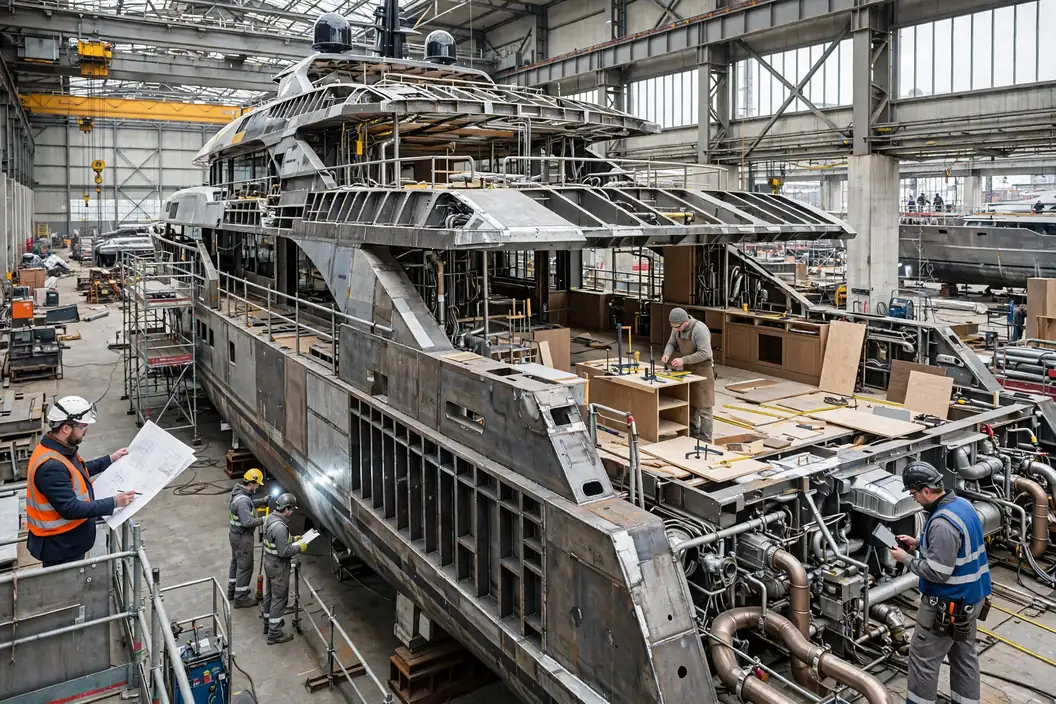
Oceanco’s achievement rests on the Dutch building system it joined. This includes the network of specialized subcontractors, the riggers, painters, and joiners of the Rotterdam region, and the classification society culture that polices quality. It also includes the commercial discretion that keeps a client’s project confidential until the launch photographs prove otherwise.
The yard expanded into a second facility and developed its own in-house engineering expertise. This advantage was once considered unapproachable territory for Feadship. It allowed Oceanco to handle projects of the greatest complexity.
In the modern ranking of custom builders, Oceanco now sits in a small group alongside Feadship, Lürssen, and Benetti. Together, these builders handle the world’s largest commissions. Oceanco’s delivery record has made it a preferred choice for owners who want the Dutch standard without the Feadship waiting list.
The Aesthetic Signature
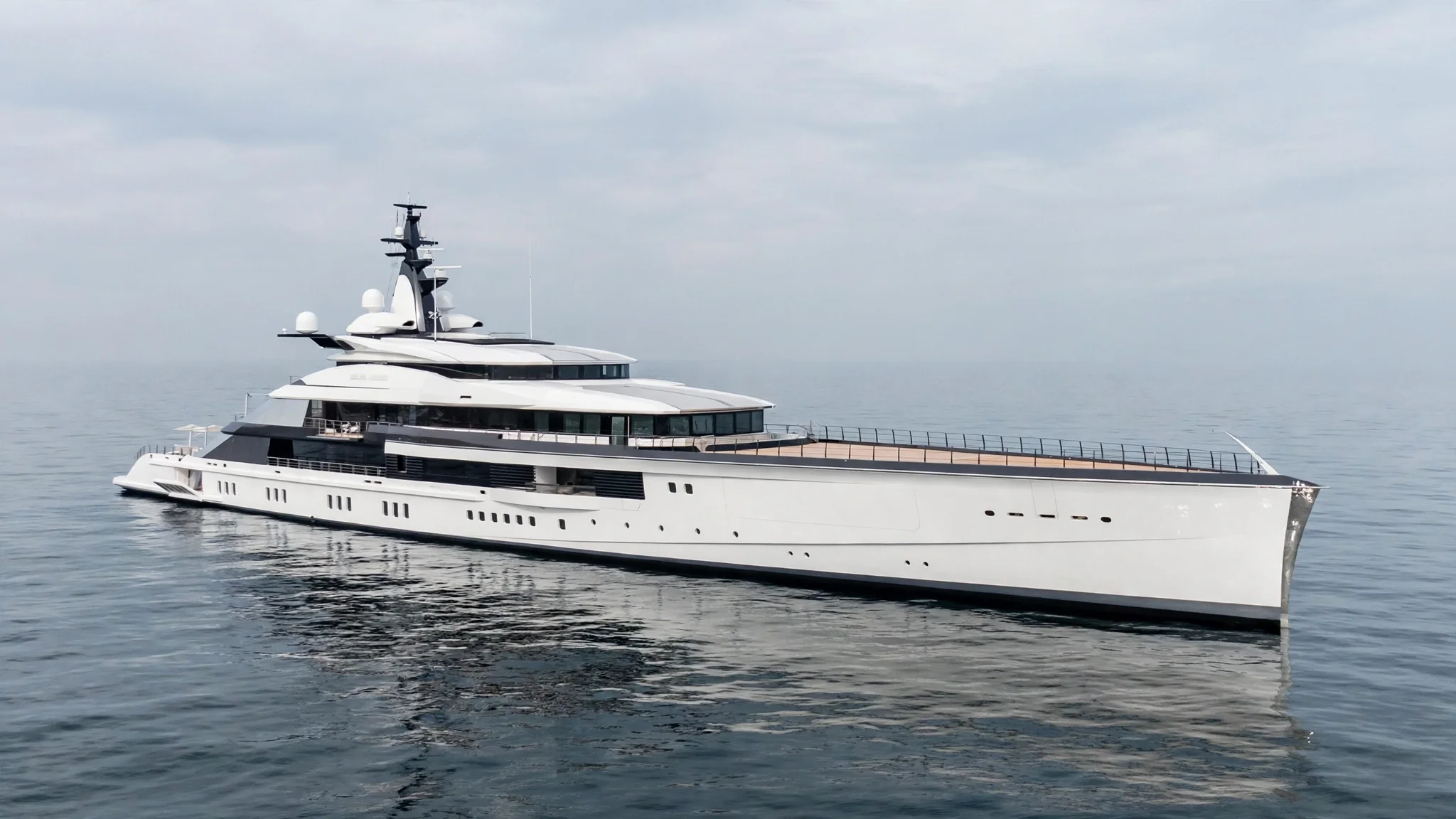
If Feadship represents engineering and Lürssen represents scale, Oceanco’s signature is design freedom. The yard has become the builder of choice for the world’s most adventurous naval architects and designers. These are the names who sketch profiles that other yards’ project managers decline.
Oceanco has consistently delivered projects once considered impossible. The Black Pearl’s DynaRig, Koru’s masts, and Bravo Eugenia’s glass and steel minimalism have established the yard as the industry’s proving ground.
A commission at Oceanco carries an implicit promise: if it can be drawn, it can be built. The yard’s four decades exist to keep that promise.
FAQs
When was Oceanco founded?
1987, in Alblasserdam near Rotterdam, by a group of private investors who acquired an existing yard and developed it from series production into full custom superyacht building.
What is Oceanco’s largest yacht?
Koru, the 127 metre three masted schooner delivered in 2023, the largest sailing yacht in the world, followed by Bravo Eugenia at 109 metres and Black Pearl at 106 metres.
What is the Black Pearl?
The 106 metre DynaRig sailing yacht delivered in 2018, whose three freestanding masts and automated sail system allow a vessel of that scale to sail at genuine speed, redefining what a sailing superyacht can be.
Where does Oceanco build?
At its facilities in Alblasserdam on the river Noord, in the Dutch shipbuilding heartland near Rotterdam, with outfitting completed in sheds of the region’s characteristic scale and discretion.
How does Oceanco compare to Feadship?
Both deliver full custom Dutch quality: Oceanco is younger, design led, and known for accepting the industry’s most adventurous commissions, while Feadship’s century of engineering depth retains the traditional summit. In the modern market, owners choose between them on style and chemistry as much as capability.
How much does an Oceanco cost?
Commissions typically begin around $100 million and extend past $300 million depending on size and complexity, with the sailing projects commanding premiums for their rig engineering.
What is the build time?
Four to six years from contract to delivery for the major projects, with the most complex sailing yachts extending longer, and the yard’s order book typically committed years ahead.
Why did Koru attract such attention?
Its scale, the largest sailing yacht ever built, its three masted profile, and the identity of its commissioning party, one of the world’s most visible fortunes, combined to make it the industry’s most discussed project of its decade.