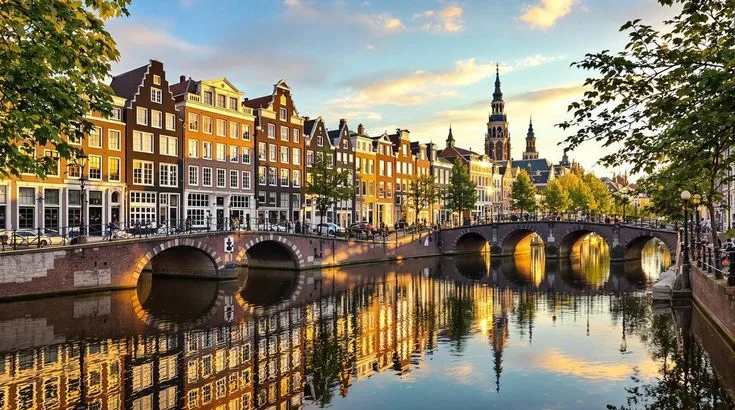
Amsterdam’s Canal Ring shapes almost every trip to the city. They determine how streets are laid out, where you’ll walk, and which neighborhoods feel busy or quiet. The central Canal Ring, known in Dutch as the Grachtengordel, was built in the 17th century and was added to the UNESCO World Heritage List in 2010.
Knowing how the ring is organized makes it much easier to find your way around and choose how to see it. You can explore it on foot through neighborhoods like the Jordaan, or take a canal cruise in Amsterdam to see the bridges, houseboats, and canal houses from water level.
How the Canal Ring Is Laid Out
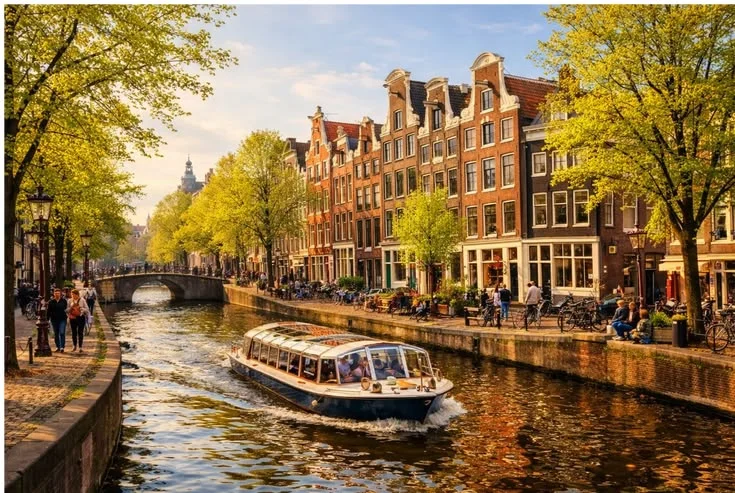
The three main canals form half-circles around the old city center. Moving outward from Centraal Station, they are:
- Herengracht: The innermost of the three, historically home to wealthy merchants
- Keizersgracht: The widest of the main canals
- Prinsengracht: The outermost, with more houseboats and cafés along its banks
Smaller radial canals and streets cut across these rings like spokes. The Singel, an older defensive canal, sits inside the ring closer to the center.
If you get lost, remember that the canals curve around the center. Following one in a single direction will eventually bring you back toward familiar streets.
Neighborhoods Worth Walking
The Nine Streets (De Negen Straatjes). These short streets connect Herengracht, Keizersgracht, and Prinsengracht between Raadhuisstraat and Leidsegracht. They’re known for independent shops, vintage stores, and small cafés.
The Jordaan. West of Prinsengracht, this area has narrower canals, residential streets, and weekly markets such as the Noordermarkt on Saturdays.
The Golden Bend. The stretch of Herengracht between Leidsestraat and Vijzelstraat has some of the widest canal houses in the city, built for Amsterdam’s wealthiest families.
Reguliersgracht. From the corner with Herengracht, you can see a row of bridges lined up along the canal. It’s a popular photo spot, especially in the evening when the bridges are lit.
What to Notice About the Canal Houses
Many canal houses are narrow and tall. Property was historically taxed partly by the width of the facade, which encouraged narrow buildings.
Look up at the gables and you’ll often see a hook or beam near the top. Staircases inside these houses are steep and narrow, so furniture was, and often still is, hoisted up and brought in through the windows. Some houses also lean slightly forward, which helps goods clear the facade on the way up.
Seeing the Canals From the Water
Walking shows you the streets and shops, but the canals were built as working waterways, and some views only make sense from a boat. From water level, you’ll see the bridges from below, the houseboats moored along the edges, and facades that are hard to take in from a narrow sidewalk.
Most canal boat trips last about an hour and follow a route through the Canal Ring and sometimes out to the wider IJ waterfront behind Centraal Station. Boats range from larger glass-roofed vessels to small open boats that can fit into narrower canals. Amsterdam has also moved toward zero-emission passenger boats in the city center, so many tours now run on electric power.
When comparing options, check where the boat departs, whether it has an open or covered deck, and whether commentary is live or recorded.
Amsterdam’s Canal Ring: Houseboats
Amsterdam has roughly 2,500 legal houseboats, many of them along Prinsengracht and the canals of the Jordaan. They are private homes, so treat them as you would any residential building. The Houseboat Museum on Prinsengracht lets you see the inside of one.
Staying Safe Around the Canals
- Most canal edges have no railings. Watch your step, particularly at night.
- Bike lanes are usually marked in red. Don’t walk in them, and look both ways before crossing, because bikes move fast and quietly.
- Swimming in the city-center canals isn’t recommended because of boat traffic and water quality.
- Don’t sit on the edge of bridges or lean over railings where boats pass underneath.
Amsterdam’s Canal Ring: Best Times to Explore
Early morning is the quietest time to walk the Canal Ring, before shops open and tour groups arrive. Late afternoon and evening bring warmer light and illuminated bridges, especially along Reguliersgracht and Herengracht.
In winter, the canals are colder and windier, but crowds are thinner. In very cold spells, the canals have occasionally frozen enough for skating, though this doesn’t happen every year and is never guaranteed.
Fitting the Canals Into Your Trip
You don’t need a separate day for the canals. Most of central Amsterdam’s museums, shopping streets, and restaurants are within walking distance of the Canal Ring. A practical approach is to walk one neighborhood, such as the Nine Streets or the Jordaan, and see the wider network from a boat, so you get both the street-level details and the overall layout of the city.