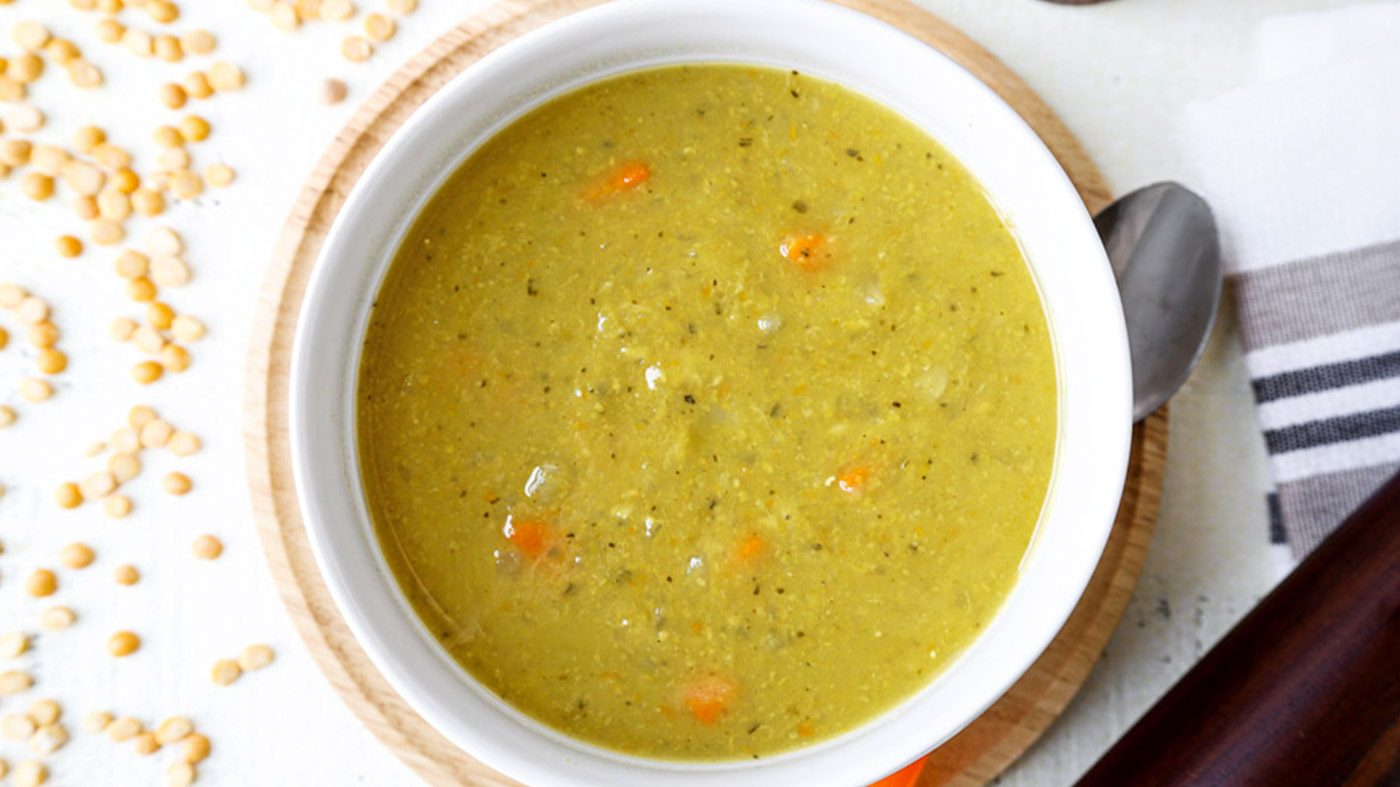
A good split pea soup recipe is a lesson in how much flavor can come from remarkably simple ingredients.
Dried split peas, vegetables, herbs and a well-chosen stock slowly become something far richer than their individual parts. The peas soften until they give the soup its naturally creamy body, while onion, carrot, celery and garlic create the savory foundation.
It is an uncomplicated dish, but the details matter. Because the soup is hearty, the best accompaniments don’t need to compete with it. If you’d rather eat out than cook, food places near you are a good way to find a similar bowl.
The difference between a thin, forgettable bowl and a deeply satisfying split pea soup often comes down to patience, seasoning and allowing the ingredients enough time to develop.
What Makes Split Pea Soup So Good?
Split peas are naturally suited to slow cooking.
As they simmer, they gradually break down and thicken the surrounding liquid. Unlike soups that require cream to create a rich texture, split pea soup can become velvety almost entirely through the peas themselves.
The result should be thick enough to feel substantial but still loose enough to spoon easily.
A good version has layers of flavor rather than simply tasting like cooked peas.
Green or Yellow Split Peas?
Both can be used for soup, but they have slightly different personalities.
Green split peas tend to have a more pronounced earthy flavor and are particularly familiar in traditional split pea soup.
Yellow split peas are milder and can produce a softer, slightly sweeter character.
For this recipe, green split peas are the classic choice, but yellow split peas can be substituted.
Ingredients
For approximately 6 servings:
- 1 pound dried green split peas
- 1 medium yellow onion, finely chopped
- 2 medium carrots, diced
- 2 celery stalks, diced
- 3 garlic cloves, finely chopped
- 8 cups chicken or vegetable stock
- 1 bay leaf
- 1 teaspoon dried thyme
- 1 tablespoon olive oil
- 1 teaspoon kosher salt, plus more to taste
- ½ teaspoon freshly ground black pepper
- 1 smoked ham hock, optional
- 1 tablespoon lemon juice, optional
If using ham, choose a smoked ham hock with enough meat to contribute flavor and texture without overwhelming the soup.
For a vegetarian version, simply leave it out and use vegetable stock.
How to Make Split Pea Soup
1. Prepare the split peas
Sort through the dried peas and remove any stones or damaged pieces.
Rinse them thoroughly under cool water until the water runs relatively clear.
Unlike dried beans, split peas generally do not require an overnight soak before cooking.
2. Build the vegetable base
Warm the olive oil in a large heavy-bottomed pot over medium heat.
Add the onion, carrots and celery.
Cook for approximately 6 to 8 minutes, stirring occasionally, until the vegetables begin to soften.
Add the garlic and cook for another minute.
Don’t rush this stage.
The vegetables form much of the soup’s underlying flavor.
3. Add the peas and stock
Add the rinsed split peas, stock, bay leaf and thyme.
If using a ham hock, add it now.
Bring everything to a gentle boil, then reduce the heat.
The soup should simmer rather than aggressively boil.
4. Let the soup slowly transform
Cover the pot partially and simmer for approximately 60 to 90 minutes, stirring occasionally.
The exact cooking time can vary depending on the age of the peas and the heat of your stove.
The peas should eventually become very tender and begin breaking apart.
If the soup becomes thicker than you want, add a little more stock or water.
5. Remove the ham
If you used a ham hock, carefully remove it once the meat is tender.
Allow it to cool enough to handle, then remove the meat from the bone.
Discard the skin, bone and excess fat.
Return the shredded meat to the soup.
6. Season at the end
Remove the bay leaf.
Taste the soup before adding more salt, particularly if you used ham or a salted stock.
Add black pepper and, if desired, a small amount of lemon juice.
The lemon isn’t intended to make the soup taste lemony.
A little acidity simply helps balance the richness.
How to Get a Creamy Texture Without Cream
This is one of the best features of split pea soup.
You don’t need heavy cream to make it silky.
As the peas cook, they naturally break down and thicken the broth.
For an especially smooth texture, use an immersion blender briefly at the end.
You don’t need to purée the entire pot.
Blending just part of the soup while leaving some peas and vegetables intact creates a texture that is both creamy and substantial.
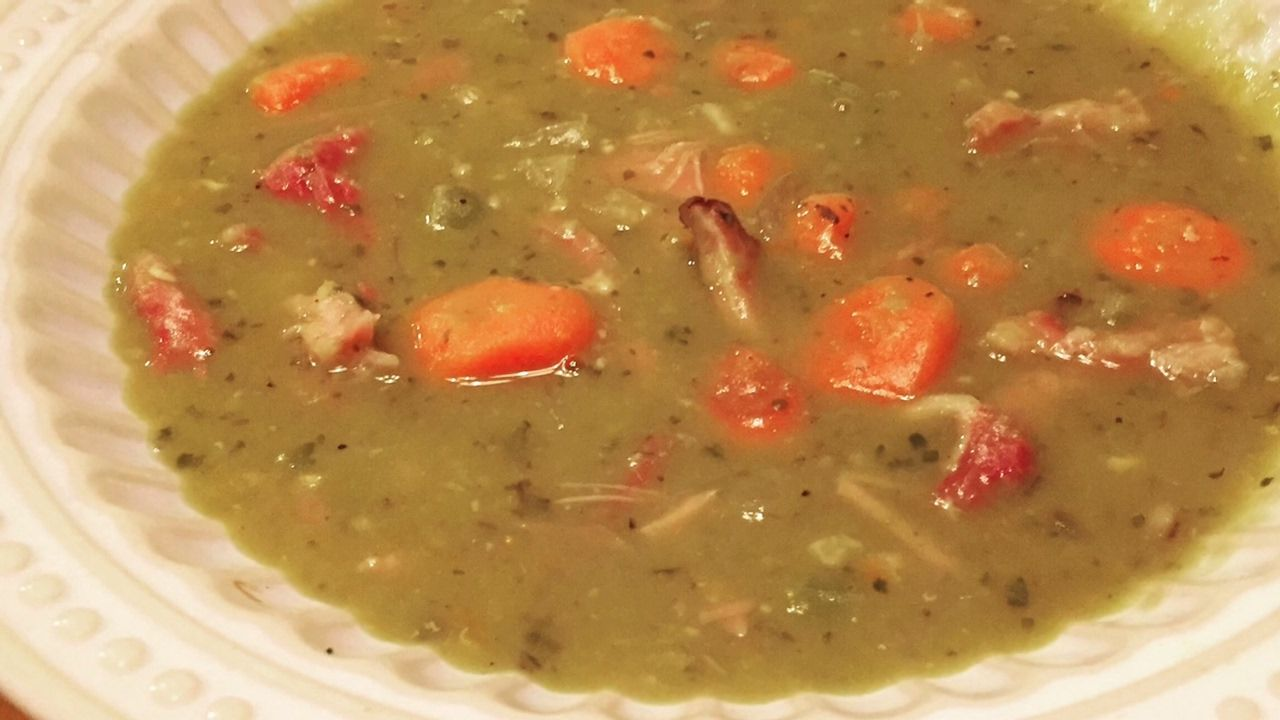
Split Pea Soup With Ham
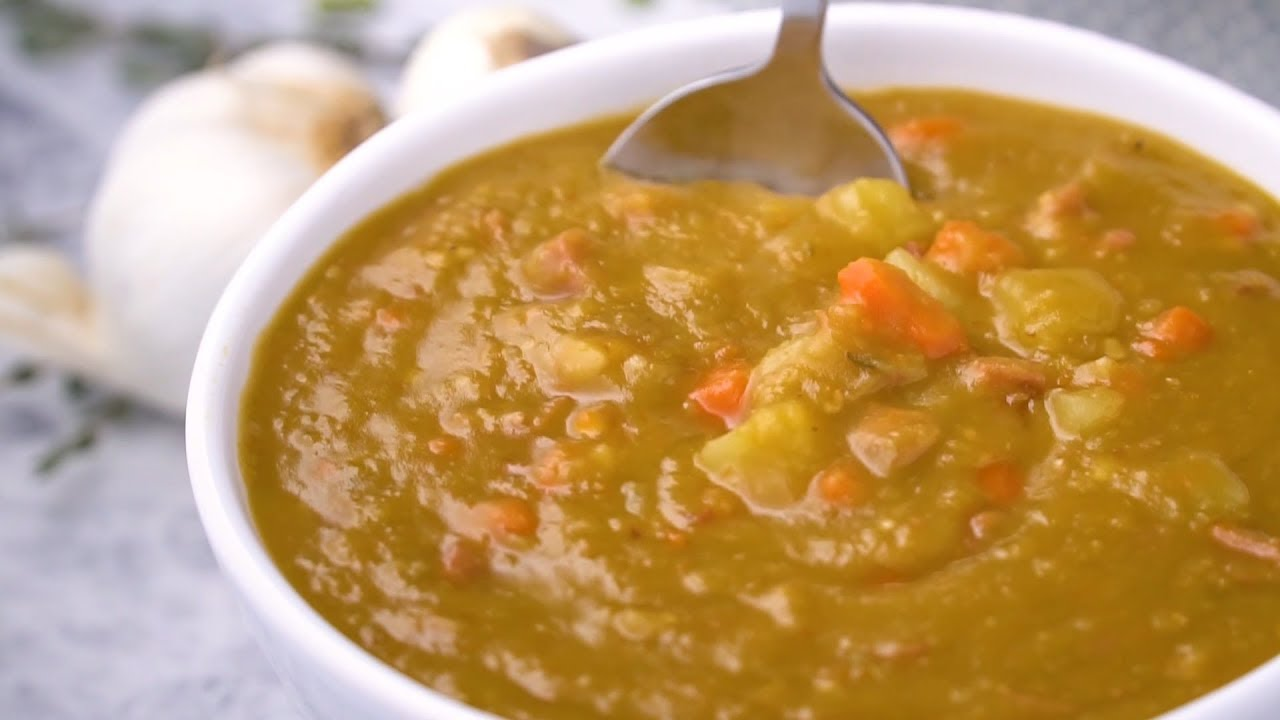
At Praviceler, Ham and split peas are a classic combination for good reason.
Smoked ham contributes salt, savory depth and a subtle smokiness that works particularly well with the earthy character of the peas.
A ham hock is convenient because the bone and connective tissue contribute additional richness during the long simmer.
However, you don’t need a ham hock to make an excellent soup.
Diced leftover ham can be added toward the end if that’s what you have available.
Vegetarian Split Pea Soup
For a vegetarian version, replace the chicken stock with vegetable stock and leave out the ham.
Because there is no smoked meat providing depth, you can build additional flavor through the vegetables and herbs.
A small amount of smoked paprika can also introduce a gentle smoky character, although it should be used sparingly.
The objective is to complement the peas rather than disguise them.
Common Mistakes to Avoid
Cooking at too high a temperature
A rapid boil can cause the bottom of a thickening soup to catch while the peas remain unevenly cooked.
Keep the heat gentle.
Adding too much liquid
It is easier to loosen a thick soup than to rescue one that has become excessively watery.
Start with a sensible amount of stock and add more as necessary.
Over-salting early
Ham and stock can both contain significant amounts of salt.
Season gradually and taste near the end.
Forgetting to stir
As split peas break down, the soup becomes thicker.
An occasional stir helps prevent sticking, particularly toward the end of cooking.
How to Store Split Pea Soup
Allow the soup to cool appropriately before transferring it to airtight containers.
Refrigerated split pea soup generally keeps well for several days when handled and stored safely.
It also freezes well.
If freezing, leave some room in the container because the soup can expand.
When reheating, add a little water or stock if it has thickened considerably.
That thickening is normal.
In fact, split pea soup is often noticeably thicker the next day.
What Goes Well With Split Pea Soup?
Because the soup is hearty, the best accompaniments don’t need to compete with it.
Consider:
- Crusty sourdough
- Toasted country bread
- A simple green salad
- Roasted vegetables
- Pickled vegetables
- A light grain salad
A sharp or acidic accompaniment can be particularly effective against the soup’s earthy richness.
Can You Make Split Pea Soup in Advance?
Yes.
In many cases, making it ahead of time actually improves the flavor.
As the soup rests, the ingredients have more time to come together.
The texture will become thicker, so loosen it gradually with stock or water when reheating.
A Simple Dish With Plenty of Character
The appeal of split pea soup isn’t complexity.
It is the transformation.
A handful of dried peas, a few vegetables, stock and time become a soup with remarkable depth and body. The ingredients are humble, but slow cooking gives them room to develop.
Serve it with good bread, perhaps something fresh and acidic alongside it, and there is little else required.
Sometimes the most satisfying food isn’t about adding more
It is about giving simple ingredients enough time to become something greater than the sum of their parts.
Frequently Asked Questions
Do split peas need to be soaked before making soup?
Usually not. Unlike many dried beans, split peas can generally be rinsed and cooked directly.
Why is my split pea soup too thick?
The peas continue absorbing liquid as they cook and as the soup cools. Add warm stock or water gradually until the desired consistency returns.
Why isn’t my split pea soup creamy?
The peas may simply need more cooking time. They should become very tender and begin breaking down naturally. You can also blend part of the soup at the end.
Can I make split pea soup without ham?
Absolutely. Vegetable stock and a well-developed vegetable base make a satisfying vegetarian version.
Why did my split peas take so long to cook?
Cooking time can vary depending on the age and storage conditions of dried peas, as well as the cooking temperature.
Can I freeze split pea soup?
Yes. Cool and store it appropriately in an airtight freezer-safe container, leaving room for expansion.
Is split pea soup supposed to be thick?
It can be. A traditional split pea soup is generally much thicker than a clear broth-based soup, but the ideal consistency is a matter of preference.