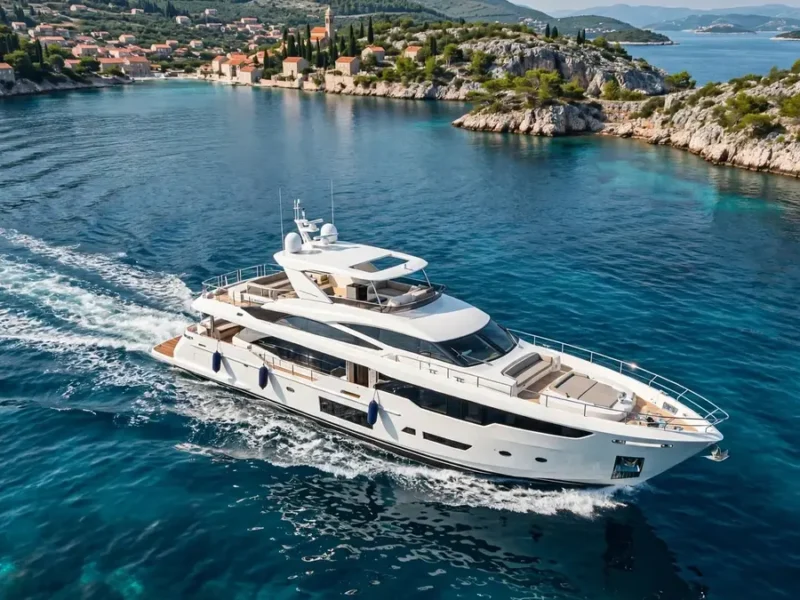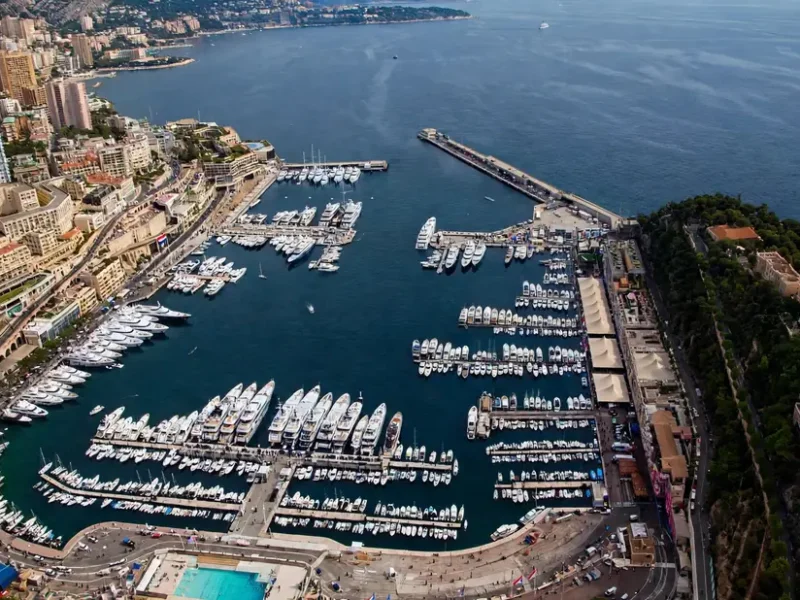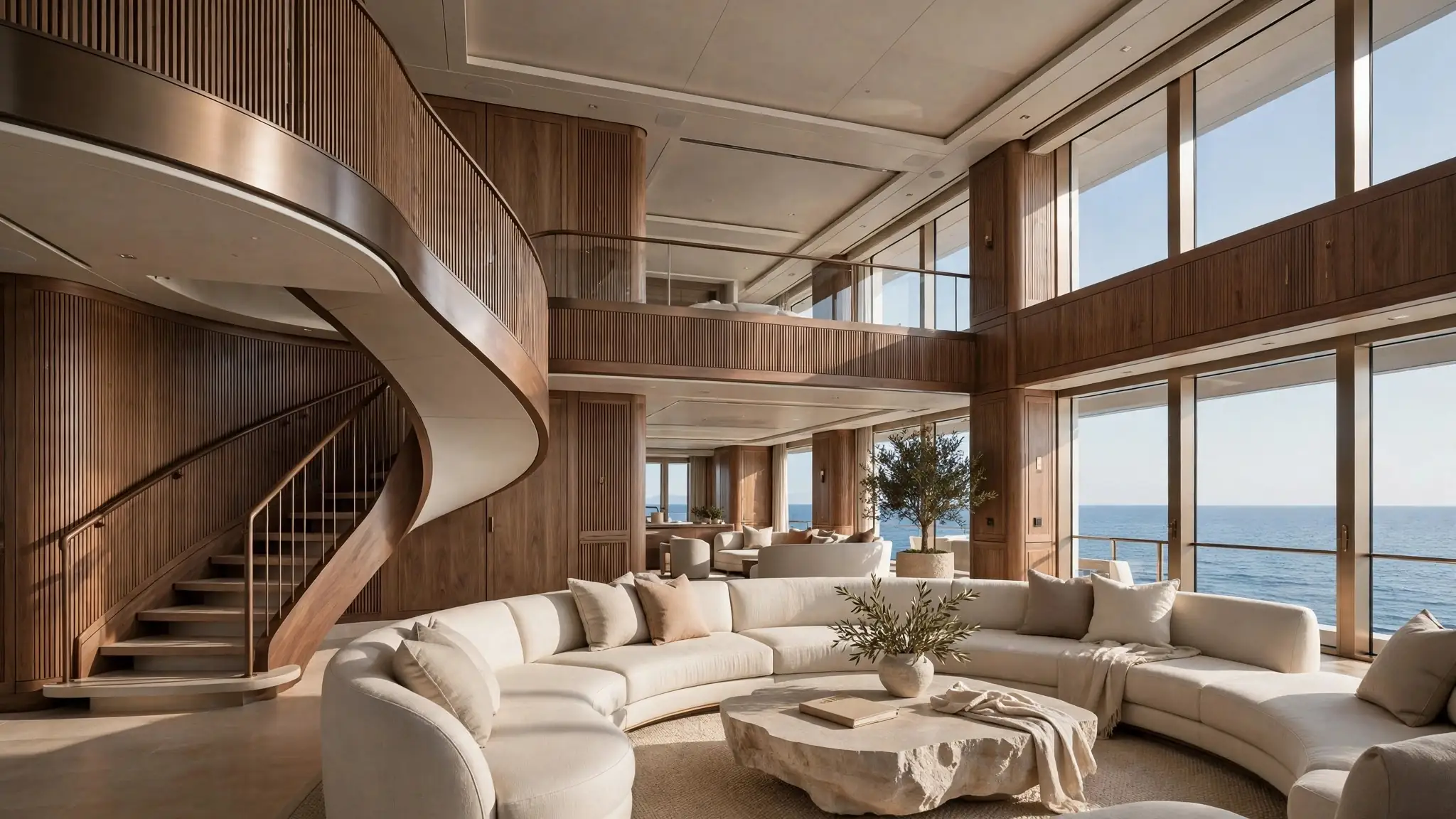
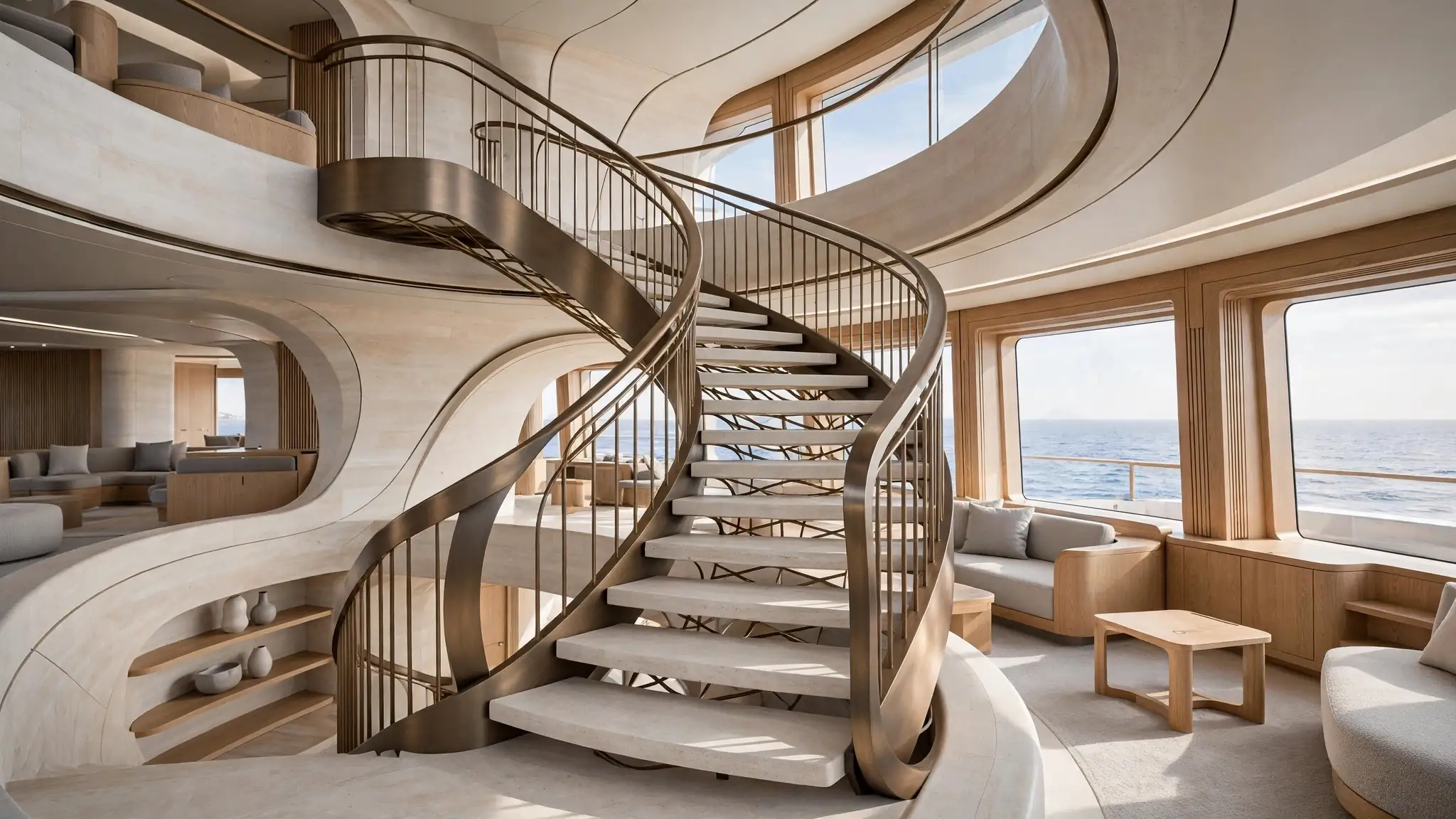
In a studio above a London square, a team of architects is deciding how the inside of a hundred-metre yacht will feel. They are choosing the exact grey of a limestone wall. It must look like fog at dawn in the Aegean. They are setting the angle of a staircase that descends through three decks without a visible support. They are also designing a dining table for fourteen. Hidden mechanisms in its base will transform it into a casino.
The client will see these decisions first in renders. Two years later, the client will see them again when the yacht is delivered. By then, those decisions will have become walls.
This is superyacht interior design. It is a discipline with no parallel on land. The commissions rival opera houses, and the deadlines are written in steel.
Here is how the great studios work, who they are, and why the interiors of the world’s largest yachts have become the most ambitious private architecture on earth.
A Discipline Without Parallel

The superyacht interior begins with constraints that would defeat a land-based architect. The structure curves, and the windows sit where the naval architect placed them. Weight is measured in grams and audited obsessively. Every material must survive salt air and vibration. Fire regulations govern everything that burns, which is to say, everything beautiful.
The designer’s canvas is being built simultaneously in a shipyard three countries away. The design must be frozen before the hull is complete. This means decisions are made at the scale of floor plans while the building exists only as numbers.
The great studios have evolved into hybrid organizations. They bring together interior architects, naval liaisons, lighting engineers, and procurement specialists. These teams source materials across five continents. They deliver them to a shed in Germany or Italy on a schedule measured in days.
The Establishment
Several names define the establishment.
Andrew Winch Designs is the London studio founded by the designer of the first A. It has shaped some of the most recognizable exteriors and interiors afloat. Its language of sculptural modernism helped make the megayacht era visible.
Terence Disdale, another London figure, brings a quieter luxury. His interiors have a sense of residential calm. Their value lies in their invisibility, creating the feeling that the yacht grew rather than was decorated.
Remi Tessier, working from Paris, represents the furniture maker’s approach. His interiors begin as cabinetry, with rare wood and shagreen surfaces assembled like a jewel box. His waiting list is the industry’s shorthand for the summit of craftsmanship.
Studio Munge and the hospitality crossovers now entering the field signal the market’s maturation. These designers create the world’s great hotels and are now turning their hands to the sea. The yacht interior is now judged against the land’s finest rooms. The land is losing.
The Process and the Money
A hundred-metre interior can cost from $50 million to more than $150 million, depending on the specification. That is against a hull and engineering budget that the interior can equal or exceed.
The process spans three years. It begins with concept renders and the owner’s design narrative. Next comes design development, which is frozen in thousands of drawings. Execution then takes place at the yard and through specialist subcontractors. A Florentine bronze workshop may create the staircase. A Dutch atelier may produce the marquetry. A German studio may design the cinema’s acoustic geometry.
The owner’s design narrative is often titled after a poem or a landscape. It governs every decision. The great studios translate it into materials with a fidelity that clients describe as uncanny.
Changes after the design freeze cost fortunes. The discipline of making decisions early is the industry’s most exercised muscle.
The New Generation
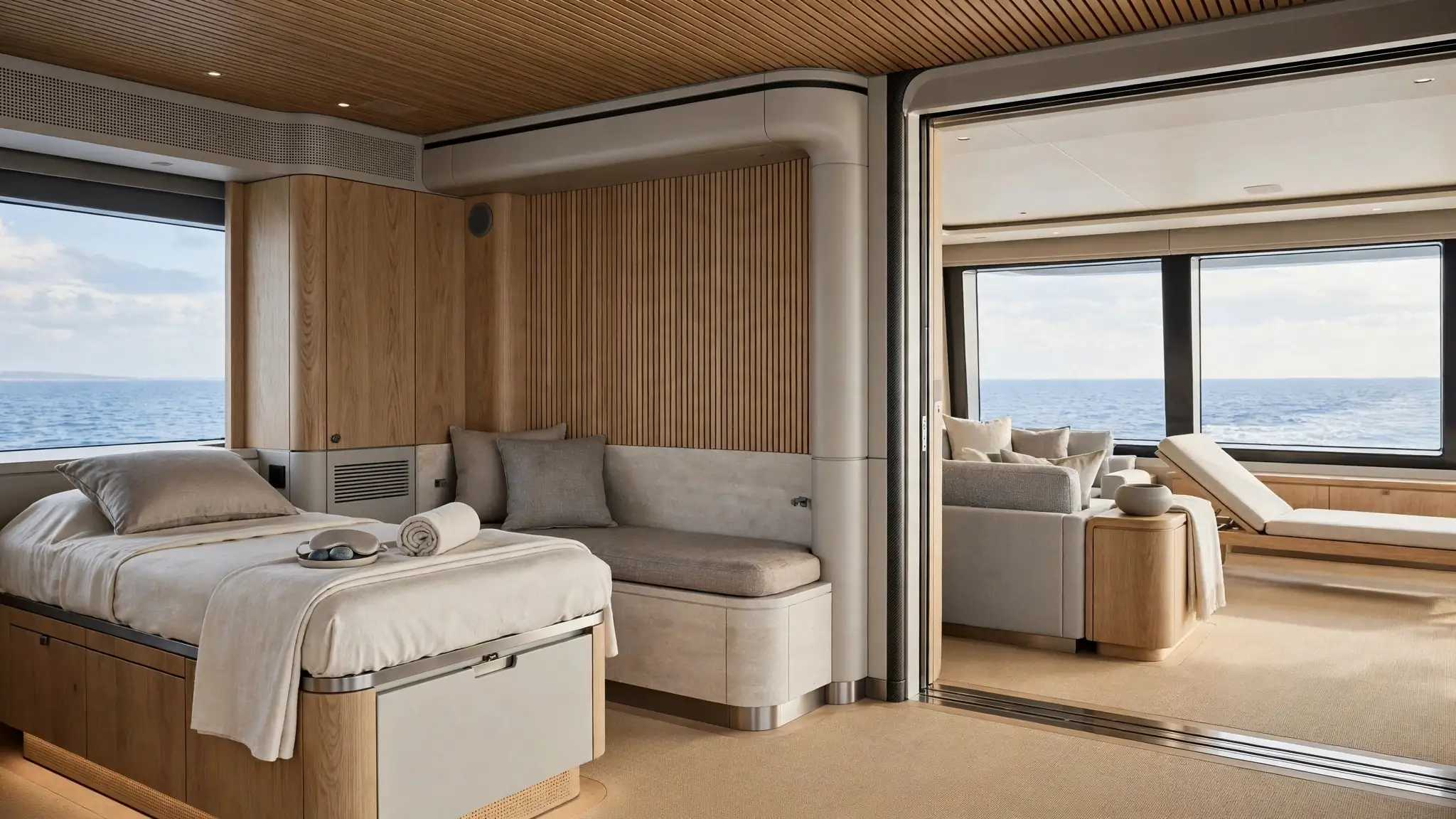
The newest generation of owners is rewriting the brief: sustainability as design language, reclaimed and certified materials, interiors that tell a story of provenance; wellness as infrastructure, spas and gyms designed as seriously as the guest suites; and flexibility, rooms that transform through hidden mechanics the way the great studio apartments never needed to.
The pandemic’s lesson, that a yacht is not a holiday but a sovereign residence, has pushed the interiors toward the residential and the personal, galleries for art collections that the designer must engineer against motion, offices that rival the home compound’s, and the quiet disappearance of the nightclub aesthetic of the 2000s in favor of light, air, and the sea always in view.
The exterior, as our 100 Metre Club feature chronicles, announces the yacht; the interior, increasingly, is the point.
FAQs
Who are the top superyacht interior designers?
Andrew Winch Designs, Terence Disdale, and Remi Tessier anchor the establishment, with Studio Munge and hotel world crossovers representing the new generation. Selection depends on the owner’s design narrative and the yard’s execution culture.
How much does a superyacht interior cost?
From $50 million to $150 million or more for a hundred metre yacht, potentially equaling the hull and engineering budget. Materials, specialist subcontractor work, and the logistics of installation at the yard drive the cost.
How long does it take to design a superyacht interior?
Three years from concept to delivery: a year of design development after the concept narrative is set, and two years of execution at the yard and subcontractors. Changes after the design freeze are possible but expensive.
Why is yacht interior design different from house design?
Structure, weight, and environment: the hull curves, every gram is audited, materials must survive salt and vibration, fire regulation governs combustibles, and the design must freeze before the building exists. The designer works with the naval architect from the first drawing.
Can owners use their own interior designers?
Yes, and increasingly do, with hotel and residential designers entering the field under the yard’s technical coordination. The great specialists remain valuable for their knowledge of marine regulation and shipyard process, which land based designers learn expensively.
What materials are used in superyacht interiors?
Rare woods and shagreen, stone and marble thin cut for weight, bronzes and custom glass, all selected for marine durability. The crafts, marquetry, casting, gilding, are sourced from Europe’s great ateliers and installed by flying teams at the yard.
How is art accommodated on superyachts?
Through engineering: vibration isolation, climate control, and lighting designed into the structure, plus insurance and security coordination. The great studios now design galleries as seriously as engine rooms.
What trends are shaping new superyacht interiors?
Sustainability as design language, wellness as infrastructure, flexibility through hidden mechanics, and a residential personal quality that reflects the yacht’s evolution into a sovereign primary residence rather than a floating holiday.