In May 2017, a matte white Himalaya Niloticus crocodile Birkin 30 with hardware of 18 karat white gold and 205 diamonds crossed the block at a Christie’s auction in Hong Kong. Bidding lasted minutes.
When the hammer fell at roughly $382,000, the room did what auction rooms do when a handbag beats the estimate of a Manhattan apartment: it laughed, applauded, and then bid harder on the next lot. Four years later, a sister bag, the diamond encrusted Himalaya Birkin 30, set the all time auction record at approximately $515,000 in the same saleroom.
The handbag has completed an unlikely journey from accessory to asset class. What was once a tool for carrying lipstick now trades at the world’s great auction houses with its own indices, investment funds, and waiting lists measured in years, and the eight bags on this list hold records that read like small real estate transactions. Here they are, what made each one worth a fortune, and why the market keeps paying.
1. The Mouawad 1001 Nights Diamond Purse: $3.8 Million
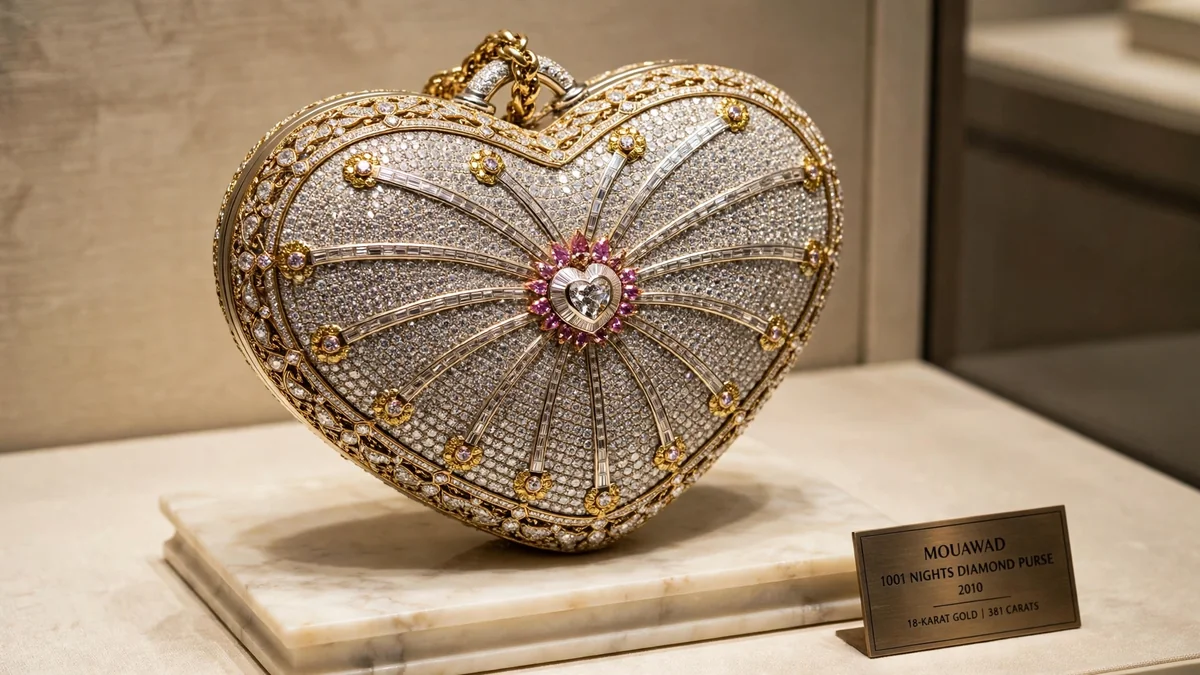
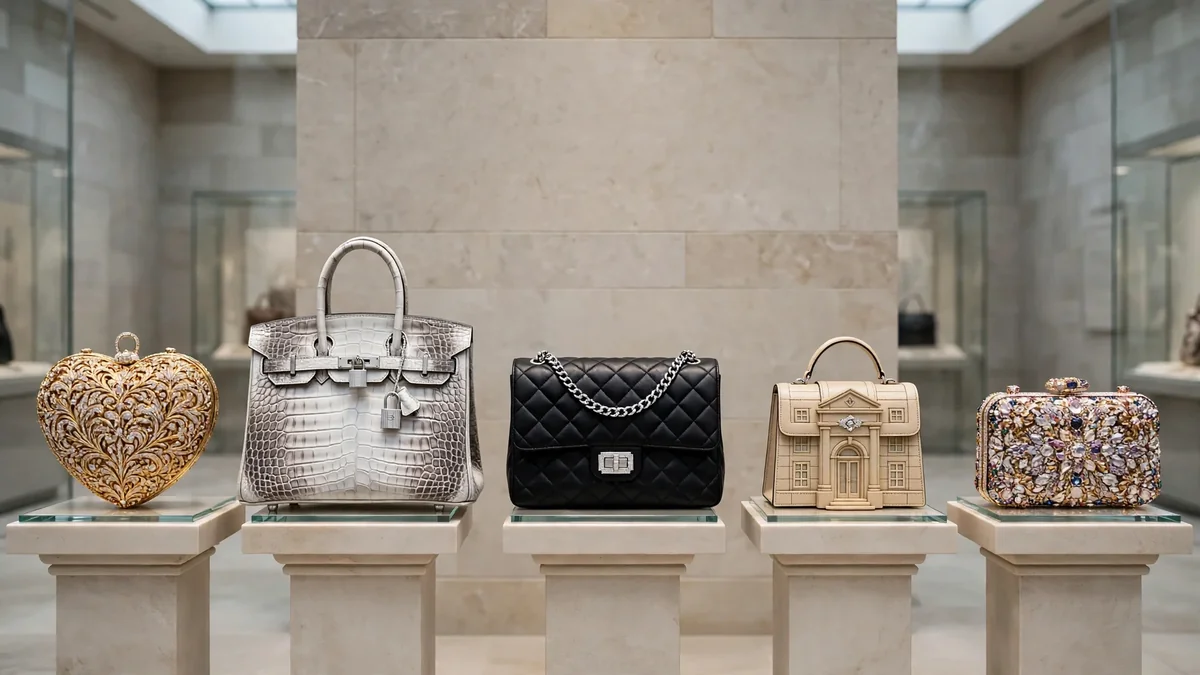
The most expensive handbag in the world was never really a handbag at all, which is part of its legend. Unveiled in 2010 by the Lebanese jeweler Mouawad, the 1001 Nights Diamond Purse is a heart shaped clutch of 18 karat gold set with more than 4,500 diamonds totaling 381 carats, and it carries a Guinness World Record at a value of $3.8 million.
Crafted by ten artisans over more than eight thousand hours, it is jewelry in the shape of a bag, designed less to be carried than to be exhibited. It anchors this list because it defines the top of the market: the point where the handbag ceases to be fashion and becomes a portable vault.
2. The Diamond Himalaya Niloticus Birkin 30: Approximately $515,000
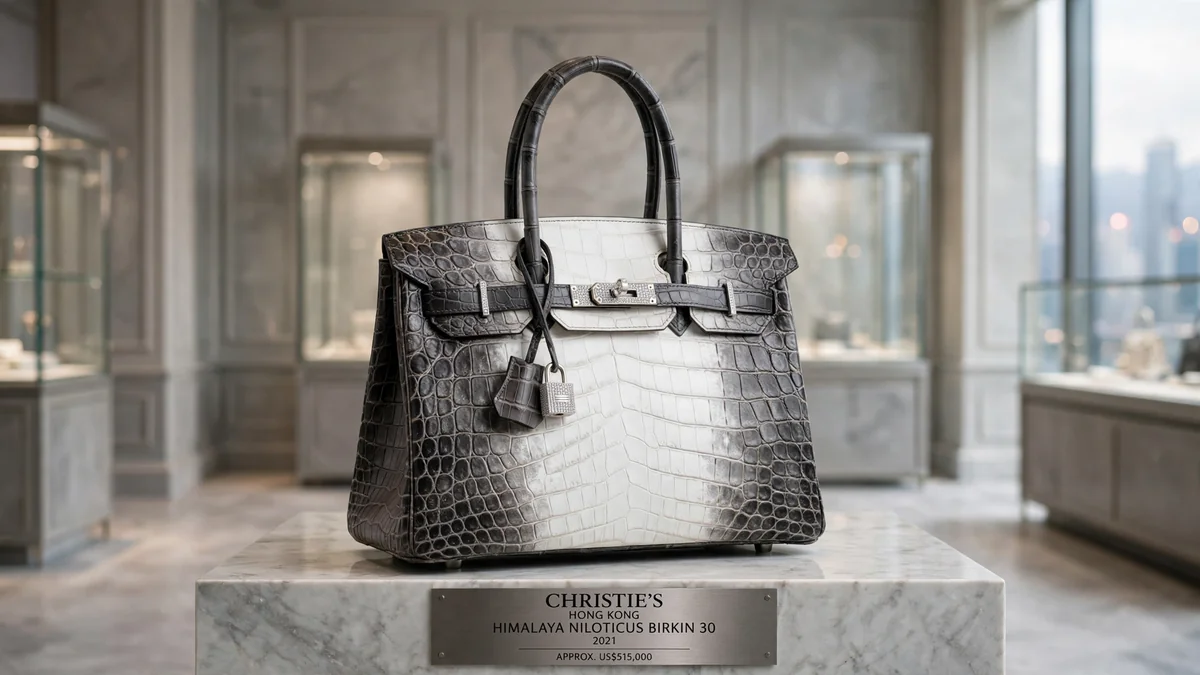
The auction record belongs to this bag, sold at Christie’s Hong Kong in 2021. The Himalaya designation, referring to the dyeing technique that fades the crocodile from smoky gray to porcelain white like mountain snow, already made it the rarest standard production in handbag history, and this example added diamond encrusted white gold hardware to the formula.
The result set a benchmark that still stands as the most paid for a handbag at auction, and it cemented the Himalaya line’s position as the blue chip of the category. For context, the same saleroom’s estimates for important watches, the market we covered in our watches that cost more than a house feature, regularly fall below what this bag achieved.
3. The Matte White Himalaya Birkin 30: Approximately $382,000
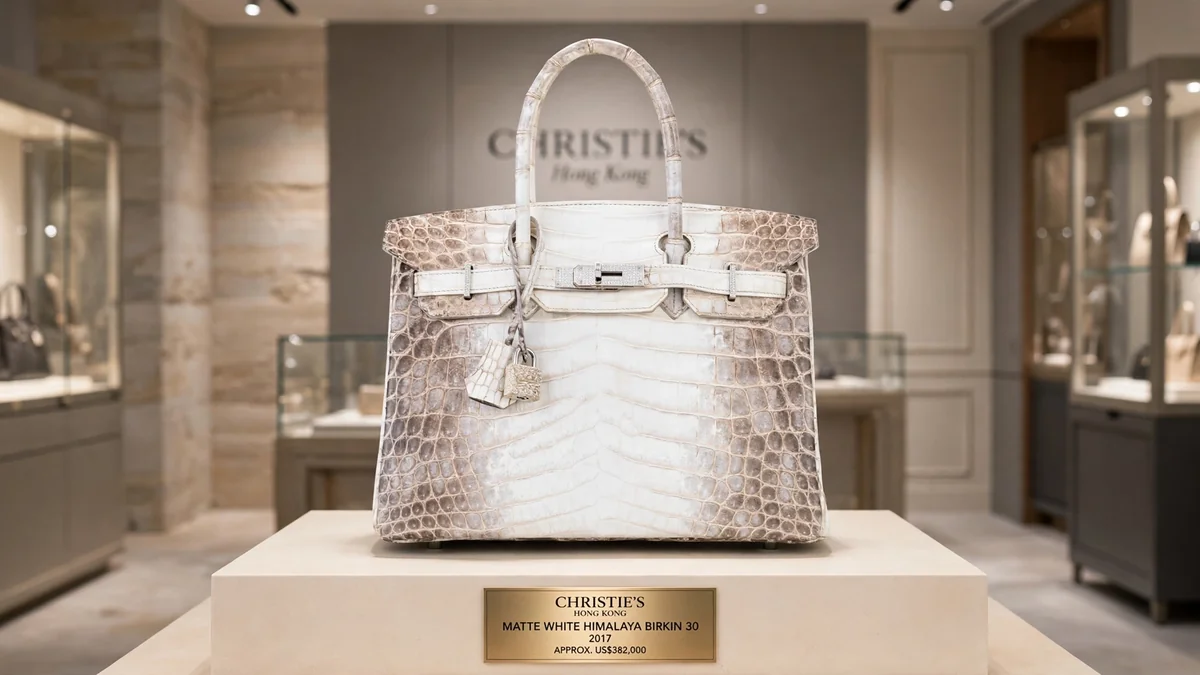
The 2017 Christie’s Hong Kong result that first electrified the market, this matte white Himalaya Birkin 30 with diamond hardware demonstrated that a handbag could clear a third of a million dollars in a room full of bidders who understood exactly what they were chasing.
Its significance is historical: it reset expectations for the entire luxury resale ecosystem, validating the waiting lists, the authentication industry, and the investment theses that now surround the Birkin line. Bags of this grade appear at auction perhaps once or twice a year, and the room knows it.
4. The Chanel Diamond Forever Classic Flap: Approximately $261,000
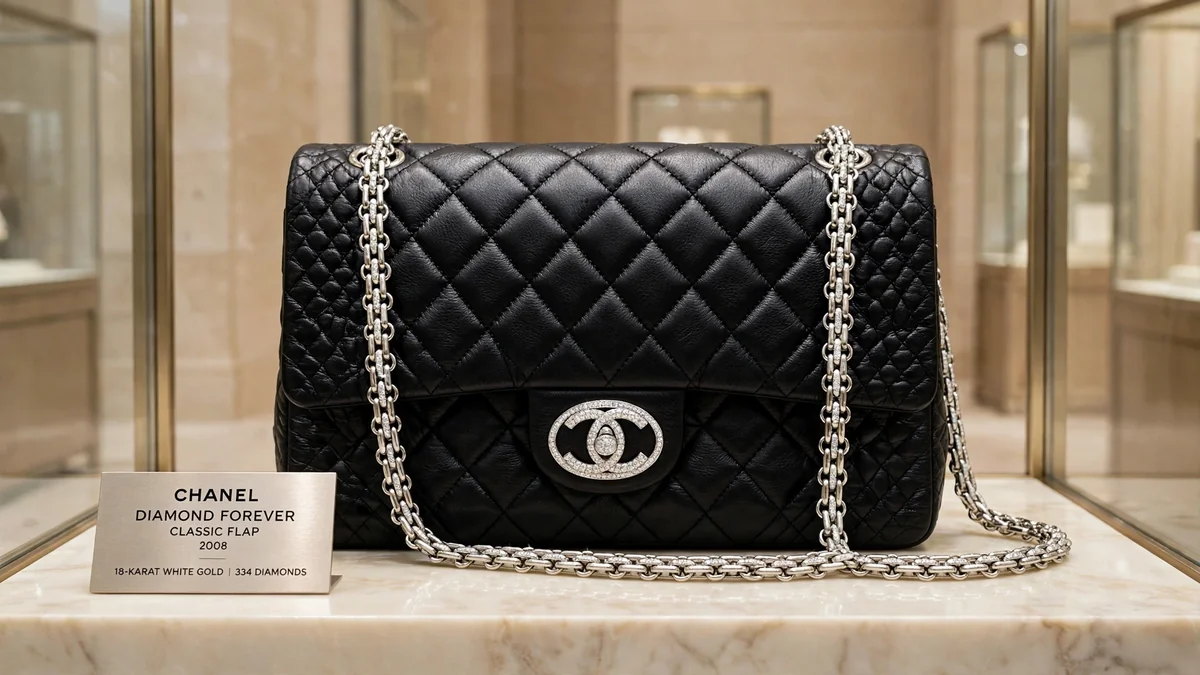
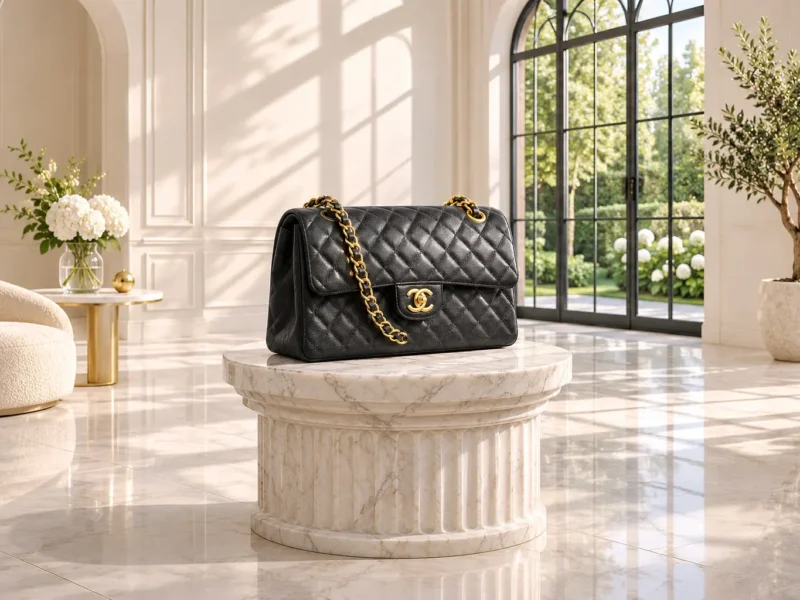
The Birkin’s oldest rival claims its own summit with the Diamond Forever, a limited Chanel Classic Flap produced in 2008 with 18 karat white gold hardware set with 334 diamonds and a strap of white gold chain.
Reportedly limited to thirteen pieces worldwide, it retailed for a six figure sum when new and trades among collectors at prices reported around a quarter million dollars, with completed examples vanishing into private collections and rarely reaching the block.
Its significance is that it anchors the top of the Chanel market, proving the house’s quilted flap, designed in 1955, can command Himalaya money when scarcity and stones align. The wider hierarchy of the houses behind these bags is mapped in our ranking of the top luxury brands.
5. The Hermès Faubourg Birkin: Approximately $230,000 and Above
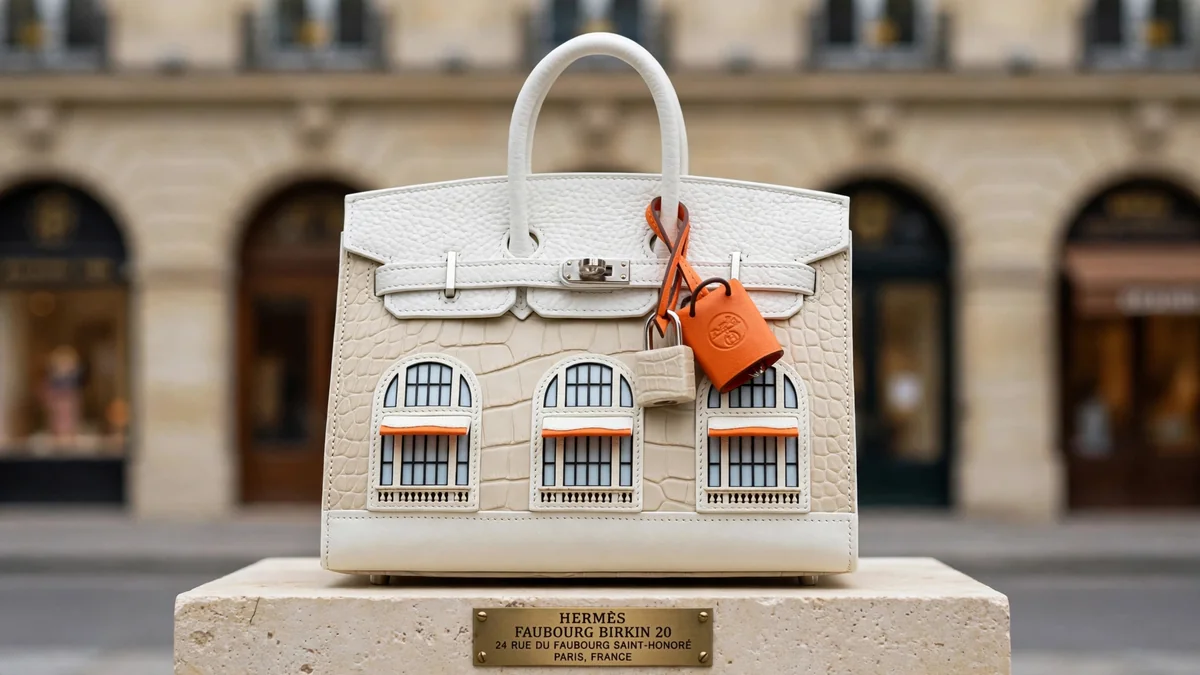
Named for the house’s flagship at 24 Rue du Faubourg Saint-Honoré, the Faubourg Birkin is a miniature marvel: a 20 centimeter rendering of the storefront itself, with windows, awnings, and a little orange shopping bag, produced in minute quantities, reportedly around a thousand pieces per colorway across its editions.
Resale prices for examples in the sunset and day colorways have been reported well above $200,000, placing the smallest Birkin among the most expensive. Its rise is the collector market’s clearest signal that within Hermès, novelty executed at the highest craft can outprice even size, the Faubourg outselling bags three times its dimensions.
6. The Fuchsia Diamond-Studded Hermès Birkin: Approximately $222,000
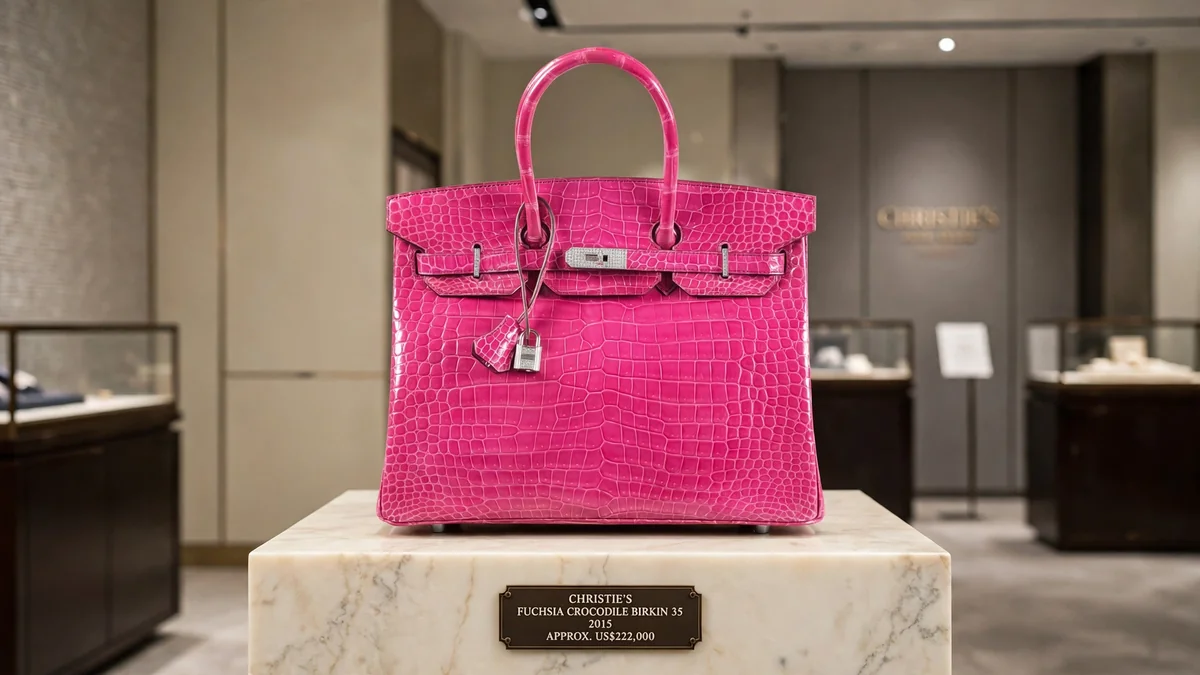
Sold at Christie’s in 2015, this glossy fuchsia porosus crocodile Birkin 35 with diamond encrusted white gold hardware was, at the time, among the most expensive handbags ever auctioned, and it remains the reference point for colored crocodile at the top of the market.
The lesson it taught collectors is that color can carry value almost as well as the Himalaya fade: vivid, saturated, flawless skins in the rarest hues attract their own bidding wars. A decade on, it anchors the middle tier of the record list, the point where auction houses now begin estimates for exceptional colored Birkins.
7. The Lana Marks Cleopatra Clutch: Reported at $100,000 to $400,000 Depending on Edition
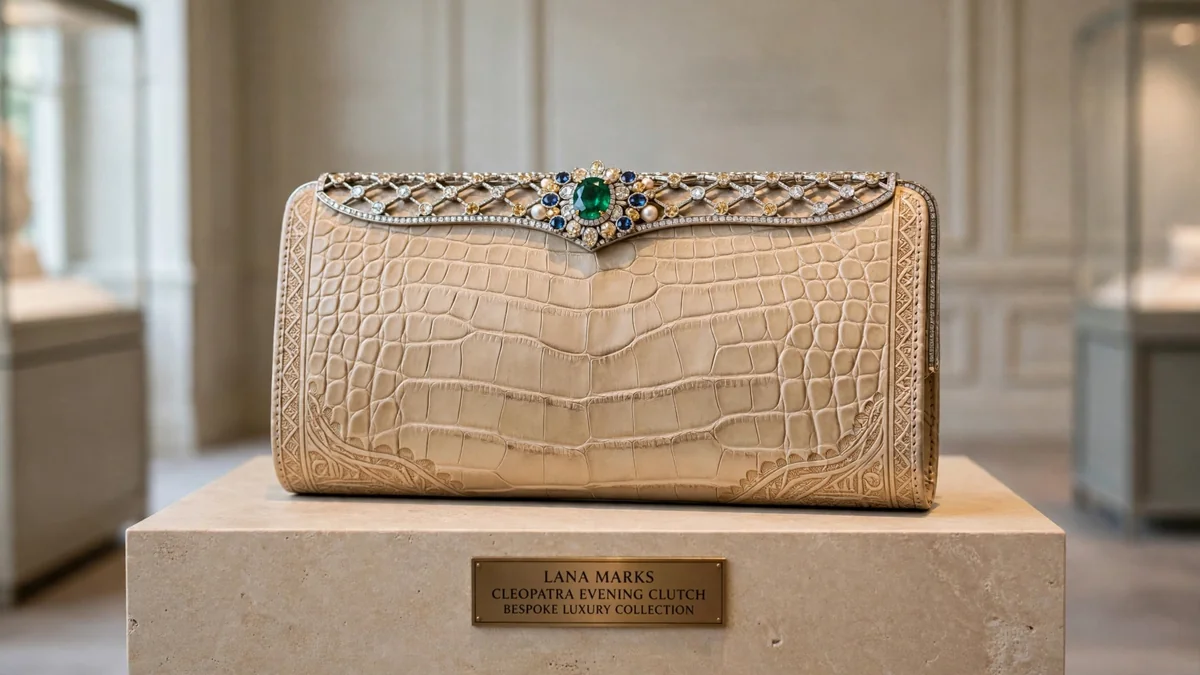
The Cleopatra, Lana Marks’ signature evening clutch carried on red carpets by a roster of actresses, is produced in editions of varying extravagance, with the most jeweled examples, custom ordered in exotic skins with diamond clasps, reported at prices ranging from $100,000 to as much as $400,000 depending on specification.
Because each top example is bespoke and many remain with their original owners, verified auction comparables are scarce, and the range reflects private sales rather than public records. It earns its place as the red carpet answer to the auction house Himalayas: the bag chosen by the client, not the saleroom.
8. Judith Leiber Precious Clutches: Reported at $100,000 and Above
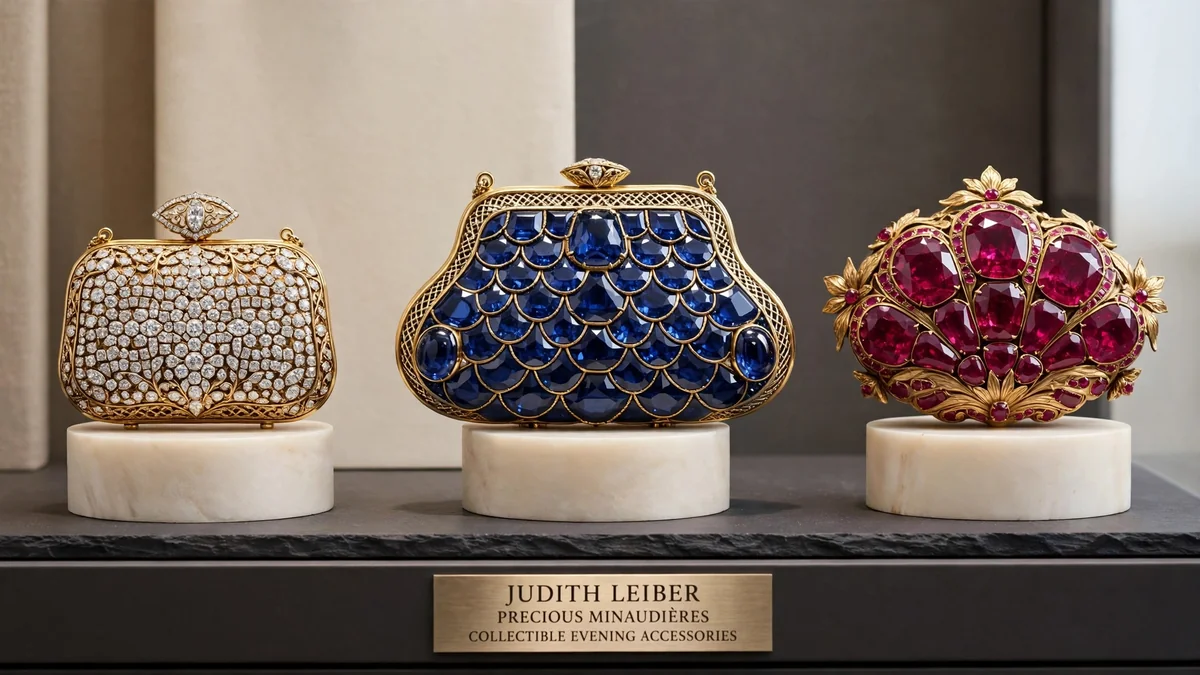
Judith Leiber, the Hungarian born designer whose crystal minaudieres defined evening accessories for decades, produced a small number of precious metal and gemstone clutches in the later years of her house, pieces set with sapphires, rubies, and diamonds rather than her signature crystals.
Reported at prices exceeding $100,000, these jeweled objects occupy the same territory as the Mouawad: bags that crossed into jewelry and never returned. Leiber’s legacy at the top of the market is the argument that the evening bag, the smallest and most sculptural of accessories, can carry value as dense as any Birkin when the stones decide the price.
Why the Market Pays
The eight bags share three drivers. Scarcity first: the Himalaya’s dyeing process works on only the finest crocodile skins and yields few flawless panels, the Diamond Forever was limited to thirteen, the Faubourg to a thousand. Craft second: each represents thousands of hours of the world’s rarest handwork.
And mythology third: the Birkin’s origin story, a chance encounter between Jane Birkin and Jean-Louis Dumas on a flight, is the kind of legend that marketing cannot buy, and it underwrites every record above.
The result is an asset that, over the past decade, has outperformed most traditional collectibles, with the caveat every auction specialist voices: condition, provenance, and hardware can swing a value by half.
For the collector deciding where handbags sit among the alternatives, our feature on the classic cars that beat the stock market offers the closest comparable logic, and the oldest luxury houses behind these bags explain why their mystique compounds.
FAQs
What is the most expensive handbag ever sold?
At auction, the record belongs to a diamond encrusted Himalaya Niloticus Birkin 30 sold at Christie’s Hong Kong in 2021 for approximately $515,000. Including non auction pieces, the Mouawad 1001 Nights Diamond Purse holds a Guinness record value of $3.8 million.
Why is the Hermès Himalaya Birkin so expensive?
The Himalaya’s gradient dyeing, fading crocodile skin from gray to white, succeeds on only the finest skins and requires extraordinary skill, making flawless examples exceptionally rare. Add diamond encrusted hardware, wait lists of years, and the Birkin’s cultural mythology, and auction records follow.
Do handbags appreciate in value?
The top tier has appreciated strongly over the past decade, with rare Hermès and Chanel pieces at auction outperforming many traditional collectibles. Like any alternative asset, results depend on condition, provenance, and rarity, and the market’s top is narrow; ordinary luxury bags do not appreciate.
How many Chanel Diamond Forever bags exist?
The Diamond Forever Classic Flap is widely reported as limited to thirteen pieces worldwide, produced in 2008 with white gold hardware set with 334 diamonds. Its extreme rarity and complete absence from public auction rooms make private sale estimates the only available pricing.
What is the Faubourg Birkin?
The Faubourg Birkin is a 20 centimeter miniature Birkin depicting the Hermès flagship storefront at 24 Rue du Faubourg Saint-Honoré, complete with windows, awnings, and a tiny shopping bag. Produced in very small numbers across several colorway editions, it has traded on the resale market at prices reported above $200,000.
Where are these record sales held?
The landmark results occur overwhelmingly at Christie’s and Sotheby’s Hong Kong salerooms, which have become the global center of the handbag auction market. The category’s strongest bidding pools, for Hermès in particular, are concentrated in Asia, and Hong Kong records routinely set the global benchmarks.
Is a Birkin a good investment?
The rarest examples have delivered strong returns at auction, but a Birkin should be bought to be used and loved first. Investment outcomes depend on pristine condition, complete accessories, and the right reference, and the market at the top is thin. Treat any purchase as a luxury with resale potential, not a guaranteed asset.
How do auction houses authenticate these bags?
Through house specialists with decades of house specific expertise, examining stitching, hardware stamps, leather quality, date codes, and provenance documentation, increasingly supplemented by digital registries and, at some houses, artificial intelligence assisted analysis. Certificates of authenticity from the major houses and documented ownership history materially affect both acceptance into a sale and the final hammer.