An Amalfi Coast yacht charter itinerary, built properly, reads the coast’s facade in the order its builders intended: from the sea, west to east, letting each town introduce itself as the sailors of the maritime republics saw it, before the road was carved and the crowds arrived by bus.
The week below assumes a Sorrento base, the classic arrangement, and gives each day one principal destination and one unhurried shape, in the series’ established manner, with the day’s logic explained rather than merely listed.
One practical note before the days begin: the distances here are short, rarely more than an hour under way, but the coast’s theater argues for slow sailing close in, the cliffs reading like a wall of galleries, and the wise captain keeps the yacht near the facade rather than offshore.
Day One: Board at Sorrento, Under the Lemons
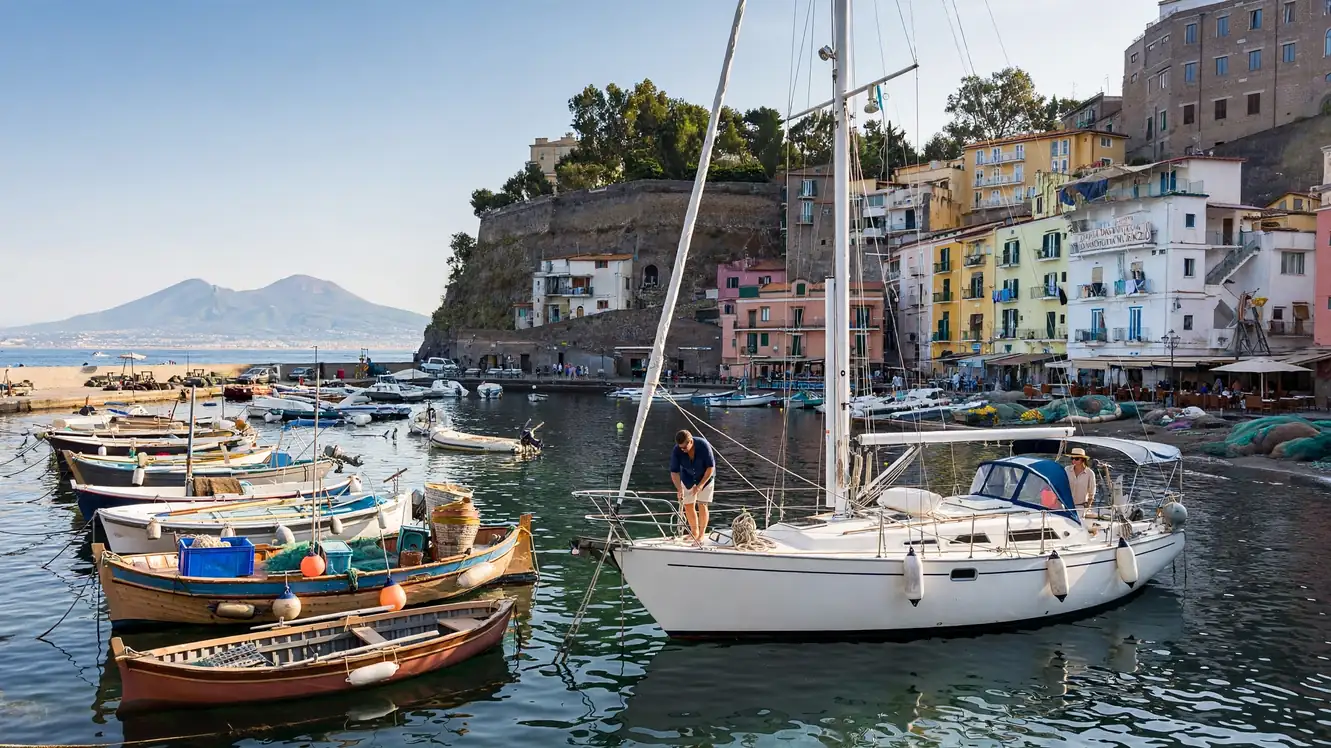
Arrive by midday, the transfer from Naples’ airport or station short, the cliff coast announcing itself before the marina does. Board without hurry: the captain’s tour, the crew’s introductions, the provisioning conversation in which the coast’s lemons, its mozzarella, its wines from the slopes of Vesuvius, receive the seriousness they deserve.
The first swim off the platform in the Marina Grande’s clear water, Vesuvius across the bay. Evening belongs to Sorrento: the dinner under the lemon pergolas, the slow passeggiata, the first sfogliatella of the week eaten warm. Sleep to the sound of a working marina; tomorrow the coast begins.
Day Two: Capri, the Island as the Emperors Saw It
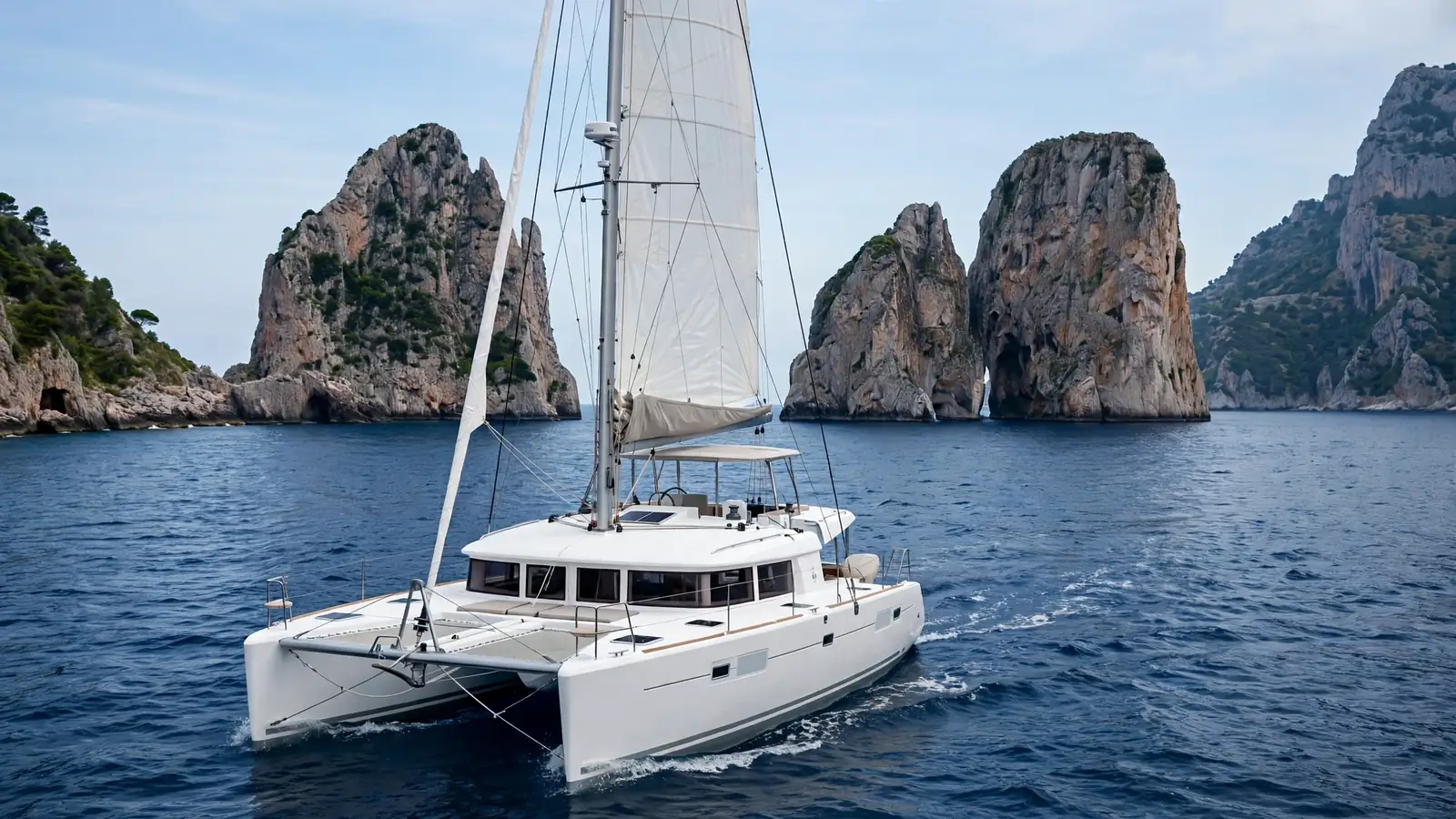
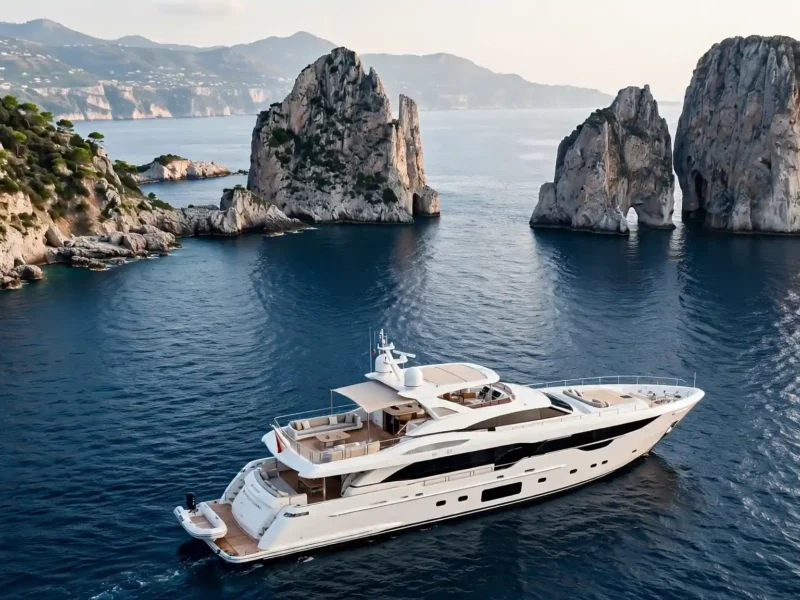
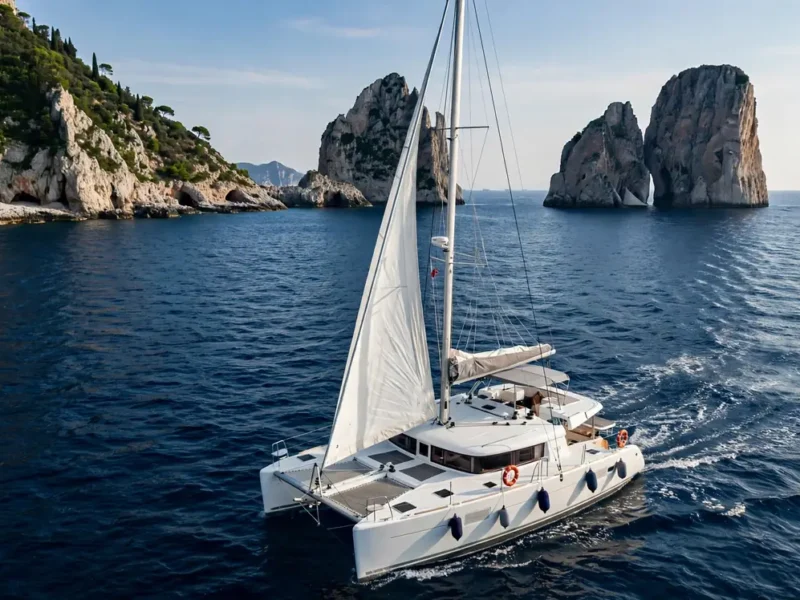
Cross the gulf early, for Capri repays the morning. The approach gives the island in sequence: the Marina Grande opening below the cliffs, the switchback of the Via Krupp descending the rock face, the white walls of the town above, and then, rounding the point, the faraglioni, the three great rocks standing in the blue, the island’s signature and one of the most beautiful approaches in the Mediterranean.
Anchor or take a buoy off Marina Piccola, the smaller harbor beneath the rocks, and spend the morning between the sea and the town: the piazzetta for coffee among the whitewashed walls, the chairlift to Monte Solaro for the view that explains the island’s geography in one look, the long lunch above the Marina Piccola with the swimmers below.
The Blue Grotto, if the party insists, is best at the earliest tender hour; the queues by ten are the island’s one honest failure. Evening at anchor off the faraglioni as the day boats leave, the rocks turning gold, the piazzetta’s lights coming on across the hill.
Day Three: Positano, Arriving as the Builders Intended
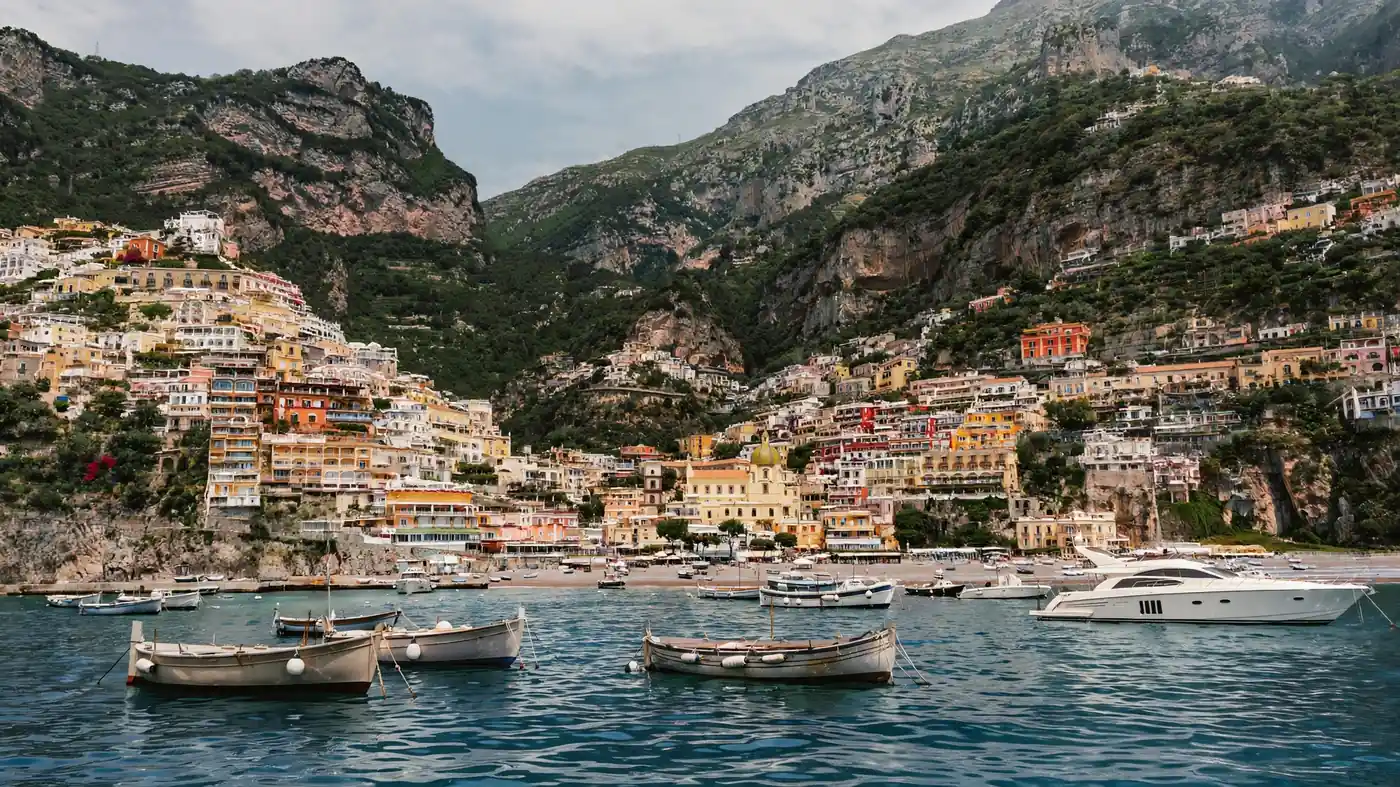
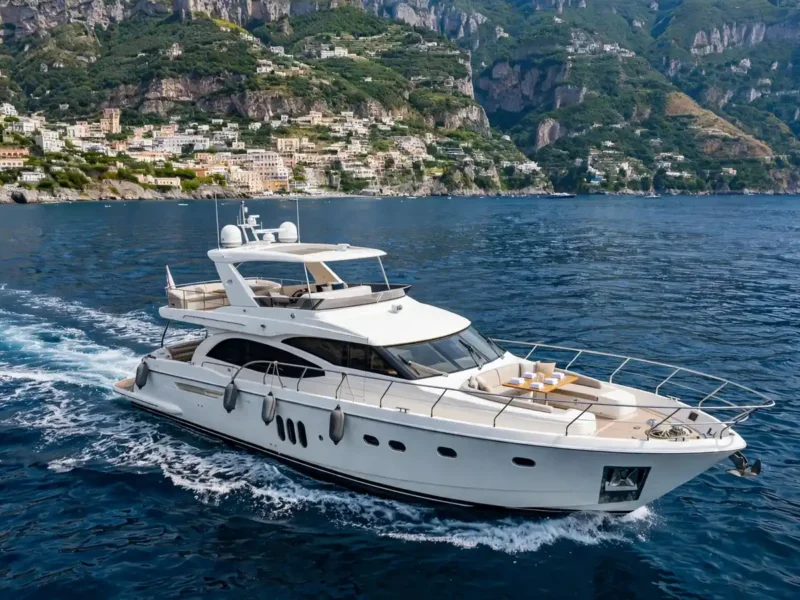
Sail the coast’s most famous approach slowly, for Positano, seen from the sea, is the coast’s masterpiece of introduction: the colored houses stacked in a vertical cascade, the dome of Santa Maria Assunta in green and yellow majolica between them, the beach at the water’s edge with its boats drawn up like toys.
Take the buoy in the managed field and go ashore by tender; the morning wanders the vertical lanes, the linen shops and the sandal makers, the church and its Byzantine icon said to have arrived with the first sailors.
The long lunch is at a table above the sea, the scialatielli with seafood the coast’s signature dish and the terrace the coast’s signature view; if the party can secure one of the great tables, the reservation is worth more than any excursion, a judgment Pravi Celer has made ashore as well in its survey of the restaurants of the great cities and the tables worth building a journey around, and the coast’s terraces belong on the same short list.
The afternoon returns to the yacht, the swim off the platform with the facade above, the golden hour as the houses light. Sleep at the buoy; the facade at night, lit from below, is the coast’s private show.
Day Four: The Middle Coast, Furore’s Fjord, and Amalfi
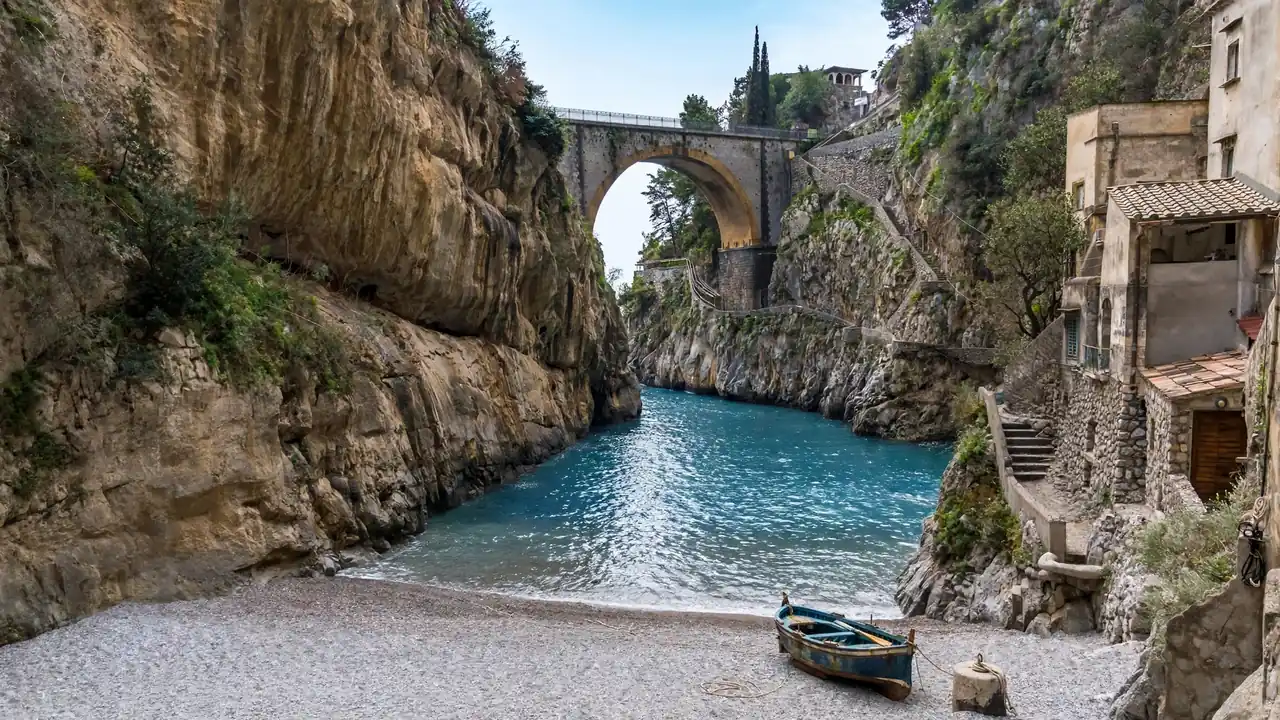
Sail east along the facade at close range, the cliffs rising sheer from the water, the small watchtowers of the old republic system standing at intervals along the rock. Stop at the fjord of Furore, a fishing hamlet hidden in a cleft of cliff, its small beach and painted boathouses one of the coast’s secrets, reached properly only from the sea.
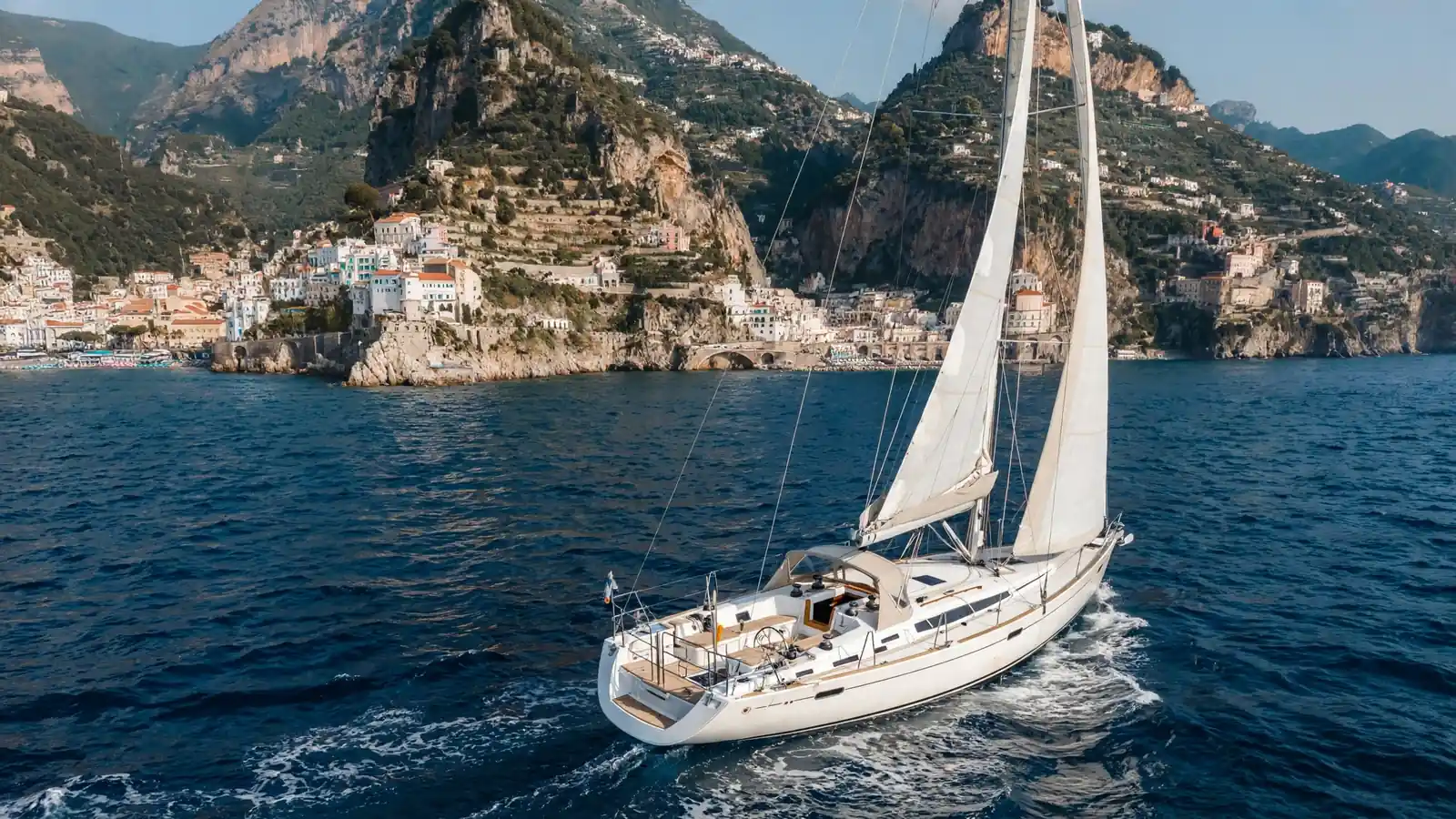
Continue to Amalfi, the ancient republic that gave the coast its name, and give the afternoon to its cathedral, the striped facade of the Duomo rising from the main square like a cliff of its own, the cloister beside it, the paper museum in the valley of the mills where the republic’s paper was made for a thousand years.
Climb, by car or by the long stairs, to Ravello above, and hold the evening for the Terrace of Infinity at Villa Cimbrone, the view that has silenced every visitor since the grand tour, and the dinner in the garden town as the coast turns to a line of lights below.
Day Five: The Islands’ Quiet: Procida, or Ischia’s Gardens
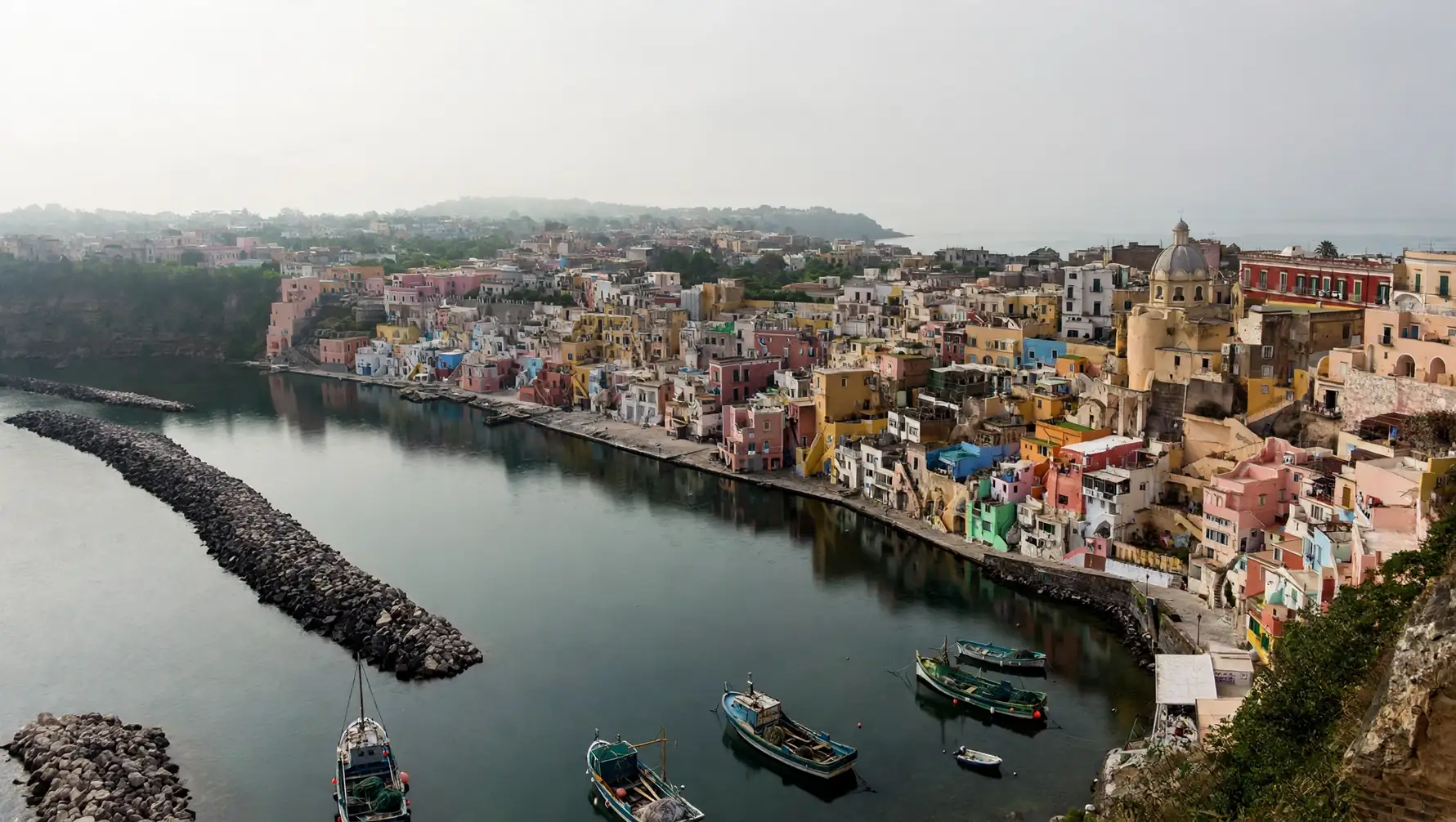
Trade the cliff theater for the gulf’s islands. Procida, the smallest and least visited, is the connoisseur’s choice: the Bay of Corricella, a fishing harbor of pink and ochre houses rising from the water, no cars, no season, a table at the water’s edge for lunch and the feeling of having found the coast’s soul; film directors keep rediscovering it and the island keeps forgetting to change.
Ischia, larger, offers the alternative day: the Aragonese Castle on its rock, the thermal gardens where warm springs feed pools among the palms, the vineyards of the Epomeo slope. Either island gives the week its exhale; both are an hour’s sail from the coast.
Day Six: The Return at Walking Pace, and the Last Golden Hour
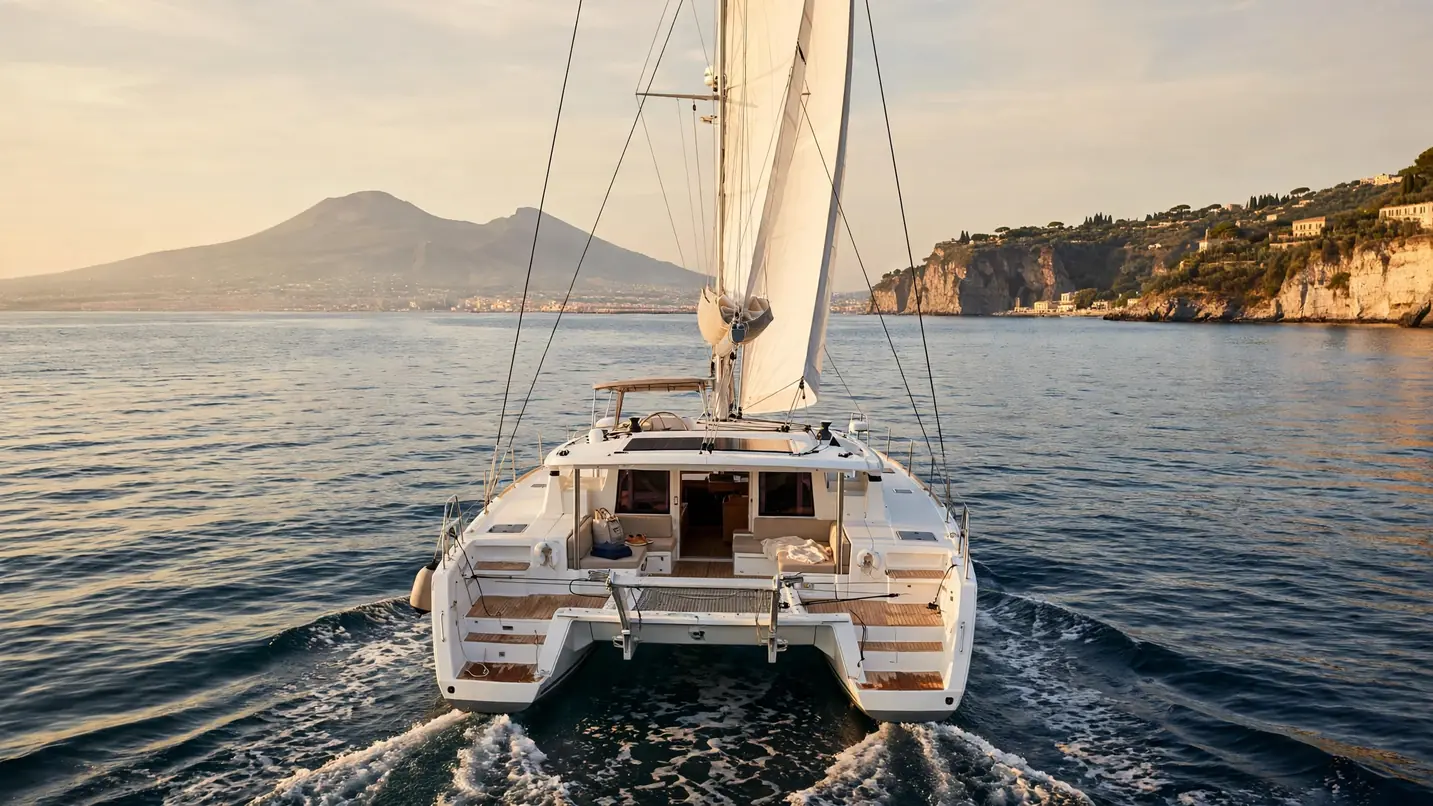
The sixth day runs west again slowly, the facade’s full length in review, the towns passing like chapters reread: Amalfi’s dome, Positano’s cascade, the fjord’s cleft, Capri’s silhouette across the water. Stop where the morning suggests, for the coast rewards the unplanned hour more than any in this series; a last swim in the cove the captain has held back all week, the final long lunch aboard with the cliffs for a wall.
The evening returns to Sorrento at golden hour, Vesuvius in the haze, the week’s photographs already inadequate. The farewell dinner ashore is the long one, under the lemons where the week began.
Day Seven: The Market, and the Departure
The last morning belongs to Sorrento’s market, the lemons like fists, the provolone del monaco from the peninsula’s hills, the limoncello for the friends at home; the provisioning of memory, as this series calls it.
The farewell lunch aboard, the slow packing, the disembarkation that feels like leaving a home port, and the final look back at the coast from the road above, now readable only because the week taught its language. The cliff faces stand at attention as ever; the guest who arrived by sea has been admitted, and knows it.
A Method for Adapting This Week
The structure holds for most parties, with four adjustments. Walkers should promote Ravello and the Path of the Gods above Positano, taking the bus up and the path along the cliffs, and trade a coastal hour without regret. Swimmers should protect Marina Piccola, the fjord of Furore, and the Procida stop against every competing plan.
Those with ten days should add Naples itself, a full day in the city that invented so much of the modern world, approached and abandoned by water; those with five should cut Ischia and the middle coast and keep Capri, Positano, and Ravello, the week’s unbreakable core. And everyone should take the Blue Grotto early or not at all, and let the faraglioni at anchor provide the memory the queue cannot.
Frequently Asked Questions
How many days do you need for an Amalfi Coast yacht charter?
Seven nights is the classic: long enough for Capri, Positano, the middle coast and Ravello, one island day, and a slow return, with no passage over an hour and most far shorter.
Where do you board an Amalfi Coast yacht charter?
At Sorrento for the classic balance, Naples for the largest fleet and the city’s edge, Salerno for an east weighted week; Positano has no working harbor for yachts.
What is the best day trip from the Amalfi Coast by yacht?
Capri for the faraglioni and the piazzetta, Positano for the facade, Ravello for the gardens above the water, and Procida for the coast’s quiet soul.
Can you visit Capri from an Amalfi Coast charter?
Constantly, and it is the week’s first day in the classic itinerary; the island lies an hour’s sail from Sorrento and repays every return.
Should you anchor or take a buoy on this coast?
Take the buoys; the coast’s famous anchorages are managed buoy fields in season, arranged by the captain as routine, and the working bases at Sorrento and Naples serve for arrival and weather.
What should I pack for an Amalfi Coast charter week?
Soft bags, deck shoes, walking shoes of genuine quality for Ravello and the paths, swimwear, one outfit for the piazzetta and the terrace dinners, a light layer for the evening breeze, and appetite; the lemons supply the rest.