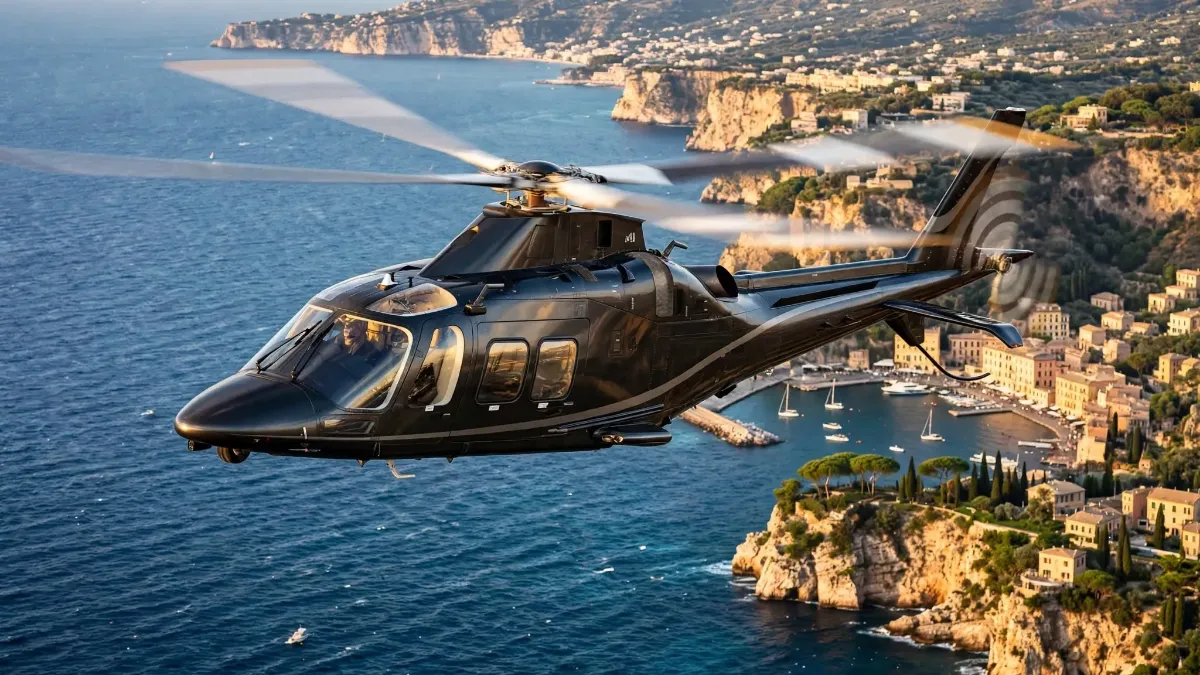
The Leonardo AW109 occupies a category it created: the helicopter as Italian design object. When the first A109 lifted off in 1971 from Giovanni Agusta’s works in Cascina Costa, it looked like nothing else in the sky.
Where every other helicopter of the era wore its machinery openly, all rivets and utility, the A109 arrived with a fuselage shaped like a sports car, a pointed nose slicing the air, retractable landing gear tucking away in flight, and lines so clean they seemed drawn rather than engineered.
More than five decades and over 1,600 aircraft later, the design has barely aged, a testament to how far ahead of its time it was. The AW109 became the chosen mount of heads of state, royal flight departments, corporate leaders, and air ambulance services worldwide, a machine equally at home on a palace lawn and a hospital roof.
This is the story of the helicopter that proved utility and beauty were never enemies.
The Agusta Vision
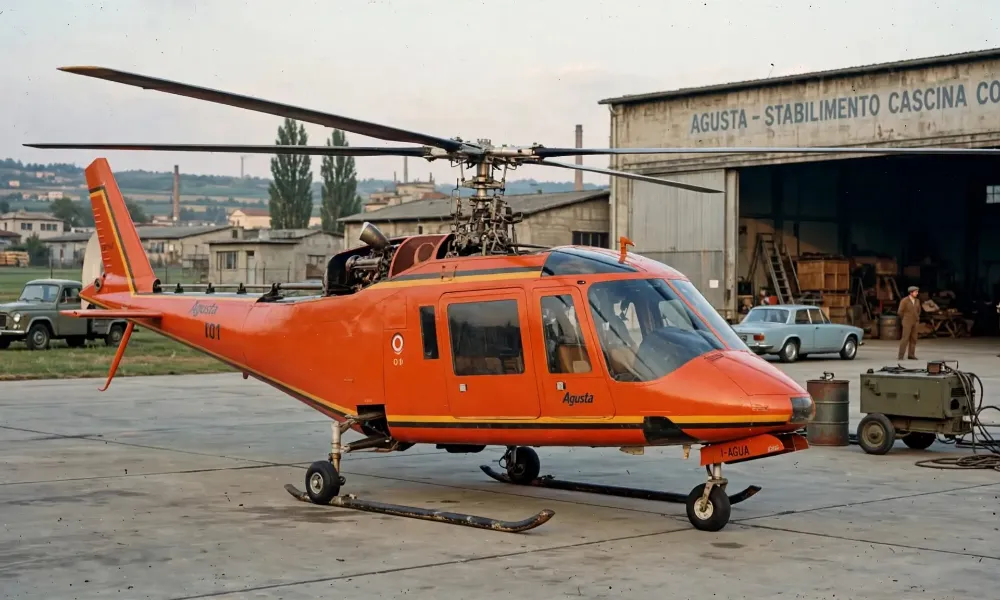
Giovanni Agusta built his company on a conviction that helicopters should aspire to the standards of Italian coachbuilding, and the A109 was that philosophy’s purest expression.
Conceived in the late 1960s as a fast executive transport, the aircraft brought car industry thinking to rotorcraft: aerodynamic refinement for speed, a cabin appointed like a grand tourer, and engineering elegance down to the details. The retractable gear, unusual in light helicopters, reduced drag and added to the machine’s distinctive sleekness in flight.
The formula worked immediately. The A109 was certified in 1975 and quickly became Europe’s definitive light twin, faster than anything in its class, cruising at speeds that remain competitive today, around 175 miles per hour in current form.
Through corporate evolution, from Agusta to AgustaWestland to today’s Leonardo, the type has been continuously refined: the A109 Power, the stretched Grand, the glass cockpit GrandNew, and the utility Trekker variant with skids. Each generation kept the essential promise: the fastest, most beautiful light twin in the sky.
The Executive Express
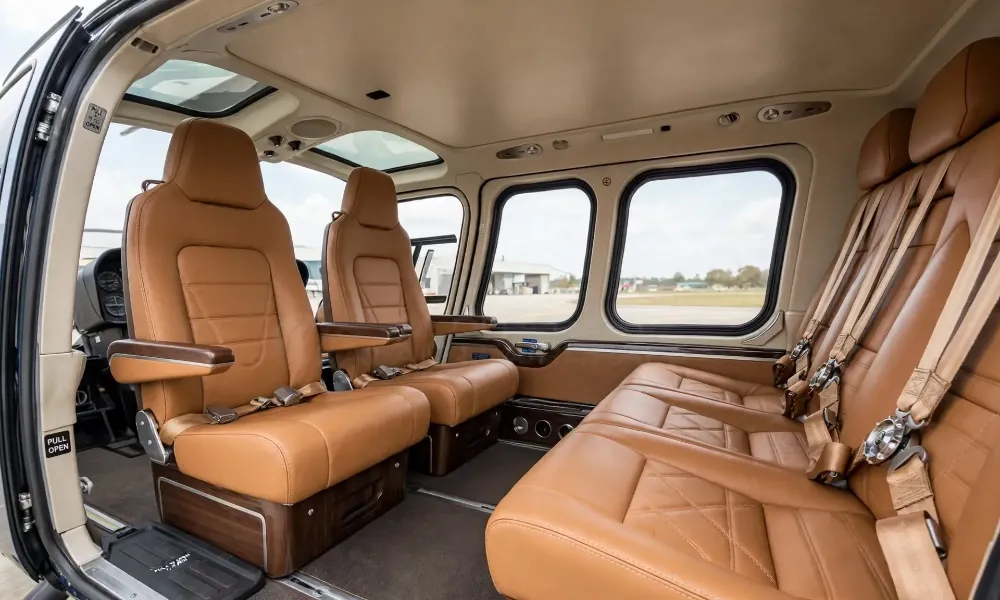
The AW109’s natural habitat is the executive mission, and its cabin explains why. Seating up to six passengers behind the cockpit in a space finished with leather, fine veneers, and noise treatment in VIP trim, the aircraft delivers genuine refinement at jet-like pace.
The speed matters more than outsiders realize: on the hundred mile transfer, the AW109’s cruise pace shaves minutes that compound across a traveler’s year, and the machine covers the classic city pair missions, Manhattan to the Hamptons, London to the estates of the Home Counties, Milan to the lakes, faster than anything that shares its price point.
The cabin doors open wide for graceful boarding, baggage stows in a proper hold, and the wide sliding door suits everything from business attire to evening dress.
For travelers considering the aircraft for the missions covered in our guide to New York private aviation options, the AW109 represents the helicopter equivalent of the sports saloon: quick, elegant, and discreet.
The Workhorse Beneath the Beauty
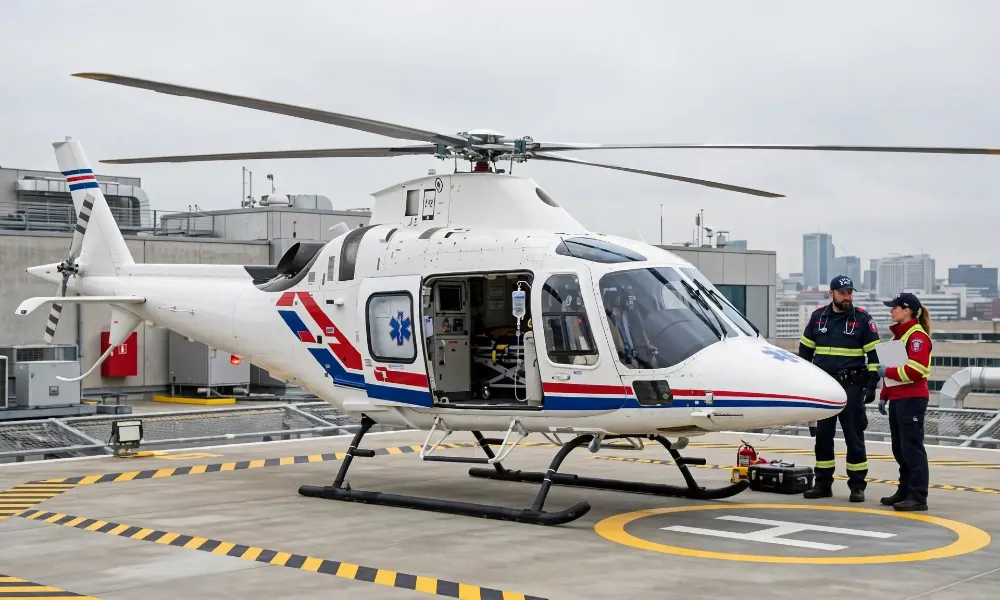
What gives the AW109 its depth is the working career beneath the glamour. The type serves as an air ambulance across the world, its speed translating directly into saved minutes on critical missions.
Law enforcement agencies fly it for its agility and endurance. Military services have operated armed and utility variants for decades. And in the offshore and utility roles, the skid equipped Trekker variant carries loads into terrain the pretty executive version never sees.
This dual nature, thoroughbred and draft horse in one airframe, is the machine’s quiet triumph. The emergency medical crews who trust the type at night in bad weather validate the engineering that the VIP cabin merely decorates.
It is a pattern familiar from the finest luxury helicopter models: the machines that last are those whose beauty is earned by capability, and the AW109’s fifty year production run proves the point as eloquently as any design award.
Flying and Owning the Italian
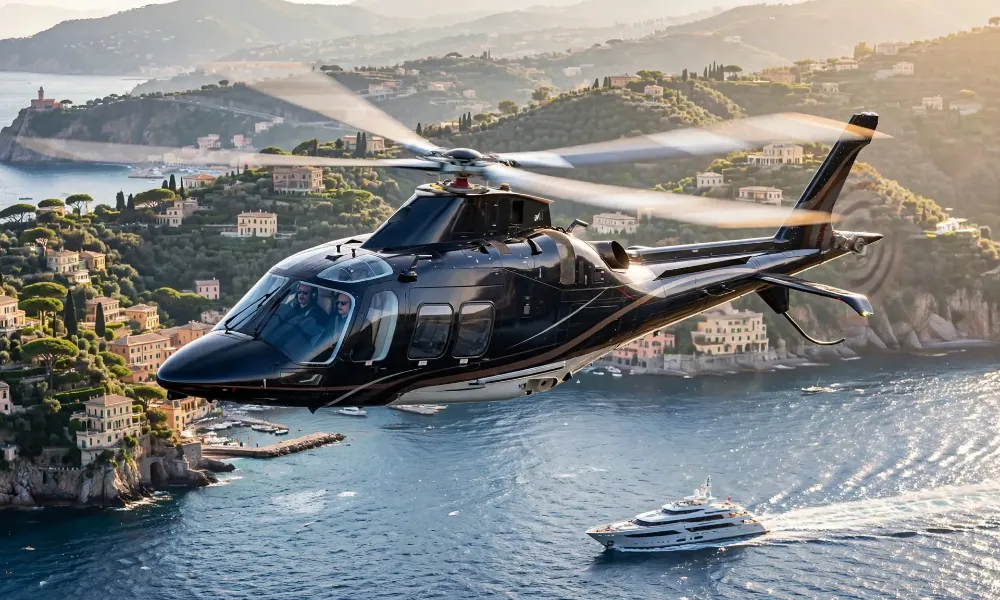
Chartering an AW109 typically prices in the middle of the light twin market, above the single engine workhorses and below the larger Sikorsky and Airbus medium types, with hourly rates varying by market and mission.
The aircraft suits the discerning traveler for whom the transfer is part of the occasion: a grand arrival at a Riviera hotel, a swift connection between Miami’s islands and airports, or a scenic coastal run where the machine’s panoramic cabin frames the view.
On the ownership side, pre-owned AW109s span a wide market, from early examples at accessible prices to late model GrandNew aircraft in the multi million dollar range, with operating economics typical of the light twin class.
Leonardo’s global support network, built across the type’s long life, keeps the fleet flying worldwide, and the model’s enduring production means parts, expertise, and upgrades remain readily available. For an owner seeking a first twin or a fleet seeking a proven executive machine, the AW109 offers something rare in aviation: a fifty year old design that still turns heads on every ramp it visits.
FAQs
When was the Leonardo AW109 first introduced?
The A109 first flew in 1971 and entered service in 1975, designed by Giovanni Agusta’s company in Italy as a fast, elegant executive helicopter. Through continuous development across the Power, Grand, GrandNew, and Trekker variants, the type has remained in production for over five decades.
How fast is the Leonardo AW109?
The AW109 is among the fastest light twin helicopters ever built, cruising at around 175 miles per hour in current GrandNew form. The speed, enabled by its aerodynamic fuselage and retractable landing gear, has been the type’s signature advantage since its introduction.
How many passengers does the AW109 carry?
The AW109 seats up to six passengers behind the two pilots in executive configuration, with VIP interiors offering leather club seating, fine materials, and noise treatment. Utility and medical variants configure the cabin differently for their missions.
Who uses the AW109?
The type serves heads of state, royal flight departments, corporate shuttle programs, air ambulance services, and law enforcement agencies worldwide. Its combination of speed, twin engine safety, and elegant cabin has made it Europe’s definitive light twin for fifty years.
What is the difference between the AW109 and the AW109 Trekker?
The Trekker is the utility variant, replacing the retractable wheeled gear with skids for rugged operations and utility work. The executive GrandNew retains the retractable gear and refined cabin. Both share the same fundamental airframe and performance DNA.
How much does it cost to charter an AW109?
Charter rates for the AW109 sit in the middle of the light twin market, typically above single engine types like the Bell 407 and below larger medium helicopters, with exact pricing varying by region, mission, and operator. It is a common choice for executive transfers and special occasions.
How much does a pre-owned AW109 cost?
Pre-owned pricing spans a wide range: early A109s trade at accessible levels while late model GrandNew aircraft command multi million dollar figures. Age, engine status, avionics, and interior specification drive value, and Leonardo’s support network sustains the global fleet.
Is the AW109 still in production?
Yes. Leonardo continues to produce the AW109 family, with the GrandNew and Trekker variants current. The type’s production run exceeding fifty years places it among the longest lived helicopter designs in history, a record matched by very few aircraft of any kind.