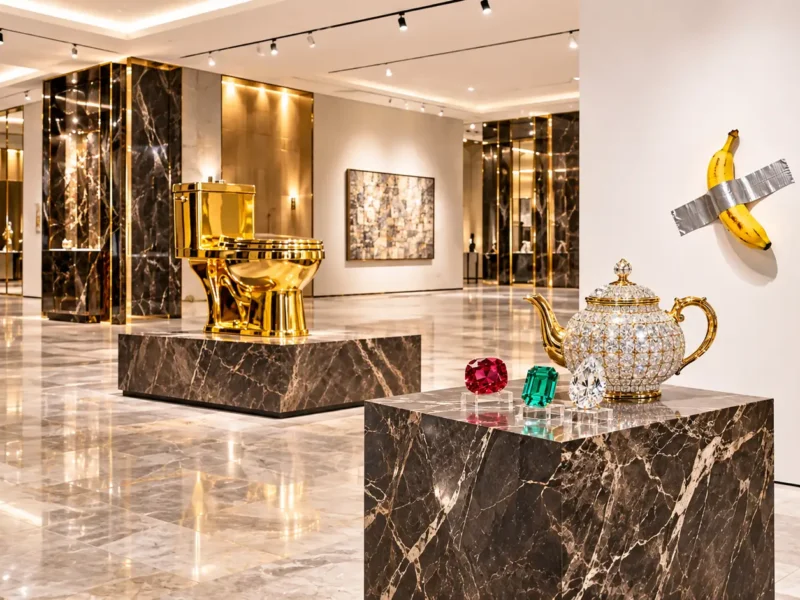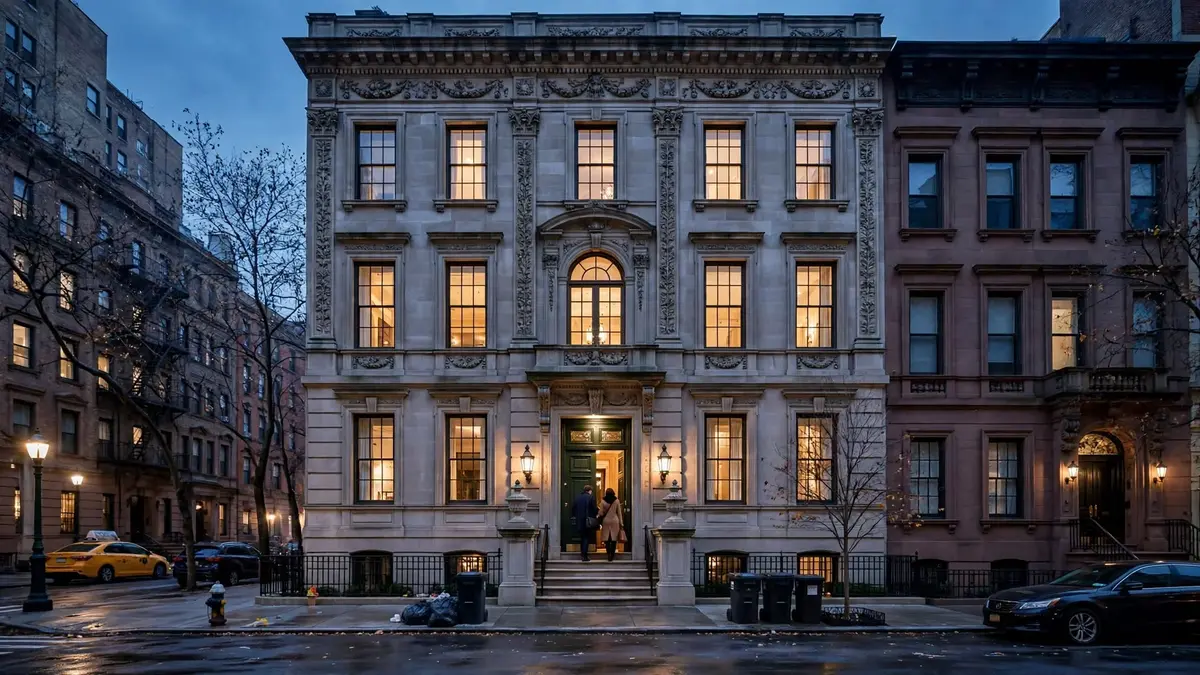
Private members’ clubs in New York have become the city’s second real estate market, a parallel geography of rooms where the most valuable currency is not the membership fee but the nomination.
A friend who serves on the admissions committee of one of the clubs on this list once described the modern application process to me in a single sentence. He said they are not selecting for wealth, which is common, but for gravity, which is rare.
New York’s club renaissance, building steadily for two decades and accelerating sharply in recent years, has produced a collection of institutions that function as salons, offices, dining rooms, and social anchors for the city’s most interesting people.
The waitlists at the best of them now stretch for years, and the interview processes rival those of selective universities. These seven are worth every month of the wait.
1. Casa Cipriani, Old World Ceremony on the Hudson
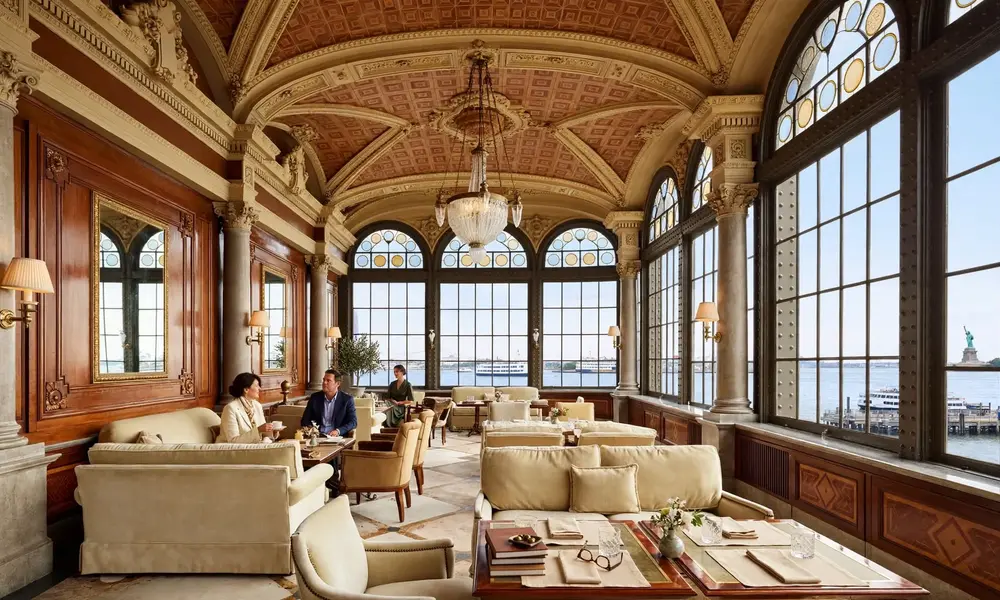
Casa Cipriani occupies the restored Battery Maritime Building at the southern tip of Manhattan, a 1909 Beaux-Arts ferry terminal transformed into what may be the most atmospheric club in America.
The Cipriani family, whose hospitality dynasty stretches back to Harry’s Bar in Venice in 1931, built the club around their philosophy of ceremonial simplicity: perfect Bellinis, impeccable service, and rooms designed like the salon of a great ocean liner.
The membership draws from finance, fashion, and old New York families, and the dress code is enforced with Venetian firmness.
What distinguishes Casa Cipriani is tone. Where other clubs chase energy, this one cultivates calm. Long lunches on the terrace above the harbor, jazz in the evenings, and a hotel component whose suites are reserved largely for members make it feel like a permanent grand tour.
For visitors considering a broader New York stay around a membership visit, our guide to the best hotels in New York maps the club’s neighbors in luxury hospitality.
2. Zero Bond, The Downtown Power Salon
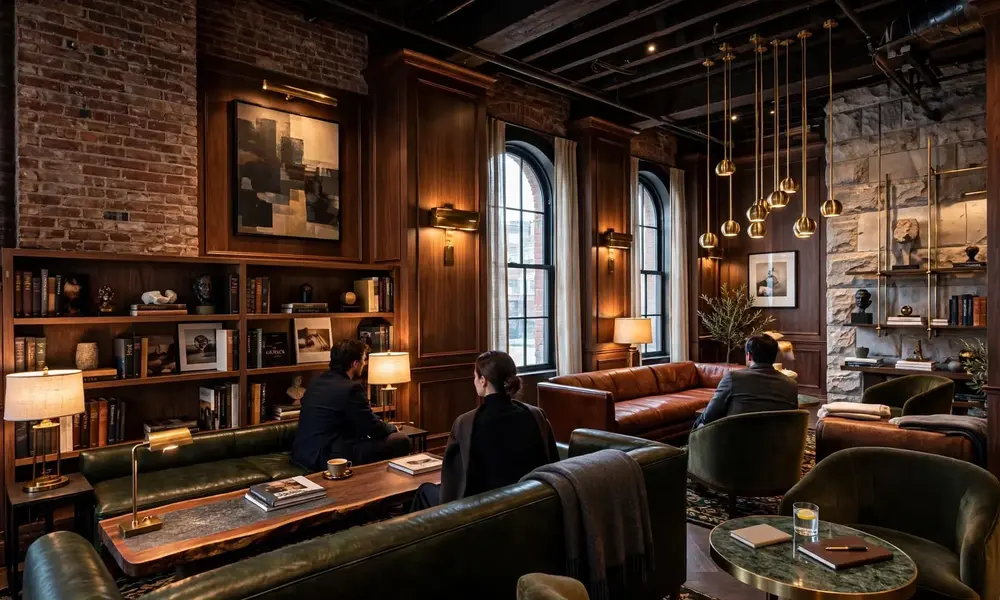
Zero Bond arrived in NoHo in 2020, opened by nightlife veteran Scott Sartiano in a loft building on Bond Street, and it quickly became the default clubhouse of a certain downtown ecosystem: tech founders, art dealers, athletes, and the actors and musicians who prefer their evenings without spectacle.
The rooms are handsome rather than flashy, with a screening room, a library, a sushi bar, and dining spaces that manage the rare trick of feeling full yet private.
The membership committee famously values cultural contribution over net worth, which produces rooms where a sculptor might hold court beside a hedge fund principal without either finding the combination strange.
Zero Bond’s genius is curation through architecture: multiple small rooms mean the club never feels like a single scene, and the no photos policy is taken seriously enough that phones disappear at the door in spirit if not always in fact.
3. The Core Club, The Midtown Boardroom Alternative
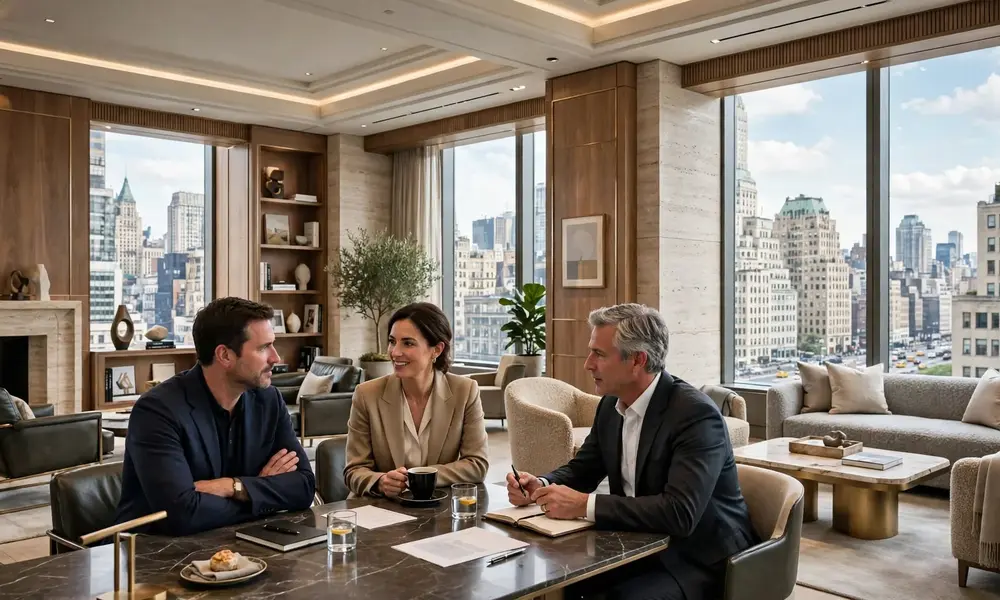
The Core Club has served New York’s professional elite since 2005, and its move to a dramatic new home at 711 Fifth Avenue elevated it into the city’s most complete business club.
The founding insight remains intact: serious people need a place to work, meet, dine, and think that is more private than an office and more functional than a restaurant.
Core delivers with a full business center, private dining suites, a screening room, a gym, and cultural programming that brings in speakers from statesmen to artists.
Membership skews toward principals rather than employees: founders, managing partners, collectors, and family offices. The admissions process is correspondingly deliberate, with nomination and committee review, and the club’s midtown location makes it the natural extension of the Park and Fifth Avenue working world. For dealmakers, it functions less as a club than as infrastructure.
4. The Ned NoMad, The Club Inside the Palace
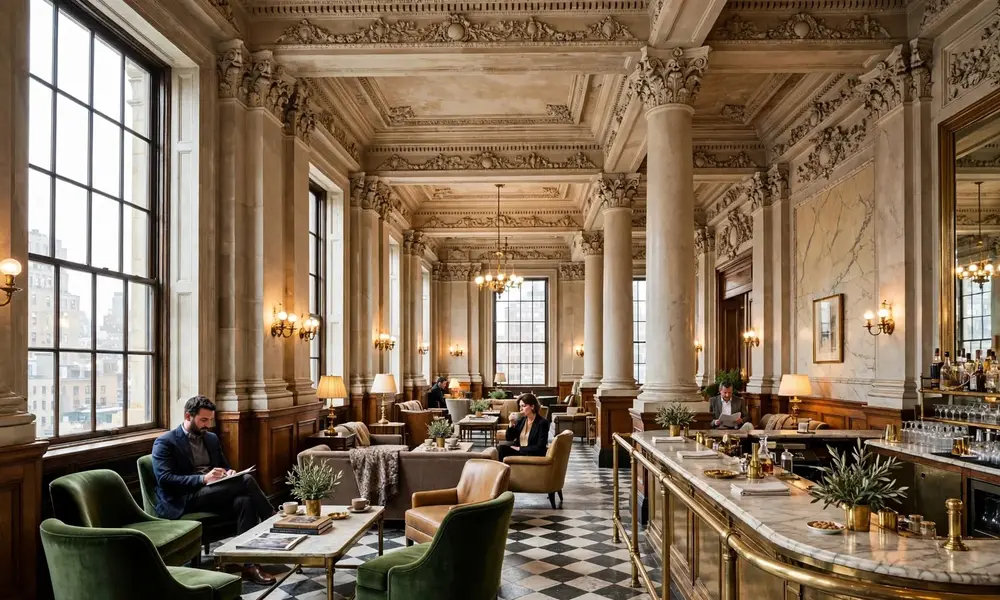
The Ned NoMad brought London’s Ned formula to Manhattan in 2022, installing a members’ club and hotel inside the former Johnston Building on Broadway, a 1903 Beaux-Arts beauty whose interiors read like a gilded age banking hall repurposed for pleasure.
The club spaces sprawl across a grand floor of lounges, dining rooms, and bars, crowned by the Magic Room, a performance venue hosting intimate shows that members discuss for weeks afterward.
The Ned’s scale is its distinction. Where boutique clubs offer intimacy, the Ned offers abundance: multiple restaurants under one roof, a rooftop with skyline views, and a membership that mixes media, fashion, and creative industries with visiting members from its London sibling.
The location places it steps from Madison Square Park, within the territory covered by our guide to where to stay in New York, and the hotel rooms give out of town members a genuine reason to join.
5. Soho House New York, The Original Disruptor
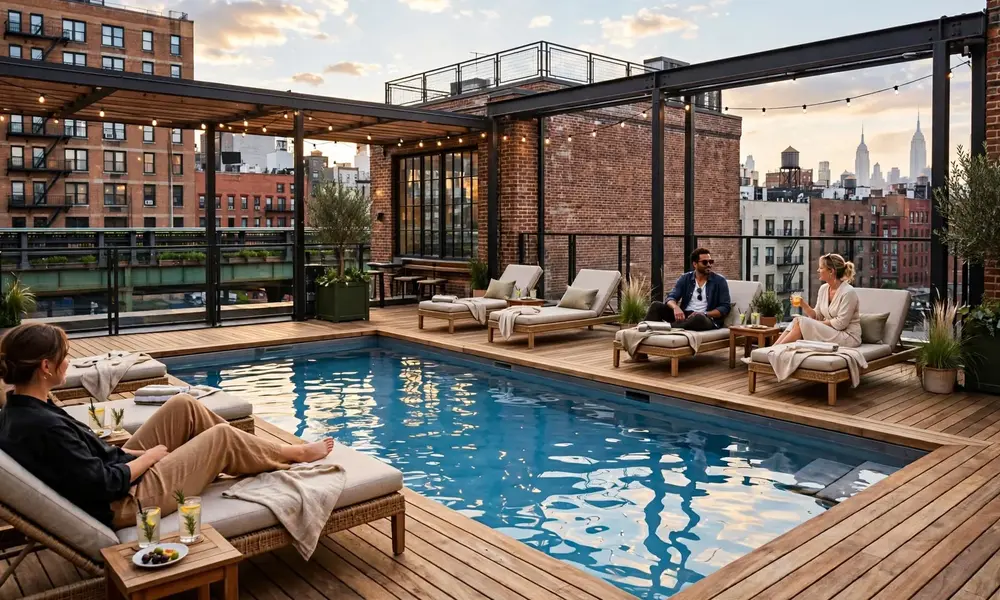
Soho House’s Meatpacking District outpost opened in 2003 and effectively invented the modern New York members’ club: younger, more creative, and more relaxed than the old institutions it disrupted.
Two decades on, it remains the most internationally useful membership in the city, because a Soho House card opens doors in London, Los Angeles, Berlin, Miami, Mumbai, and dozens of cities between. The rooftop pool, visible in a thousand social posts each summer, remains one of the most recognizable club spaces in the world.
The house has matured alongside its original members while continuing to recruit young creatives, a balancing act it manages through its Every House and Cities Without Houses tiers. Critics periodically declare it overexposed, yet the rooftop on a June evening, with the High Line below and the Hudson beyond, makes the counterargument without words. For the creative industries, it remains the default answer.
6. San Vicente West Village, The New Intimacy
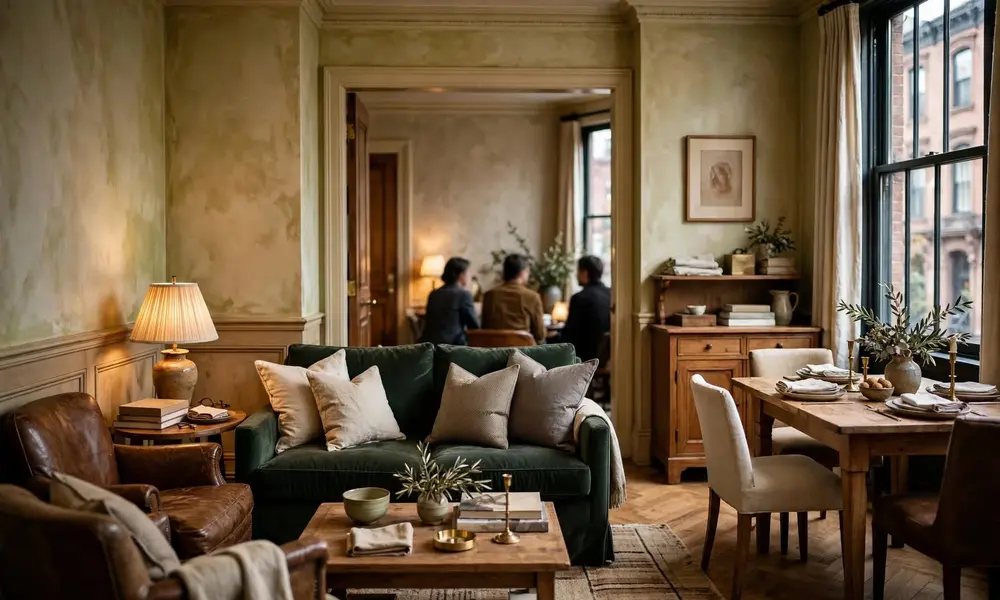
San Vicente brought West Hollywood’s discreet bungalow club model to the West Village, and it filled immediately with the fashion, film, and art world figures who found the earlier generation of clubs too large and too loud. The rooms are deliberately residential: low lighting, deep seating, a dining room that serves as the neighborhood’s quietest power table, and a no photography culture enforced by consensus rather than signage.
The club’s power lies in scale. Small rooms mean the membership actually knows itself, and the admissions process, heavily weighted toward existing member nomination, preserves a coherence that larger clubs cannot maintain. San Vicente is where deals and romances in the creative world now begin, over dinners that never appear on anyone’s social feed.
7. Norwood, The Townhouse for the Arts
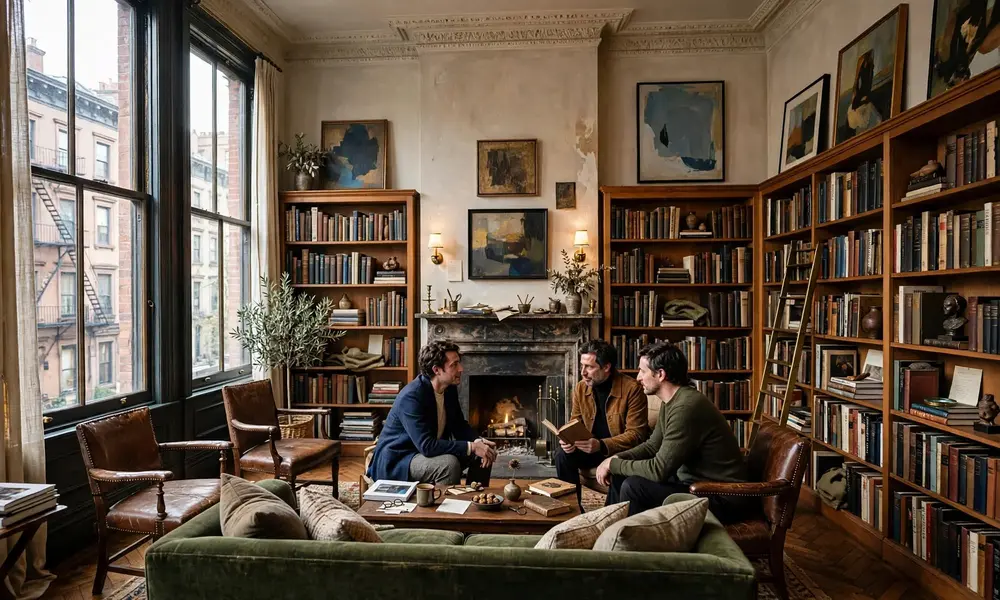
Norwood occupies a Chelsea townhouse on West 14th Street and has spent its years as the thinking person’s club: a five story sanctuary dedicated to the arts, with a salon program of talks, readings, and screenings that rivals small cultural institutions.
The membership draws curators, writers, gallerists, and patrons, and the atmosphere rewards conversation over networking. The dining room and bar operate with clubby warmth, and the upstairs lounges feel borrowed from a particularly well-read friend’s London home.
Norwood matters because it represents the club as a cultural patron rather than an amenity provider. Its programming puts artists and audiences in the same rooms at intimate scale, and its membership dues effectively fund a rolling salon.
For those whose New York revolves around galleries, books, and ideas, it remains the most natural home on this list, and the waiting list reflects a membership that rarely leaves. Pair a visit with the cultural itinerary in our guide to the top things to do in NYC for the full picture of the club’s neighborhood.
How to Actually Get In
The admissions mechanics across these clubs share common elements: nomination by existing members, a written application, committee review, and often an interview. What separates successful applications is less résumé than narrative. Committees look for people who will use the club as a club, contributing to rooms rather than merely occupying them. A genuine reason for belonging, whether professional ecosystem, cultural engagement, or geographic pattern, reads better than any title.
The practical path runs through your existing network. Identify which clubs your closest New York contacts already belong to, attend as their guest, and let the room sell itself before you apply.
And remember that the waitlist is part of the product: these institutions protect their atmosphere by controlling their growth, which is precisely why they remain worth joining.
The wait is not the obstacle. The wait is the filter, and the city’s finest rooms, including the dining rooms ranked in our guide to the most expensive Michelin star restaurants in the USA, all operate on the same principle.
FAQs
How much do private members’ clubs in New York cost?
Initiation fees typically range from around $1,000 at younger, creative clubs to $10,000 or more at premium institutions, with annual dues ranging from roughly $2,000 to $8,000. Ultra-premium clubs and those with hotel components can cost significantly more. Most also offer reduced rates for members under 30.
What is the most exclusive members’ club in New York?
Exclusivity takes different forms. Casa Cipriani and San Vicente cultivate smaller, nomination-driven memberships, while Core Club selects members based partly on professional seniority. Traditional institutions such as the Union Club and Metropolitan Club, founded in the nineteenth century, remain among the most closed establishments, although they operate outside the modern private club scene.
Can you visit Soho House New York without a membership?
Non-members can visit as guests of existing members, while hotel guests at Soho House properties receive access to most club spaces during their stay. Soho House also offers Cities Without Houses membership for people living in locations without a physical club.
Do New York members’ clubs have reciprocal access abroad?
Soho House offers some of the broadest reciprocal access, with dozens of houses worldwide. The Ned NoMad connects members with its London counterpart, while Core Club maintains relationships with select international clubs. Always confirm current reciprocal arrangements before relying on them while traveling.
What is the dress code at New York private clubs?
Casa Cipriani enforces one of the stricter dress codes, with jackets expected in its main rooms. Most downtown clubs describe their dress codes as smart casual, generally prohibiting gym wear, flip-flops, and prominent logos while welcoming fashion-forward outfits. When in doubt, tailored clothing is a safe choice.
How long are the waitlists for New York members’ clubs?
Waiting periods range from a few months at newer or larger clubs to several years at the most sought-after institutions. Strong recommendations from existing members can significantly accelerate applications, while unsolicited applications without sponsors may remain pending indefinitely.
Are phones allowed in private members’ clubs?
Most clubs prohibit phone calls in common areas and photography throughout their premises. Enforcement varies, ranging from gentle reminders at Zero Bond to camera stickers at certain venues. A strict no-photography culture is central to the privacy that members expect.
Which New York club is best for business meetings?
Core Club was designed with professional use in mind, offering private dining suites, meeting rooms, and a business center. Casa Cipriani is well suited to relationship-building lunches, while The Ned NoMad accommodates larger gatherings and offers restaurants suitable for client entertainment.