The Bentley Boys were a loose brotherhood of wealthy young Britons who, between 1924 and 1930, won the 24 Hours of Le Mans five times and turned a small London car company into a legend. They raced by day and partied by night with equal ferocity, and their exploits, on the track and off it, created the most romantic chapter in British motoring history.
What makes their story endure is not merely the victories. It is the improbability of them: gentlemen amateurs beating professional factory teams, in cars they helped develop, at speeds that killed many of their contemporaries, while living lives so extravagant that the newspapers could barely keep up. Nearly a century later, every Bentley that leaves Crewe still carries something of their spirit.
W.O. Bentley and the Cars They Raced
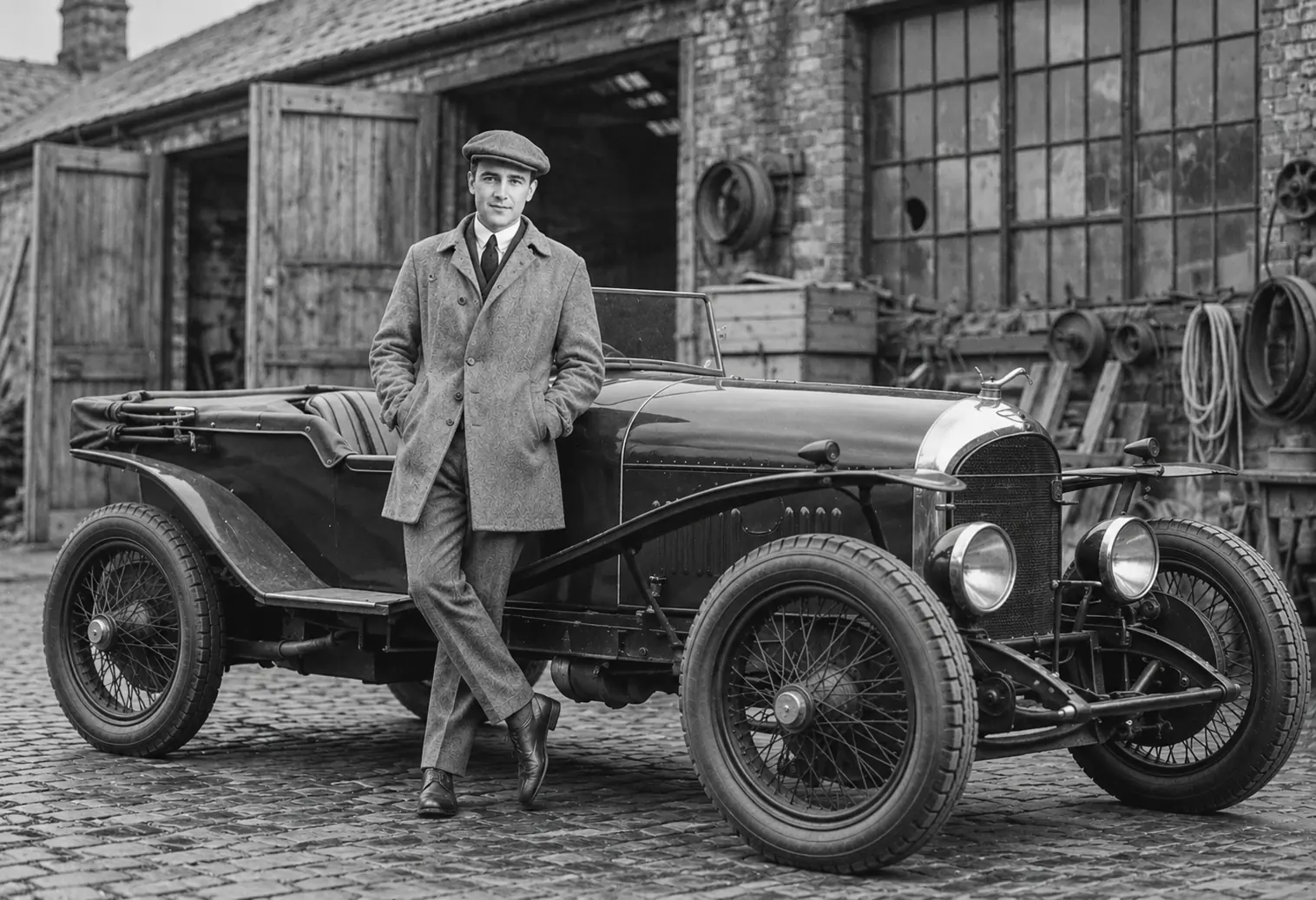
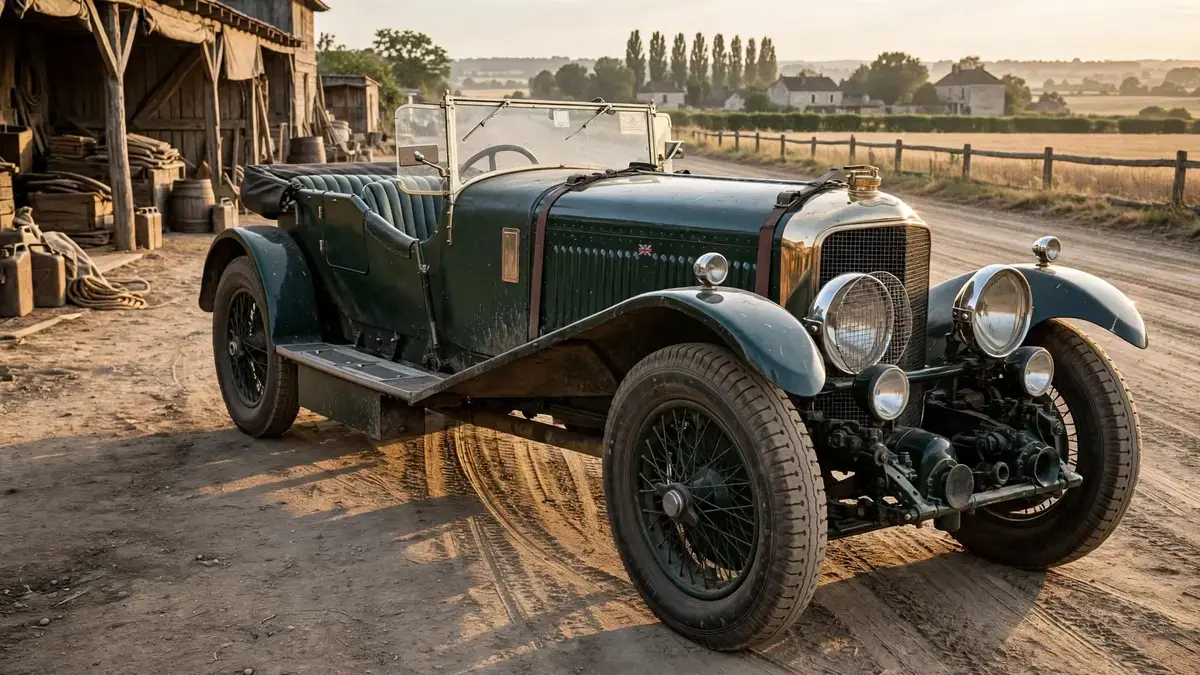
The story requires its foundation first. Walter Owen Bentley was an engineer of the old school, a railway apprentice who had designed aircraft engines in the Great War and founded his car company in 1919 with a simple creed: build a fast car, a good car, the best in its class. His machines were big, green, and unbreakable, powered by large-capacity engines whose torque was measured in stump-pulling abundance rather than delicate revs.
W.O. himself was ambivalent about racing, skeptical that competition improved the breed and perpetually anxious about his company’s finances, which were precarious from the start. The men who would change his mind, and his company’s fortunes, were already gathering around the marque: customers who bought his cars not for touring but for war.
The Brotherhood Assembles
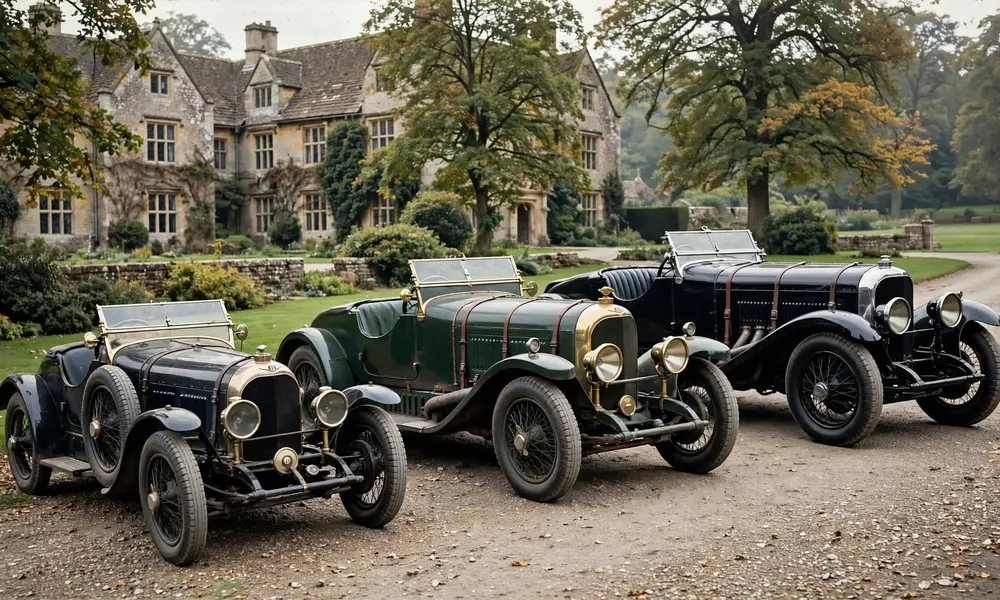
The Bentley Boys were never a formal team. They were a circle, bound by money, nerve, and a shared conviction that life was to be spent rather than saved.
Woolf Barnato, the South African diamond heir who became the team’s anchor and eventually the company’s owner, was a three-time Le Mans winner with a perfect record: he entered three times and won three times.
Sir Henry Birkin, known as Tim, was the dashing baronet whose daredevil style made him the era’s racing idol, a man who drove with a spotted silk scarf and total commitment.
Dr. Dudley Benjafield was a bacteriologist who raced with scientific calm. The Davis brothers, John and Glen Kidston, completed a roster that mixed aristocrats, sportsmen, and adventurers.
Their off-track legend grew in parallel. The Bentley Boys’ parties at Grosvenor Square were fixtures of London’s roaring twenties, and their wagers became famous: Barnato once raced the Blue Train from Cannes to London in his Bentley, beating the express to Calais and arriving in London before the train reached the Channel.
The story, embellished in the retelling, captured exactly what the Boys represented: speed as a way of life, pursued with money, style, and absolute nerve.
Five Victories at Le Mans
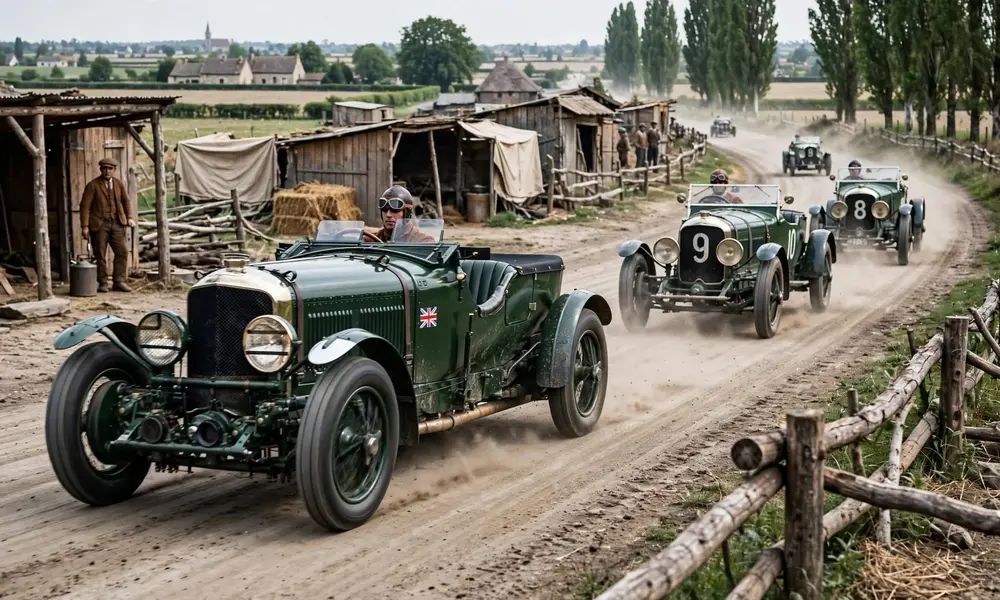
The 24 Hours of Le Mans, founded in 1923, was the perfect stage for the Bentley formula. The race punished fragility above all, so W.O. built his big, torque-rich machines to endure. Bentley secured its first victory in 1924 and continued winning throughout the decade.
The company won again in 1927, after a famous crash eliminated much of the field and forced the team to rebuild the surviving Bentley trackside. Bentley claimed another victory in 1928. In 1929, its cars swept the first four places. In 1930, the Speed Sixes secured their final victory.
The 1929 result deserves pause: four Bentleys crossing the line in formation, first through fourth, at the world’s hardest race. It remains among the most dominant team performances in motorsport history, achieved by a company that was, at the time, perpetually weeks from insolvency. The contrast between the cars’ invincibility and the company’s bank balance defines the era’s strange magic.
Birkin and the Blower
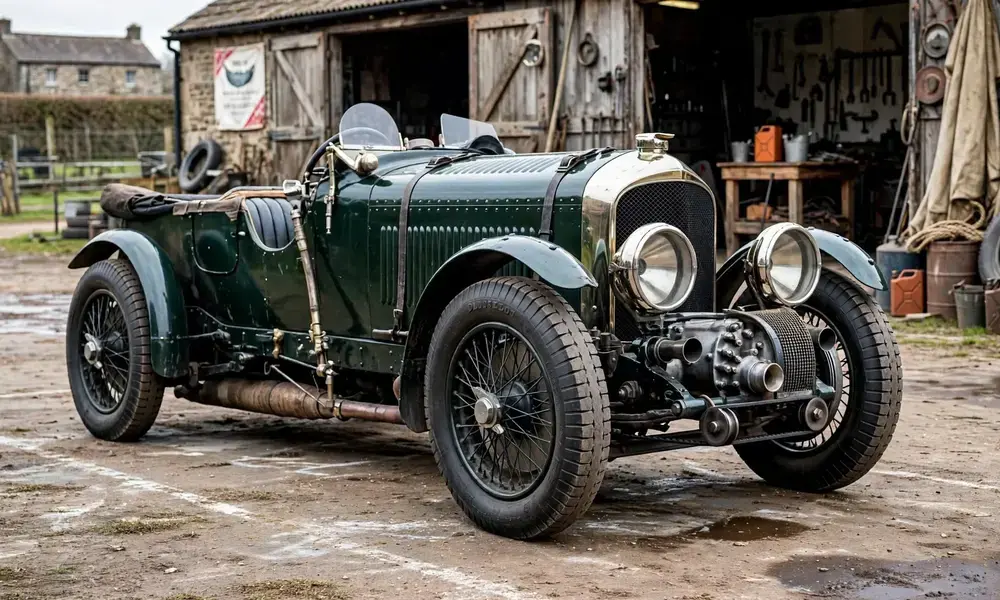
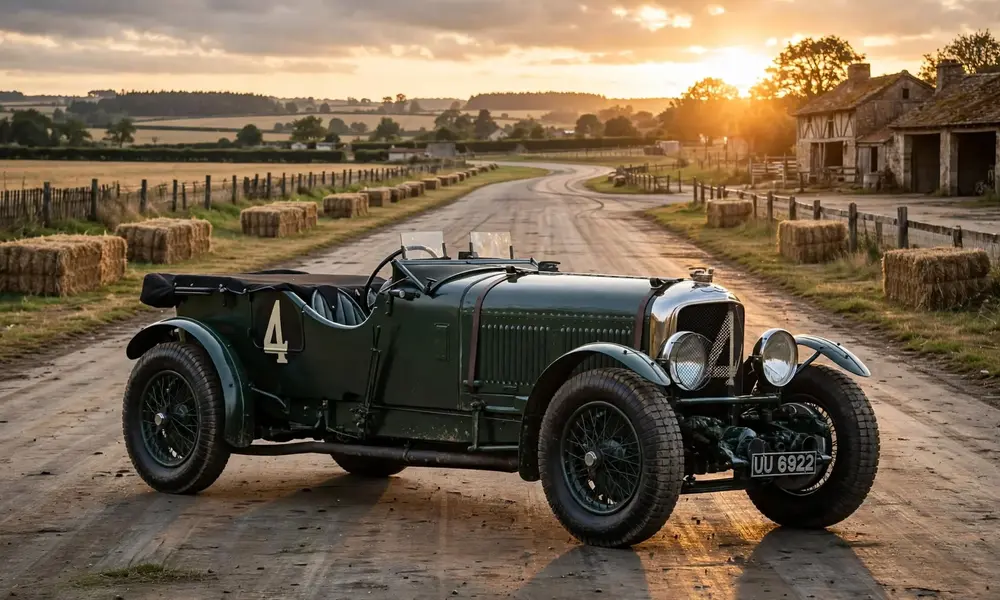
The most famous Bentley of all was the one W.O. never wanted. Tim Birkin became obsessed with supercharging, bolting a blower to the four-and-a-half-liter engine to extract power through forced induction rather than W.O.’s preferred route of ever-larger displacement. Bentley detested the idea, considering it a corruption of his engineering, but Birkin persisted, backed by the wealthy Dorothy Paget, and the Blower Bentley was born: a snarling, supercharged monster with the blower mounted defiantly outside the radiator.
The Blower never won Le Mans, its ferocity outrunning its reliability, but it became the most charismatic racing car of the age, the machine in which Birkin set lap records and legends. It remains the most valuable Bentley variant in the world, and its image, British racing green, outside exhausts, and that great shovel of a supercharger, is the visual shorthand for the entire era, a cornerstone of the collectible car canon.
The Crash of the Dream
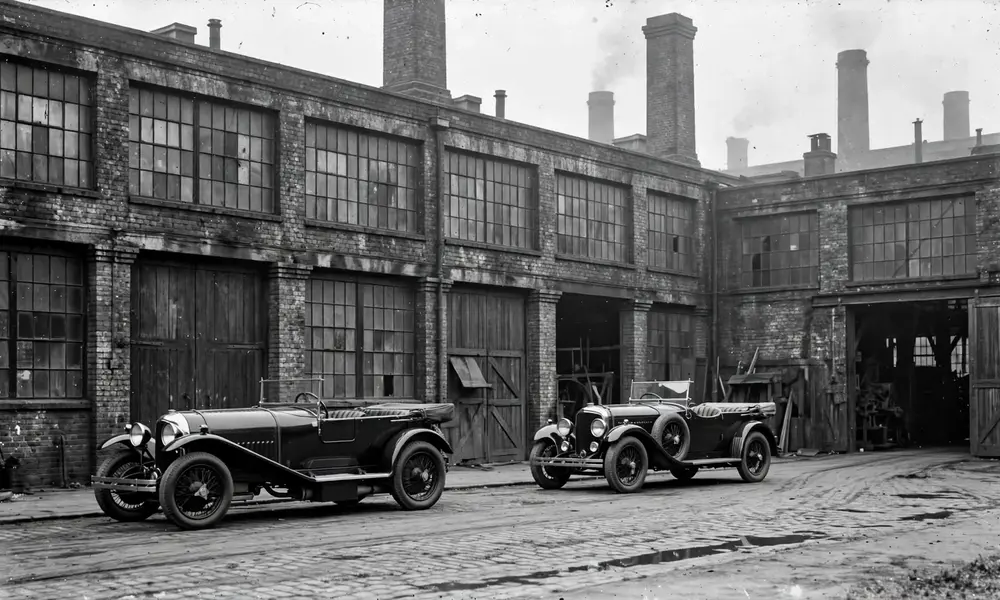
The Bentley Boys’ world ended with the decade. The Wall Street Crash of 1929 gutted the market for expensive motorcars, and Bentley Motors, chronically undercapitalized even in victory, slid toward collapse.
Barnato’s fortune could not sustain the company forever, and in 1931, Rolls-Royce acquired its most dangerous rival through a receiver’s auction, with a hidden bidder representing the company. Rolls-Royce then absorbed Bentley into a quieter identity for decades.
The men scattered to their fates, and the fates were often cruel. Birkin died in 1933 of septicemia from a burn received at the Tripoli Grand Prix, aged thirty-six. Glen Kidston died in an air crash the same year. The roaring twenties had exacted their price, and the survivors carried the memories into a greyer century.
The Legend Reborn
The Bentley Boys lay dormant in memory until the modern Bentley revival, begun in the 1980s and crowned under Volkswagen ownership, rediscovered them as the brand’s soul. The Continental GT’s reinvention of Bentley as a modern supercar maker, explored in our comparison of luxury car brands, explicitly channels the Boys: speed with substance, luxury with menace.
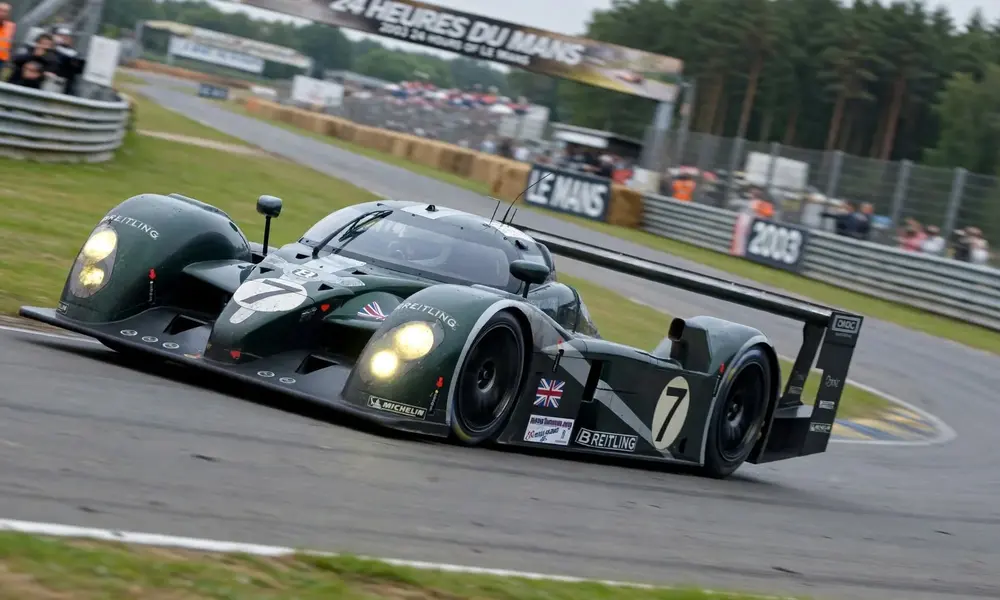
In 2003, Bentley returned to Le Mans and won again, seventy-three years after the Boys’ last victory, with the winning car’s union flag livery recalling 1930 directly. And in the collector market, the original cars have ascended to the realm of the untouchable: the Birkin Blower teams’ survivors and the speed Sixes that won at Le Mans rank among the most valuable British cars in existence.
What the Boys Teach
The Bentley Boys endure because they embody a vanished possibility: that wealth, skill, and daring could combine in amateur hands to beat the industrial world. They were the last gentlemen of racing’s heroic age, before professionalism and safety fencing changed the sport forever, and they lived with a completeness that makes their era feel illuminated against the grey on either side.
Every modern Bentley advertisement that invokes heritage is invoking them: the green cars, the silk scarves, the Blue Train, and the five golden years when a band of playboys made a struggling car company immortal. W.O. Bentley built the machines. The Bentley Boys built the legend, and the legend, unlike the company, proved crash-proof.
FAQs
Who were the Bentley Boys?
The Bentley Boys were a group of wealthy British racing drivers during the 1920s, including Woolf Barnato, Tim Birkin, Dudley Benjafield, and the Kidston brothers. They won the 24 Hours of Le Mans five times for Bentley between 1924 and 1930.
How many times did Bentley win Le Mans in the 1920s?
Bentley won the 24 Hours of Le Mans five times in 1924, 1927, 1928, 1929, and 1930. The 1929 victory was especially impressive because Bentley cars secured the first four positions.
What was the Blower Bentley?
The Blower Bentley was a supercharged version of the 4½ Litre developed by Tim Birkin against W.O. Bentley’s wishes. It featured a supercharger mounted outside the radiator. Although it never won Le Mans, it became one of the most famous and valuable Bentleys of its era.
What was the Blue Train race?
The Blue Train race was Woolf Barnato’s famous 1930 wager that he could beat the Blue Train travelling from the French Riviera to Calais in his Bentley. He won the challenge by reaching London before the train arrived at the Channel.
What happened to the original Bentley company?
Bentley Motors faced financial difficulties following the Wall Street Crash and years of undercapitalization. As a result, the company was sold to Rolls-Royce in 1931, which controlled the Bentley marque for nearly seven decades.
What happened to Tim Birkin?
Tim Birkin died in 1933 at the age of 36 from septicemia caused by a burn he suffered during the Tripoli Grand Prix. He was one of several Bentley Boys whose lives were cut short by the dangers of motor racing during that era.
Did Bentley ever win Le Mans again?
Yes, Bentley returned to Le Mans and won again in 2003, 73 years after the Bentley Boys’ final victory. This achievement came under Volkswagen ownership.
Are original Bentley Boys cars valuable today?
Yes, original Bentley team cars, Blower Bentleys, and Speed Six models from the Le Mans era are among the most valuable British classic cars. These historic vehicles can command auction prices reaching millions of dollars.