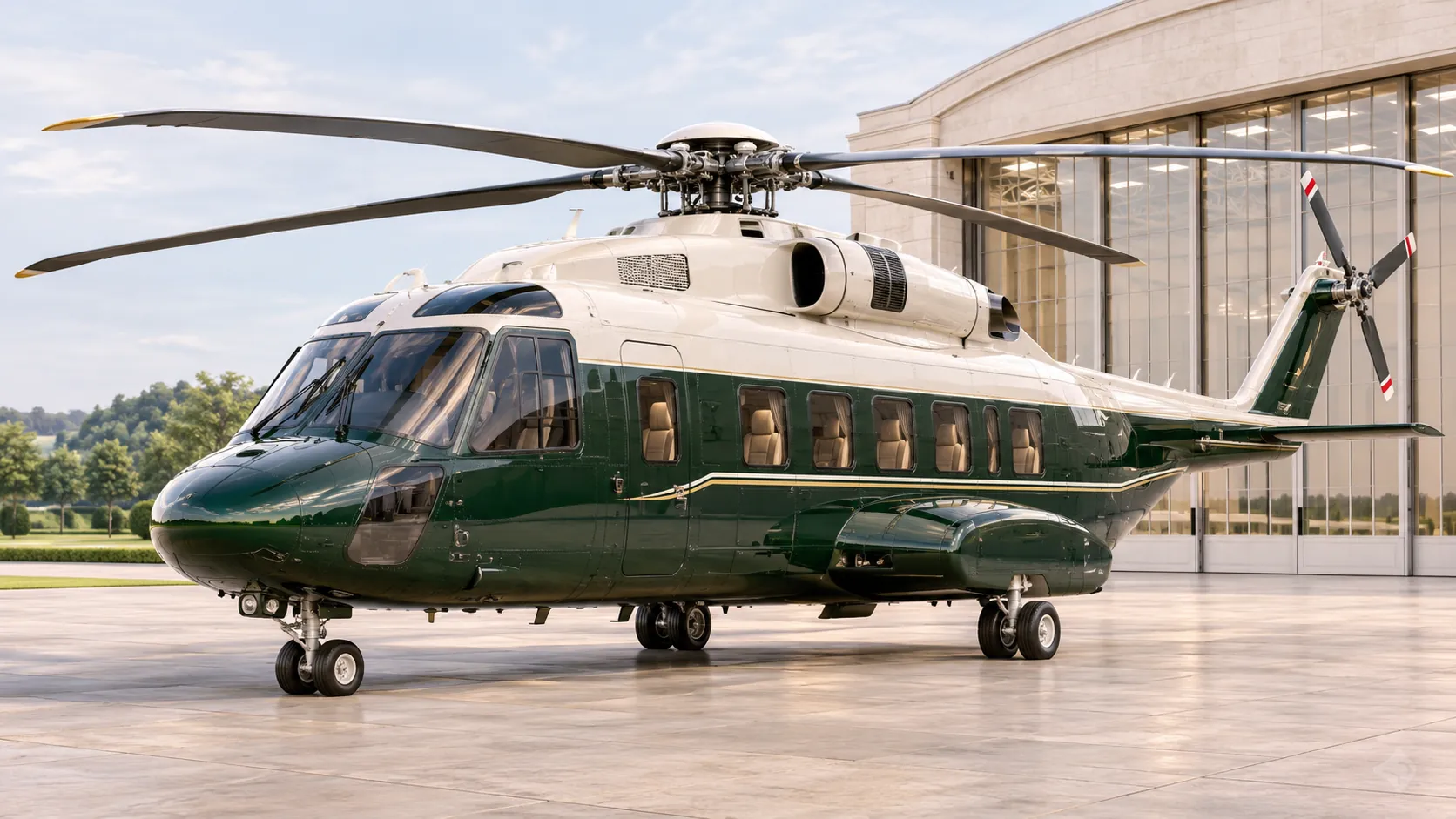
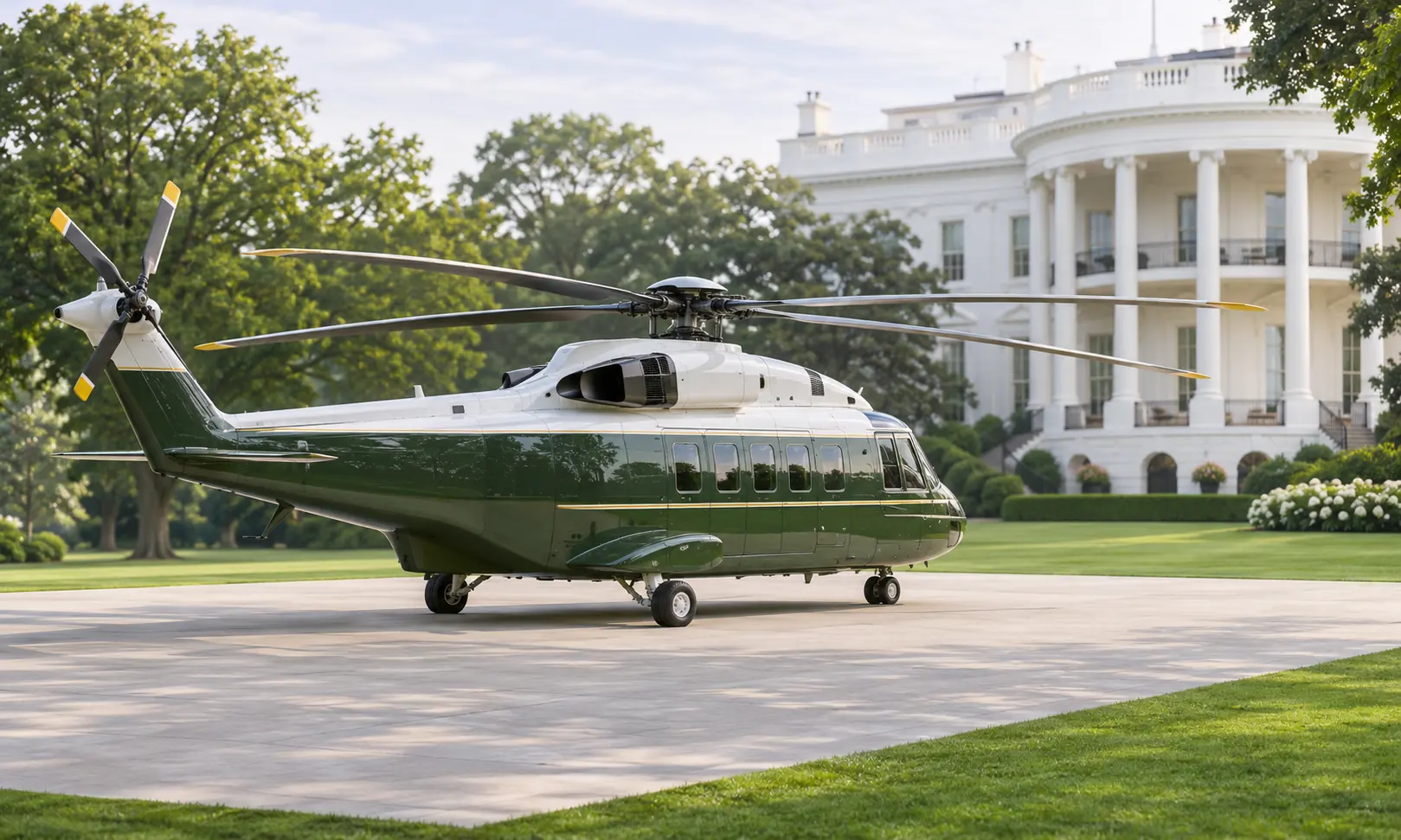
It’s a rainy September afternoon in Washington, D.C. A green-and-white helicopter sits on the South Lawn of the White House. Its enormous rotor blades are turning, the engines are running, and a small group of officials has gathered around a newly completed landing pad.
There’s a ceremony. A ribbon is cut. Then the President of the United States boards the aircraft. Moments later, the helicopter rises into the sky.
From a distance, it might look like a familiar presidential departure. Something people have watched on television for decades. But September 21, 2026, was different.
For the first time, the Sikorsky VH-92A Patriot carried the president away from the White House’s South Lawn during an operational flight.
And the machine making that journey belongs to one of the most expensive helicopter acquisition programs ever publicly documented.
How expensive? Approximately $213 million per aircraft, according to a US government estimate that includes development and procurement costs allocated across the fleet.
Yes. For a helicopter. At first, the number seems almost impossible to believe. You could buy extraordinary private jets, remarkable superyachts, and some of the world’s most exclusive residences for that kind of money.
So what makes this helicopter different? Is the interior filled with unimaginable luxury? Does it fly faster than everything else in the sky? Or is the real explanation hidden in the technology, security, and responsibilities that come with carrying one of the world’s most protected passengers?
The answer is considerably more interesting than gold-plated fittings or beautiful leather seats. The Sikorsky VH-92A Patriot is among the world’s most expensive helicopters when measured by total program acquisition cost per aircraft. Its approximately $213 million figure comes from government development and purchasing estimates—not a retail price a private buyer could pay.
And the story behind that number reveals how differently the worlds of presidential aviation and private luxury operate.
What Is the Most Expensive Helicopter in the World?
The VH-92A Patriot is a strong contender when comparing publicly documented helicopter program costs. It was developed by Sikorsky, a Lockheed Martin company, for the United States presidential helicopter program.
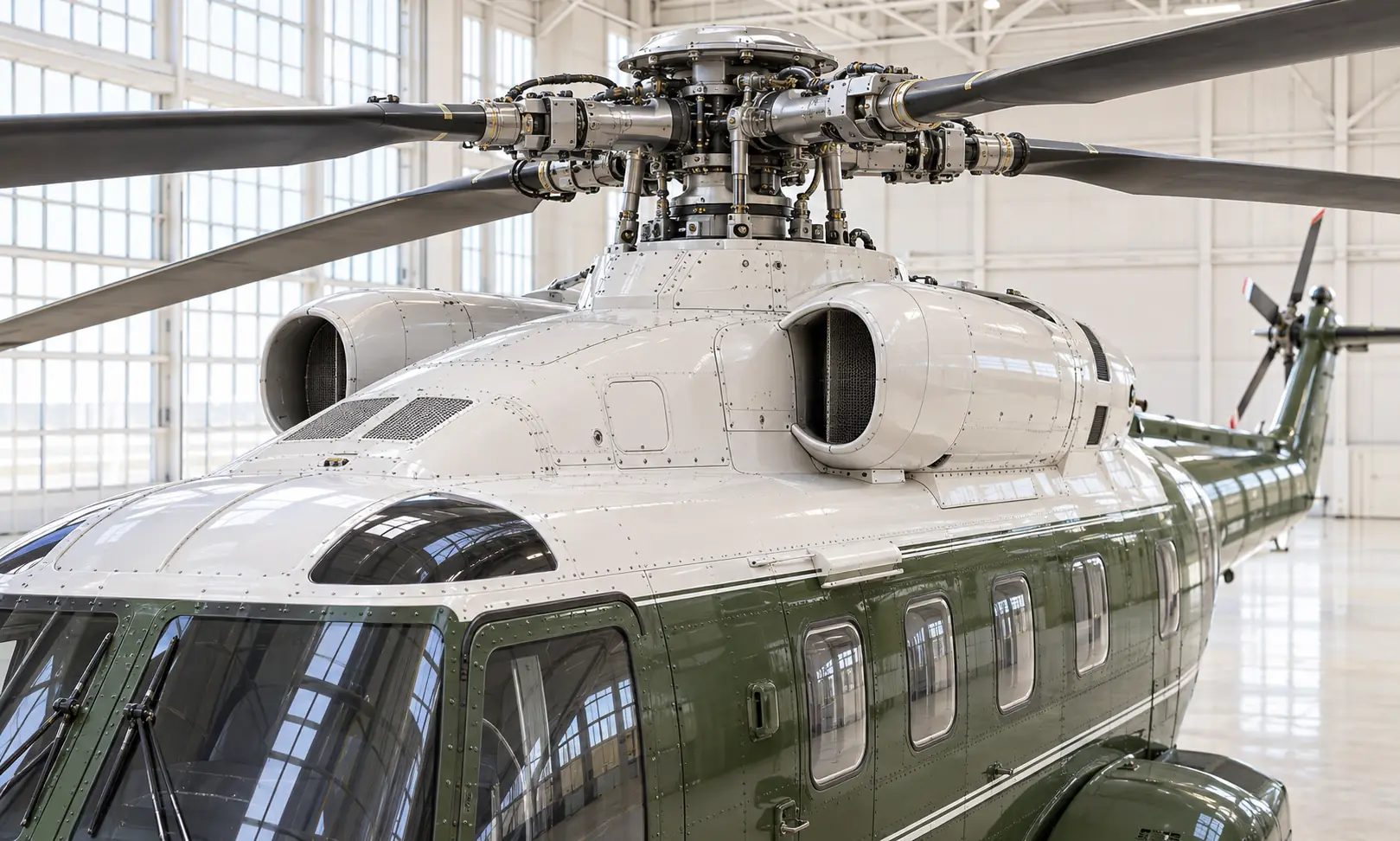
The aircraft is based on the commercial Sikorsky S-92 platform but incorporates specialized equipment and systems for government transport. The fleet supports presidential missions and other official transportation.
Here’s how its documented acquisition cost breaks down.
| Cost measure | US government estimate |
| Program development | $2.649 billion |
| Program procurement | $2.247 billion |
| Total acquisition | $4.895 billion |
| Aircraft in program | 23 |
| Acquisition cost per aircraft | Approximately $212.8 million |
Figures are from the Government Accountability Office’s April 2020 report, using an April 2019 program estimate. The per-aircraft amount is calculated by dividing total program acquisition cost by 23. There’s a critically important distinction here.
The helicopter itself did not have a publicly established $213 million showroom price. That figure includes the cost of developing a specialized presidential transport program.
And when those costs are divided among just 23 aircraft, the result is enormous. That makes the VH-92A fascinating for a reason luxury magazines don’t always explain. Its extraordinary price tells us as much about the mission as it does about the machine.
Why Does the Presidential Helicopter Cost So Much?
Imagine buying an ordinary luxury helicopter.
You might choose the cabin materials, seating arrangement, entertainment system, and additional avionics.
You’d consider where you wanted to fly, how many passengers needed accommodation, and which aircraft could comfortably handle those journeys.
Now imagine that the passenger is the President of the United States.
The requirements change dramatically.
The aircraft must fit into a highly specialized transportation system.
It needs secure and reliable communications.
It must be supported by government crews, maintenance organizations, and mission-specific operational procedures.
It also needs to work alongside other aircraft and established security arrangements.
The VH-92A program includes advanced communications equipment intended to support presidential operations.
The helicopter’s interior is configured for executive transportation.
But the most important features aren’t necessarily the ones passengers can see.
A secure communications system
For an ordinary passenger, being able to make a phone call during a flight might be a welcome convenience.
For presidential aviation, communications can be an operational requirement.
The VH-92A incorporates a dedicated Mission Communications System.
Government testing and upgrades have continued to address the performance of that system.
Specialized development
A commercial S-92 provides the foundation.
But creating a presidential aircraft requires additional development, integration, testing, certification work, and mission-specific changes.
Those expenses are included in the acquisition-program estimates.
A small production fleet
The US government procured 23 aircraft.
Twenty-one were designated as operational aircraft and two as development and test aircraft.
Development costs are spread across a relatively small fleet compared with a mass-produced commercial vehicle.
Long-term support
A presidential helicopter isn’t purchased and forgotten.
It requires trained crews, maintenance, operational planning, upgrades, and continuing support.
Those long-term costs are significant—and are separate from the headline acquisition figure.
That’s how an aircraft based on an established helicopter design becomes part of an extraordinarily expensive program.
The Most Surprising Part: It Took a New Helipad to Use It at the White House
Here’s where the story becomes almost unbelievable.
The United States spent billions developing and purchasing the new presidential helicopter fleet.
The final aircraft was delivered in August 2024.
The VH-92A began carrying the president on official journeys that same month.
Yet for a considerable period, it couldn’t routinely perform one of the missions people most closely associate with Marine One.
Landing on the White House’s South Lawn.
The problem wasn’t the aircraft’s beautiful interior.
It wasn’t a shortage of horsepower.
It was the grass.
The helicopter’s exhaust and rotor wash created problems for the lawn during testing.
The older presidential helicopters could use the established landing arrangement more readily.
The new VH-92A needed a different solution.
In 2026, work began on a dedicated granite landing pad.
Then, on September 21, 2026, the helicopter made its first presidential departure from that new surface.
The helipad project was reported to cost approximately $5 million to $6 million, separate from the original helicopter acquisition program.
Sikorsky was reported to be funding the work.
Why does this matter?
Because it reveals something extraordinary about expensive technology.
Even the most sophisticated machine can encounter a problem that seems remarkably ordinary.
An aircraft may have advanced communications, specialized aviation systems, and a substantial development budget.
But it still has to work in the place where people intend to use it.
The lesson isn’t that the VH-92A lacks engineering sophistication. It’s that real-world compatibility matters just as much as technical ambition.
And that lesson extends far beyond presidential aviation.
Is Marine One the Actual Name of the Helicopter?
Not exactly. This is a detail that often gets lost in headlines.
Marine One is a radio call sign used when the President of the United States is aboard a US Marine Corps aircraft.
The aircraft’s model name is VH-92A Patriot.
When the president isn’t aboard, the helicopter doesn’t use the Marine One call sign.
And other Marine Corps helicopters can carry the designation when transporting the president.
It’s the same broad principle that applies to Air Force One.
The call sign describes a particular mission and passenger, not one permanent aircraft model.
That distinction is important because the famous name can make it seem as though every presidential helicopter is identical.
In reality, the fleet has included different aircraft generations over time.
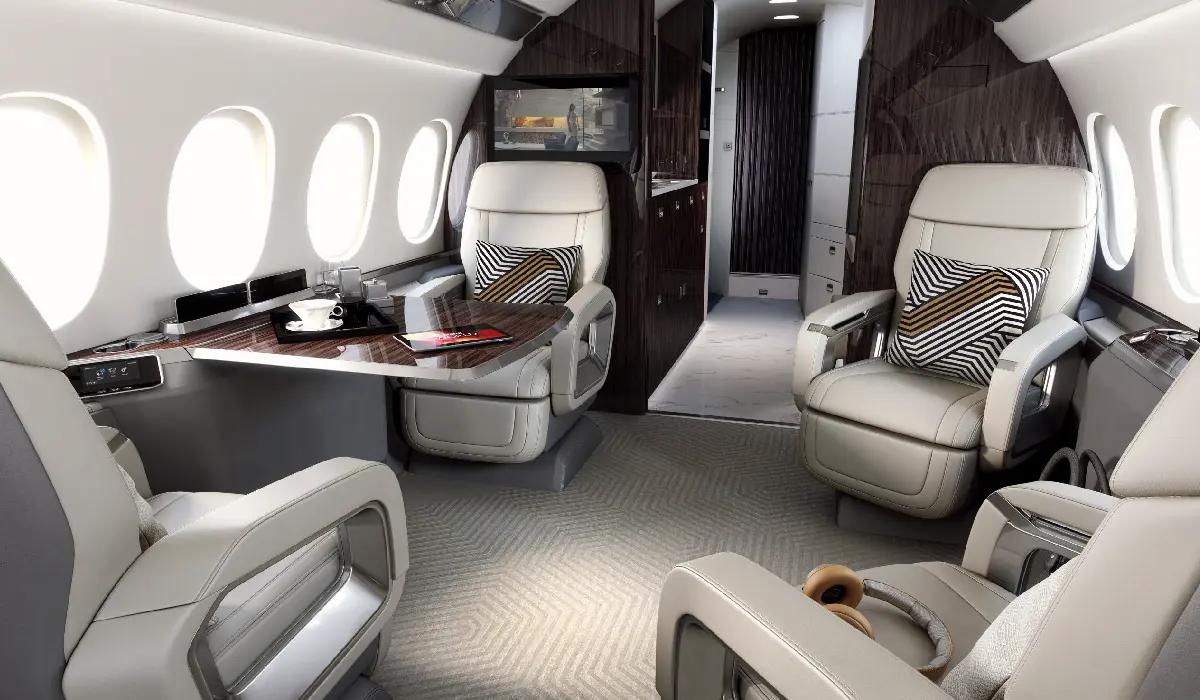
What Does the Inside of the VH-92A Look Like?
Imagine opening the door of a helicopter expecting a spectacular private-jet-style interior.
Perhaps an enormous bedroom.
A marble bathroom.
Or a lavish dining space.
That’s not what presidential helicopter design is primarily about.
The VH-92A has an executive interior adapted for official transportation.
Its exact protected mission equipment and arrangements are not all publicly documented in detail.
But publicly available information confirms its specialized communications systems and purpose-built presidential transport role.
The cabin is designed for a mission where practicality, operational requirements, and reliable communication are essential.
That doesn’t mean comfort is irrelevant.
It means the aircraft’s most valuable capabilities aren’t necessarily decorative.
And that creates a remarkable contrast with luxury helicopters available to private owners.
A billionaire might spend heavily on beautiful upholstery, entertainment features, and cabin customization.
A presidential transport program spends heavily on an entirely different set of priorities.
What Is the Most Expensive Helicopter a Private Person Can Buy?
Now we’re entering a different world.
Imagine a family planning a weekend on the French Riviera.
There’s a beautiful property waiting near the coast.
A yacht is anchored offshore.
And the family wants to move between destinations without spending hours on busy roads.
In that situation, owning a luxury helicopter might be attractive.
But the owner doesn’t need presidential communications infrastructure.
Instead, the priorities may include cabin space, baggage accommodation, passenger comfort, range, quietness, and access to suitable landing facilities.
The market includes several exceptional aircraft.
However, there is no independently verified universal winner for the most expensive privately purchasable helicopter.
Manufacturers often negotiate custom prices, and a heavily modified VIP completion may cost substantially more than a standard aircraft.
Here are three remarkable candidates.
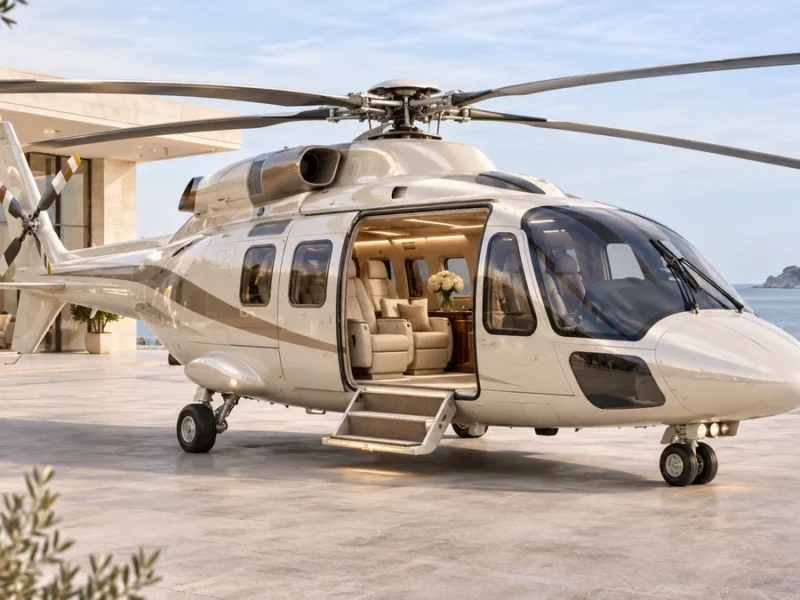
The Sikorsky S-92 Executive: Presidential Heritage Without the Presidential Price
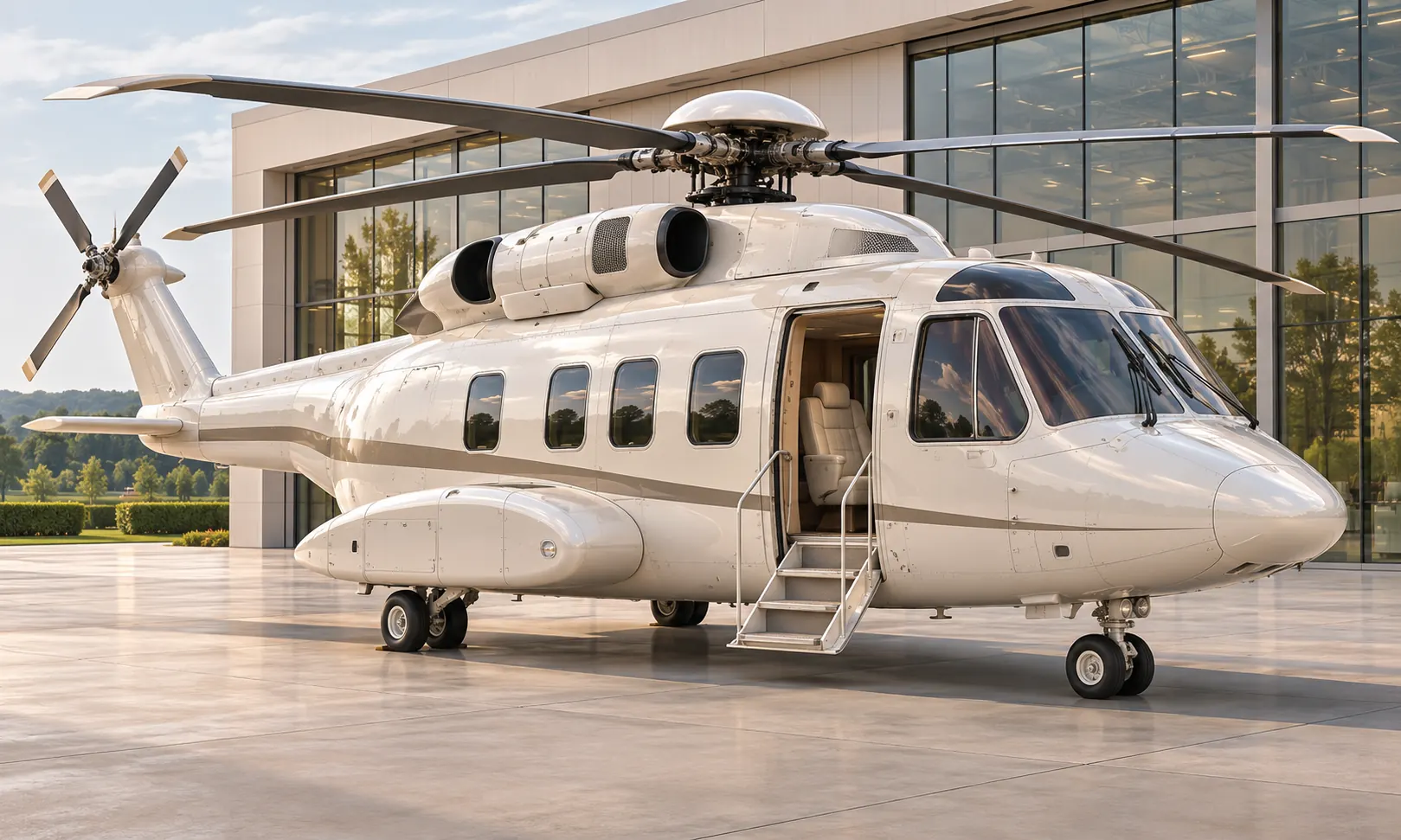
The S-92 is particularly interesting because it shares its aircraft family with the VH-92A.
But the commercial version serves very different customers.
Sikorsky’s S-92 platform has been used for offshore transport, search and rescue, and head-of-state aviation.
It offers a substantial cabin and a well-established operational history.
For a VIP owner, the aircraft can be fitted with executive seating and other premium features.
And the story is still developing.
In March 2026, Sikorsky announced preparations for production of the improved S-92A+.
The updated variant introduces changes including enhanced engines and a new main gearbox.
Then, on November 6, 2026, Sikorsky announced that it had been selected to supply four S-92A+ presidential helicopters to South Korea.
That is a particularly interesting update.
The S-92 isn’t simply a historic aircraft whose presidential connection belongs to the past.
It’s continuing to evolve as a platform for high-level transport.
How expensive is an executive S-92?
Industry estimates often place large, specially configured S-92 helicopters in the tens of millions of dollars.
But a current, manufacturer-verified fixed retail price for a fully customized executive S-92 is not publicly established.
That makes a direct price ranking difficult.
A buyer needs an actual quotation for the aircraft, cabin completion, equipment, delivery, and support arrangements.
Airbus ACH175: The Helicopter Designed Around Exceptional Comfort
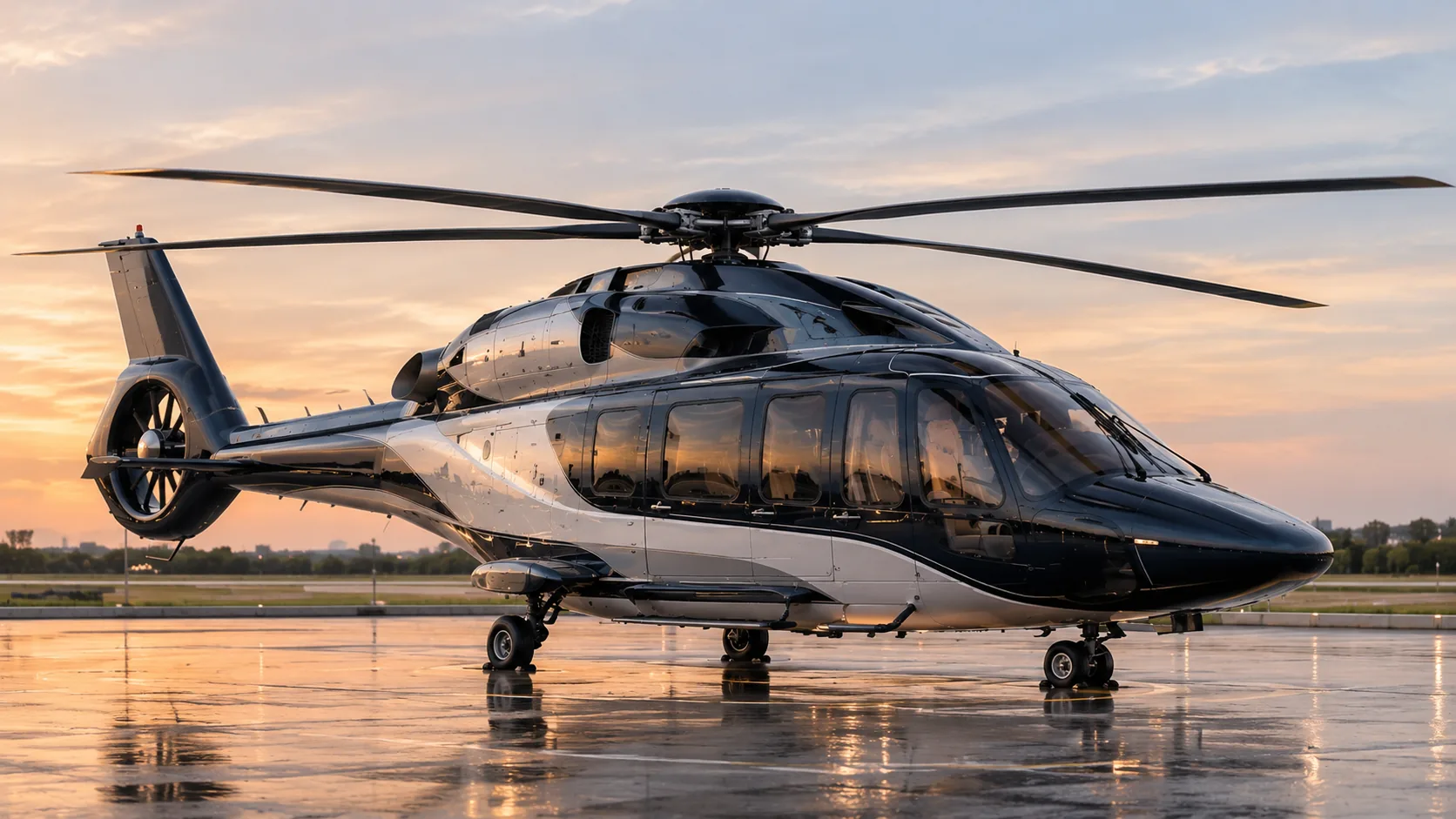
If you’re imagining a spacious flying lounge, the Airbus ACH175 deserves attention.
Airbus describes it as one of its most luxurious and spacious private-aviation helicopter offerings.
Based on the H175 platform, the ACH175 provides a substantial cabin that can accommodate different VIP arrangements.
The underlying aircraft has been designed for demanding long-range operations and passenger transport.
But the private-aviation version places greater emphasis on cabin refinement.
Picture a journey from a city to a secluded coastal destination.
You step aboard.
The luggage has been properly accommodated.
Everyone settles into comfortable seats.
And the helicopter becomes a peaceful space between two very different parts of the day.
That’s the kind of experience the ACH175 aims to provide.
Is it more luxurious than Marine One?
In some passenger-comfort respects, a bespoke ACH175 may be designed to offer a more elaborate private-cabin experience.
But that doesn’t make it more sophisticated in every technical sense.
The two aircraft serve fundamentally different missions.
One is created for executive or private transportation.
The other is built for presidential operations.
Comparing their leather seats alone would miss the point.
Leonardo AW139 VIP: The Helicopter That Makes a Yacht Transfer Feel Extraordinary
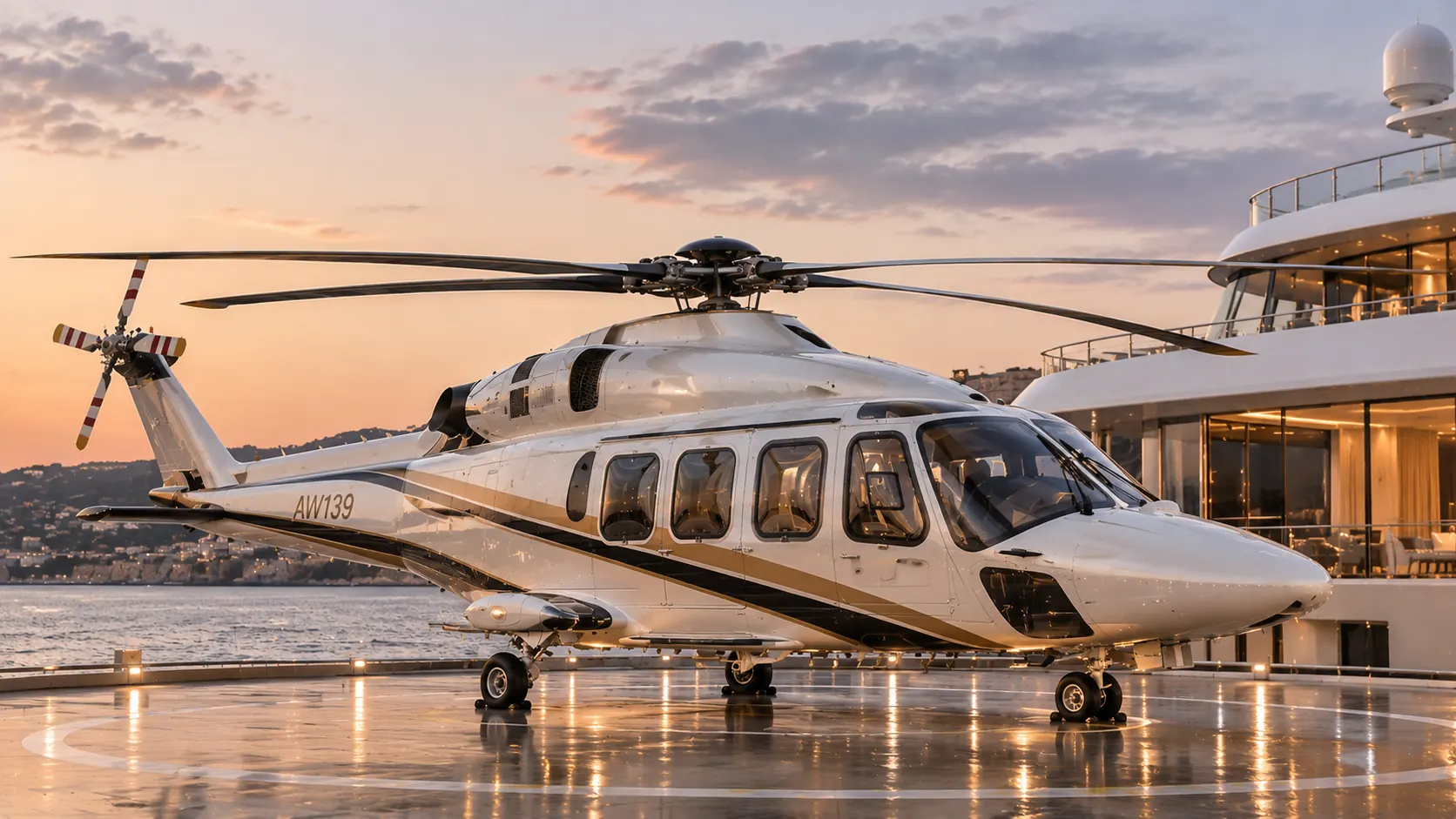
There’s something wonderfully cinematic about arriving above a beautiful coastline.
Below, the sea is sparkling.
A private yacht sits at anchor.
And a carefully planned helicopter transfer is bringing guests closer to their destination.
The Leonardo AW139 is among the aircraft used in VIP and executive operations.
Its twin-engine platform, adaptable cabin, and established commercial service history make it a serious option for corporate transport.
A specialized luxury interior can transform the passenger experience.
But yacht transfers require far more than a beautiful aircraft.
The helideck must be suitable for the helicopter.
The operating conditions must allow the flight.
And the necessary approvals, crew qualifications, and safety arrangements must be in place.
If you’re fascinated by the relationship between yachts and aviation, our guide to superyacht engineering explores the remarkable technical systems behind modern luxury vessels.
The lesson is simple.
A beautiful arrival is only truly luxurious when every part of the journey has been planned properly.
The World’s Most Expensive Helicopters: How Do the Prices Compare?
Here’s the problem with most helicopter-price rankings. They place completely different types of costs beside one another. A military acquisition program.
A factory aircraft price. An estimated VIP conversion. And a secondhand asking price.
Those numbers don’t measure the same thing. A better comparison looks like this:
| Helicopter | Public cost information | What the figure means |
| Sikorsky VH-92A Patriot | Approx. $213 million per aircraft | Historical total program acquisition cost divided by 23 |
| Sikorsky CH-53K King Stallion | $10.9 billion for a contract covering up to 99 aircraft | Maximum multi-year contract value, not the price of one aircraft |
| Sikorsky S-92 Executive / S-92A+ | Custom quotation | Civilian or head-of-state aircraft with variable completion costs |
| Airbus ACH175 | Custom quotation | Premium private-aviation configuration |
| Leonardo AW139 VIP | Custom quotation | Executive or corporate configuration |
The table is deliberately not a strict price ranking.
Because putting a government development allocation beside a private-aircraft quotation without explanation would be misleading.
And there’s another number worth understanding.
The $20.5 Billion Figure That Makes the Story Even More Extraordinary
In its April 2020 review, the US Government Accountability Office estimated the VH-92A program’s total cost over approximately forty years at $20.537 billion.
That included acquisition as well as projected operations and support. It’s a breathtaking figure. But it isn’t the price of one helicopter.
And it isn’t solely what the government had already spent. It’s a historical projection for developing, buying, operating, and supporting the entire fleet over its planned life.
The distinction matters because it’s easy to turn extraordinary numbers into misleading headlines.
A fleet operating for decades requires maintenance, personnel, parts, technical upgrades, and support. Those costs build over time.
And specialized aircraft can demand extraordinary resources long after the original delivery ceremony.
The Pravi Celer Million-Dollar Question: What Are You Actually Paying For?
Here’s a useful way to understand the world’s most expensive helicopters.
I’ve developed the Pravi Celer Five-Price Test, an editorial framework that separates five very different expenses.
1. The Aircraft Price
What does the basic aircraft cost to purchase in the specified configuration?
For a civilian helicopter, this may begin with an airframe quotation.
2. The Interior Price
How much is added for executive seating, materials, cabin systems, and other customization?
A standard transport cabin and a bespoke VIP interior can be very different products.
3. The Mission Price
Is the aircraft required to perform a specialized role?
Presidential transport, search and rescue, offshore operations, and other demanding missions can require additional equipment.
4. The Program Price
Does the headline figure include research, development, testing, and integration across a fleet?
This is where the VH-92A’s approximately $213 million figure belongs.
5. The Lifetime Price
How much will operating, maintaining, supporting, and upgrading the aircraft cost over the planned ownership period?
That may be a much larger number than the initial purchase price.
The purpose of this test isn’t to calculate the value of a specific helicopter without its financial records.
It’s to stop very different prices from being mistaken for one another.
The Pravi Celer principle: Before asking why a helicopter costs so much, ask exactly what the quoted price includes.
That one question can reveal more than a spectacular headline ever will.
Would a Billionaire Be Better Off With a Helicopter or a Private Jet?
It depends on the journey.
Imagine traveling between major international cities.
A private jet is generally better suited to longer-distance, high-speed travel.
Now imagine a journey between a regional airport and a remote property with a suitable helicopter landing area.
A helicopter may offer a practical advantage.
The aircraft serve different purposes.
Jets travel much faster over longer distances.
Helicopters can operate from suitably approved locations without conventional runways.
But private helicopters usually have more limited range, speed, payload, and weather flexibility than larger private jets.
And their operations can be expensive.
For travelers weighing the benefits of different types of private aviation, Pravi Celer’s guide to luxury personal jets offers another perspective on the relationship between comfort, flexibility, and cost.
The best aircraft isn’t necessarily the most expensive one.
It’s the one that solves the right travel problem.
Five Questions About the World’s Most Expensive Helicopter
What is the world’s most expensive helicopter?
The Sikorsky VH-92A Patriot is among the most expensive helicopters by publicly documented program acquisition cost, with an approximately $213 million per-aircraft estimate from the US Government Accountability Office.
Does Marine One really cost $215 million?
An earlier 2019 government report gave a $215.3 million program acquisition unit-cost estimate. An updated 2020 report implied approximately $212.8 million per aircraft. Both include development and procurement allocations, not a standalone retail purchase price.
Can a billionaire buy Marine One?
A private buyer cannot simply purchase a US presidential VH-92A as though it were a civilian luxury helicopter. The commercial Sikorsky S-92 family is a different purchasing proposition.
What makes a presidential helicopter so expensive?
Specialized communications, mission systems, development, testing, and the needs of a small, highly specialized government fleet contribute to its acquisition-program costs.
What is the most expensive private helicopter?
There is no single publicly verified answer across all bespoke civilian VIP aircraft. Large executive platforms such as the Sikorsky S-92 and Airbus ACH175 can be extremely costly, but final prices depend on configuration and private contracts.
Final Thoughts: The World’s Most Expensive Helicopter Has a Surprisingly Simple Lesson
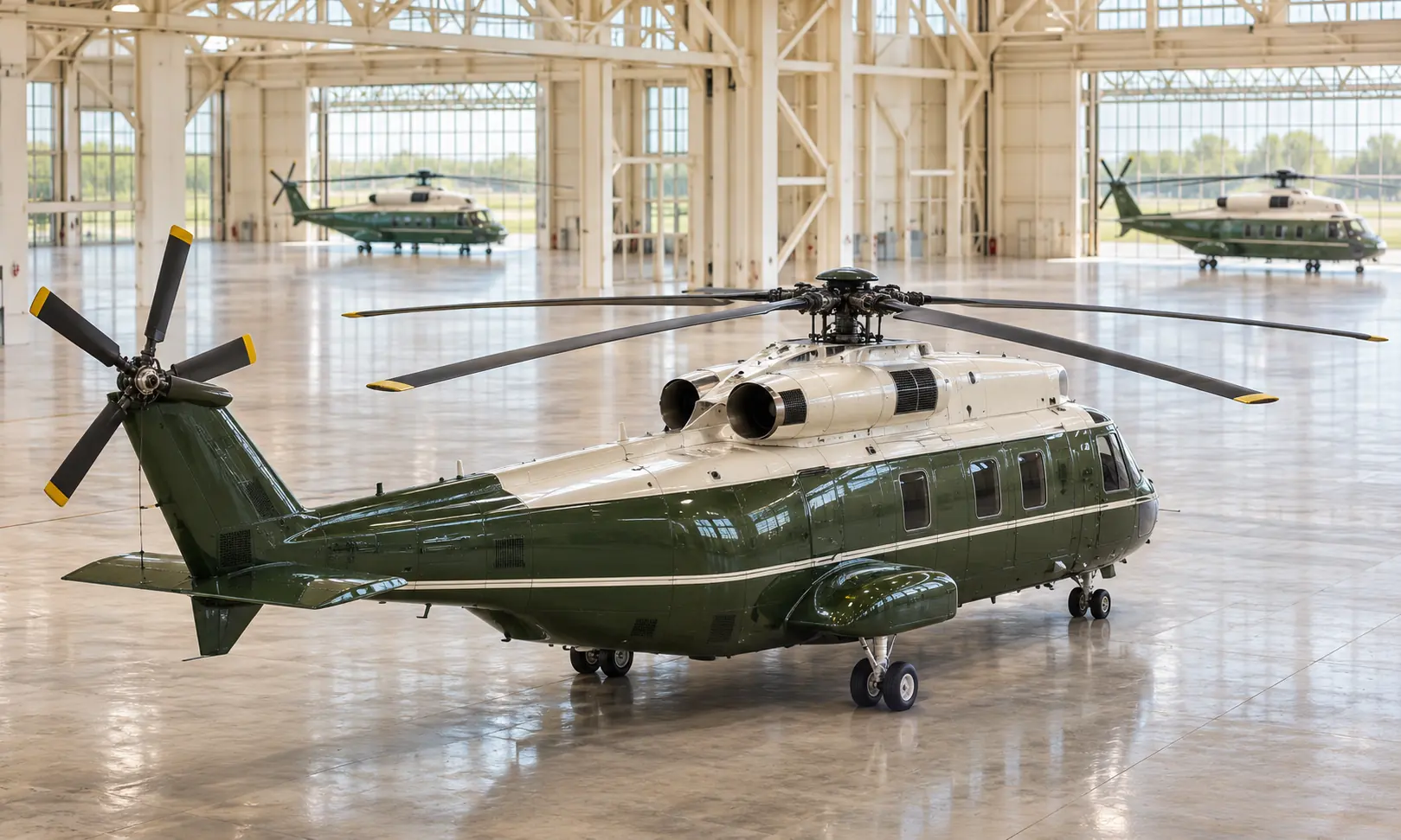
Imagine standing beside the VH-92A Patriot. It’s an extraordinary machine. The deep green-and-white paint. The enormous rotor blades.
The advanced engineering hidden beneath the surface. And a history connected to one of the world’s most recognizable forms of official transportation. Yet what makes it truly fascinating isn’t simply the number attached to its acquisition program.
It’s the story behind that number. Years of development. A fleet of specialized aircraft. Sophisticated communications. An enormous long-term support commitment. And even the unexpected challenge of making the helicopter compatible with the White House lawn.
That’s what makes this machine so different from a luxury helicopter designed for private owners. One is built around a national mission. The other may be built around extraordinary personal freedom. And both reveal something interesting about aviation.
A beautiful helicopter can make a journey memorable. But the truly remarkable engineering often lives in the details passengers never see. So whether you’re admiring the presidential VH-92A, a beautifully finished Airbus ACH175, or a sleek executive Sikorsky S-92, it’s worth looking beyond the price.
Ask what the machine was designed to do. What makes it special. And what it takes to make the journey possible. Because the world’s most expensive helicopter isn’t fascinating simply because it costs more than a fleet of luxury cars. It’s fascinating because of everything that extraordinary price is expected to accomplish.