Kewpie mayo belongs to the hour when you open the fridge, stare at the contents and briefly consider having crackers for dinner.
There are eggs. Half a cucumber. Bread that deserves to be eaten before tomorrow. You have ingredients, technically. What you are missing is enthusiasm.
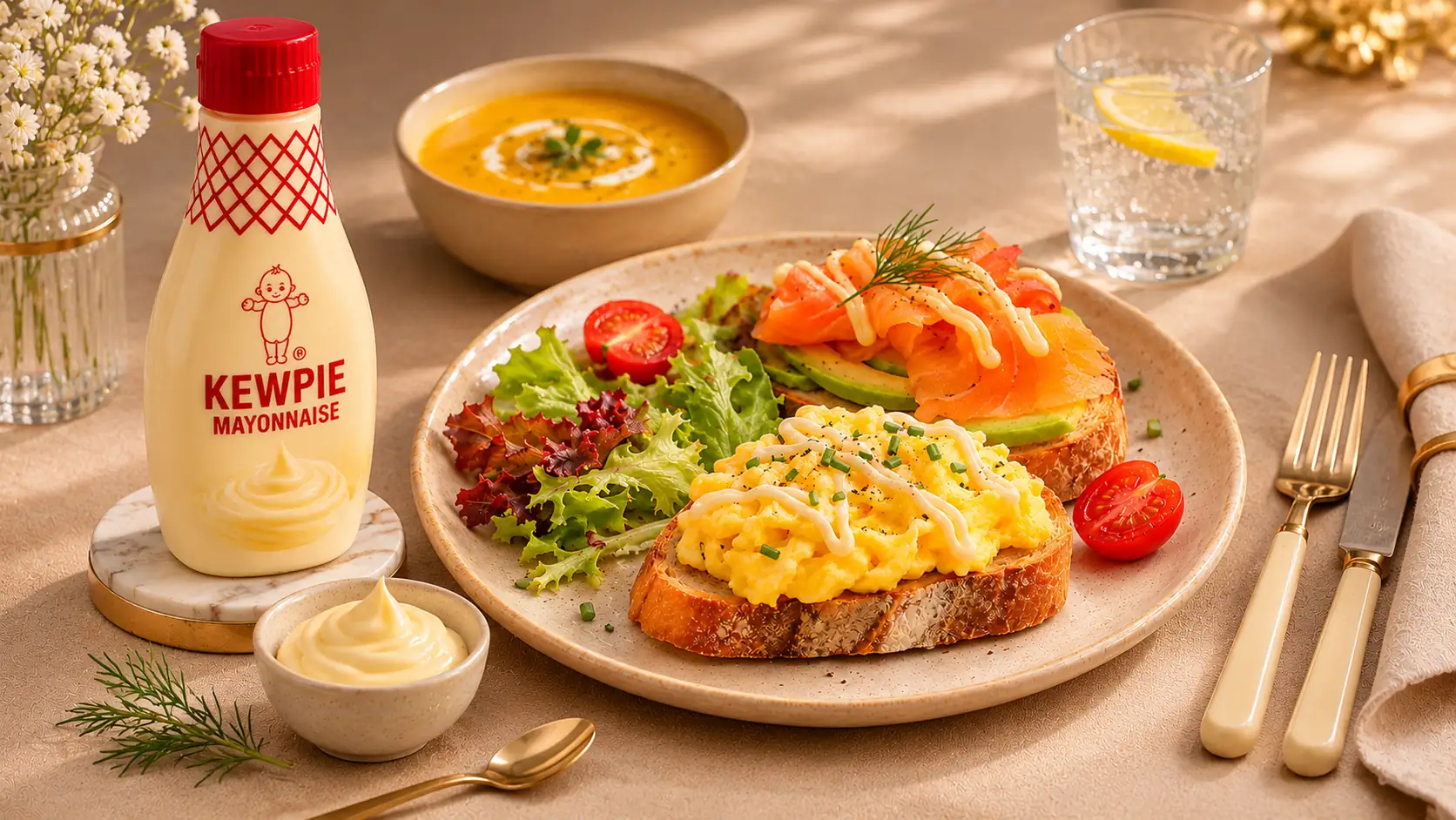
This is a good moment for the soft bottle with the red cap.
Kewpie is a Japanese mayonnaise brand known for its egg-yolk richness, tang and savory depth. Its classic mayonnaise uses yolks rather than whole eggs, giving it a different character from many familiar supermarket mayonnaises.
But the ingredient explanation only gets you so far. The more interesting question is what happens after you bring it home.
Here is our case for it: Kewpie rewards attention more than ambition. Give a simple sandwich a little care, and you may find you wanted that all along.
Key Takeaways
- Kewpie launched its mayonnaise in Japan in 1925.
- Its classic mayonnaise is made with egg yolks, oil, vinegar and seasonings.
- Different Kewpie products have different formulas; check the actual bottle.
- The Japanese original contains MSG, and the current U.S. 12-ounce product page also lists it.
- Start with simple food so you can decide whether you enjoy the mayonnaise itself.
Why Does Kewpie Mayo Make an Ordinary Sandwich So Interesting?
Imagine an egg sandwich with too much going on.
Mustard, chopped onion, herbs, hot sauce, perhaps a pickle that has brought enough vinegar for everyone. There may be delicious things in there, but the egg has become difficult to find.
Now imagine giving the egg more room.
Soft bread. Chopped cooked egg. Enough mayonnaise to bring the filling together. A little seasoning after you have tasted it.
That restraint is where Kewpie becomes worth exploring. Its yolk-based richness and tang give you something to work with before you reach for five other jars.
You still have to make a good sandwich. The bread matters. So does the texture of the filling. A generous squeeze cannot rescue everything.
What it can do is make a small amount of effort feel rewarding.
And that is a lovely quality in something kept beside the ketchup.
What Makes Kewpie Different From Regular Mayonnaise?
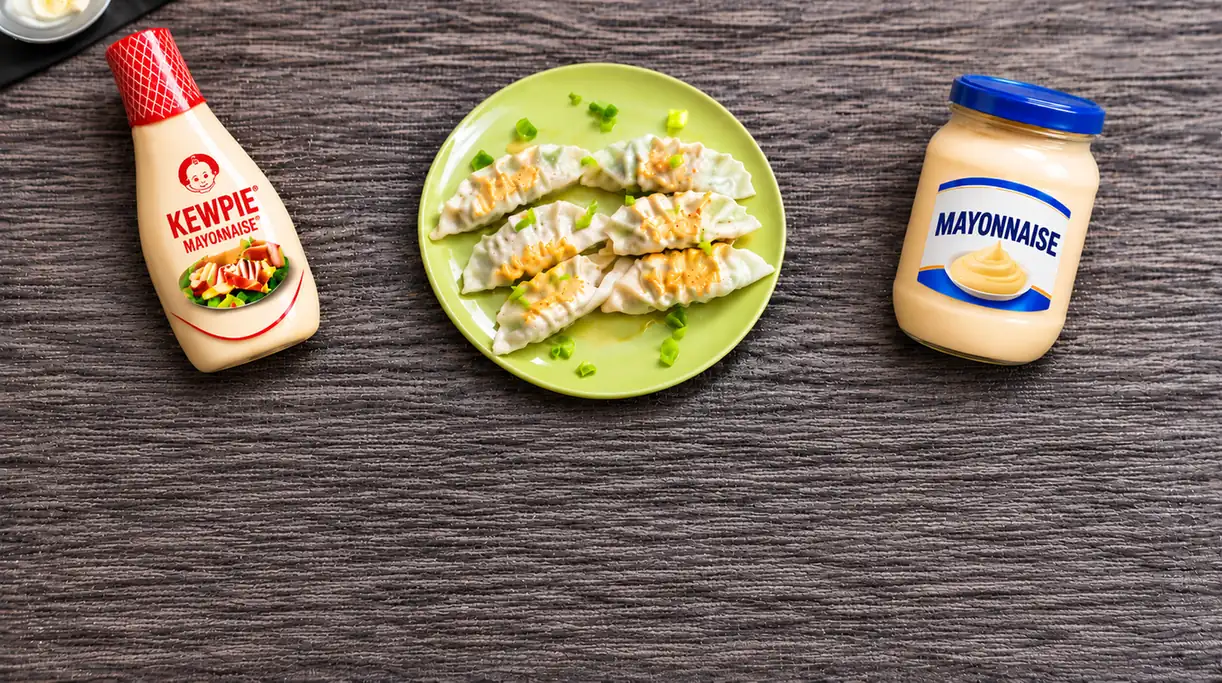
“Regular mayonnaise” covers a lot of ground. Some brands use whole eggs, some use yolks, and their acidity, sweetness and seasoning vary.
Kewpie’s classic identity centers on egg yolks and a distinctive vinegar-and-seasoning profile.
The result is a mayonnaise with enough character to be noticeable in a simple dish. Whether you prefer it depends on what you like mayonnaise to do.
If you want a quiet background spread, a more neutral brand may suit you. If you want the mayonnaise to contribute a savory, tangy presence, Kewpie deserves a place in the comparison.
Why Do the Egg Yolks Matter?
Egg yolks are central to the product’s richness.
That makes them particularly relevant in foods where the mayonnaise remains easy to taste: egg salad, a potato salad or a sandwich with only a few ingredients.
There is also a practical implication. Begin with less than you think you need, mix, then taste.
You can always add another small squeeze. Taking it out is considerably less convenient.
Is the Secret Just MSG?
MSG—monosodium glutamate—is a seasoning associated with umami, the savory dimension of taste.
It is part of the Japanese original’s formula. It does not explain the entire experience.
Texture, acidity, salt and the rest of the recipe matter too. Reducing Kewpie to one ingredient is a little like explaining a good sandwich by pointing at the bread. Relevant, certainly. The whole story, hardly.
What About the Vinegar?
This is an unexpectedly revealing part of Kewpie’s history.
The company says it established a vinegar business in 1962 and developed a vinegar specifically for mayonnaise using apple juice and malt.
That detail deserves a moment.
Vinegar is easy to treat as the sharp thing added near the end. Here, it became something worth developing around the product itself.
It helps explain why comparing mayonnaise is more interesting than comparing creaminess alone. Pay attention to the tang, too: how it arrives, how long it stays and whether you want another bite.
Are You Buying the Kewpie You Think You Are?

Turn the bottle around.
Really. This is the most useful shopping advice in the article.
Kewpie sells different products across markets, and the familiar packaging does not guarantee an identical ingredient list.
There is also an outdated shortcut worth retiring: the claim that Japanese Kewpie contains MSG while American Kewpie does not.
The current official U.S. page for the 12-ounce mayonnaise lists monosodium glutamate. That makes country-of-origin shorthand a poor substitute for reading the label.
| What to check | Why it matters |
| Exact product name | Classic, organic, spicy and vegan products are different formulations |
| Country of manufacture | Useful context, although it does not tell you everything about the recipe |
| Ingredient list | Shows the oils, vinegars, seasonings and other ingredients in that bottle |
| Allergen information | Dietary suitability should be checked on the specific product |
| Storage instructions | Follow the directions supplied with your purchase |
| Pack size | Choose an amount you expect to enjoy using |
If you are shopping for the Japanese original, look for a clearly identified product of Japan.
If you are simply curious about the flavor, you can start with an available Kewpie product and judge that bottle on its own merits.
You are buying something to eat. Give your own preference a vote.
How Should You Try Kewpie Mayo for the First Time?
Keep the first meal simple enough to tell you something.
A heavily dressed burger is delicious territory, but it is a crowded introduction. Cheese, pickles, sauce and browned meat all have strong opinions.
We would begin with a sandwich and a few pieces of cucumber on the side.
That gives you a soft, savory setting and a crisp, fresh one. You can notice where you enjoy the mayonnaise most without turning lunch into a formal tasting.
Start With an Egg Sandwich
Chop peeled, fully cooked eggs and add a modest amount of Kewpie.
Mix gently. Taste before adding salt, mustard or anything else. Then decide what the filling needs.
Perhaps a little pepper. Perhaps nothing.
Use bread you enjoy eating on its own. Keep the filling manageable enough that you can take a bite without reorganizing the sandwich.
These are small decisions, but small food makes them visible.
Try It Beside Something Crisp
A little Kewpie beside cucumber or freshly cooked potatoes creates another way to explore it.
Use the mayonnaise as a dip at first. That lets you control each bite and decide how much richness you want.
If you enjoy the combination, you have learned something useful about your own taste. There is no obligation to turn it into a bowl of sauce.
Save the Spicy Mayo for Round Two
Kewpie and chili sauce are an easy pairing to understand.
But try the mayonnaise before mixing it. Otherwise, you may buy a distinctive ingredient and immediately cover the part you wanted to investigate.
Once you know what it contributes, making a sauce becomes a more deliberate choice.
Can You Make a Small Supper Feel Luxurious?
Absolutely. Give it a little structure.
For this article, we suggest building the plate around something soft, something crisp and something sharp.
This is a way to organize a meal from what you have, rather than another shopping list.
The soft part might be an egg sandwich or potatoes. The crisp part could be cucumber, radishes or toast. The sharp part might be a pickle, a few capers or a squeeze of lemon where it suits the food.
Kewpie provides richness, so look at the rest of the plate before adding more.
| What is on the plate? | What you could add | What it contributes |
| A soft egg sandwich | Cucumber or radishes | A fresh, crisp bite between mouthfuls |
| Potatoes with mayonnaise | Pickles or chopped herbs | Acidity or freshness alongside the richness |
| A crisp chicken sandwich | A restrained spread of Kewpie | Creaminess without soaking the filling |
| Several rich components | A simpler vegetable side | More variation across the meal |
These are suggestions to adapt, not tested recipes with fixed quantities.
The pleasure is in making a few good decisions. Cut the sandwich neatly if you feel like it. Put the cucumber on a plate. Sit down while the toast is still worth eating.
A modest supper deserves that much ceremony.
When Should You Use Less Kewpie?
When everything else is already rich.
Avocado, cheese, fried food and mayonnaise can all be enjoyable together. They can also leave you wishing for something fresh halfway through.
Before adding more sauce, ask what the next bite needs.
It might need acidity, crunch, or simply need less filling.
Kewpie is useful enough that you do not have to prove your enthusiasm by putting it on everything.
What Is Worth Knowing Before You Buy?
A little care at the shelf makes the first meal easier:
- Choose the exact product you want to try.
- Read its ingredients rather than relying on packaging familiarity.
- Check relevant allergen and dietary information.
- Pick a pack size that suits your household.
- Follow the bottle’s storage instructions.
- Plan one simple first use.
- Taste before adding more seasoning.
That last point is worth remembering. You bought a seasoned ingredient. Let it do some of the work.
Frequently Asked Questions
What does Kewpie mayo taste like?
Its characteristic profile is rich, creamy, tangy and savory. The exact balance varies by formulation, so judge the product you actually buy.
Is Kewpie the same as Japanese mayonnaise?
Kewpie is a brand strongly associated with Japanese mayonnaise. Japanese mayonnaise is a broader category that includes other brands.
Does American Kewpie contain MSG?
Some formulations do. The current official U.S. 12-ounce mayonnaise listing includes MSG. Check your bottle because recipes and products differ.
Can you use Kewpie instead of ordinary mayonnaise?
Usually, yes, in foods such as sandwiches and salads. Add it gradually and taste before keeping the original recipe’s full amount of salt or other seasonings.
Is Kewpie vegan?
The classic mayonnaise contains egg yolks. Kewpie also sells a separately labeled vegan mayo product.
Is homemade “Kewpie” the same thing?
A homemade Japanese-style mayonnaise can be enjoyable, but it is an approximation. It should not be presented as an exact copy without evidence.
What Would You Actually Want for Dinner?
Return to that open fridge.
The eggs are still there. So is the cucumber. The difference is that supper now has a direction.
Make the sandwich. Give it something crisp on the side. Taste before reaching for another condiment.
Kewpie’s appeal becomes clear at this scale: an ordinary meal, a few attentive choices and the possibility that you will sit down to something you are pleased to have made.
For a bottle of mayonnaise, that is a very good evening’s work.