

Does your closet feel crowded and confusing every time the weather changes? A seasonal closet rotation guide helps you bring order and calm to your wardrobe. This easy habit saves space and protects your clothing from unnecessary wear. You will find dressing each day much easier and more enjoyable.
What Is Seasonal Closet Rotation & Why It Matters
Seasonal closet rotation means storing off-season clothes and bringing in-season ones forward. This practice keeps your closet neat, speeds up outfit choices, and protects your garments. In many guides, it is also known as seasonal wardrobe rotation or a seasonal closet swap.
When & How Often to Rotate

Most people rotate their wardrobes twice yearly, but your climate can change that. Spring and fall are natural times for a seasonal closet swap. Some areas with extreme weather benefit from a quarterly rotation instead of twice a year. This plan keeps your wardrobe aligned with outside temperatures and daily needs.
Ideal Timing for Rotation
Early spring and fall are the most popular points for rotation. These seasons are ideal because you can store heavy or light clothes depending on the weather. A quarterly rotation can feel more practical in regions with sharp weather changes. This slight shift keeps your outfits ideally suited to each season.
Handling Transitional Periods
Sometimes the weather changes slowly, and you need a mix of clothes. Keeping a small transitional wardrobe makes dressing simple during those in-between weeks. Light jackets, layering pieces, and neutral shoes can work well for this period. Planning avoids digging through storage to find missing items quickly.
| Season Change | Suggested Action | Quick Tip |
|---|---|---|
| Spring → Summer | Store heavy jackets, bring out lighter fabrics | Keep one light jacket for chilly mornings |
| Summer → Fall | Rotate in sweaters, boots, and coats | Leave a few tees for warm afternoons |
| Fall → Winter | Bring out heavy coats and scarves | Add moisture absorbers to storage bins |
| Winter → Spring | Store bulky sweaters, bring back dresses | Wash and mend items before packing away |
Step-by-Step Seasonal Closet Rotation Process

Following a clear system makes seasonal closet rotation easy and less stressful. By breaking it into steps, you declutter, clean, and store your clothes without overwhelm. This process also helps you review your style and adjust your wardrobe choices. You will feel in control and ready for each season.
Step 1: Declutter & Audit
Start by taking everything out and reviewing each piece of clothing carefully. Ask yourself if you wore it last season and if it still fits your life. This seasonal declutter helps you decide what to keep, donate, or sell. Being honest now keeps your closet fresh, simple, and efficient later.
Step 2: Clean, Repair & Prepare
Before storing off-season clothes, ensure each piece is clean and dry. Treat stains, replace missing buttons, and mend tears to avoid future damage. This easy step protects fabrics from pests and mildew during storage. Clean clothing will always smell fresher when you bring it out next season.
Step 3: Categorise & Sort by Season
Group clothes by type and season to make packing faster and easier. Separate heavy winter sweaters from light summer dresses and keep transitional wardrobe pieces aside. Labelling or colour-coding bins saves time when you rotate them again. Clear categories also reveal gaps in your wardrobe for future shopping trips.
Step 4: Choose Storage Solutions
Choosing the proper storage for off-season clothes is crucial for preservation. Breathable bins, fabric garment bags, and vacuum-sealed options all have their uses. Cedar blocks or lavender sachets protect against moths and add a pleasant scent. Label your storage clearly so you can find items quickly.
Step 5: Move & Place in Your Closet
Bring in-season clothes to the most accessible areas of your closet right away. Use shelf dividers, double rods, or vertical organisers to maximise storage space. Store off-season bins under the bed, in another closet, or in stackable boxes. This approach keeps your closet visually clear and easy to use daily.
Step 6: Maintain & Refresh Throughout the Season
Check your closet once a month to see if anything needs refreshing. Sometimes the weather changes quickly, and rotating pieces back keeps you prepared. This ongoing maintenance prevents clutter from building up over time. It also helps you stay connected to your style throughout the year.
Storage & Preservation Tips for Off-Season Clothes
Proper storage extends the life of your clothes and keeps them looking new. Choose breathable containers instead of cardboard boxes, which trap moisture and attract pests. Climate-specific challenges like humidity or damp basements may require extra precautions like silica gel or dehumidifiers. Wrap them in acid-free tissue for delicate fabrics like silk or wool before packing.
Best Container Types
Fabric bins or clear plastic boxes with ventilation are great for storage. Vacuum bags work for bulky items, but are not recommended for delicate fabrics. Always make sure clothes are fully dry before sealing them to prevent mildew. Good storage is a simple investment that keeps garments ready to wear.
Pest Prevention
Mothballs work but have a strong smell and potential health concerns. Cedar blocks, chips, or lavender sachets offer a natural alternative that also smells pleasant. Replace them every few months to maintain complete protection against pests. This step keeps your wardrobe safe and fresh for the next season.
Climate-Specific Challenges
For best results, humid areas require moisture absorbers or climate-controlled storage. In dry climates, delicate fabrics may need extra hydration to prevent brittleness. Adapting your seasonal wardrobe rotation to your environment avoids unpleasant surprises later. These minor adjustments protect your investment and keep clothes beautiful.
Tips for Delicate Fabrics
Handle items like silk blouses or wool sweaters with extra care every time. Fold instead of hanging heavy knits to prevent stretching and damage. Use acid-free tissue paper between layers to protect delicate fibres from friction. These small actions preserve quality and keep clothes ready for wear.
Dealing With a Small Closet or Limited Space
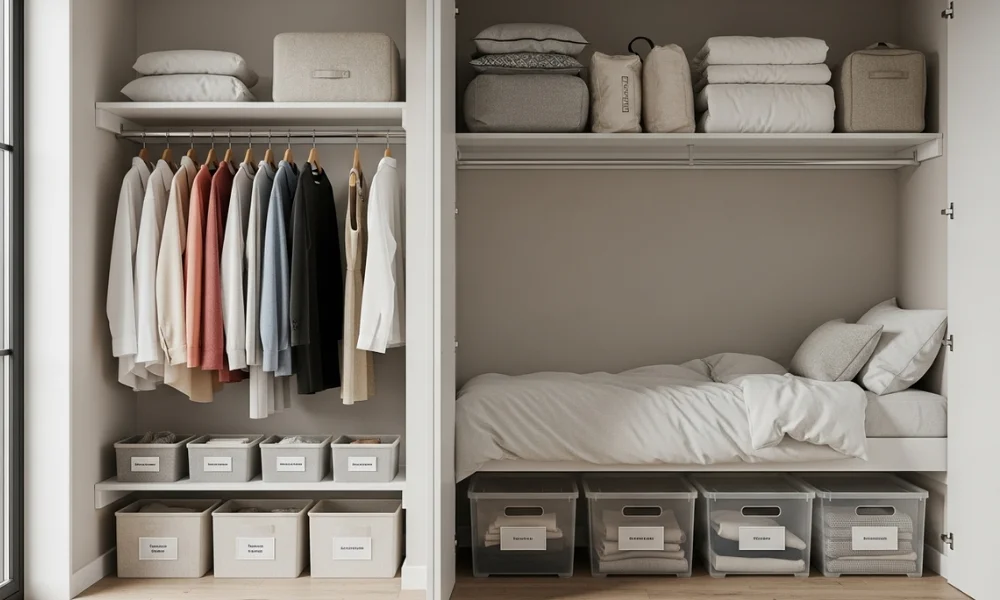
Many people struggle with small closets, but can still effectively manage a seasonal closet swap. Under-bed storage boxes, vacuum bags, or renting a small storage unit can free up needed space. Rotating more often, such as every two to three months, keeps your active wardrobe manageable. Even a tiny space works well with a thoughtful system and plan.
Printable Seasonal Closet Rotation Checklist
A checklist makes seasonal closet rotation easier to follow from start to finish. You can create one in a simple spreadsheet or download a printable version online. Include tasks like declutter, clean, categorise, store, label, and refresh as steps. Checking off each part keeps you on track and motivated to complete the process.
Frequently Asked Questions (FAQ)
Can I Rotate More Than Twice a Year?
Yes, you can rotate your closet every few months if it fits your lifestyle. This keeps your wardrobe aligned with the weather and helps you stay organised.
What About Climates With No Clear Seasons?
A complete seasonal wardrobe rotation may not be necessary in tropical or monsoon climates. Instead, to stay organized, rotate by fabric weight, activity, or lifestyle.
Should I Fold or Hang Sweaters?
Heavy sweaters should be folded to avoid stretching, while lighter knits may hang. This preserves their shape and keeps your closet neat.
How to Handle Shoes, Accessories, and Outerwear?
Use clear boxes or fabric bags for shoes, rotating accessories by season. Store outerwear in breathable garment bags to keep it protected and ready.
What to Do With In-Between Garments?
Keep a small section of your closet for transitional wardrobe items. This helps you handle unpredictable weather without digging through storage.
Conclusion
Seasonal closet rotation is more than just moving clothes around; it simplifies daily life. Following this guide, you’ll create a clean, efficient wardrobe ready for every season. Regular maintenance, proper storage, and honest decluttering keep your system running smoothly year after year. Start your seasonal wardrobe rotation today and enjoy a closet that works for you.
